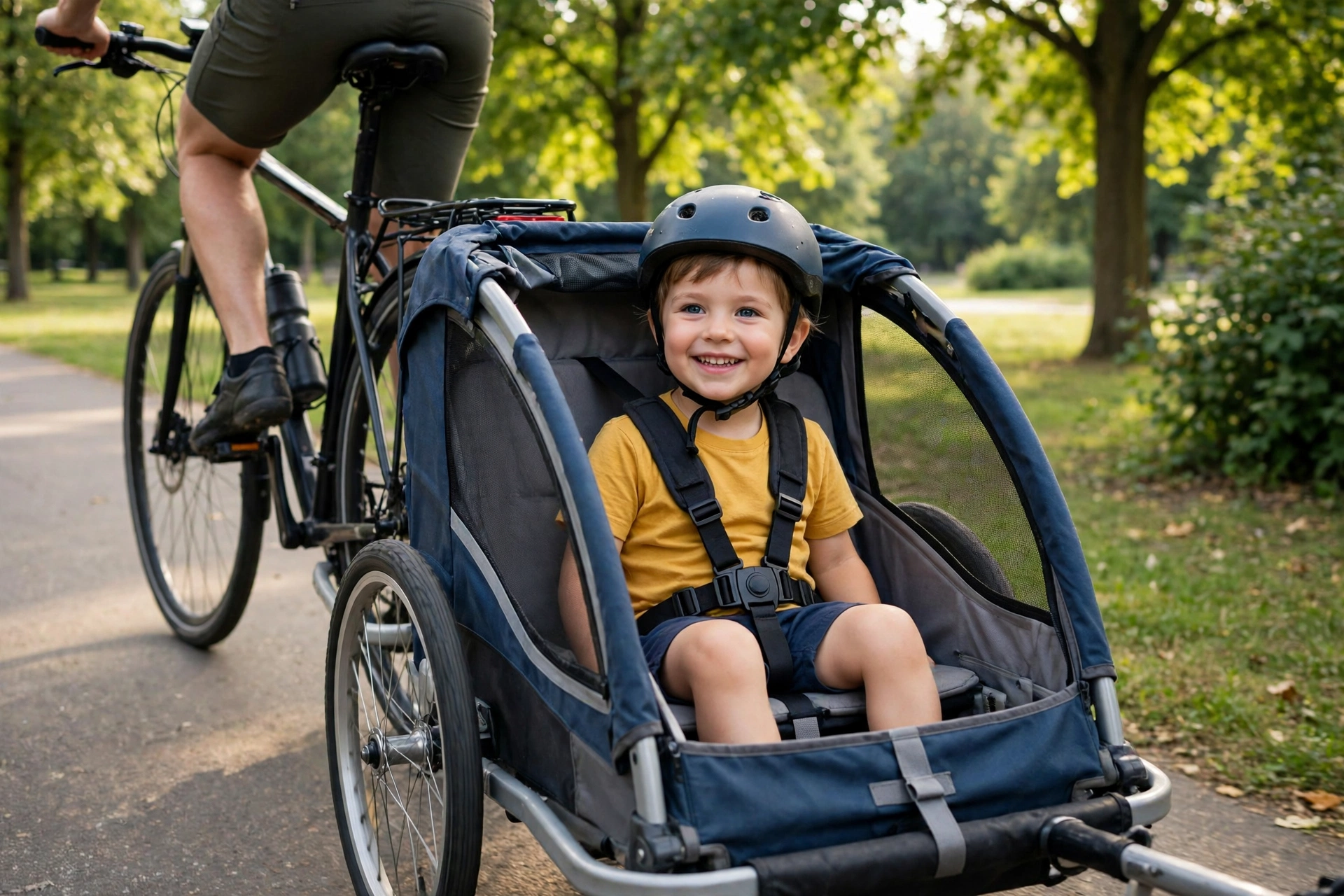
Yes, a child riding in a bike trailer should wear a helmet — and not just any helmet: choose a small, lightweight, certified bike helmet with a smooth, flat, rounded back, because in a trailer your child’s head rests against the seat back, and a helmet with a pointed or protruding rear will push their head uncomfortably forward. The flat back is the trailer-specific detail most parents miss when they grab whatever helmet is by the door.
Trailers feel enclosed and secure, which leads some parents to skip the helmet altogether. This guide explains why the helmet matters in a trailer, what shape to look for, and how the fit differs from normal riding.
Does a Child Really Need a Helmet Inside a Bike Trailer?
Yes. A trailer is low to the ground, but the realistic risks are a tip-over, a collision from behind or the side, or a sudden stop that throws the child against the harness and frame. A certified helmet protects against exactly those knocks, including the low-speed ones that happen when a trailer rolls onto its side on a corner or a curb.
There is a legal layer as well: helmet laws in many places cover child passengers, and whether they name trailers specifically varies by state and locality. In general terms, safety organizations and trailer manufacturers alike recommend a helmet for every child passenger on every ride, whatever the local law says.
One timing rule comes first, though. In general terms, most pediatric and manufacturer guidance suggests children should be around 12 months old before riding in a trailer: old enough to sit up steadily and hold their head up with a helmet on, over bumps, for the length of a ride. A helmet on a baby whose neck is not ready for it does more harm than good, so if your child is younger than that, wait — and check with your pediatrician if you are unsure.
Why Does the Back of the Helmet Matter So Much?
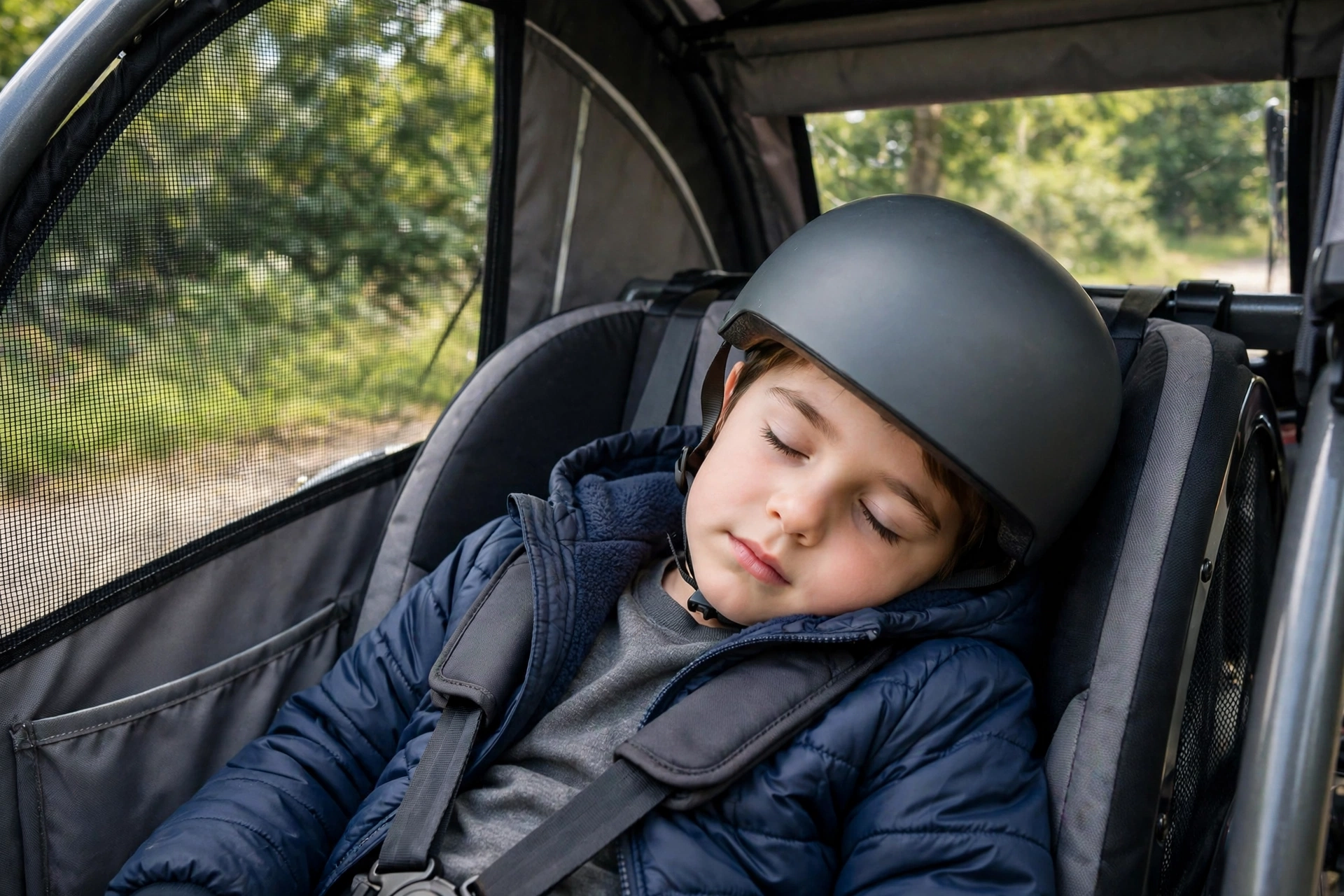
On their own bike, a child holds their head upright and the back of the helmet touches nothing. In a trailer, the child sits reclined against a seat back, often for a long ride, and may doze off against it. A typical bike helmet has an elongated rear that tapers to a point or carries the fit mechanism back there. Pressed between the child’s head and the seat, that shape acts like a wedge, pushing the head forward and down into an uncomfortable chin-to-chest slump.
A helmet with a flat, rounded back solves this. The rear profile is smooth and nearly vertical, so when the child leans back, the helmet rests flush against the seat and the head stays in a natural position. Some trailers even build a recess or pocket into the seat back to accommodate a helmet; a flat-back helmet works with or without that feature.
This is also why skate-style helmets are a popular trailer choice: their round shape naturally has a smoother rear. That works only if the individual helmet is certified as a bicycle helmet — check for the CPSC label — and fits correctly. Shape solves the comfort problem; certification and fit do the protecting.
What Features Should You Look For in a Trailer Helmet?
Size range first: trailer passengers are among the youngest helmet wearers, so look for models made in genuinely small sizes for toddlers, with a circumference range that starts low enough for a one- or two-year-old’s head. Measure your child’s head and match the number to the chart — the smallest helmet in the shop is not automatically the right one.
Weight matters more here than in almost any other use. A young passenger’s neck muscles are still developing, and they will hold the helmet up for the whole ride, often while drowsy. The lightest helmet that fits and is certified is the kindest choice. A rear fit dial helps fine-tune snugness as your child grows, and is easier to adjust in the trailer than swapping pad sets.
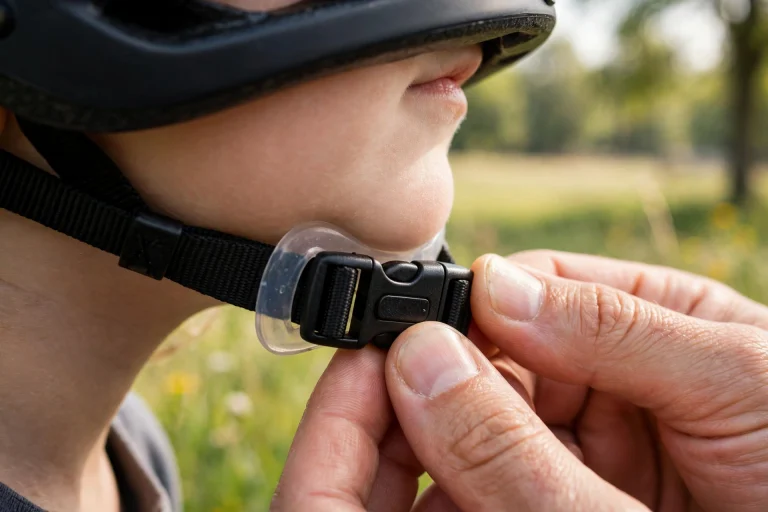
Look also for a smooth shell with minimal rear protrusion, straps that lie flat, and a buckle that will not dig into the neck when the child leans back — a guard or pad at the buckle is a genuine comfort plus here. If you want added protection technology, some small helmets now include rotational liners like those described in our guide to what MIPS is and how it can help, which is worth considering at replacement time.
How Should the Helmet Fit a Child Sitting in a Trailer?
Fit the helmet the standard way first: level on the head, front edge about one to two finger-widths above the eyebrows, snug with no rocking, side straps forming a V below the ears, and one to two fingers of room under the chin strap. Then do the trailer-specific test: sit your child in the trailer, harness fastened, and have them lean back the way they will actually ride.
In that leaned-back position, check three things. The helmet should not be pushed forward over the eyes. The child’s chin should not be forced down toward the chest. And the back of the helmet should rest against the seat without a pressure point your child complains about after a few minutes. If the helmet tips forward when they relax, the shape is wrong for trailer use even if the size is right.
What Else Makes a Trailer Ride Safe for a Helmeted Child?
The harness is the helmet’s partner: it should be snug over the shoulders so the child stays centered in the seat and the helmet stays in its fitted position. Loose harness straps let the child slide sideways, and then even a well-fitted helmet ends up tilted. Fasten the harness every ride, even a short one.
Keep the trailer’s own safety gear in place: the roll bar structure only works as designed with the cover and harness used properly, and a safety flag and lights make the low trailer visible to drivers.
Finally, treat the helmet like any other: replace it after any crash or tip-over where it took a hit, when your child outgrows it, or when straps and buckles wear. A trailer helmet leads a gentle life, but its foam ages the same way, in general terms over several years, and a helmet that no longer fits snugly has stopped doing its job.
Frequently Asked Questions
Q: Can my baby ride in a trailer with a helmet before 12 months?
A: In general terms, no — most pediatric and trailer manufacturer guidance puts the starting age at around 12 months, when a child can sit steadily and support their head plus a helmet over bumps. A helmet adds weight a younger baby’s neck is not ready for. If you are considering it earlier, ask your pediatrician first.
Q: My trailer has a helmet recess in the seat — does my child still need the helmet?
A: Yes. The recess only solves the comfort problem, giving the helmet somewhere to rest so the head is not pushed forward. It provides no impact protection itself. Your child still needs a certified, correctly fitted helmet on every ride.
Q: Is a skate helmet or a bike helmet better for a trailer?
A: Either shape can work, because what matters for trailer comfort is the smooth, flat back, which skate-style helmets naturally have. The deciding factor is certification: it must be labeled as a CPSC bicycle helmet and fit your child’s measured head size. A skate-only helmet without the bicycle certification is not the right choice.

Olivia
Writer at Helmet Today, covering helmet reviews, fit and riding safety.