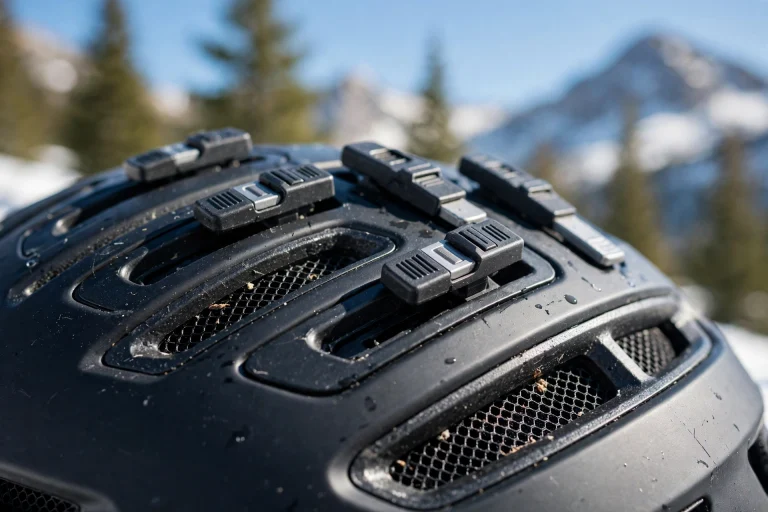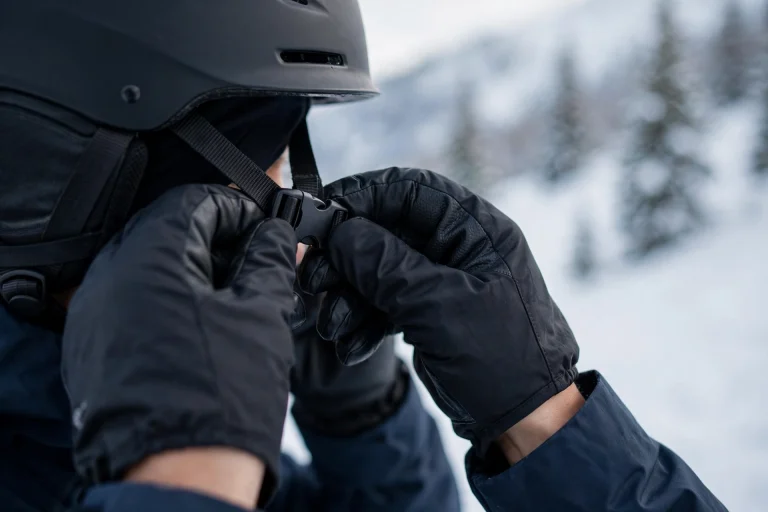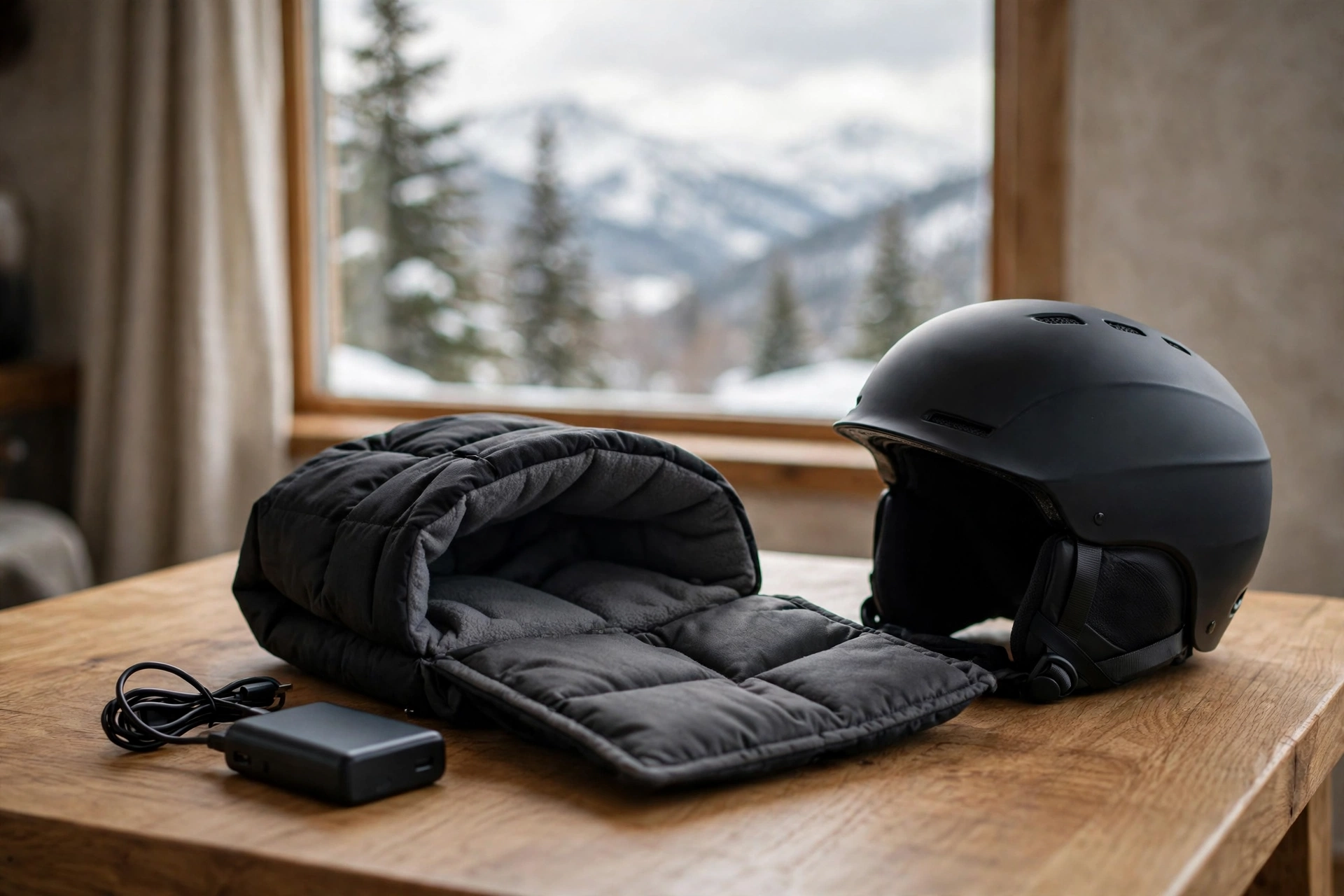
Heated ski helmet accessories are add-ons that warm the helmet itself — chiefly replacement heated liners and heated ear pads with thin battery-powered heating elements, driven by small rechargeable battery packs. They keep your head and ears warm on bitter lift rides without a thick hat stuffed under the helmet, which would spoil the fit.
Cold heads end ski days early, and the traditional fix — a chunky beanie under the helmet — changes the fit and can reduce protection. Heated accessories were created to solve exactly that problem. This guide explains what the accessories are, how they work, how the batteries behave in the cold, and the care rules that keep both the gear and the helmet safe.
What Counts as a Heated Ski Helmet Accessory?
The core items are heated liners and heated ear pads. A heated liner replaces the helmet’s standard comfort liner with one that has heating elements woven through it, powered by a battery pack that tucks into a pocket in the liner or at the back of the helmet. Heated ear pads work the same way on a smaller scale, warming just the ears — often the first thing to go numb on a windy chairlift.
Some helmets are designed heated-ready, with the wiring channels and battery pocket built in, and the heated liner sold as the matching upgrade. Others accept universal heated pads from accessory makers. The two are not interchangeable by default: a liner shaped for one helmet rarely fits another properly, and fit is everything in a helmet.
Related but separate are heated balaclavas and heated goggle systems. Those warm you too, but they are worn with the helmet rather than being part of it, and they follow their own care rules. This article is about the accessories that live inside the helmet itself.
How Do Heated Liners and Ear Pads Work?
Thin, flexible heating elements are sewn between layers of the liner fabric — similar in spirit to the elements in heated gloves — and connected to a small rechargeable battery, usually lithium-ion. A button on the battery pack or a lead at the back of the helmet cycles through heat settings, typically low, medium, and high, with a small colored light showing which level you are on.
The heat is gentle and local. The goal is to take the bite off the cold and stop heat leaking away through the liner, not to toast your scalp; on high, a good system feels clearly warm, and on low it simply feels like the cold has stopped getting in. Because the elements sit in the comfort padding, they work with the helmet on or off — many skiers switch the liner on during the lift ride and down again for the descent, when effort generates its own heat.
Well-designed systems route the cables inside the liner so nothing presses into your head, and put the battery low at the back where its modest weight is least noticeable. If you can feel a cable or the battery through the padding when you try an accessory on, it is the wrong accessory for that helmet.
How Long Do the Batteries Last, and How Do You Charge Them?
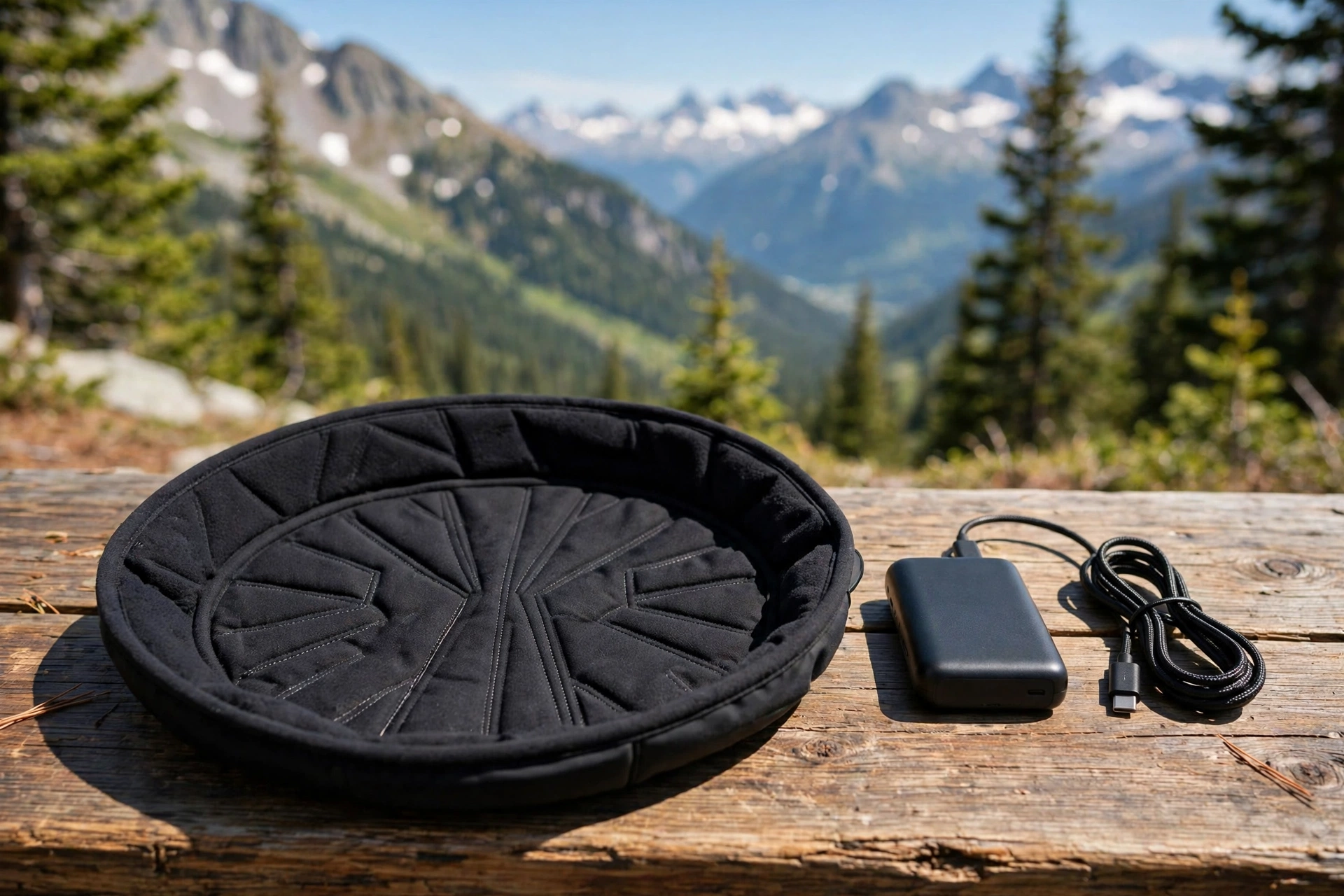
Battery life depends on the heat setting and the weather. Higher settings draw more power, and genuine cold reduces what any battery can deliver, so in general terms expect a long day on low, and plan on switching down after the coldest lifts if you need the pack to last until the last chair. Riders who ski full days in severe cold often carry the charger in the lodge bag and top up at lunch, or choose a system with a swappable spare battery.
Most packs charge from USB, which makes life easy: charge the night before, alongside your phone, and make it part of the pre-ski routine. Charge indoors at room temperature rather than in a cold car, and store the battery partly charged rather than flat if it will sit unused all summer, which is kinder to lithium cells.
Build the check into your morning: battery connected, button tested, indicator lit. A heated liner with a flat battery is still a liner — you will not be in danger, just colder than planned — but the whole point is not discovering that on the first lift.
Are Heated Accessories Safe to Use in a Helmet?
Used as designed, yes — with three rules. First, use accessories made for helmets, and ideally for your helmet model. Anything that adds bulk between your head and the foam changes the fit, and anything hard or lumpy in that space is a bad idea. A heated liner should replace the original liner at the same thickness, not stack on top of it.
Second, respect the fit systems already inside. Rotational liners need to move freely to do their job — the principle set out in our guide to what MIPS is and how it works — so never tape, wedge, or jam an accessory in a way that pins the helmet’s internal layers together, and never run cables across parts designed to slide.
Third, follow the electrical common sense: only charge with the supplied charger, keep connectors dry, stop using a pack that is swollen, damaged, or gets unusually hot, and always remove the battery before washing the liner. Heat and helmets get along fine at the low levels these systems produce; abuse and improvisation are where problems live.
Who Gets the Most From Heated Helmet Accessories?
Riders who run cold benefit most: people whose ears ache within one lift ride, anyone skiing in regions where wind chill on exposed lifts is the day’s main opponent, and skiers who sit still a lot — parents watching lessons, instructors on slow beginner lifts, and photographers or patrollers standing around in the cold.
They also suit riders who dislike hats and hoods but need reliable warmth, since the heat arrives without changing the helmet’s fit or your silhouette. And for anyone whose cold head triggers headaches, steady gentle warmth can be the difference between a full day and a long lunch.
Who needs them least? Spring skiers, fast lappers who generate plenty of their own heat, and tourers counting every gram. For everyone in the cold middle, heated liners and ear pads are one of those upgrades that sounds like a luxury in the shop and feels like common sense on the first frozen chairlift.
Frequently Asked Questions
Q: Can I add a heated liner to any ski helmet?
A: Not automatically. The liner must match your helmet’s shape and replace the original padding at the same thickness. Helmet-specific heated liners are the safe route; universal pads need a careful trial fit and should never leave the helmet loose or lumpy.
Q: Can I wash a heated liner or heated ear pads?
A: Usually yes, gently — but only after removing the battery pack, and only as the accessory’s instructions direct, which in general terms means hand washing and full air drying. Never wash or dry the battery itself.
Q: Do heated ear pads stop me hearing other skiers?
A: No more than ordinary ear pads do. The heating elements are thin and the pads sit where standard pads sit. Keep your awareness the same as always — warmth is not a reason to switch off your attention on the slope.

Olivia
Writer at Helmet Today, covering helmet reviews, fit and riding safety.