The CPSC bike helmet standard is the US federal safety rule (16 CFR 1203) that every bicycle helmet sold in the United States must meet — it sets requirements for impact absorption, how much of the head the helmet covers, how strong the straps and retention system are, and what labels the helmet must carry. If a bike helmet is legally sold in the US, it complies with this standard.
The rule is enforced by the US Consumer Product Safety Commission, and it replaced a patchwork of earlier voluntary standards. Here is what the standard actually tests, what the label inside your helmet means, and what it does not tell you.
Why Does the US Have a Mandatory Bike Helmet Standard?
Before the federal rule, bike helmets in the US were certified to a mix of voluntary standards from different organizations, and quality varied. The CPSC standard created a single legal floor: manufacturers and importers must test their helmets, certify compliance, and keep records, and non-compliant helmets can be stopped at the border or recalled.
The standard applies to helmets marketed for bicycling. Some helmets are designed and certified for additional activities too — skateboarding, for example, has its own separate voluntary standard — but a helmet sold as a bike helmet in the US must meet the CPSC rule regardless of what else it claims.
Children’s helmets are covered by the same regulation, with additional attention in the testing program to smaller headforms and coverage appropriate for young riders. There is no separate, weaker “kids’ standard” — the floor is the same.
What Does the CPSC Standard Actually Test?
The core test is impact attenuation: a helmeted headform is dropped onto different anvil shapes — flat and rounded or edged surfaces meant to represent pavement and curbs — and sensors measure how much force reaches the headform. The helmet passes if the measured force stays under the standard’s limit.
Testing also covers:
- Coverage (peripheral vision and area of protection): the helmet must protect a defined area of the head while still letting the rider see to the sides
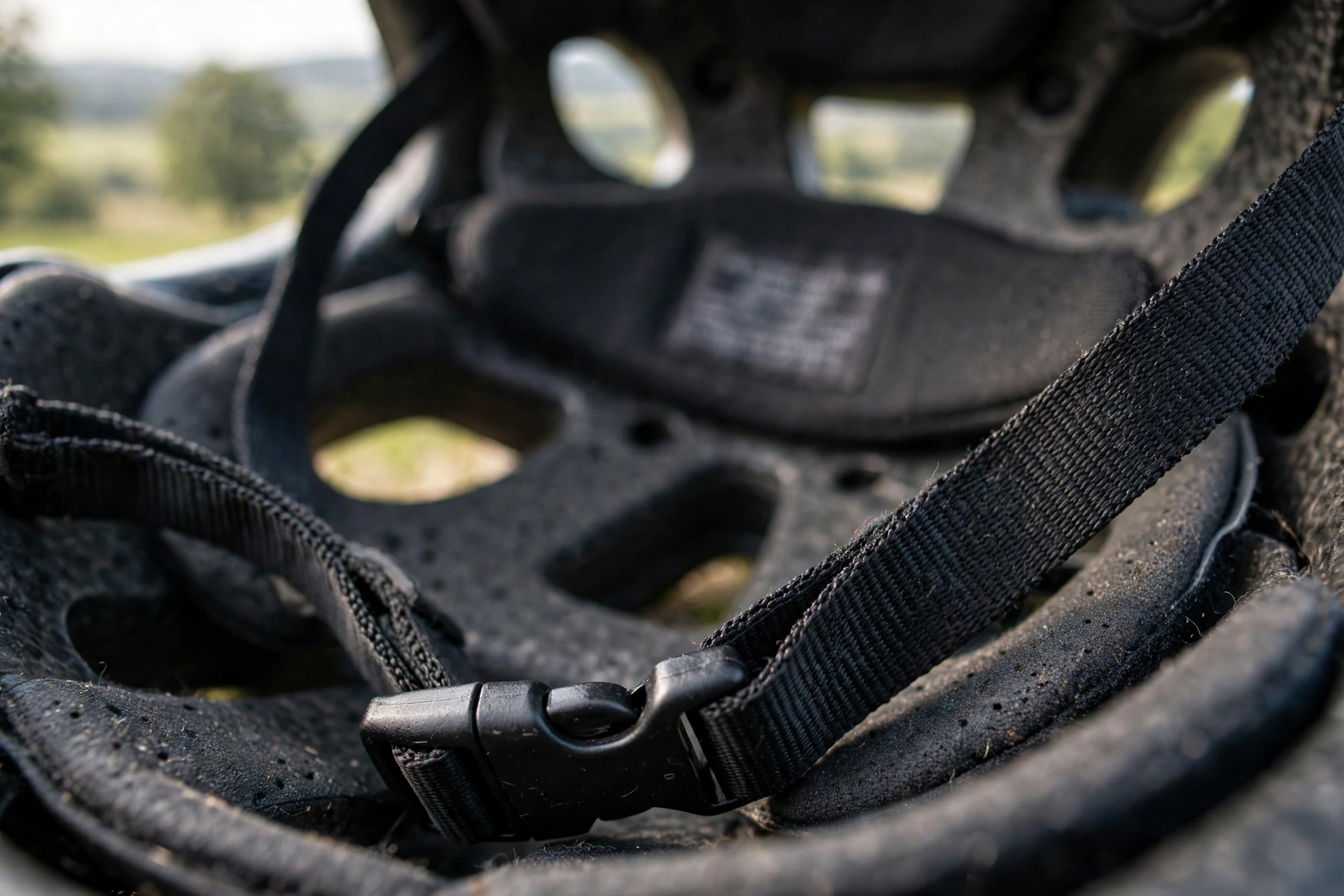
- Retention system strength: the straps and buckle are loaded to confirm the helmet stays on during a crash sequence
- Positional stability: the helmet is checked to make sure it does not roll off the head too easily
- Conditioning: samples are tested after exposure to heat, cold, and water, so performance holds up in real weather
In general terms, the tests are pass/fail against fixed limits. The standard does not rank helmets against each other, so two compliant helmets may perform differently in the lab while both earn the same legal status.
Who Makes Sure Manufacturers Actually Comply?
Compliance is not just a promise on a box. Manufacturers and importers must test their helmets — often through accredited laboratories — and issue a certificate of compliance for the products they sell. The CPSC can test helmets itself, stop non-compliant imports at ports, and order recalls of helmets found not to meet the standard.
Recalls do happen from time to time, which is a sign the system has teeth. It is also one more reason to register a new helmet with the manufacturer or keep the model name and production date noted: if a recall is ever announced, you can quickly check whether your helmet is affected and what remedy is offered.
Where Is the CPSC Label and What Should It Say?
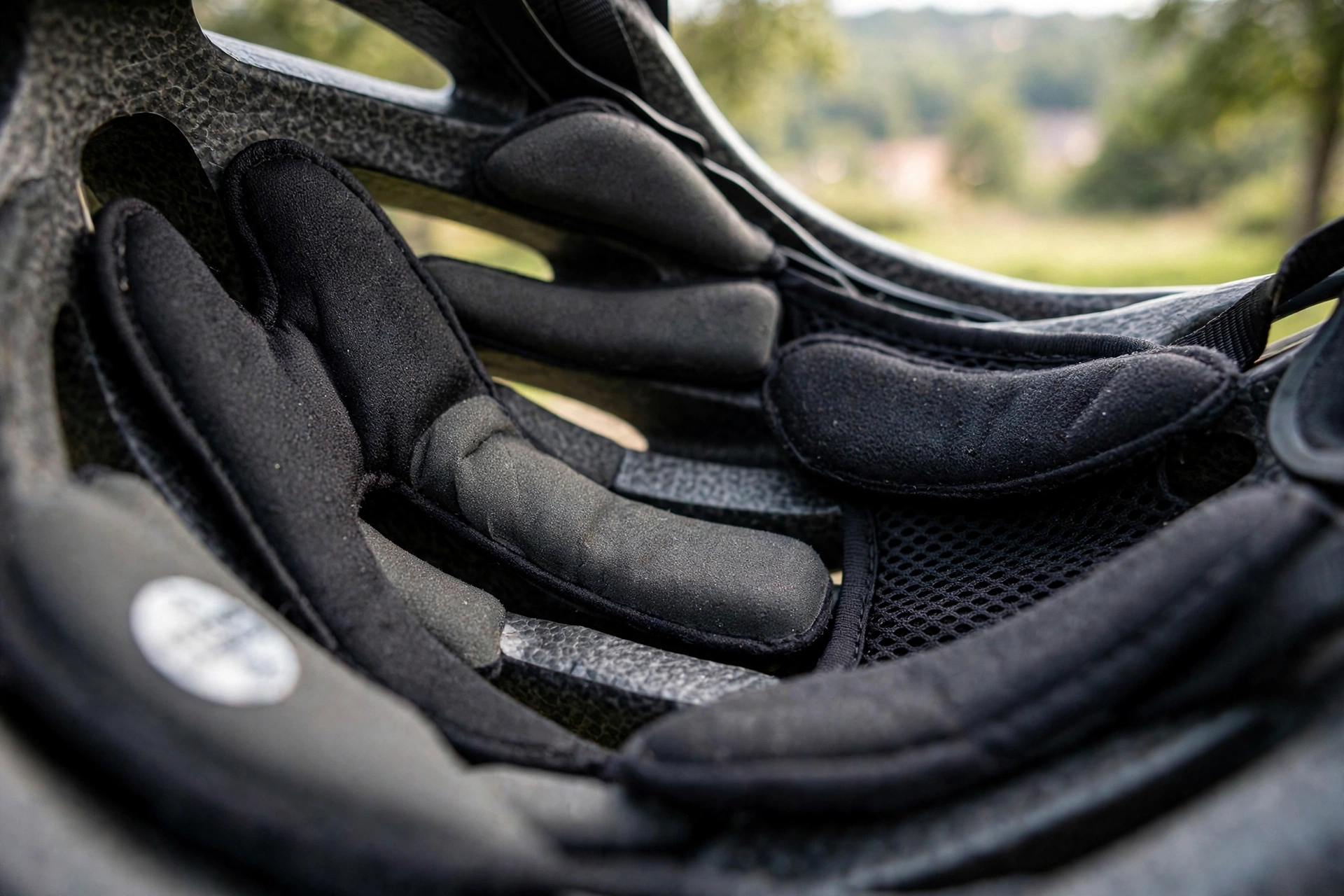
Every compliant helmet has a label inside — usually on the liner or shell interior — stating that the helmet meets the CPSC standard, along with information such as the model, size, and date of manufacture. The law also requires warnings and instructions, including guidance that the helmet should be replaced after a crash.
When buying, physically look for that label. Online listings sometimes use loose language like “safety certified” without naming the standard; the label inside the actual helmet is the proof. A helmet imported from another market may carry only a foreign standard’s mark (such as Europe’s EN 1078) — that does not make it CPSC compliant, and it should not be sold as a US bike helmet.
The manufacturing date matters too, because helmets age. Even an unworn helmet that has sat in a hot warehouse for many years is not the same as a fresh one; check the date and buy reasonably recent stock.
What Does the CPSC Standard Not Cover?
It does not measure rotational forces. Like most standards of its generation, the CPSC rule is built around straight-on (linear) impacts. Interest in rotational protection has grown since, which is why add-on technologies exist — our article on what MIPS is and how it reduces rotational motion explains the idea. A helmet can fully meet CPSC and include such a system, or not; the standard itself is neutral about it.
The standard also does not rate comfort, ventilation, weight, or durability beyond the safety tests, and it does not certify helmets for motorized use. An e-bike that qualifies as a bicycle can be ridden with a CPSC helmet, but a CPSC bike helmet is not a motorcycle helmet and is not tested for motorcycle-speed impacts.
Finally, certification assumes the helmet is worn correctly. The best-tested helmet fails its job if it is the wrong size, worn tilted back, or left unbuckled — the standard tests the product, not the rider’s habits.
How Is the CPSC Standard Different From the European EN 1078?
Both standards aim at the same goal — a bicycle helmet that manages impact energy, stays on the head, and covers the key areas — and both use drop tests, retention tests, and coverage requirements. In general terms, the CPSC rule is regarded as the more demanding of the two in its impact energy and coverage details, while EN 1078 helmets are often a little lighter as a result.
The practical point is jurisdictional: each standard is the legal one in its own market. A US rider should buy a helmet labeled to CPSC; a European rider, one labeled to EN 1078. Many global models carry both labels because they are sold in both markets, in which case either rider is covered.
Frequently Asked Questions
Q: Is every bike helmet sold in the US really CPSC certified?
A: Legally, yes — the federal standard is mandatory for helmets sold as bicycle helmets in the US. Still, check the label inside the helmet, especially with marketplace imports, where enforcement can lag behind listings.
Q: Does the CPSC standard test rotational impacts?
A: No. It is built around linear (straight-on) impacts, coverage, and strap strength. Rotational protection is an extra feature some helmets add on top of the standard.
Q: Can I use a CPSC bike helmet on an e-bike or motorcycle?
A: On an e-bike that is legally a bicycle, a CPSC helmet is the appropriate bicycle helmet. On a motorcycle, no — motorcycle helmets are tested to different, more demanding standards and a bike helmet is not a substitute.

Olivia
Writer at Helmet Today, covering helmet reviews, fit and riding safety.