Buying a helmet as a gift works best when you secretly find the rider’s head size, match the helmet type to how they ride, and buy from a shop with an easy exchange policy. If you cannot learn their size, give a fitting voucher or gift card for a helmet shop instead — fit is personal enough that a guess-sized helmet often ends up returned or, worse, worn loose.
A helmet is one of the most thoughtful gifts you can give a rider, but it is also one of the easiest to get subtly wrong. Two helmets in the same labeled size can fit the same head completely differently. This guide shows you how to gather the information you need without spoiling the surprise, and how to structure the gift so the rider ends up protected either way.
Why is a helmet a tricky gift to get right?
Helmets are fitted equipment, not sized accessories. Head circumference decides the starting size, but head shape decides whether that size is comfortable: some heads are rounder, others longer and narrower, and brands build their shells around different shape assumptions. A helmet that is perfect on paper can create a forehead pressure point on the actual person.
Comfort is also the deciding factor in whether a helmet gets worn. A gift helmet that pinches or wobbles will quietly migrate to a shelf, which protects no one. That is why the best helmet gifts are planned around easy fitting and exchanging, rather than around the hope of a perfect first guess.
The good news: riders usually leave clues everywhere. Their current helmet, their hat sizes, and their past shopping history can tell you almost everything you need.
How can you find their helmet size without ruining the surprise?
The single best source is the helmet they already own. Look inside it: most helmets carry a label with the size and usually the centimeter range it covers. Photograph that label. It gives you the brand, the model line, and the size they already know fits them — the strongest possible starting point for an upgrade in the same family.
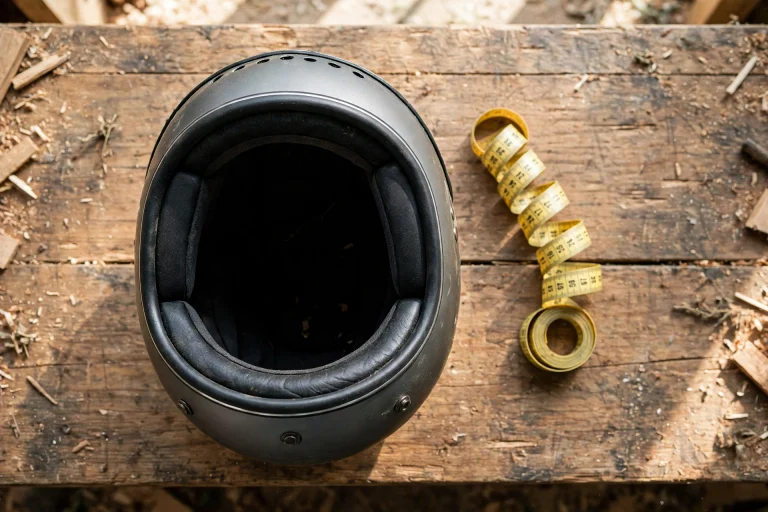
If they do not own a helmet yet, measure indirectly. Borrow a cap or beanie they wear and measure its inner band, or measure the circumference of a fitted hat they like. You can also enlist help: a riding buddy or family member can measure their head with a soft tape “for a group order” or a similar cover story, roughly an inch above the eyebrows and ears, which is where helmet sizing is taken.
Write down the number in centimeters rather than trusting a letter size. Sizes are not standardized across brands, in general terms, and the centimeter measurement is what lets a shop convert your information into the right size in any brand you choose.

Which type of helmet should you buy for their riding?
Match the helmet to the riding they actually do. A commuter needs vents that work at city speeds, room for lights, and easy on-off straps. A sport rider may care about weight and aerodynamics. A motorcyclist needs a helmet certified for motorcycle use — never substitute a bicycle helmet because the colors match better.
Certification is the non-negotiable part of the gift. Every helmet you consider should carry the proper label for its activity and market: CPSC or EN 1078 for cycling helmets, ECE or DOT for motorcycle helmets, in general terms. A beautiful helmet without a certification label is decoration, not protection.
If you are upgrading their current helmet, the safest move is the current version of the model they already wear, in the same size — riders’ heads and preferences are already proven in it. Save adventurous brand switches for gifts you can shop for together. If you do want the upgrade to add a feature their old helmet lacks, rotational-impact protection is the popular one — our explainer on what MIPS is and how it works will help you judge whether it is worth paying for in the model you choose.
What if you cannot find their size at all?
Then change the gift, not the guesswork. A gift card or voucher for a reputable helmet retailer — paired with a card saying “this is for your new helmet, fitting included” — is a genuinely good present, not a cop-out. The rider gets a professional fitting, tries several shapes, and walks out with a helmet that will actually be worn.
You can make it feel personal despite the format: wrap the voucher with a small riding accessory, write why you chose a helmet as the gift, or plan the shop trip together as part of the occasion. Some riders enjoy the fitting itself — it is an hour of trying on gear with expert help.
What you should avoid is the random online guess. An unreturnable, wrong-shaped helmet bought in a sale is the most common failed version of this gift, and it usually ends with the rider still using their old helmet while the new one sits in its box.
How do you make sure they can exchange it?
Buy the gift as if an exchange is likely, because it often is. Choose a retailer with a clear returns window long enough to cover the occasion plus fitting time, and confirm that helmets can be exchanged if tried on indoors but not ridden in — policies differ, so ask before you pay.
Always include the gift receipt in the box, and keep your own copy of the proof of purchase. Leave tags and packaging intact, and resist removing protective film or stickers “to make it look nicer” — some shops treat that as used.
Finally, frame the exchange as part of the plan when you give it: “If the fit isn’t perfect, swapping it is step two, not a failure.” Riders who know the giver expects a possible swap actually make the swap — and end up with the helmet that fits — instead of politely wearing the wrong one.
Frequently Asked Questions
Q: Is it okay to give a helmet without knowing the exact size?
A: Only if the gift is structured for it — a returnable purchase from a shop with a fitting service, or a voucher for one. A non-returnable guess is likely to end up unworn, because helmet fit depends on head shape as well as size.
Q: What is the safest helmet gift for a brand-new rider?
A: A fitting voucher or a trip to a good shop together. New riders have no proven size or shape preference yet, and a professional fitting also teaches them how a correct fit should feel — knowledge they will use for every helmet after.
Q: Can I give a second-hand helmet as a gift?
A: No. A used helmet’s impact history is unknowable, and a helmet that has already absorbed a crash may look perfect while offering reduced protection. Helmets are one of the few gifts that should always be bought new.

Olivia
Writer at Helmet Today, covering helmet reviews, fit and riding safety.