The best way to buy a helmet is in a store, where you can wear each candidate for ten to fifteen minutes and test the fit — but if you buy online, you can get the same result by measuring your head carefully, ordering two sizes from a retailer with free returns, and doing the same long wear test at home before removing any tags.
Helmets are the worst possible product to buy by guesswork: brands size differently, internal shapes vary, and a helmet that is one size off protects less and hurts more. The good news is that both channels can work well if you know what each is for. This guide compares in-store and online buying honestly, and gives you a system that makes either one reliable.
What Do You Gain by Buying a Helmet In Store?
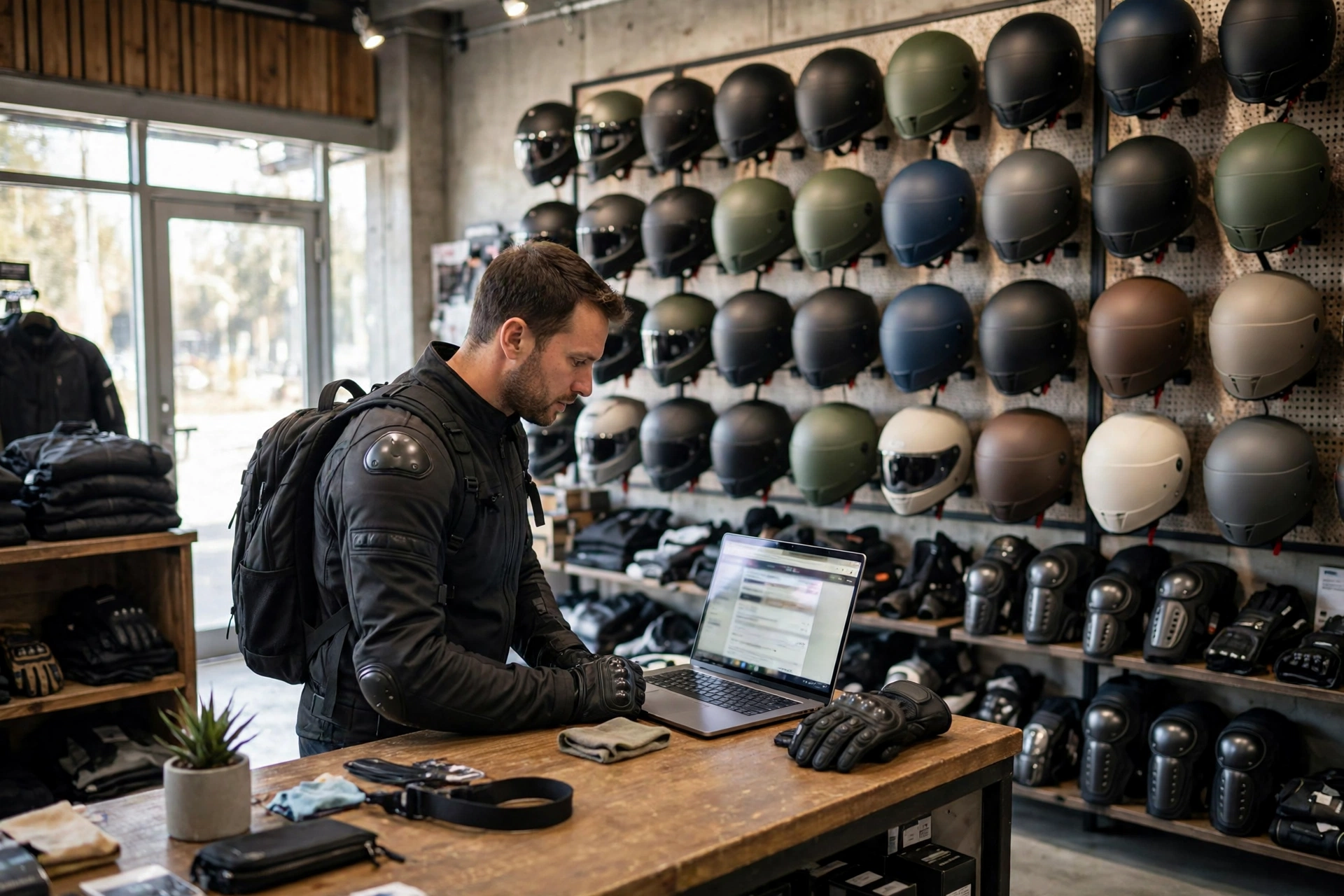
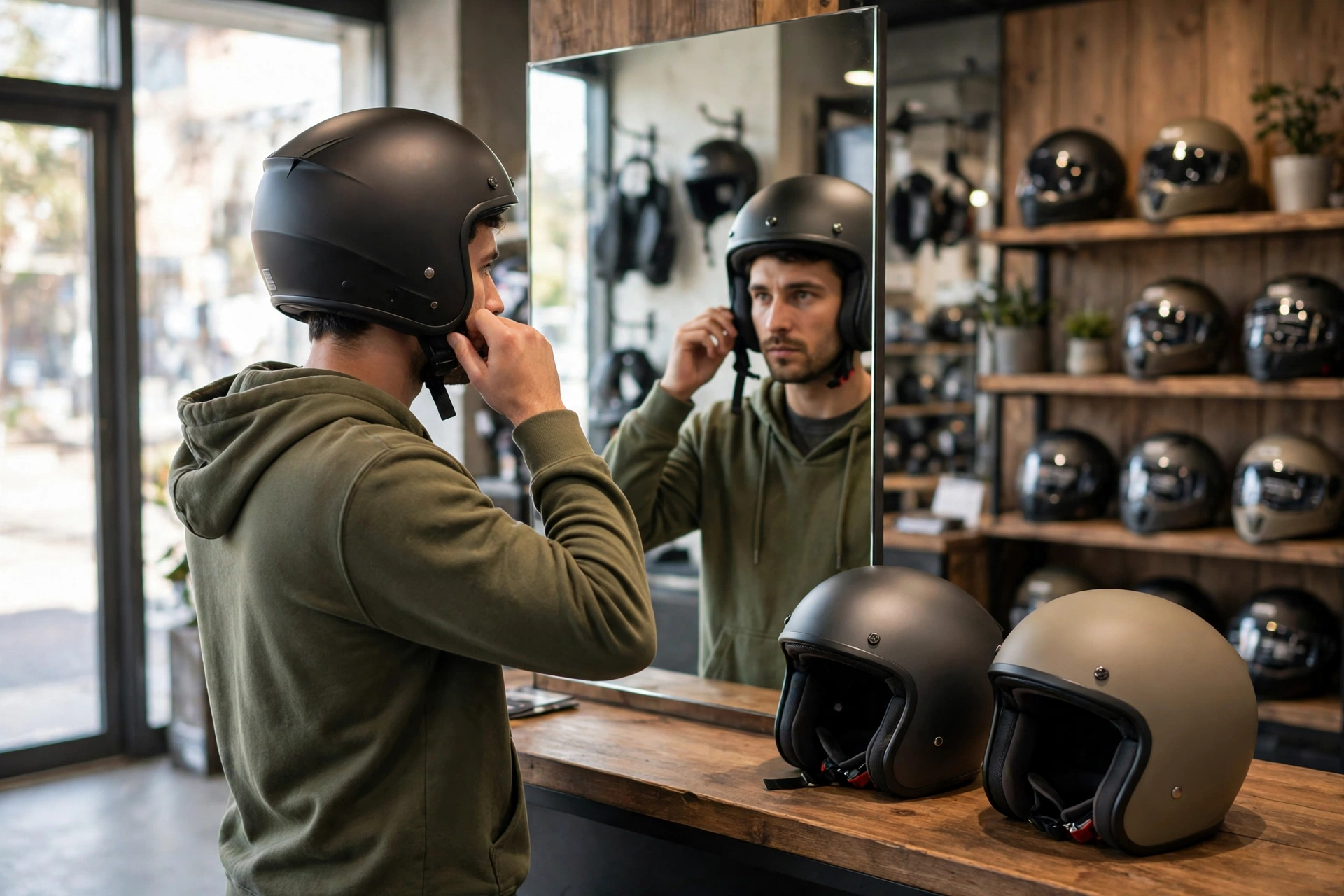
Fit testing, above all. In a store you can put a helmet on and keep it on — walk around, look up and down, shake your head, wear your glasses — and pressure points announce themselves within ten minutes in a way no five-second try-on reveals. That long wear test is the single most valuable step in helmet buying, and a store makes it effortless.
You also gain shape comparison. Two helmets in the same size can fit completely differently because one is rounder and the other more oval; in store you can feel that difference in seconds and abandon a wrong-shape model before money changes hands. Staff help is a real, if variable, bonus: a good fitter watches how the helmet sits, checks the straps, and spots the tilt or gap you cannot see in a mirror.
Finally, you gain certainty about condition and completeness — the exact helmet in your hands, labels, spare pads, and visor mechanism all checked, leaving with you. For a first helmet especially, that combination is hard to beat.
What Do You Gain by Buying a Helmet Online?
Selection and price. Online catalogs carry more brands, more sizes — including the very small and large ends local shelves rarely stock — and more colors, and prices are easy to compare across retailers in minutes. For riders who already know exactly which model and size fits them, online buying is simply efficient.
Online also suits repeat purchases: replacing a crashed helmet with the identical model and size, or buying a second helmet in a line you already wear. The fit question is already answered, so the channel’s main weakness disappears. The catch is that none of that helps a first-time buyer until the box arrives — which is why online buying works when you deliberately rebuild the store’s advantages: careful measurement, two sizes, a long home wear test, and free returns.
How Do You Measure Your Head Before Ordering Online?
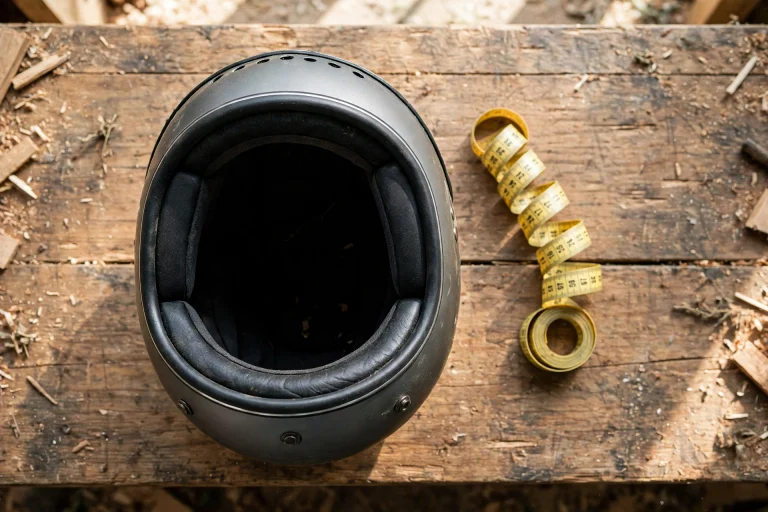
Measure, do not guess, and never order “the same as my old brand.” Wrap a soft tape — or a string marked against a ruler — around the largest part of your head: about an inch above your eyebrows and ears, across the bump at the back of your skull, level and snug. Measure two or three times and take the largest consistent reading, in centimeters.
Then use the chart for the exact model you are buying. Sizes are not standardized: a medium in one brand can overlap a large in another, and even within a brand, different model lines can fit differently. If your measurement lands between sizes on that model’s chart, that is precisely the case for ordering both sizes and returning one.
Think about shape as well as circumference. If helmets have always given you a forehead hotspot, you likely have a longer, more oval head; if they squeeze your temples, likely rounder. Check whether the model you are eyeing is described as round, intermediate, or long oval, and favor the shape that has historically fit you — the technology inside, such as the systems explained in our article on what MIPS is and how it works, matters only once the shell shape is right.
How Should You Run the Home Fit Test on an Online Order?
Treat the delivery like a store visit. Keep tags on, stay indoors, and wear the helmet for at least ten to fifteen minutes in your riding configuration — glasses on if you ride with them, hair styled as you ride. A correct fit feels snug and even all around, like a firm handshake, with no single painful point.
Run the movement checks: shake your head side to side and nod — the helmet should move with your forehead skin, not slide over it. Try rolling it forward and back with both hands; it should resist. Open your mouth wide and tug the helmet upward with the strap fastened; it should not lift off your forehead. Side straps should form a V just below each ear, and the chin strap should allow roughly one to two fingers beneath it.
If either size hurts, rocks, or passes only because you are tired of returning things, send it back. A helmet you tolerate is a helmet you will fiddle with, loosen, or eventually leave behind — and an unworn helmet is the worst safety purchase of all. Discipline at this stage is what makes online buying equal to the store.
What Returns and Condition Checks Matter When Buying Online?
Read the returns policy before ordering, not after. You want free or cheap returns, a window long enough to test properly, and clear rules: most retailers require the helmet to be unworn outdoors with tags and visor films intact — which is exactly the indoor-test discipline described above. A slightly higher price at a retailer with free returns is cheaper than a bargain you cannot send back.
When the box arrives, inspect like a skeptic. Check the certification label inside (DOT and/or ECE for motorcycle helmets; CPSC or EN 1078 for bicycle helmets), confirm the manufacture date is recent rather than old stock, look for scuffs or crushed box corners suggesting a drop, and verify all the listed contents — spare pads, breath guard, carry bag, manual. A helmet’s service life starts at manufacture, and foam, straps, and adhesives age on the shelf too, so a suspiciously old date on a “new” helmet is a legitimate reason to return it.
Finally, be wary of marketplaces and unknown sellers for safety gear. Counterfeit and uncertified helmets exist, and the label is the product. Buy from the brand’s own store or an established retailer, and treat any price that seems wildly too good as a warning sign rather than a bargain.
Frequently Asked Questions
Q: Is it safe to buy a helmet online at all?
A: Yes, if you measure your head, use the exact model’s size chart, order from a reputable retailer with free returns, and run a full indoor wear test before removing tags. The risk is not the channel — it is skipping the fit discipline that a store visit forces on you.
Q: Should I order one size or two?
A: Two, whenever the returns policy makes it free and your measurement falls anywhere near a size boundary — which is most riders. Wear both at home for fifteen minutes each and keep the one that is snug and even with no hotspot. Guessing one size is how riders end up tolerating a bad fit for years.
Q: Can I return a helmet after riding in it?
A: Usually not. Most retailers only accept returns of helmets that have been tried on indoors with tags and protective films intact; a ridden helmet is generally final sale for hygiene and safety reasons. That is why the full test has to happen indoors, before the first ride.

Olivia
Writer at Helmet Today, covering helmet reviews, fit and riding safety.