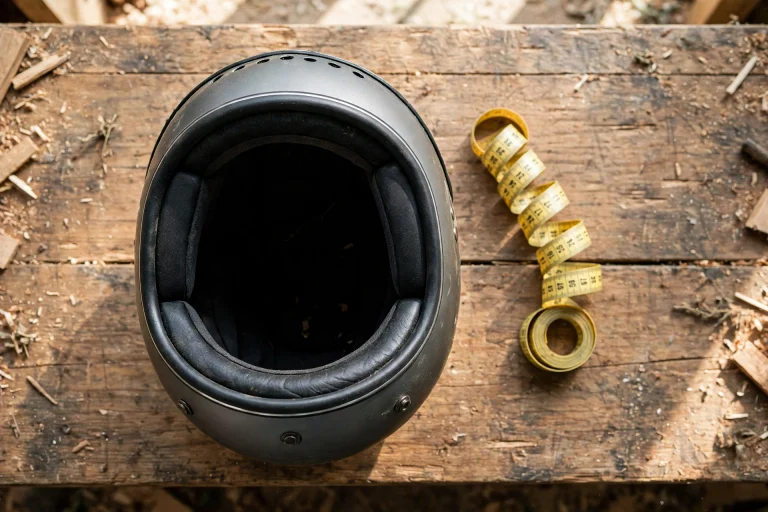
To choose a helmet for a small adult head, measure your head in centimeters, shop models that offer a genuinely small shell in XS or XXS — not just thick pads in a shared big shell — and judge fit by even snugness with no rocking. The shell-size question matters more for small-headed riders than for anyone else, and it is the one most shops forget to mention.
Small-headed adults get a raw deal from the helmet market: fewer models stocked locally, size runs that stop at small, and medium shells padded down and sold as smalls. The result is a generation of riders in helmets that look bobble-headed, catch the wind, and move in a crash. This guide explains how to measure, why shell sizes decide everything, and how to shop successfully anyway.
How Do You Measure a Small Head Accurately?
Wrap a soft tape measure — or string marked against a ruler — around the largest part of your head: roughly an inch above your eyebrows and ears, across the bump at the back of your skull. Keep it level and snug but not compressing, measure two or three times, and record the largest consistent number in centimeters.
At the small end of the range, precision matters more than usual. A centimeter of measurement error that a medium rider never notices can put a small rider in entirely the wrong size band, because the small sizes change quickly. Measure with your hair as you ride with it, and if you are between a shop’s stated bands, trust the tape over the label: the centimeter figure is the fact, the letter size is marketing shorthand.
Then map your number to the specific model’s chart — and read how that model builds its sizes. If your measurement sits at the very bottom of a brand’s range, you are exactly the rider the next sections are about.
Why Do Shell Sizes Matter More Than Pad Thickness?
Helmet ranges are built on shells — often two or three shell sizes covering five or six letter sizes. The sizes within one shell are created by varying the thickness of the comfort pads and sometimes the foam. A brand whose smallest shell spans only XS and S gives small riders a compact, proportional helmet. A brand that stretches one shell from XS to L gives small riders a medium helmet with extra padding.
The differences are not cosmetic. An oversized shell on a small head is heavier than it needs to be, catches more wind and noise, and — most importantly — can rotate or shift more in an impact, because protection works best when the shell sits close and the fit is precise. Thick pads also compress over a season, so the padded-down helmet that felt snug in the shop is the one most likely to be loose by autumn.
So ask the question directly, in store or in the product details: how many shell sizes does this model use, and which shell is the XS built on? In general terms, premium ranges use more shells; some manufacturers publish the shell breakdown on the label inside the helmet or in the size chart. A maker who answers the question clearly is a maker who thought about small riders.

How Should a Helmet Fit on a Small Head?
The universal rules apply, with small-head traps added. The helmet should sit level, low on the forehead — about an inch above the eyebrows — and feel snug and even all around, like a firm handshake, with no single pressure point. Shake your head and nod: the helmet should move with your skin, not slide over it. Roll it forward and back with both hands; it should resist.
Trap one: the cute factor. A proportionally correct helmet on a small head looks normal; if you look like a bobblehead, suspect a shared big shell, not your head. Trap two: pads doing the shell’s job — if the helmet only fits with the thickest pads dialed and the retention at its tightest, it will loosen as pads settle. Trap three: chin straps sized for bigger heads, leaving excessive tail or a buckle sitting awkwardly; check the strap hardware adjusts down properly, and that side straps still form a V just below your ears with about one to two fingers of room under the chin strap.
Features inside the helmet should not be forgotten in the size hunt — rotational protection systems of the kind described in our article on what MIPS is and how it works are available in small sizes from several makers. And keep the fifteen-minute rule: wear any candidate for a full quarter hour. A hotspot on a small head often comes from a shell shape mismatch — round versus oval — which no amount of sizing up fixes; change the model family, not the size.
Where Can Small-Headed Adults Actually Find Helmets That Fit?
Shop where the range is deep. Brand flagship stores and large online retailers stock the XXS and XS sizes that small local shelves skip, and ordering two sizes with free returns — then wear-testing both at home, tags on — is the practical method for most small riders. Order early in the season; the smallest sizes sell through first and restock last.
Look beyond the obvious departments. Women’s ranges often extend smaller and use smaller shells — a deliberate design feature, not a compromise, and the certification is identical. Some youth ranges in their largest sizes overlap adult smalls and carry the same cycling standards, but verify the label applies to your activity; for motorcycle helmets, stick to adult-certified models in your size. If a local shop cannot help, ask them to order in your size to try — many will, and a good fitter is worth cultivating precisely because your size is not the easy one.
What not to do: size up “for comfort,” add aftermarket pads or a thick cap to fill space, or accept a helmet that rocks because the price was good. Every one of those trades away the precision that is your protection. The right small helmet exists for nearly every head — the riders who find it are the ones who treat shell size as the first specification, not an afterthought.
Frequently Asked Questions
Q: What is the smallest adult helmet size available?
A: Many brands offer XXS in at least some models, in general terms covering head circumferences in the low 50s of centimeters, and some go smaller still — but ranges vary widely by brand and model. Measure your head first, then search by your centimeter figure rather than by letter size.
Q: Can I just add thicker pads to a bigger helmet?
A: Only the pads the manufacturer supplies for that shell and size. Aftermarket padding, caps, or stacked liners change how the helmet sits and can reduce protection, and pads compress with use until the fit is loose anyway. If a helmet needs filling to fit, it is the wrong shell — choose a model built on a smaller shell instead.
Q: Are women’s helmets a good option for small-headed men?
A: Yes. The certification and construction are the same; women’s ranges often simply offer smaller sizes and smaller shells, which is exactly what a small-headed rider needs. Fit is about centimeters and shell shape, not the department on the box.

Olivia
Writer at Helmet Today, covering helmet reviews, fit and riding safety.