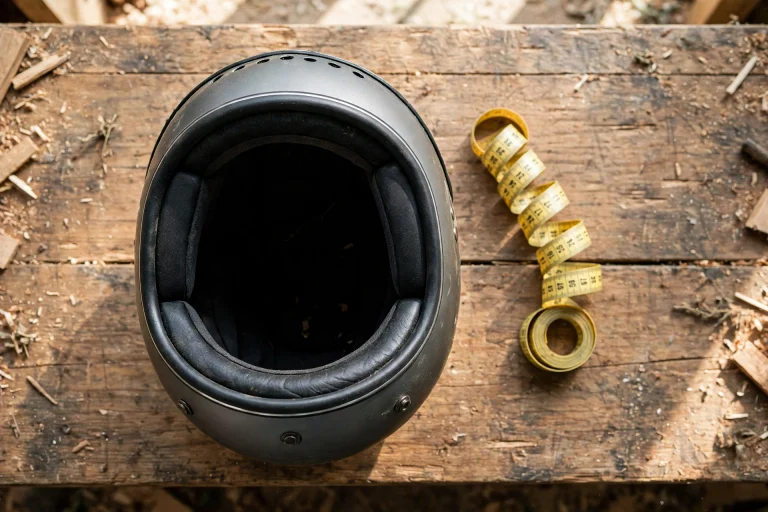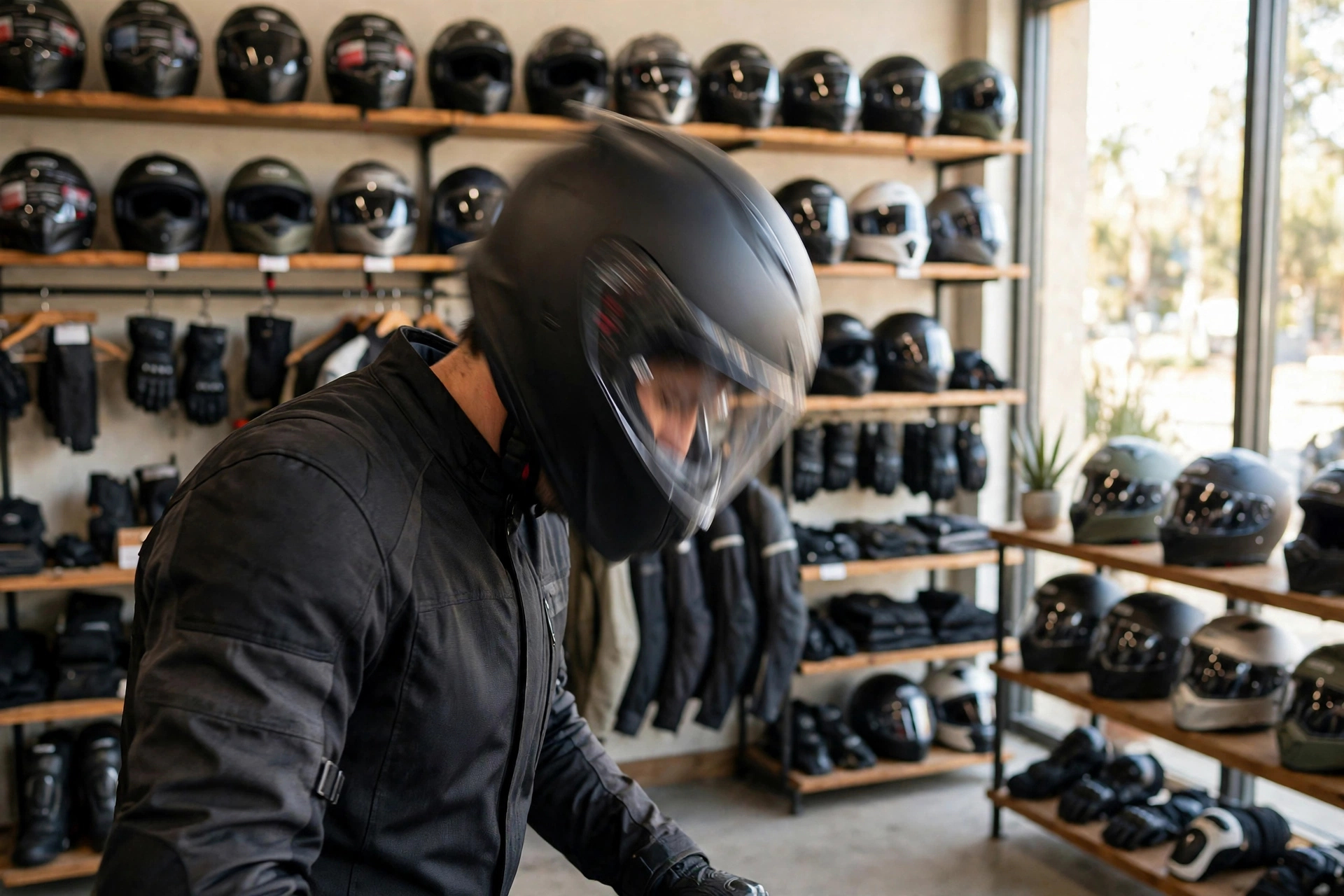
The best way to use a helmet try-on checklist in the store is simple: measure your head first, wear each candidate helmet for at least ten full minutes, and run the shake test, jaw test, and strap check before you even look at the price tag. A helmet that feels merely “okay” for thirty seconds can become a headache machine on a two-hour ride, so the store visit is your one chance to catch problems while returning it is still easy.
Most riders shop with their eyes — color, graphics, brand — and only squeeze the fit check into the last minute. This checklist flips that order. Work through the steps below for every helmet you try, and you will walk out with a lid that fits your head shape, clears your glasses, and stays comfortable long after the new-helmet smell fades.
What Should You Do Before You Try Any Helmet On?
Start with a measurement, not a guess. Wrap a soft tape measure around the largest part of your head, roughly an inch above your eyebrows and ears, and note the circumference in centimeters. That number maps to each brand’s size chart, and it stops you from grabbing whatever size you wore in a different brand five years ago — sizes are not standardized between manufacturers.
Bring what you ride with. If you wear glasses, earbuds, or a balaclava, bring them to the store, because a helmet that fits perfectly bare-headed may pinch with glasses arms or sit wrong over a liner. Tie long hair the way you normally ride with it, too; a high ponytail lump under the crown changes how the helmet sits.
Finally, know your head shape. Most people fall somewhere on a spectrum from long oval to round, and knowing yours in advance helps the salesperson point you to shells that will actually work instead of ones you will fight with for ten minutes.
How Should a New Helmet Feel in the First Minute?
A new helmet should feel snug everywhere — like a firm handshake around your whole head, not a squeeze on one spot. Your cheeks should be pushed up slightly by the cheek pads on a full-face helmet, enough that you could almost bite the inside of your cheeks if you tried. That tightness is normal; cheek pads break in noticeably during the first several hours of riding.
What is not normal is a hard pressure point on your forehead, temples, or the crown of your head. The comfort liner and EPS beneath it do not break in the way cheek pads do, so a hotspot at minute one becomes a throbbing ache at minute forty. If you feel a distinct point of pressure, that helmet’s internal shape does not match your skull, no matter what size you try.
Check the eye port as well. Your brow should sit just above the top edge of the opening, and you should have clear peripheral vision without the shell creeping down toward your eyebrows, which is a classic sign the helmet is too big or the wrong shape.
Why Do You Need to Wear It for Ten Minutes?
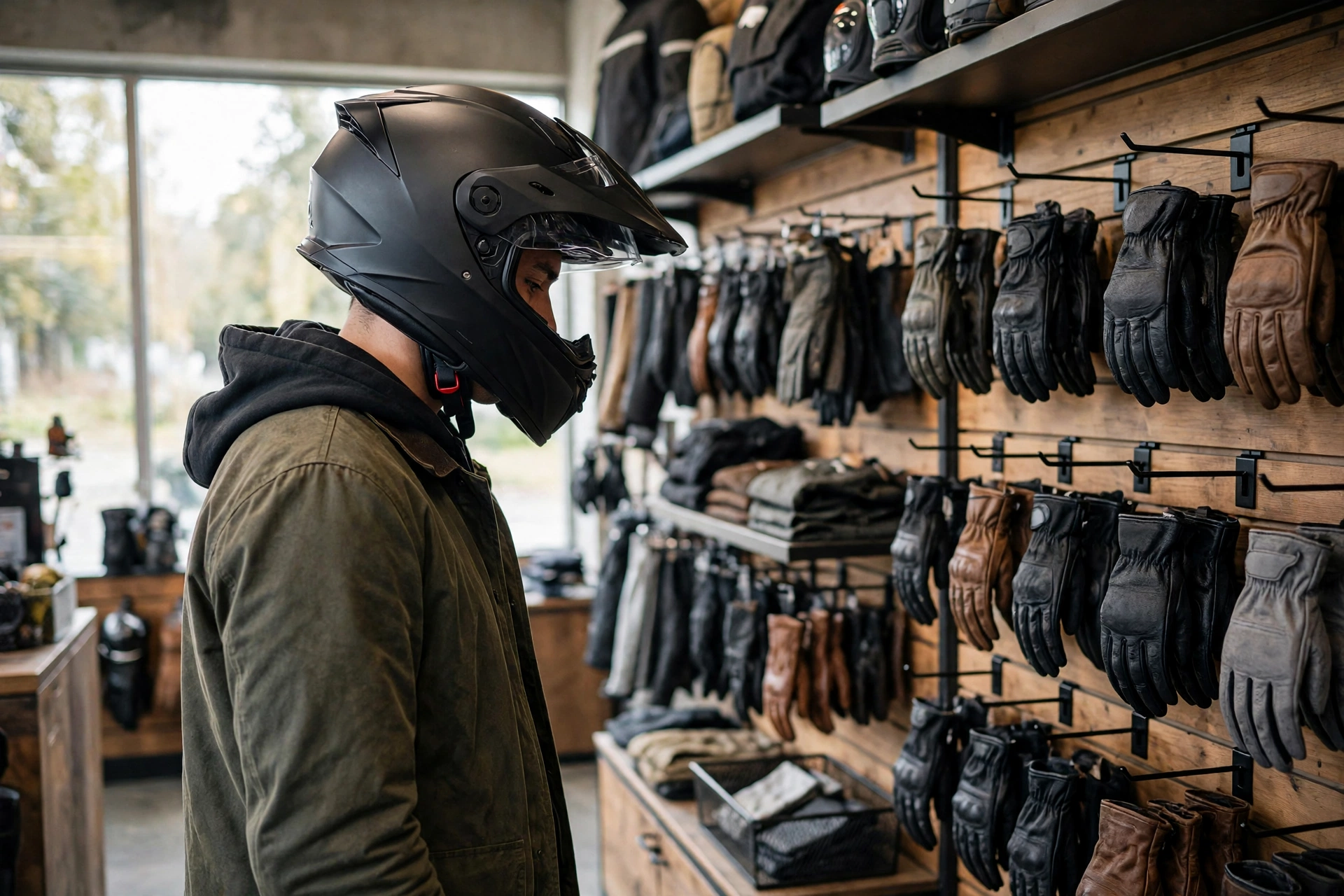
Because the ten-minute wear test is the single most revealing step on this checklist. Pressure problems, heat buildup, and slow-building aches rarely show up in the first sixty seconds — they creep in around minute five to ten, which is exactly why so many riders end up with helmets they hate: they tested for one minute in the store and discovered the truth on the highway.
Keep the helmet on, strap fastened, and walk around the shop. Browse gloves. Read a label. If the helmet is going to produce a forehead hotspot, temple squeeze, or a weird pressure on the top of your head, you will usually feel the first hints within ten minutes. Multiply whatever you feel by a full day of riding before you decide it is “fine.”
This is also the moment to think about weight. A helmet that feels acceptable while standing still may feel heavy once you add wind load and hours of neck work. Turn your head side to side, look up and down as if checking mirrors and traffic, and notice whether the weight feels centered or perched on top of your head.
What Fit Checks Should You Run Before Buying?
Run these four tests with the strap fastened every time:
- The shake test: Shake your head firmly side to side and up and down. The helmet should move with your head, and your scalp skin should move with the helmet. If the shell slides or rotates independently, it is too loose or the wrong shape.
- The roll-off test: With the strap done up, grip the back bottom edge of the helmet and try to roll it forward off your head. A properly fitted helmet resists; one that peels forward easily is too big.
- The jaw and glasses test: Open and close your jaw, talk, and slide your glasses on and off. Glasses arms should slide in without being forced and should not be pressed painfully into your temples.
- The strap check: The chin strap should sit snugly under your chin — roughly one to two fingers of room — and fasten smoothly. Fumbling with an awkward buckle in the store means fumbling with gloves at the roadside.
If a helmet fails any of these, try another size, then another model. Never buy a helmet that passes only because you are tired of trying them on.
What Common Store Mistakes Should You Avoid?
The biggest mistake is buying for the break-in you wish would happen. Cheek pads soften; forehead pressure does not. The second is sizing up for comfort in the store — a helmet that feels luxuriously loose on day one will be sloppily loose within a month, and a loose helmet protects poorly. Modern liners that manage rotational forces, such as the ones explained in our guide to MIPS helmet technology and how it works, only do their job when the helmet stays correctly positioned on your head, which starts with honest sizing.
Also avoid rushing the last helmet of the day because the shop is closing, and avoid judging fit while sitting on a display bike in an air-conditioned showroom — heat and vibration expose fit problems that a showroom hides. And never skip the certification check: look for the DOT sticker and, in general terms, consider ECE-rated helmets where they are legally sold, and make sure the label is genuine and the helmet is new, not a returned or dropped unit being resold.
Frequently Asked Questions
Q: How long should I wear a helmet in the store before deciding?
A: At least ten minutes with the strap fastened. Most hidden pressure points and heat issues appear between minutes five and ten, and that short test prevents the most common buying regret.
Q: Should a new helmet feel tight?
A: Snug, yes — especially in the cheeks, which break in over the first rides. But a hard pressure point on the forehead, temples, or crown will not break in, so treat that as a shape mismatch and try a different model.
Q: What if I am between sizes in a helmet?
A: In general terms, start with the smaller size if it passes the ten-minute test without hotspots, because liners relax with use. If the smaller size creates pressure points, move to a different shell shape rather than forcing the larger size to work with thick pads alone.

Olivia
Writer at Helmet Today, covering helmet reviews, fit and riding safety.