To choose a dual-sport adventure helmet, start with fit and certification, then decide how much off-road you truly ride — because the peak, the eye port, and the ventilation that make an adventure helmet great in dirt are exactly the things that add noise and drag on the highway. Most riders are best served by a road-biased adventure helmet with a drop-down sun visor and a removable peak, rather than a motocross helmet with a license plate dream.
Dual-sport helmets are a compromise by design: part street helmet, part dirt helmet. The right one depends on your actual mix of riding. This guide breaks down the peak, the eye port, ventilation, noise, and weight so you can pick the balance that matches your routes, not your fantasies.
What Makes a Helmet a Dual-Sport or Adventure Helmet?
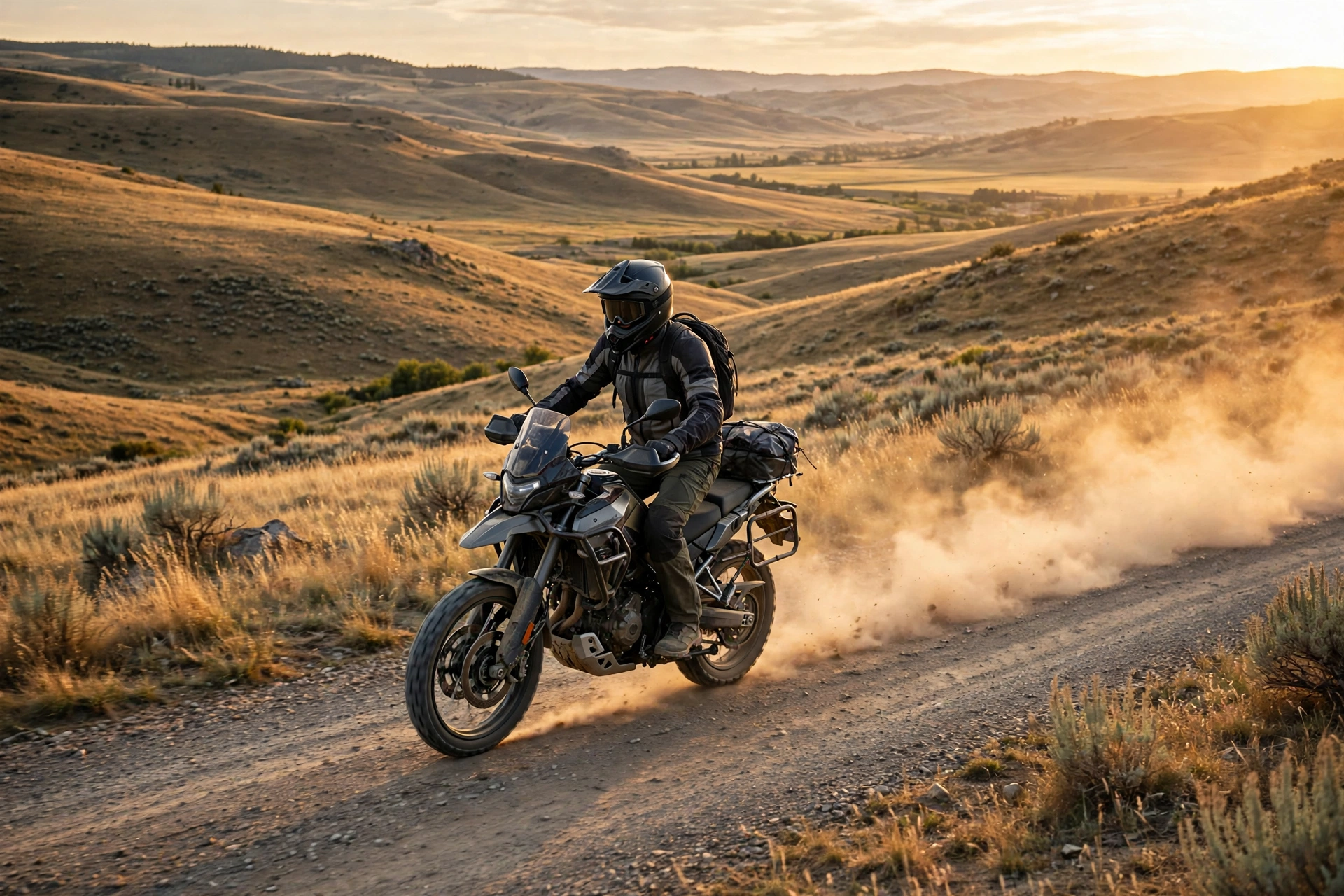
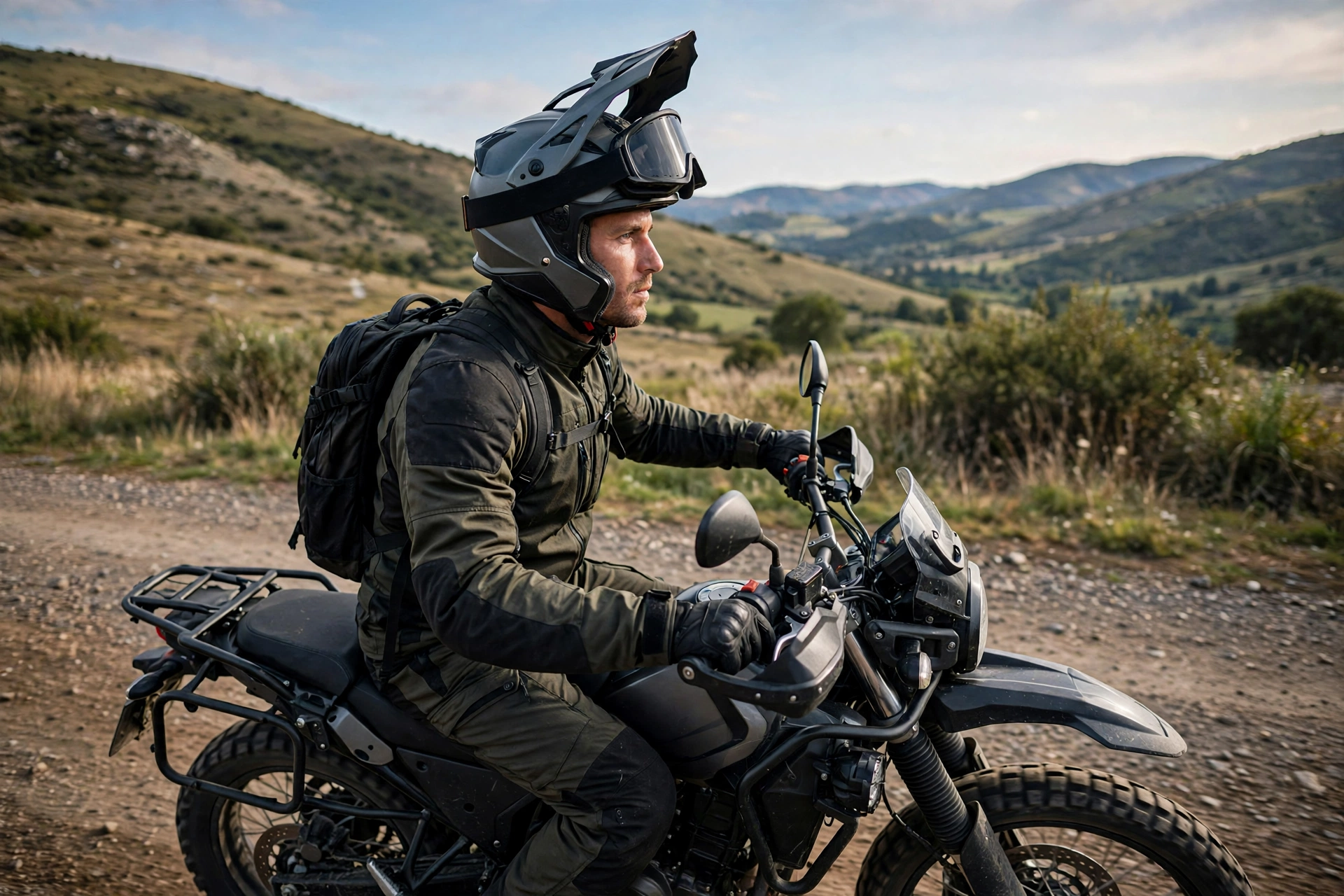
A dual-sport helmet borrows its silhouette from motocross: a pointed peak (sun visor) up top, a large eye port, and a chin bar that sits a little further from the face than on a pure street helmet. Unlike a motocross helmet, though, it has a proper face shield that seals against the shell, so you get real weather protection and wind management at road speeds.
That combination exists for riders who genuinely do both. The peak blocks sun and roost on the trail, the wide eye port can swallow goggles when the going gets dusty, and the shield keeps highway rain and cold air out of your eyes on the paved miles between trails.
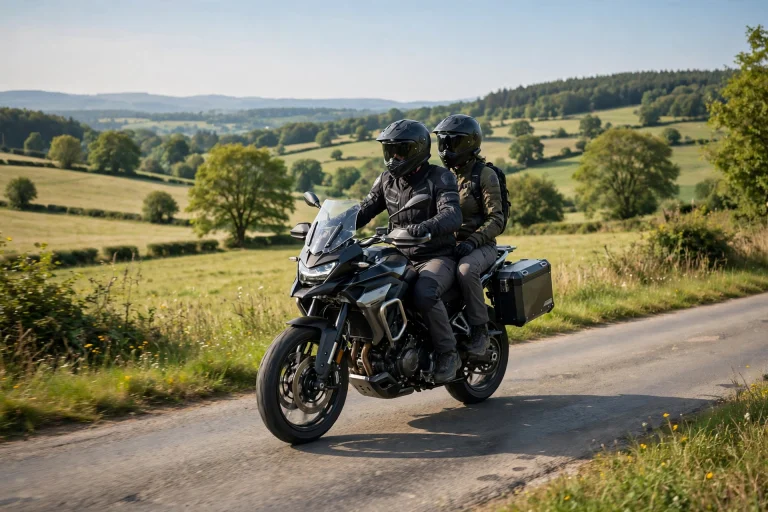
If your riding is 95 percent pavement, in general terms you are often better off with a touring helmet and a drop-down sun shield. If your riding is mostly dirt with short road links, a motocross helmet with goggles may serve you better. The dual-sport earns its keep in the middle ground.
Should Your Adventure Helmet Have a Peak — and Can It Come Off?
The peak is genuinely useful off-road: it shades your eyes from low sun, deflects branches and roost, and lets you dip your head to block glare instead of reaching for a tinted shield. On the highway, though, that same peak catches air. At sustained speeds it can lift, buzz, and pull at your neck, especially in crosswinds or when you check over your shoulder.
Look for two things. First, a peak that is vented or shaped to spill air rather than scoop it. Second — and more important — a peak that detaches easily without tools. Removing the peak transforms the helmet into a much calmer street helmet for long paved days, and the best designs let you swap in seconds.
Also check that the peak does not fight the face shield: on some designs the shield cannot fully open with the peak fitted, or the peak vibrates against it. In the store, open and close the shield a dozen times and listen for rattles.
Face Shield, Goggles, or Both?
The large eye port is the adventure helmet’s party trick: it accepts most off-road goggles with the shield removed or raised. Goggles seal against dust far better than a shield, they never fog against a sweaty face the way a closed shield can, and on slow technical trails that matters. The strap also keeps the helmet feeling planted on rough ground.
For road work, the shield wins. It is quieter, warmer, and protects your eyes at highway speed without the pressure points a goggle strap creates over hours. Many riders run the shield for the road miles and switch to goggles for the dirt sections, carrying the goggles in a tank bag.
Whichever you favor, check for a drop-down internal sun visor. It is one of the most practical adventure features: instant glare relief when you exit a tree-lined trail into bright open country, without stopping to swap shields. Also confirm the shield mechanism works with gloves on, because you will operate it with gloves on, every time.
How Much Do Ventilation and Noise Matter on Long Days?
Off-road riding is slow and physical, so adventure helmets need serious airflow at walking pace — big chin vents and closable crown vents are worth more than sleek styling. But every vent is also a noise inlet on the highway. Dual-sport helmets are, in general terms, louder than dedicated touring helmets, thanks to the peak, the larger eye port, and the generous venting.
Manage expectations and manage the noise: wear earplugs on long road days, choose a helmet with vents that fully close, and check that the neck roll seals reasonably well under your jaw. A tight, clean seal at the bottom of the helmet does more for quiet than almost any other single feature.
Weight matters here too. Adventure helmets carry extra hardware — peak mounts, shield pivots, sun visors — and on a long day standing on the pegs, a heavy helmet works your neck hard. Compare weights in your size, and remember that good venting and low weight together beat a long feature list.
What Safety and Fit Checks Should You Not Skip?
Certification is non-negotiable: the helmet should carry the standard your region requires, such as DOT in the US or ECE 22.06 in Europe, and many riders prefer a helmet tested to a recognized standard with the sticker to prove it. Some adventure helmets add rotational-impact liner systems — the concept behind MIPS and similar low-friction layers comes from the bicycle and off-road world, where angled impacts are common, and that off-road heritage is exactly why the idea suits dirt riding.
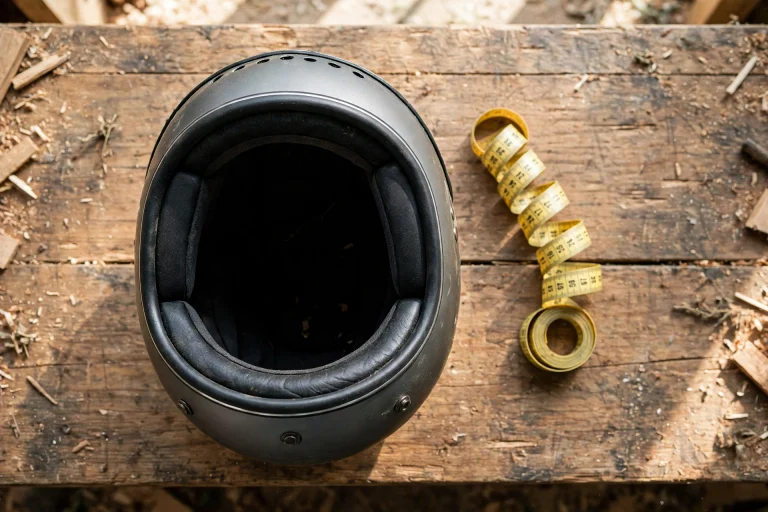
Fit follows the usual rules, with one addition: check clearance for goggles. Put your goggles on with the helmet and confirm the strap sits flat and the frame does not push the helmet up or press on your nose. Then do the normal checks — snug all around, no forehead hotspot, no movement on the shake test, strap snug under the chin.
Finally, think about where the helmet lives: quick-release shield pivots you can service on the road, a washable liner (dirt riding makes liners filthy fast), and available replacement peaks and shields all add real-world value that a spec sheet hides.
Frequently Asked Questions
Q: Can I use a dual-sport helmet as my only helmet?
A: Yes, if your riding genuinely mixes road and trail. It will be somewhat louder and less aerodynamic on the highway than a pure touring helmet, and less airy than a motocross helmet off-road, but one well-chosen adventure helmet covers both jobs well.
Q: Is the peak on an adventure helmet just for looks?
A: No. It shades your eyes, deflects branches and roost, and helps in low sun. It does catch wind at highway speed, which is why a removable, well-vented peak is the feature to look for.
Q: Should I ride on the road with goggles instead of the face shield?
A: You can at moderate speeds, but the face shield is generally quieter, warmer, and better suited to sustained highway riding. Many riders use the shield on pavement and switch to goggles for dusty off-road sections.

Olivia
Writer at Helmet Today, covering helmet reviews, fit and riding safety.