You stop a helmet smelling bad by washing the removable pads and liner regularly, drying the helmet completely after every ride, and never storing it sealed up while it is still damp. Helmet odor comes from sweat soaking into the comfort padding ride after ride, where bacteria feed on it in a warm, dark space. Kill the moisture and clean the padding on a schedule, and the smell never gets established in the first place. If your helmet already stinks, a proper wash of everything removable will fix most cases in one go.
There is one hard rule that runs through everything below: use only mild soap or a dedicated helmet/liner cleaner on anything inside a helmet. Never use solvents, bleach, strong detergents, or antibacterial sprays with harsh chemicals on the pads, and never let any of them touch the EPS foam liner underneath. Those chemicals can degrade the foam that is supposed to absorb an impact, and they do it invisibly. Gentle cleaning and patience are the whole job.
Why Does a Helmet Start to Smell in the First Place?
Every ride, your head sweats into the crown pads and cheek pads. That sweat carries salt, skin oils, and bacteria. The padding holds the moisture for hours after you hang the helmet up, and in that warm, damp, airless environment the bacteria multiply and produce the stale, sour smell riders know well. The strap under your chin and the area around the ears are usually the worst, because they sit against the skin and rarely dry fully.
Two habits make it dramatically worse. The first is sealing a damp helmet inside a bag, a top box, or a cupboard straight after a ride — you have built a perfect incubator. The second is never washing the pads at all, which many riders do for years because they do not realize the padding comes out. In general terms, a helmet worn daily in warm weather can develop a strong odor within a few weeks if it is never aired or washed, while the same helmet dried properly after every ride stays fresh far longer.
It helps to know what smell you are dealing with. A sour, sweaty odor is bacterial and responds to washing. A musty, mildewy smell means the padding stayed damp for a long time and needs a thorough wash and a very long, complete dry.
How Do You Wash the Pads and Liner Properly?
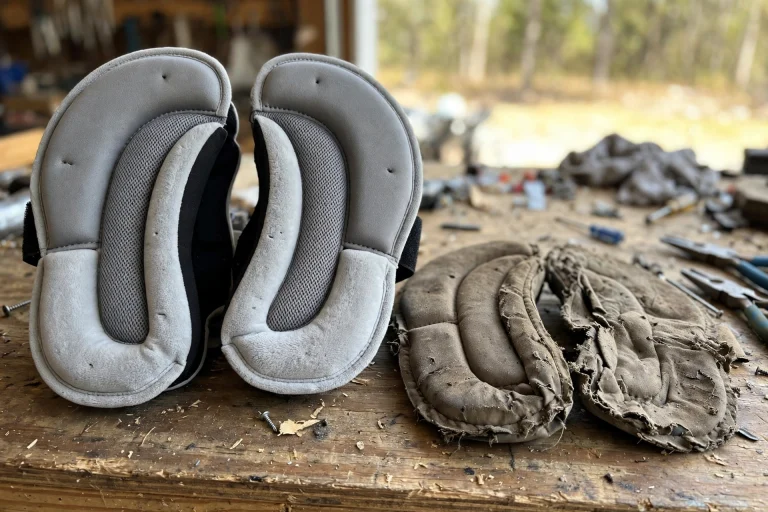
Start by removing everything that comes out. On most modern motorcycle and bicycle helmets, the crown liner and cheek pads unclip, unsnap, or pull free from hook-and-loop fasteners. Work slowly, note how each piece fits, and take a photo before you start if the arrangement looks complicated. If a pad resists, look for another snap rather than forcing it — torn fasteners are a common DIY casualty.
Hand-wash the pads in a basin of lukewarm water with a small amount of mild soap, gentle shampoo, or a helmet-specific liner cleaner. Squeeze the soapy water through the foam repeatedly rather than scrubbing or wringing, which can tear the fabric cover and break down the padding. For a badly smelling set, let them soak for twenty to thirty minutes first. Rinse by squeezing under clean water until no soap runs out — leftover detergent makes pads stiff and can irritate your skin.
For helmets whose liner does not come out, clean the interior in place: wipe the padding with a cloth dampened in the same mild solution, then wipe again with a clean damp cloth to lift the soap out. Never soak or submerge the whole helmet — water can reach glues, electronics, and the EPS liner, and it will take days to dry.
How Should You Dry a Helmet After Washing or Riding?
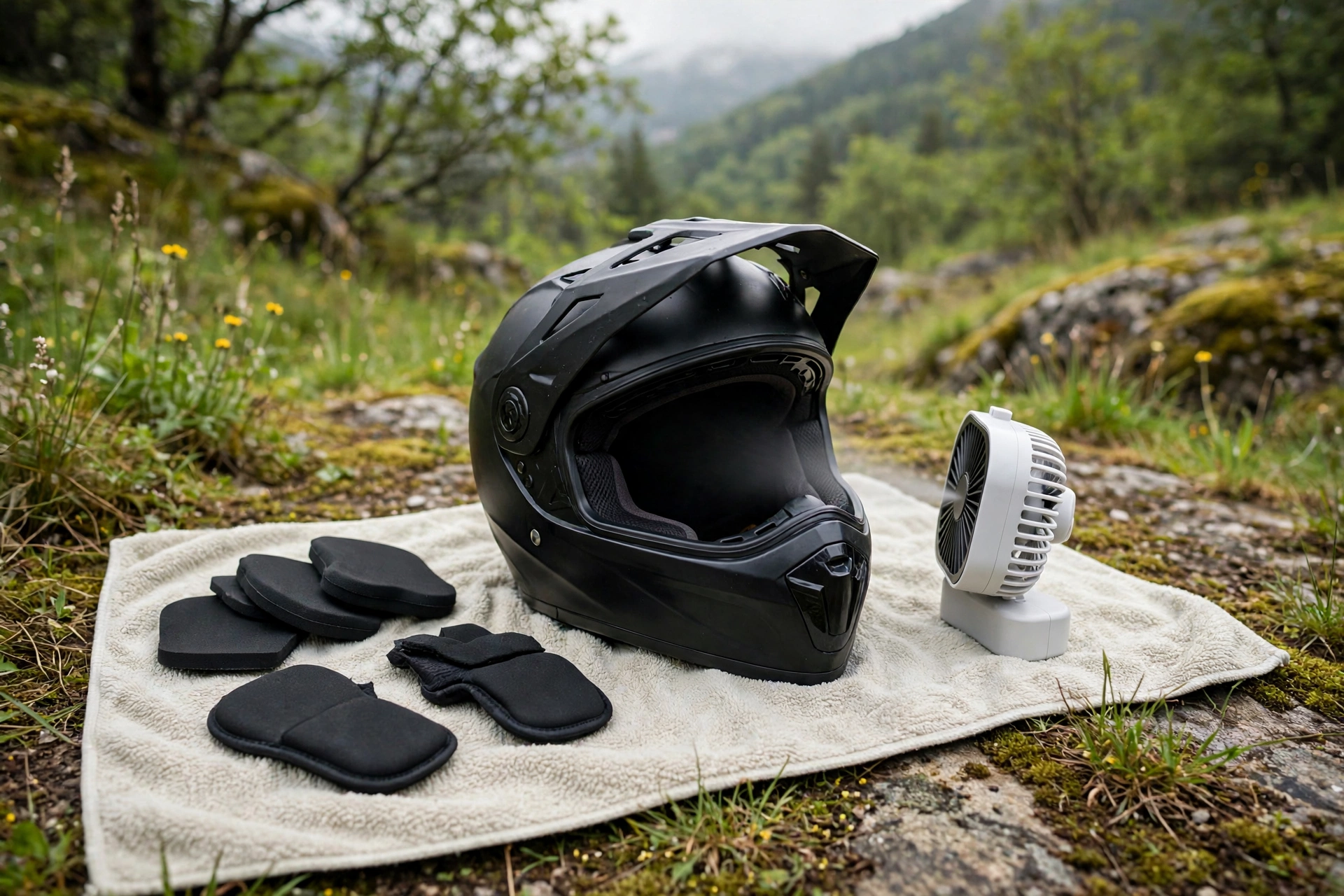
Drying is half the battle, and it is where most riders undo their good work. After washing, press the pads gently between towels to remove most of the water, then let them air-dry completely in a ventilated room. That can take a full day. Do not refit damp pads “because they will dry on the ride” — they will not; they will start smelling again immediately.
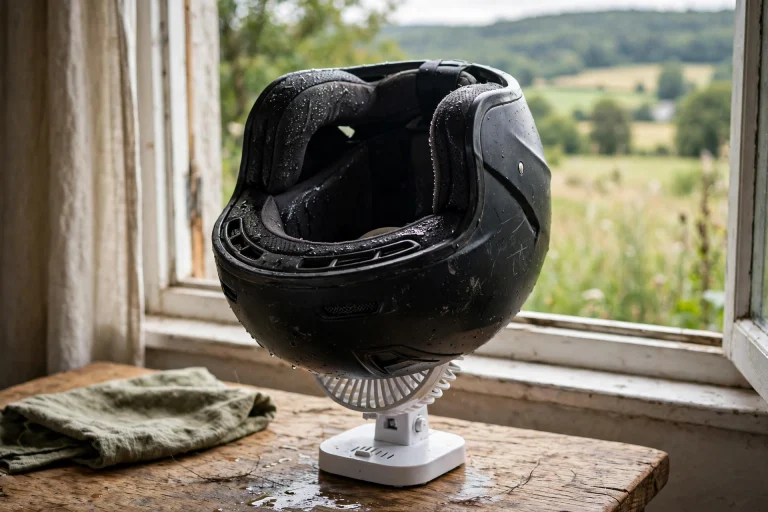
Never use direct heat to speed things up. Hair dryers on hot settings, radiators, and leaving the helmet on a hot car seat can all damage the EPS foam and the adhesives that hold the comfort liner. A fan blowing room-temperature air into the helmet is the fastest safe method, and a small helmet dryer or a stand with airflow does the same job gently overnight.
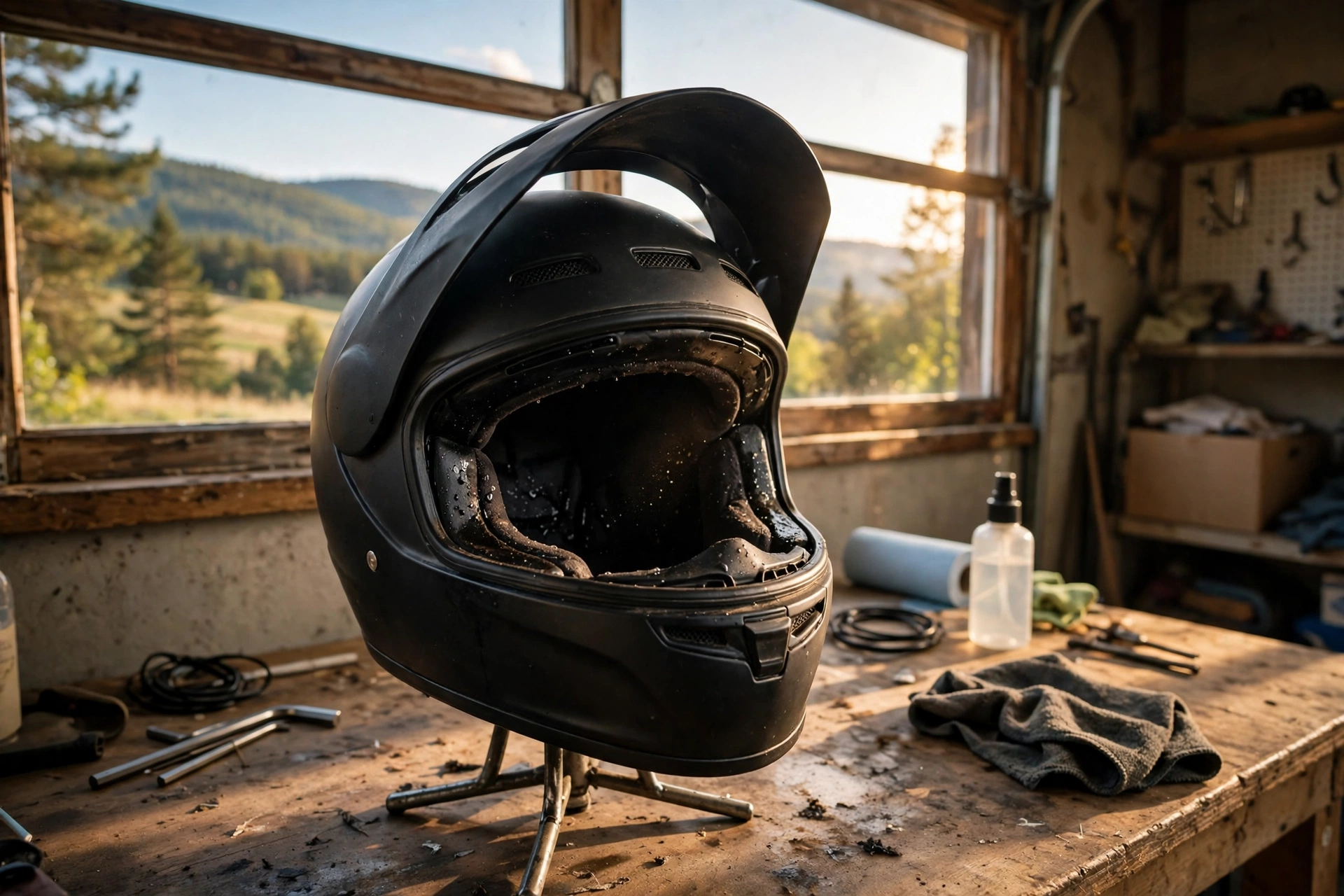
The same routine applies after every sweaty ride, not just after a wash. Stand the helmet somewhere air can circulate through it, with the visor open. Bacteria need sustained damp, and a helmet that dries within a few hours never gives it to them.
What Can You Do Between Washes to Keep It Fresh?
A few simple habits stretch the time between deep cleans. A washable helmet liner cap or skull cap worn under the helmet absorbs most of your sweat before it reaches the pads, and throwing the cap in the normal laundry is far easier than stripping the helmet. Many daily riders keep two caps and rotate them.
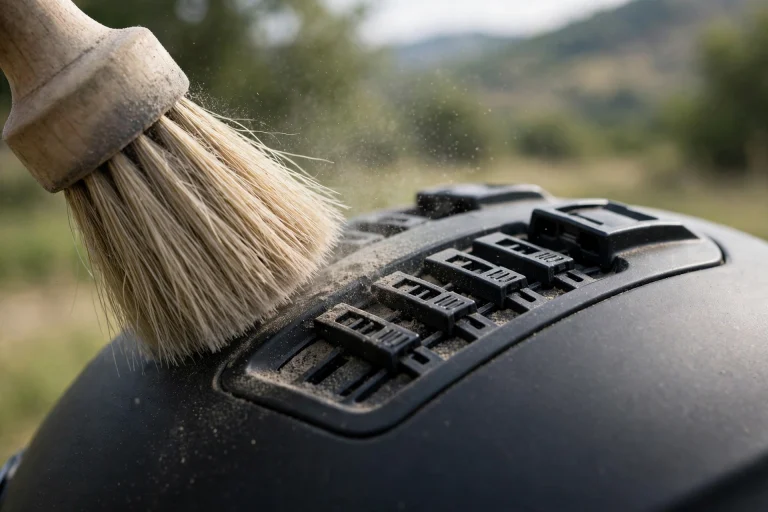
Liner refresher sprays made specifically for helmets can help between washes, and a light dusting of plain baking soda on dry pads, left a few hours then brushed out thoroughly, can absorb odor. Avoid perfumed deodorizers that only mask smell, anything with solvents or bleach, and keep every product on the pads and fabric only — never on the EPS foam.
Storage matters as much as cleaning, and it links directly to general helmet condition, the same reason impact systems such as MIPS rotational protection liners need a helmet that is kept dry and out of heat to do their job over years of use. Store your helmet in a cool, dry place with air circulation, in a breathable bag if it came with one. Never store it in a sealed plastic box, a damp garage corner, or a top case that bakes in the sun.
When Does a Smell Mean the Pads Are Finished?
Sometimes washing stops working, and that is information, not failure. Comfort pads are consumable parts. Over years, the foam compresses, the fabric wears thin, and bacteria colonize deep inside padding that no surface wash can fully reach. If the pads still smell after a proper soak and wash, or if they have gone flat and loose so the helmet no longer fits snugly, it is time for a replacement pad set.
Most major manufacturers sell replacement liners and cheek pads for current models, and a fresh set makes an older helmet feel and smell new again. Match the exact model and size when ordering, since pad thickness differs between sizes. If pads are no longer available and the smell or fit is genuinely bad, the helmet as a whole is nearing the end of its useful life.
Frequently Asked Questions
Q: Can I put my helmet pads in the washing machine?
A: Hand-washing is the safe default, because machine agitation can tear fabric covers and snap fasteners. If the manufacturer allows machine washing, use a laundry bag, a gentle cycle, and mild detergent — and air-dry only. Never submerge or machine-wash the helmet shell itself.
Q: Is it safe to spray antibacterial or deodorizing spray inside my helmet?
A: Only products made specifically for helmet liners, used on the fabric pads as directed. Avoid sprays with solvents, bleach, or harsh chemicals, and keep all chemicals off the EPS foam, since they can degrade impact absorption invisibly. Mild soap and complete drying solve most odor problems without any spray.
Q: How often should I wash my helmet pads?
A: For a daily rider in warm weather, every few weeks is a sensible rhythm, and sooner whenever you notice odor returning. Occasional riders can go longer, but every helmet benefits from being fully dried after every ride and having its pads washed at least a few times a season.

Olivia
Writer at Helmet Today, covering helmet reviews, fit and riding safety.