To store a helmet in a changing room, put it on a shelf or hook above the floor, away from wet kit and steam, so it can dry out and keep its shape. Changing rooms are warm, damp, and crowded, which makes them one of the hardest places to store a helmet well. But with the right spot and a few simple habits, your helmet can survive the changing room in good condition.
Most riders and players leave their helmet in the changing room during a session and sometimes between sessions too. The room is full of wet towels, sweaty kit, showers, and steam, and the floor is often wet.
Why is a changing room tricky for helmet storage?
The main problem is moisture. Showers run hot, the air fills with steam, and wet kit hangs everywhere. A helmet in that air absorbs moisture into its liner, and if it never dries out properly, it can develop a smell and, over time, mould. The liner is the part that suffers most, because it holds sweat and steam like a sponge.
Changing rooms are also busy. People move quickly, bags get thrown onto benches, and boots and kit pile up. A helmet on a bench can be knocked to the floor, sat on, or buried under a heavy bag. A helmet on the floor is even more at risk, because it can be kicked or stepped on in the rush to get changed.
Heat is another factor. Some changing rooms have radiators or underfloor heating, and a helmet left near a heat source can warp. The combination of heat, steam, and knocks makes the changing room a place where a helmet needs a deliberate spot, not just any free space.
Where should you put your helmet?
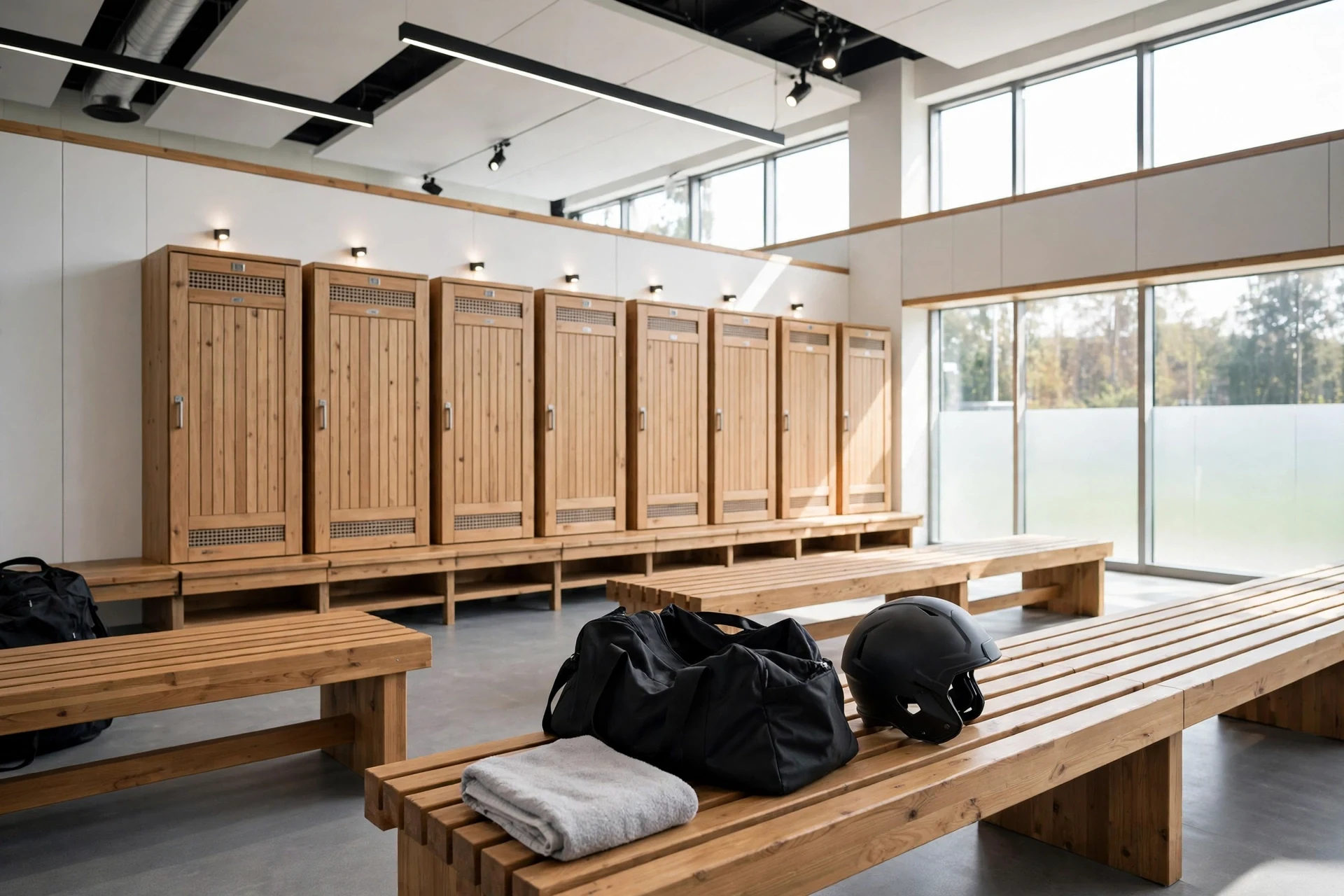
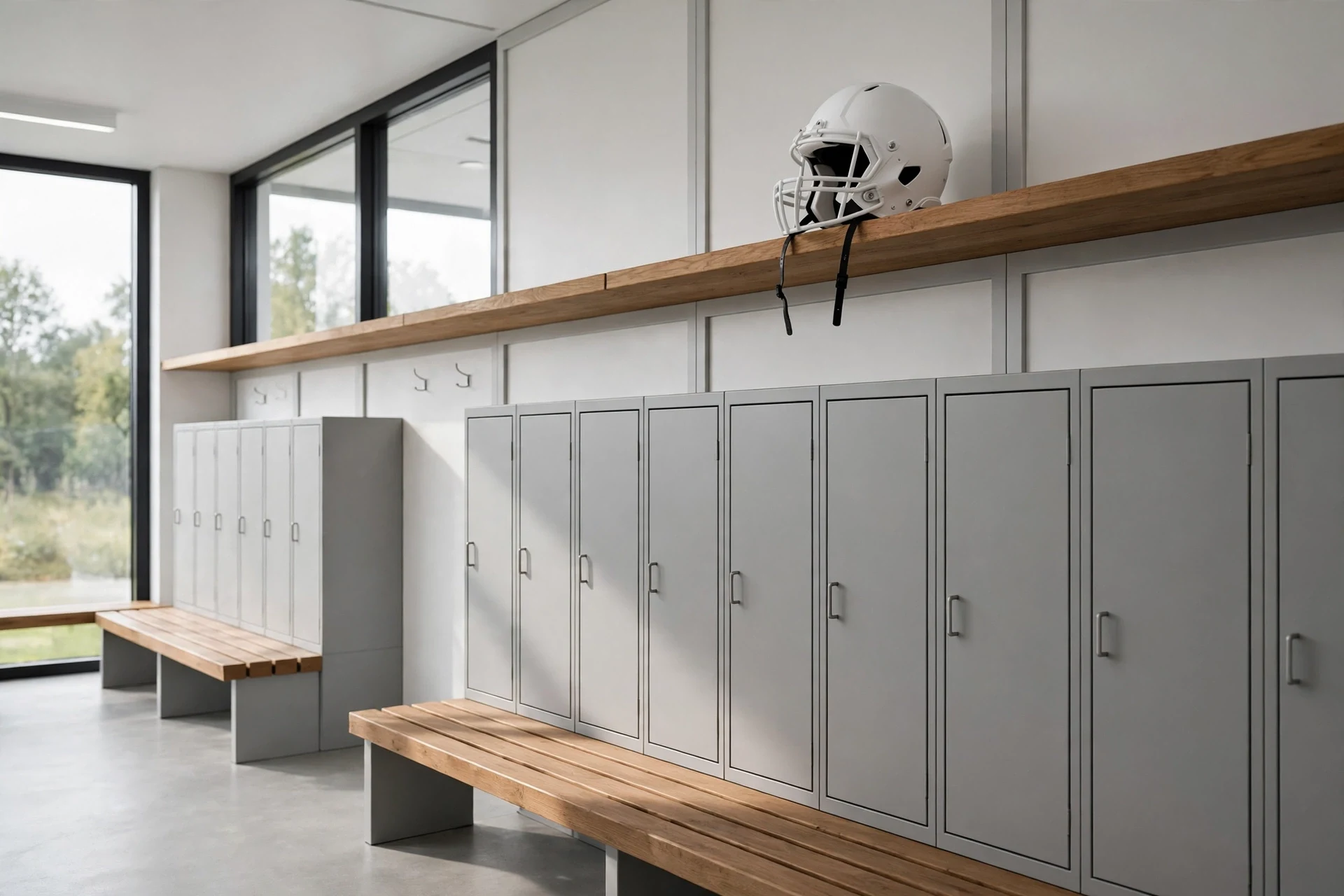
Look for a high shelf or a wall hook, well above the floor and away from the showers. The best spot is near a vent or a window, where air moves, and away from the wettest part of the room. If the changing room has lockers, the top of a locker can work, as long as the helmet sits flat and cannot roll off.
Do not put your helmet on the bench if you can avoid it. Benches are where bags land, and a helmet on a bench is in the way. If there is no shelf or hook, put the helmet on top of your own bag, upright, where you can see it and where nobody else will throw kit on top of it.
If you use a locker, put the helmet on the top shelf of the locker, not at the bottom with your shoes. Shoes bring in mud and moisture, and the bottom of a locker is the dampest place in it. Keep the helmet separate from wet kit inside the locker too.
How do you deal with damp and steam?
After a session, let the helmet air out before you put it away. Leave it on a shelf with the vents open for a while, rather than sealing it in a bag straight away. If you can, wipe the inside with a dry cloth to remove some of the moisture before you store it.
Do not leave a damp helmet in a closed locker for days. A closed locker with a damp helmet inside is a warm, dark, airless space, which is where smells and mould grow. If you must leave the helmet in a locker, leave the locker door open a little if the room allows it, or take the helmet home to dry.
At home, take the liner out if it is removable and let it dry separately. Wash the liner regularly, especially if you use the changing room every week. A clean, dry liner is the best defence against the damp of a changing room.
Should you leave your helmet in a locker?
A locker is useful for security, but it is not ideal for drying. Lockers are enclosed, with little airflow, and they often hold wet kit alongside the helmet. If you leave your helmet in a locker, make sure it is dry first, and do not pack wet towels or kit around it.
Use a helmet bag inside the locker to protect the shell from scuffs, but only once the helmet is dry. A bag can also stop the helmet picking up smells from other kit in the locker. Keep the bag open a little if you can, so some air can move.
If you leave the helmet in a locker for a long time, check it regularly. Open the locker, look for damp or smells, and take the helmet out to air if it feels moist. A helmet forgotten in a locker for weeks can come back smelling bad or with mould in the liner.
How do you keep your helmet safe from knocks?
Changing rooms are full of hard surfaces and moving people, so knocks are common. The best protection is a spot where the helmet sits still and cannot fall. A shelf with a lip, or a hook that holds the helmet firmly, is better than a flat bench where it can be brushed off.
Do not hang the helmet by its straps from a thin hook where it can swing and bang against the wall. If you hang it, use a wide hook that supports the shell. Do not stack anything on top of the helmet, and do not let other people put their kit on top of it.
Check the helmet after a busy session. Look for new scratches or dents, and check that the liner is still in place. Some modern helmets use a slip layer similar to MIPS inside the shell; wipe it gently when you clean the helmet and let it dry before your next session.
What should you do before your next session?
Before you put the helmet on, give it a quick check. Look inside for dust, insects, or anything that has got in while it was stored. Check the straps and buckles, and make sure the liner is dry and firmly in place. A helmet that has sat in a damp changing room can feel cold and clammy, so air it out before you wear it.
If the helmet smells, wash the liner before your next session. A quick wipe of the inside with a damp cloth and mild soap can help in between washes. Let it dry fully before you wear it again.
Make a habit of taking the helmet home now and then, even if you usually leave it at the changing room. A night at home in a dry, ventilated room lets the helmet dry out properly and gives you a chance to clean it and check it over. Your helmet will last longer, and it will be more pleasant to wear.
Can I leave my helmet in a changing room overnight?
Yes, if it is dry and stored on a shelf or in a locker above the floor. Do not leave a damp helmet sealed in a locker, because it can develop smells and mould.
Is it safe to store a helmet near the showers?
No, it is best to keep it away from the showers. Steam and splashes keep the liner damp, and damp padding is where smells and mould start. Choose a drier spot in the room.
Should I use a helmet bag in a changing room?
A helmet bag protects the shell from scuffs, but only use it once the helmet is fully dry. A damp helmet in a closed bag can develop mould and a bad smell.

Olivia
Writer at Helmet Today, covering helmet reviews, fit and riding safety.