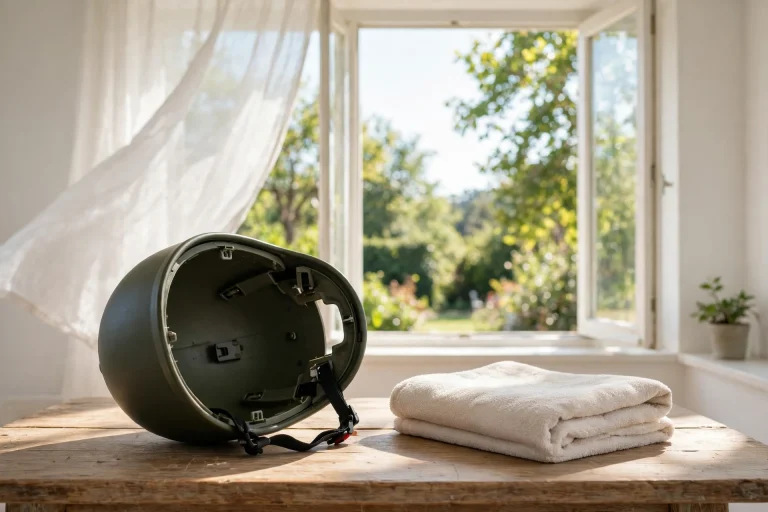
To protect a helmet from mould, keep it dry, clean the liner regularly, and store it in a ventilated spot, because mould grows where damp and poor airflow meet. Mould is one of the most common problems for helmets that are used often and stored badly. It starts as a musty smell or a few small spots, and if it is ignored it can spread through the liner and make the helmet unpleasant, and in general terms unhealthy, to wear.
Mould needs three things: moisture, warmth, and still air. A helmet gives it all three after a sweaty ride, especially if it is put away damp in a closed bag or a dark cupboard. The liner holds the sweat, the shell keeps the air out, and the result is a perfect home for mould. The good news is that mould is preventable, and a helmet that is kept dry and clean will rarely have a problem.
Why does mould grow on helmets?
Mould grows on the liner and the padding because those parts absorb sweat, skin oils, and dirt. After a ride, the liner is warm and damp, and if the helmet is stored without drying, the moisture stays trapped. Mould spores are everywhere in the air, and they settle on any damp surface and start to grow.
Poor storage makes the problem worse. A helmet in a sealed bag, a closed locker, or a damp garage has no airflow, so the moisture cannot escape. A helmet left in a cold, damp room can also grow mould, because condensation forms on the shell and seeps into the liner.
Helmets that are rarely cleaned are more at risk. A liner that has not been washed for months holds a build-up of sweat and oils, which feed mould. Regular washing removes that food source and keeps the liner fresh, so mould has less to grow on.
What are the first signs of mould?
The first sign is usually a smell. A helmet that smells musty or stale, even after it has dried, may have mould in the liner. The smell can be faint at first, and it may get stronger when the helmet warms up on your head.
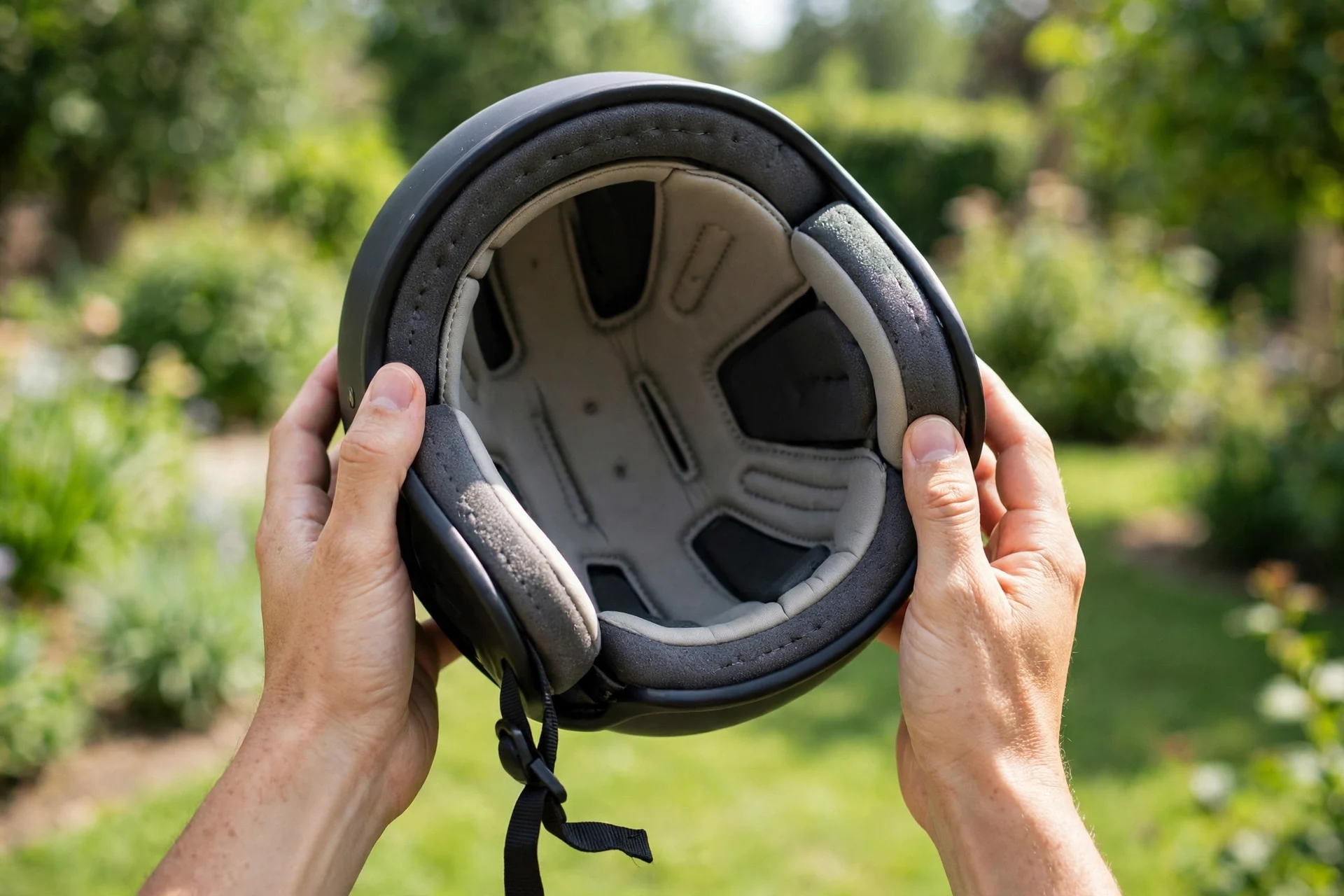
The next sign is spots. Look inside the helmet for small black, green, or grey spots on the liner, the padding, or the straps. Check the seams and the folds, where moisture collects. Mould can also grow on the inside of the shell, behind the liner, so take the liner out and look behind it if you suspect a problem.
Other signs include a liner that feels slimy or sticky, or skin irritation after wearing the helmet. If your scalp itches or your skin feels irritated after a ride, and the helmet smells musty, mould may be the cause. If skin irritation persists, see a clinician rather than guessing at the cause.
How do you clean mould off a helmet?
If you find mould, act quickly. Remove the liner and pads, and wash them by hand in lukewarm water with a mild soap. Let them soak for a while, then rinse well and let them air-dry fully. In general terms, a mild soap wash is enough for light mould, and it is the safest method for the foam.
Wipe the inside of the shell with a damp cloth and mild soap, and clean the straps the same way. Use a soft brush to reach the seams and the vents, where mould can hide. Rinse the cloth often so you are not spreading the mould around the helmet.
Do not use bleach or strong chemicals on a helmet, because these can damage the shell, the foam, and the straps, and they can irritate your skin. If the mould is heavy, or if it comes back after cleaning, the liner may need replacing. If the foam itself is stained through or feels damaged, it may be time for a new helmet.
How do you dry a helmet properly?
Drying is the most important step in fighting mould. After every ride, leave the helmet in a ventilated room with the vents open, and take the liner out if you can so air can reach every surface. Turn the liner over as it dries, and do not put the helmet away until it feels dry to the touch.
Do not use heat to dry a helmet. Radiators, heaters, and hair dryers on a hot setting can warp the foam and weaken the shell. Room-temperature air, with a little airflow from an open window or a fan on a low setting, is the safest way to dry a helmet.
After washing, a helmet can take a full day to dry, and the liner can take longer. Plan your cleaning for a day when you do not need the helmet, and give it plenty of time. A helmet that is put away damp is a helmet where mould can start again.
Where should you store a helmet to stop mould?
Store your helmet in a cool, dry place with good airflow. A shelf in a bedroom or a spare room is ideal. The helmet should sit upright with the vents open, and it should not be sealed in a bag or a box while it is still damp. A helmet bag is fine for a dry helmet, because it keeps dust off, but never bag a wet helmet.
Avoid damp rooms, such as a basement, a garage with a leaking roof, or a bathroom. Avoid closed cupboards with no ventilation, and avoid storing the helmet near wet coats or damp kit. If your only storage space is damp, consider a small dehumidifier or a moisture absorber nearby, and check the helmet regularly.
Keep the storage area clean. Dust and dirt can feed mould, so wipe the shelf now and then, and do not store the helmet next to old clothes or boxes that may already have mould on them.
How can you stop mould coming back?
Prevention is a habit, not a one-off clean. Wash the liner regularly, especially in summer or if you ride every day. A clean liner has less for mould to feed on, and it smells better too. Wipe the inside of the helmet after sweaty rides, and always let it dry before you store it.
Check the helmet often. A quick look inside every few weeks will catch mould early, when it is easy to clean. Pay attention to the seams, the straps, and the area behind the liner, where mould can hide.
Think about the MIPS slip liner if your helmet has one: wipe it gently when you clean the helmet, and let it dry before you put the comfort liner back in. Mould can grow on any damp surface, including a slip liner, so no part of the helmet should be put away wet. With regular cleaning, good drying, and ventilated storage, mould should not come back.
Is mould on a helmet dangerous?
In general terms, mould on a helmet is unpleasant and can irritate the skin and airways, especially for people with allergies. Clean it promptly, and if irritation persists, see a clinician. Do not keep wearing a helmet with heavy mould.
Can I use bleach to remove mould from my helmet?
No. Bleach and strong chemicals can damage the shell, foam, and straps, and can irritate your skin. Use mild soap and water, and replace the liner if the mould keeps coming back.
How do I know if my helmet liner needs replacing?
If the liner still smells musty after a thorough wash and dry, if it is stained through, or if the foam feels damaged or compressed, a replacement liner is worth considering. Check with the helmet maker for the right part.

Olivia
Writer at Helmet Today, covering helmet reviews, fit and riding safety.