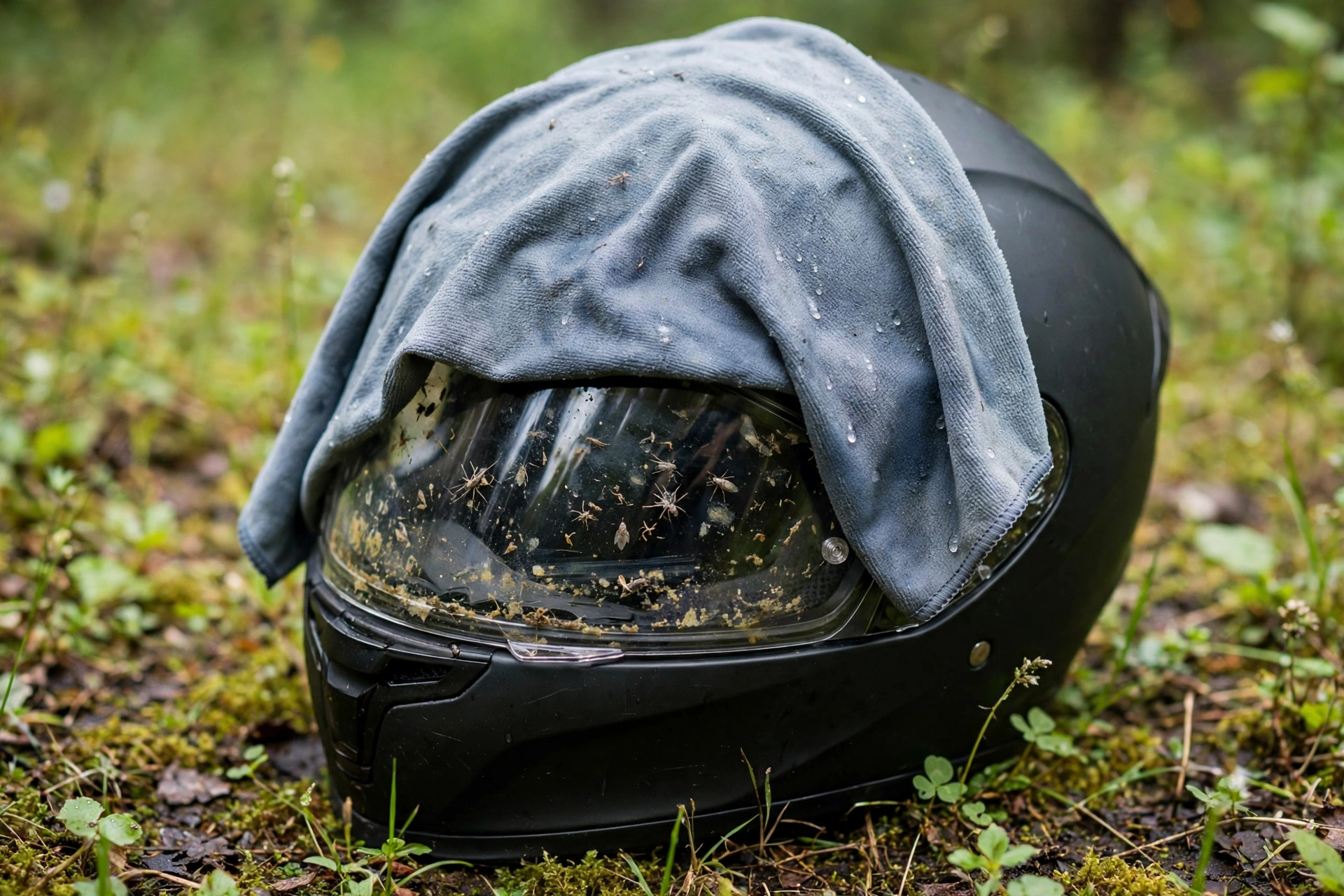
The safe way to remove bugs from a helmet shell is to lay a warm, wet cloth over the dried bugs for 10 to 15 minutes to soften them, then lift them off gently with the cloth and plain water. Never scrape dried bugs off with your nails, a card, or anything abrasive, and never use solvents or harsh chemicals, which can damage the shell and visor.
Anyone who rides in warm weather knows the problem: after a long ride, the front of the helmet and the visor are speckled with dried insects. Bug residue is more than ugly. Left in place, it bakes on harder, can stain the finish, and the protein in it is mildly corrosive over time. The catch is that the obvious cleaning methods — scrubbing, scraping, strong sprays — can do more harm than the bugs. This guide explains the soak-and-lift method, what to use on the visor, and what to avoid.
Why Should You Never Scrape Dried Bugs Off?
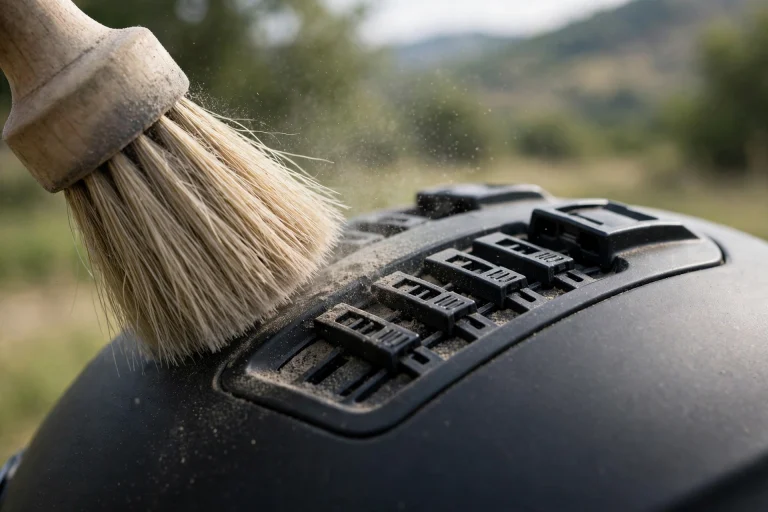
Dried bug residue hardens into a crust that bonds surprisingly well to a helmet shell. When you scrape at it, two things go wrong. First, the crust itself is gritty, and dragging it across the surface scratches the shell and clouds the visor as it comes off. Second, whatever tool you use — fingernails, a plastic card, a brush — concentrates pressure on a small area and can gouge the finish.
The visor is the bigger concern. A scratched or hazed visor scatters light, which is a genuine safety problem at night or in low sun. Visors are also coated, and abrasive cleaning can strip anti-scratch or anti-fog coatings unevenly, leaving the visor worse than dirty.
Softening changes everything. Once rehydrated, bug residue loses its grip and wipes away with almost no pressure. That is why the whole method below is built around patience rather than force.
What Is the Soak-and-Lift Method?
The method is simple and takes about fifteen minutes, most of it waiting:
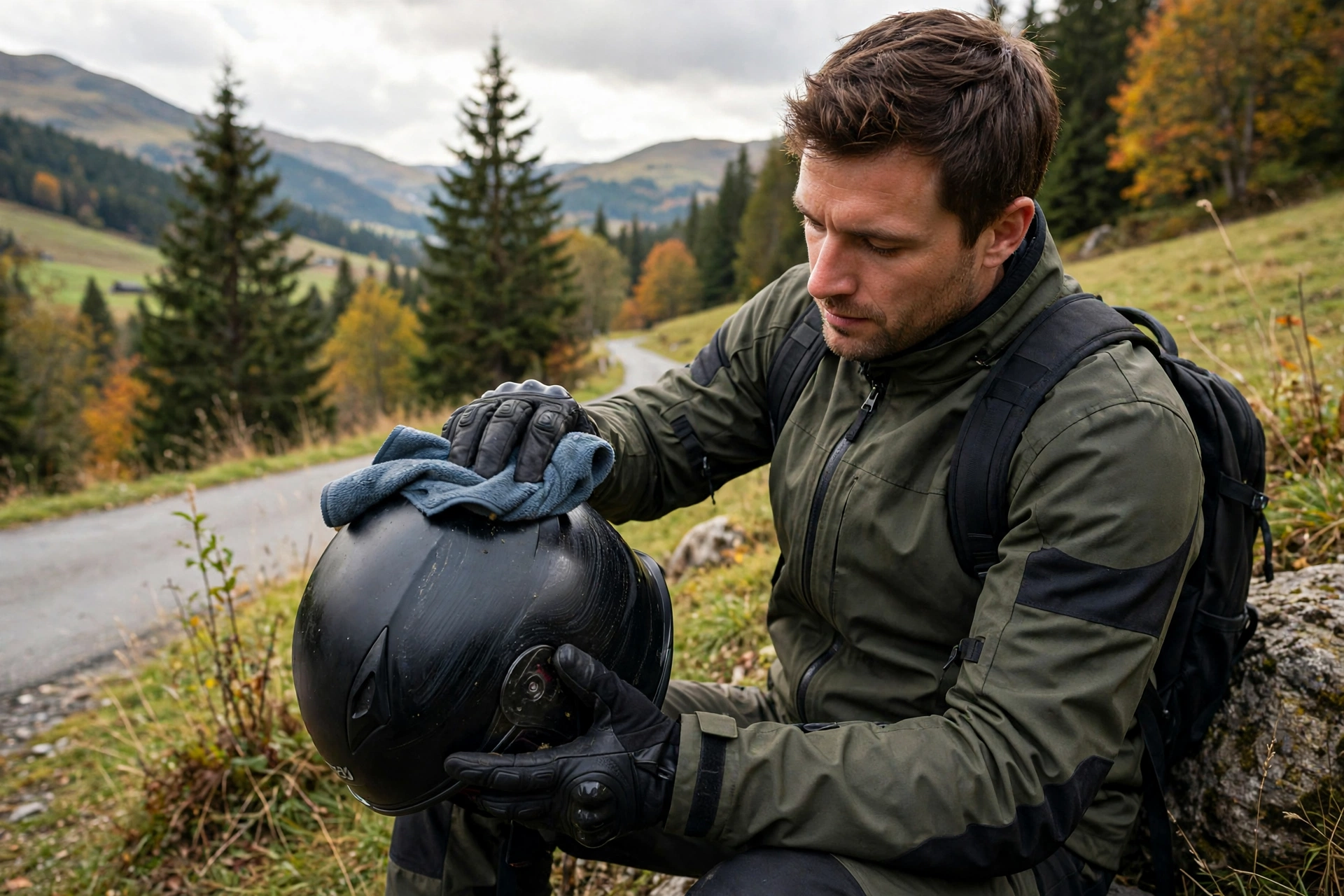
- Soak a clean microfiber cloth or soft towel in warm — not hot — water.
- Wring it out lightly so it is wet but not dripping, and lay it over the bug-covered area of the shell or closed visor.
- Leave it in place for 10 to 15 minutes. For a heavily coated visor, resting the cloth across the front of the helmet works well.
- Lift the cloth away. Most of the residue will come with it or wipe off with a gentle pass.
- Rinse the cloth, and repeat the gentle wipe until the surface is clean.
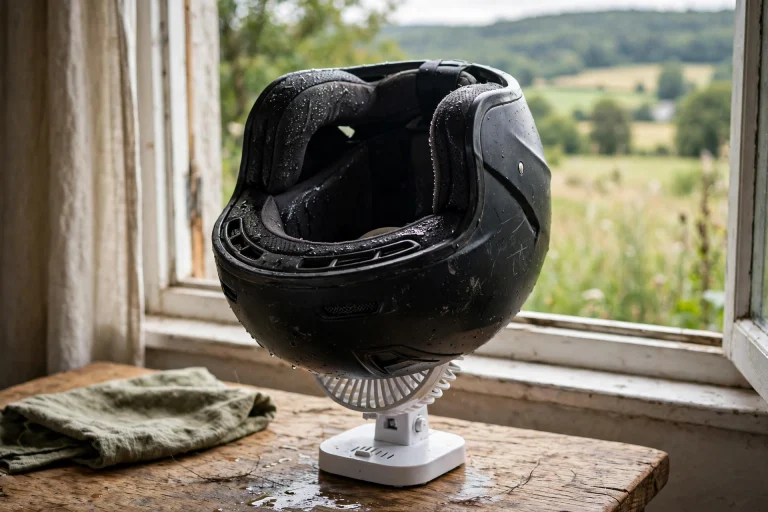
- Dry the shell and visor with a separate soft, dry microfiber cloth.
Work gently and let the water do the job. If a few spots resist, re-soak them rather than rubbing harder. A mild soap solution can help with stubborn residue on the shell, but plain water handles most cases, and water is always the safest choice for the visor.
How Do You Clean Bugs Off the Visor Without Scratching It?
Treat the visor more gently than the shell. Use the same soak method: a wet microfiber cloth draped over the closed visor softens the residue so it lifts without scrubbing. Then wipe in straight, gentle passes rather than circular scrubbing, rinse the cloth often so you are not dragging grit back across the surface, and finish with a dry microfiber.
Avoid paper towels, tissues, and shop rags on a visor. Their fibers are abrasive enough to leave fine scratches, especially once they pick up dried grit. Microfiber exists for exactly this job, and keeping two cloths — one for soaking, one for drying — costs almost nothing.
Clean the inside of the visor just as carefully. Breath fog and dust build up there too, and the inner anti-fog surface on many visors is delicate. Use water and a soft cloth, and never apply glass cleaner or solvent sprays to the inside unless the helmet maker specifically approves it.
Which Cleaners Are Safe — and Which Can Damage a Helmet?
Plain water is the safest cleaner and the right default. If you need more, mild soap diluted in water is generally safe for the shell and straps. That is the entire safe list — keep it short on purpose.
Now the danger list. Never use solvents such as acetone, gasoline, paint thinner, or strong degreasers on a helmet. These chemicals can attack the shell finish and, more seriously, degrade the EPS foam and the adhesives that hold the helmet together — damage you cannot see from outside. Bleach is equally out: it weakens strap webbing and can damage foam and adhesives. Avoid hot water as well, since heat can affect adhesives and foam over time; warm water is plenty.
Be cautious with all-purpose household sprays and “bug and tar” automotive products. Some are safe on painted metal but far too aggressive for helmet shells and visor coatings. If a product does not explicitly say it is safe for helmets or polycarbonate visors, do not use it. And while you are inspecting the shell up close, it is a good moment to check the liner sits correctly — including any rotational system such as the one described in our article on MIPS and how it reduces rotational forces — and that nothing has shifted or worn.
How Can You Make Bug Cleanup Easier Next Time?
Timing is the biggest factor. Fresh bug splatter wipes off in seconds with a damp cloth; the same splatter a week later needs the full soak. A quick wipe-down after each ride in bug season keeps the job permanently small.
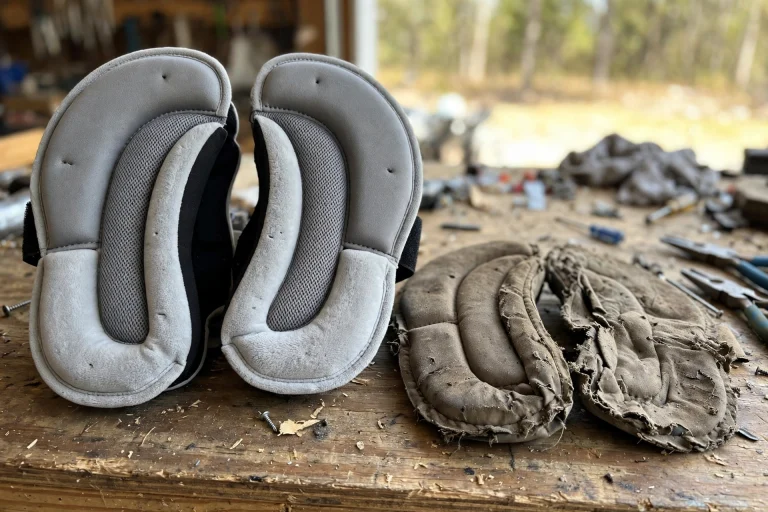
A few riders keep a small microfiber cloth and a water bottle handy at fuel stops on long rides, and clean the visor before the residue dries. Clear vision is worth the two minutes. At home, storing the helmet clean also protects the pads and liner, since residue and road grime transfer onto them over time.
Finally, consider it part of a routine: wipe the shell, glance over the straps and buckle, check the visor mechanism. Two minutes of cleaning doubles as a safety inspection, and it is the easiest inspection habit to keep.
Frequently Asked Questions
Q: Can I use dish soap to remove bugs from my helmet?
A: A small amount of mild soap in water is generally fine for the shell, but plain water handles most bug residue after soaking. Always soak first so you are lifting softened residue rather than scrubbing, and avoid getting soap solutions on delicate visor coatings when water alone will do.
Q: What if bugs are baked onto the visor and will not come off?
A: Extend the soak. Lay the wet cloth on for a full 15 to 20 minutes, keeping it damp, and repeat if needed. Residue always softens eventually. Do not escalate to scraping or chemicals — a damaged visor costs far more than the extra patience.
Q: Is it safe to use a pressure washer or hose on a helmet?
A: No. High-pressure water can force moisture into vents, seams, and electronics, and can damage the liner and adhesives. Clean a helmet by hand with a cloth and water from a tap or bowl — that is all the force the job needs.

Olivia
Writer at Helmet Today, covering helmet reviews, fit and riding safety.