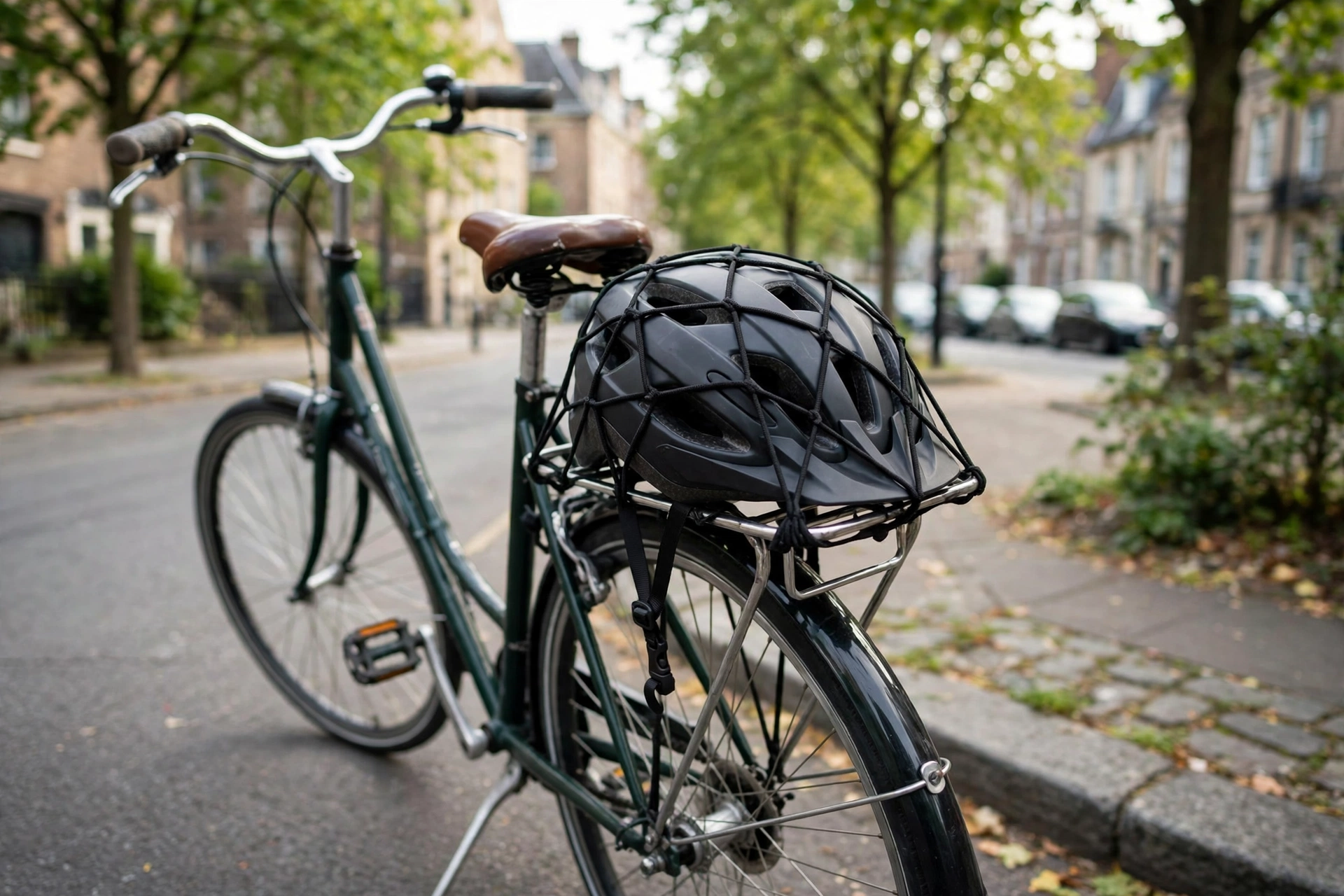
The safest way to transport a helmet on a bicycle rack is to strap it down firmly under a cargo net or with bungee cords so it cannot bounce, slide, or work loose — ideally with the helmet inside a soft bag or wrapped in a cloth so the shell does not rub against the bare rack. A helmet left loose on a rack chatters against the metal on every bump, and that constant knocking can quietly damage the very thing you are carrying it to protect.
Riders rack a helmet for ordinary reasons: carrying a spare for a passenger, bringing a second helmet to work, picking someone up, or riding home with a new purchase. Done well, the helmet arrives in the condition it left. Done badly, it arrives scuffed, dented, or lying in the road behind you.
Why Shouldn’t You Just Hang the Helmet by Its Strap?
The tempting shortcut — clipping the chin strap around the rack and letting the helmet dangle — is the worst option. A hanging helmet swings as you ride, knocking against the rack stays, the frame, and sometimes the spokes side of the wheel. Even when it stays clear of the wheel, every knock is a small impact against the shell, and the strap itself wears where it rubs over the rack edge.
There is also a real safety risk. A swinging helmet can shift in a turn, snag, or drop altogether — litter at best, a hazard to the rider behind you at worst. If it goes into your own rear wheel, it can stop the wheel abruptly: a crash caused by the spare helmet.
Hanging also leaves the helmet exposed: road grit settles into the pads and vents, and rain soaks the liner. Strapping it flat and covered avoids all of this with thirty seconds of effort.
What Is the Best Way to Strap a Helmet to a Rear Rack?
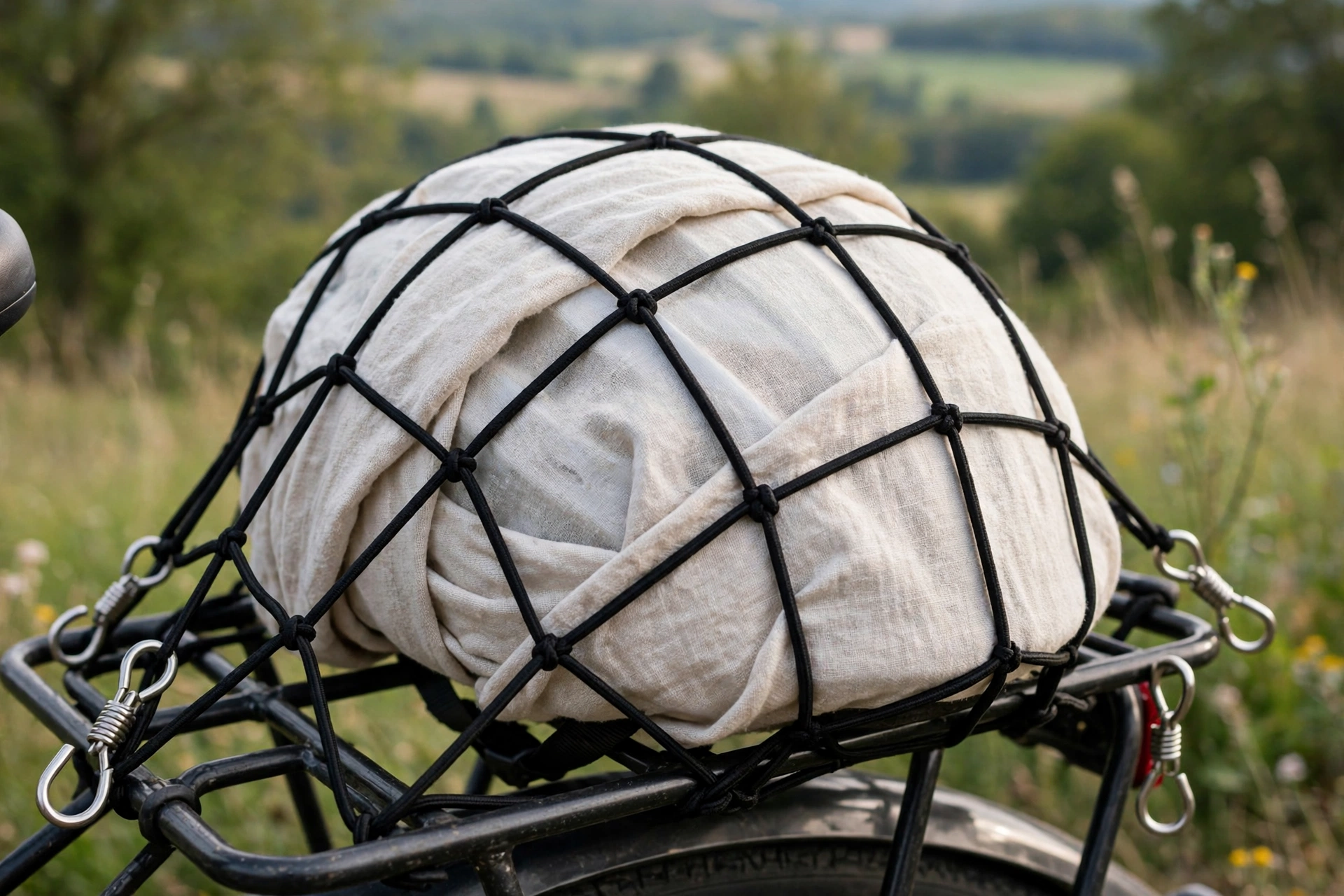
A stretch cargo net made for bicycle racks is the simplest tool for the job, because it holds the helmet down and inward at the same time. Bungee cords work too if you use them carefully. The routine is:
- Prepare the helmet. Fasten the chin strap so nothing dangles, and slide the helmet into its storage bag or wrap it in a soft cloth or old T-shirt.
- Set it on the rack. Place it centered on the rack platform, shell facing up, so the weight sits evenly and the helmet cannot roll.
- Net or strap it down. Stretch the cargo net over the whole helmet and hook it to both sides of the rack. With bungees, run two cords in a cross pattern over the top of the shell — never through the vents, which can stress the shell and foam.
- Do the shake test. Grab the helmet and try to shift it firmly in every direction. It should barely move. If it slides or rocks, add a cord or tighten the net before you ride.
On a long or rough ride, stop once early on to confirm everything is still tight — nets and bungees settle in the first mile.
Should You Put the Helmet in a Bag First?
Yes, whenever you can. A soft helmet bag — the drawstring kind many helmets are sold with — or any padded cloth bag stops the shell picking up scratches from the rack and cords, keeps road dust out of the liner, and gives the net something smooth to grip, which actually makes the whole bundle more stable.
If you regularly carry a helmet this way, a small pannier is an even better home for it. Inside a pannier the helmet is fully protected from weather and knocks, and there is nothing to strap at all. Just make sure nothing hard and heavy in the same bag can press into the foam — a helmet sharing space with a big lock should have the lock wrapped or kept in a separate pocket.
Skip anything airtight for long, though. A helmet sealed in a plastic bag after a sweaty ride traps moisture against the pads. For the length of a ride it does no harm, but take the helmet out and let it air when you arrive.
Can You Use a Front Rack, a Basket, or the Handlebars?
A front rack works the same way as a rear rack: bag the helmet, center it, net it down, and shake-test it. Keep the bundle low and snug, because any movement up front is more noticeable in the steering. Avoid stacking the helmet high on a front rack where it can block your view of the front wheel.
A basket is genuinely good for helmet carrying, provided the helmet cannot bounce out on a pothole — lay a jacket or bag over the top, or pass a strap through the helmet’s vents area and the basket if the ride is rough. In general terms, a helmet that fits snugly inside the basket with something soft over it travels very well.
The handlebars are the one place to avoid. A helmet looped over the bars swings with every steering input, can slip down and jam against the wheel or fork, and is in the worst place if you have to brake or swerve. If the helmet cannot go on the rack or in the basket, wear your own helmet as normal and carry the spare on your back in a backpack — never as a second helmet stacked on your head, which ruins the fit of both.
What Damage Can Careless Carrying Do?
The shell collects the obvious harm: scratches, scuffs, and chips that are mostly cosmetic. The hidden harm is in the foam. A helmet that repeatedly knocks against rack tubes, gets dropped onto pavement while you are loading up, or is crushed under heavy cargo can take dents and compression in the EPS liner that are hard to see from outside.
That matters because the foam is the protection. Modern helmets add further systems on top of the foam — rotational impact liners of the kind explained in our guide to what MIPS is and how it works — and all of it assumes a liner that is intact. A helmet that has been banging around loose for months may not perform the way it did when it left the shop.
Treat transport as part of helmet care: carry it snug, padded, and still, check the foam if it ever takes a real knock in transit, and never keep using a helmet whose liner shows a dent from a drop. Arriving with your spare helmet undamaged is the whole point of carrying it carefully.
Frequently Asked Questions
Q: Can I thread a bungee through the helmet vents to hold it down?
A: It is better not to. A cord through the vents concentrates force on the shell between vents and can stress the foam underneath. Cross your bungees or net over the top of the shell instead, and shake-test the result.
Q: Is it okay to carry a child’s helmet on my rack?
A: Yes, with the same method: bag it, center it, strap it under a net, and check it cannot move. Children’s helmets are lighter, so they bounce more — an extra cord is worthwhile on rough roads.
Q: My helmet fell off the rack onto the road. Can I still use it?
A: Inspect it carefully first. If it only scuffed the shell, it is generally fine, but if it hit hard enough to dent or crack the foam liner, retire it — that kind of damage means the helmet has already spent part of its protection.

Olivia
Writer at Helmet Today, covering helmet reviews, fit and riding safety.