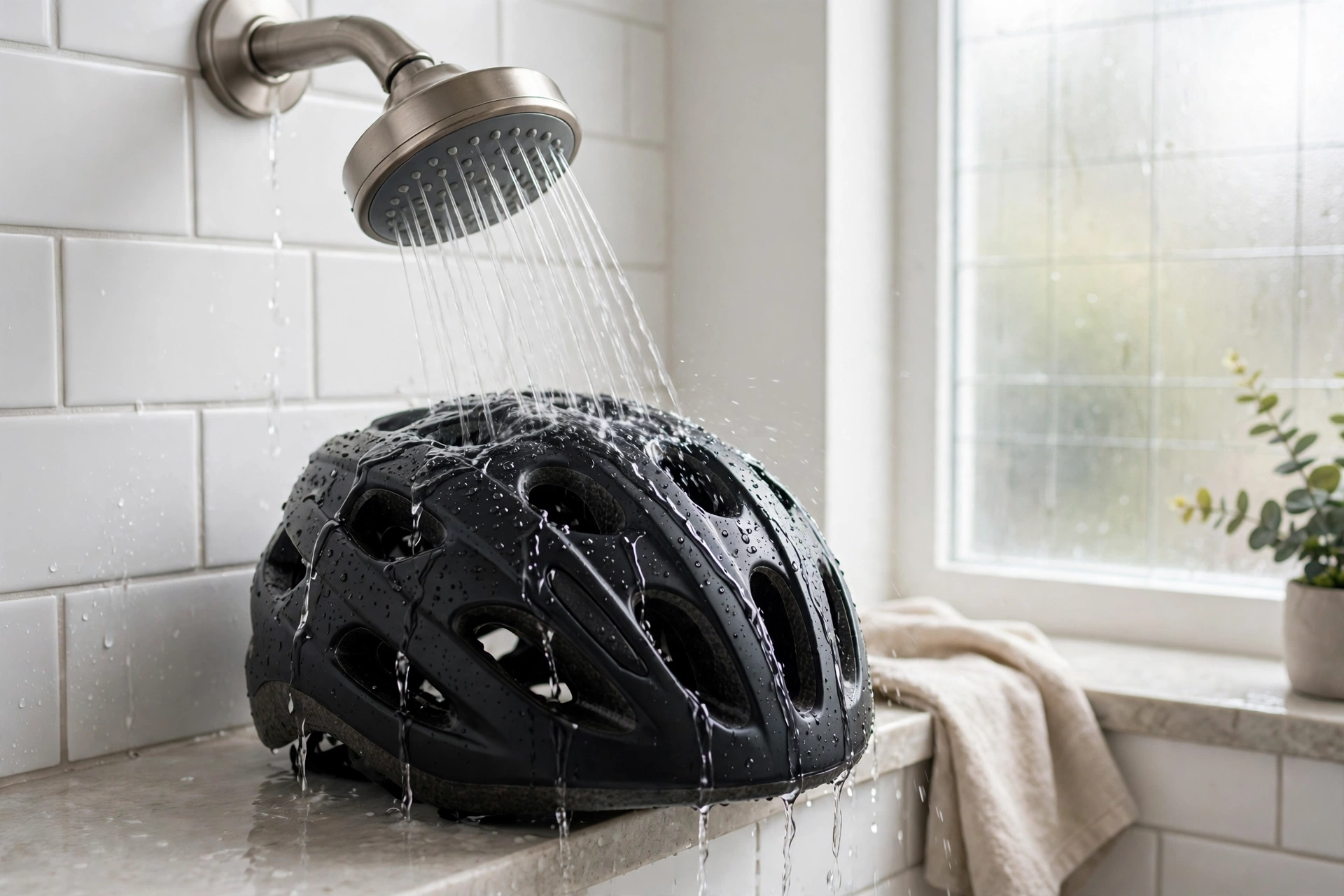
To wash a bike helmet, remove the pads and liner, soak everything in lukewarm water with a small amount of mild soap, wash gently by hand, rinse thoroughly, and let it all air-dry completely before reassembling. Never use bleach, solvents, hot water, or a washing machine, because they can damage the EPS foam, adhesives, and straps that the helmet depends on.
A bike helmet that gets ridden daily absorbs sweat, sunscreen, dust, and road grime, and eventually it smells like it. Washing restores comfort and hygiene — and it is also the best regular inspection you can give your helmet, because cleaning forces you to handle every strap, pad, and seam. The method is gentle by design. EPS foam is a safety component, not a sponge, and the goal is to clean around it without attacking it. Here is the full process, step by step.
What Do You Need to Wash a Bike Helmet?
The supply list is short, and everything on it is chosen to be safe:
- A sink, basin, or bathtub
- Lukewarm water — comfortably warm to the touch, never hot
- A small amount of mild soap, such as a gentle liquid soap or baby shampoo
- A soft cloth or sponge for the shell
- A clean, dry towel, plus somewhere ventilated to air-dry the parts
That is all. Deliberately absent: bleach, disinfectant sprays, degreasers, solvents, and abrasive scrubbers. In general terms, if a cleaner is strong enough to strip grease from an engine or bleach a shirt white, it is strong enough to weaken strap webbing, attack adhesives, or degrade the foam. Mild soap and water clean a helmet completely; stronger products only add risk.
Before you start, check whether your helmet’s pads and liner are removable. Most modern bike helmets use hook-and-loop pads that peel out, and many have a removable liner as well. If yours are not removable, you can still wash the helmet — you will just wash it whole, gently, as described below.
How Do You Wash the Pads, Liner, and Straps?
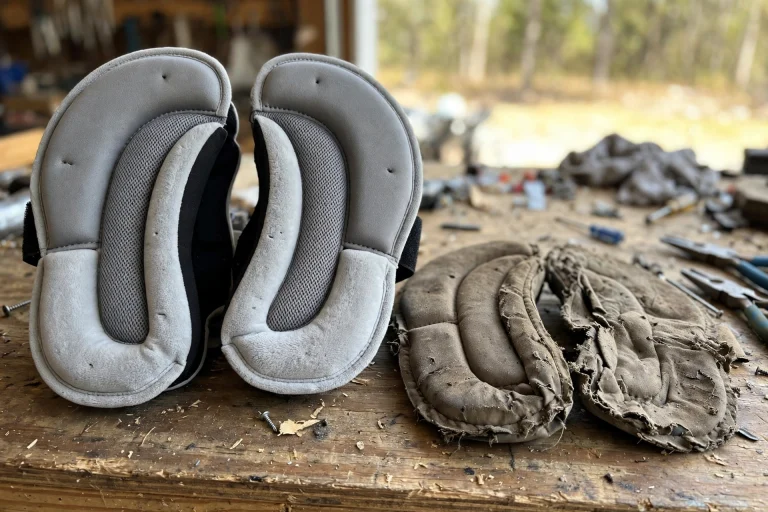
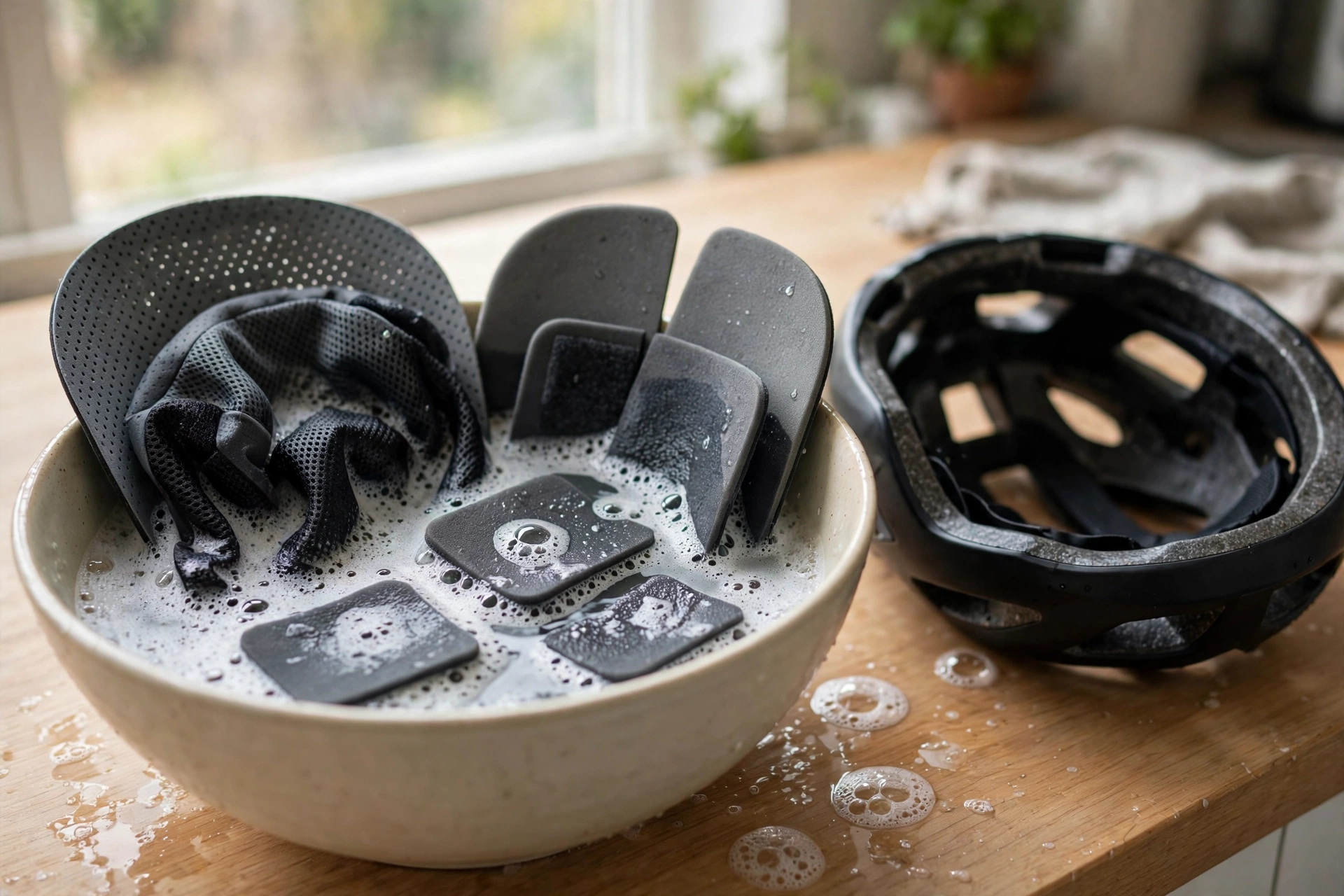
Start with the removable parts, since they hold most of the sweat and odor. Peel out the pads and liner carefully, noting where each piece sits so reassembly is easy — a quick phone photo helps. Place them in the basin of lukewarm, mildly soapy water and let them soak for 10 to 15 minutes.
After soaking, wash the pads by hand: squeeze them gently, work the soapy water through with your fingers, and repeat. Avoid twisting or wringing them hard, which can tear foam pads and their fabric covers. Rinse under clean running water until no soap remains — leftover soap residue attracts dirt and can irritate skin.
For the straps, which usually stay attached to the helmet, dip them into the soapy water and rub them gently between your fingers along their length, paying attention to the section near the chin where sweat concentrates. Work the buckle and strap adjusters through the water too, since grit collects in them. Rinse the straps well with clean water.
How Do You Wash the Helmet Shell and Foam?
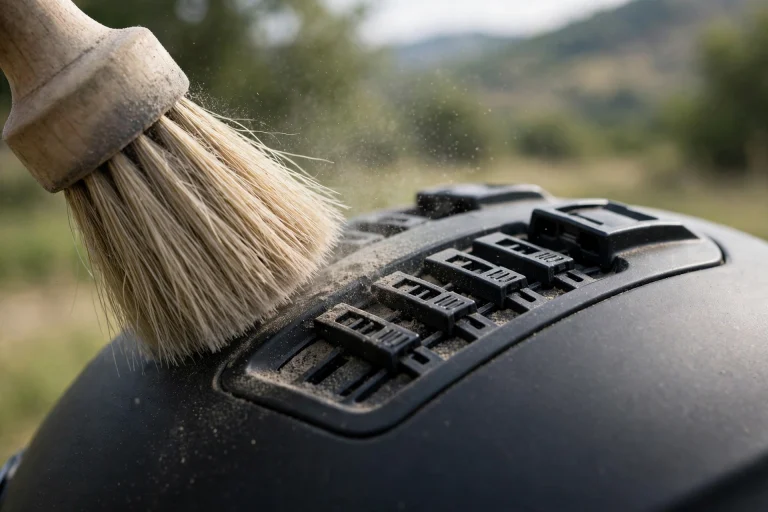
The shell and the EPS foam body need the lightest touch. You are not trying to soak the foam; you are wiping away surface grime. Use a soft cloth dampened with the same mild soap solution and wipe down the outside of the shell, working into vents and around the edges where dust collects.
For the inside, wipe the exposed foam surfaces gently with the damp cloth. Do not submerge and squeeze the foam body, do not scrub it, and do not use a brush on it. EPS is full of tiny cells that give it impact-absorbing ability, and crushing or abrading it does it no favors. A light wipe removes the sweat film and dust that actually build up.
If the helmet has a fit system with a dial at the back, wipe around it and check it still turns and clicks cleanly. This is also the moment to look at the whole helmet closely: check for cracks in the foam, frayed straps, loose glue joints, or a shell separating from the foam. Features inside the helmet — including rotational liners explained in our guide to what MIPS is in a helmet — should sit flat and move as designed. Washing day is inspection day.
How Should You Dry a Helmet After Washing?
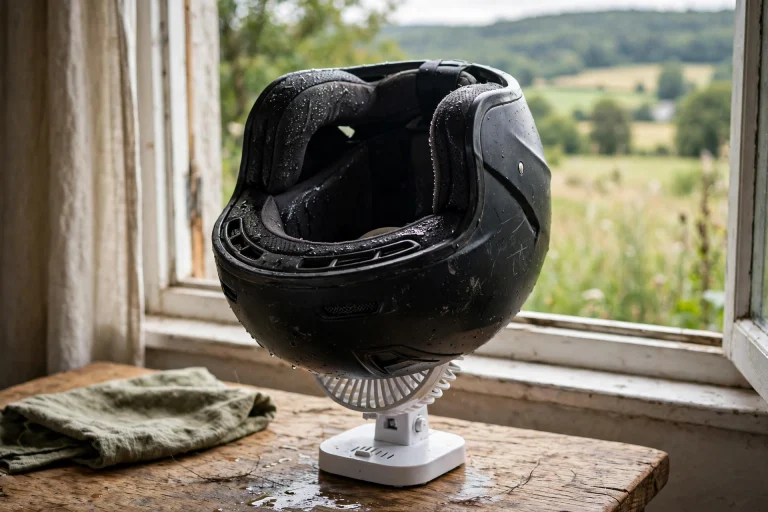
Drying matters as much as washing. Press the pads and liner gently in a clean towel to remove excess water, then lay everything out in a ventilated spot at room temperature. Air-drying is the only recommended method.
Never use direct heat: no hair dryer, no radiator, no tumble dryer, and no leaving the helmet to bake on a hot dashboard or in direct strong sun. Heat can warp foam, weaken adhesives, and age strap materials. A fan pointed at the parts is fine and speeds things up safely.
Give the helmet real time to dry — several hours, ideally overnight. Pads that feel dry on the surface can still be damp inside, and reassembling a damp helmet invites mildew and odor, which defeats the purpose of washing it. Once everything is fully dry, refit the pads and liner in their original positions, adjust the straps, and do a quick fit check before your next ride.
How Often Should You Wash a Bike Helmet?
In general terms, wash the pads and liner every few weeks during heavy riding season, or whenever they start to smell or feel stiff with salt. A quick rinse of the pads after especially hot, sweaty rides stretches the time between full washes. The shell needs less frequent attention — a wipe-down when it looks grimy is usually enough, with a full gentle wash a few times a season.
Watch for the signs that washing is overdue: white salt lines on the straps, a liner that stays stiff after drying, or pads that have compressed and no longer cushion well. Compressed or torn pads should be replaced rather than washed back to life — many manufacturers sell replacement pad sets, and fresh pads restore both comfort and fit.
One firm rule: if the helmet has been in a crash, washing is irrelevant — replace it. And if the foam is cracked, crumbling, or separated from the shell, no amount of cleaning makes it safe again.
Frequently Asked Questions
Q: Can I put my bike helmet in the washing machine or dishwasher?
A: No. Machine agitation, detergents, and heat can damage EPS foam, warp pads, degrade adhesives, and weaken straps. Hand-washing in lukewarm water with mild soap takes only a few minutes and is the safe method manufacturers intend.
Q: What soap is safe to use on a helmet?
A: A small amount of mild liquid soap or baby shampoo in lukewarm water is the standard safe choice. Avoid bleach, solvents, degreasers, antibacterial sprays, and harsh detergents, all of which can attack foam, adhesives, or strap webbing.
Q: Why does my helmet still smell after washing?
A: Usually the pads were not fully rinsed or not fully dried. Soap residue and trapped moisture both cause lingering odor. Re-rinse the pads in clean water, press them in a towel, and air-dry them completely — overnight if needed — before putting them back.

Olivia
Writer at Helmet Today, covering helmet reviews, fit and riding safety.