
Helmets do not carry a hard expiration date like a carton of milk, but the widely repeated five-year guidance is a reasonable rule of thumb for a helmet in regular use. The number comes from helmet manufacturers and safety organizations, and it reflects how a used helmet ages: sweat, skin oils, heat, sunlight, and everyday knocks gradually degrade the materials that protect you. A helmet that has been worn for years of commuting is a different object from the one that left the factory, even if it still looks tidy.
The honest answer to “do helmets expire” is that they wear out rather than expire. Understanding what actually ages inside the helmet tells you far more than a calendar alone, and it explains why a crashed helmet is finished immediately while a carefully stored spare may still be serviceable after the same number of years.
Do Helmets Really Expire After Five Years?
In general terms, the five-year figure is guidance, not law. No sticker inside your helmet suddenly invalidates it on a particular birthday. What manufacturers are saying is that, based on how materials age in typical use, around five years of service is a sensible point to replace a helmet and stop trusting it fully — with some makers suggesting a few years from purchase and others counting from the manufacture date printed inside.
Think of it like tires. A tire does not fail on a fixed date, but age, heat cycles, and wear steadily reduce its performance, and sensible owners replace tires on condition and age together. Helmets are the same: the five-year mark is a prompt to inspect honestly and, for a regularly used helmet, usually to replace.
There is also a technology argument. Helmet design and standards evolve, so a helmet replaced on a five-year cycle keeps you in reasonably current protection. That is a secondary benefit, though — the main reason remains the condition of the one on your head.
What Actually Ages Inside a Helmet?
Start with the comfort padding. Pads absorb sweat and skin oils on every ride, and over years they compress, harden, and lose their shape. That matters for safety, not just comfort: the pads are part of how the helmet achieves its snug fit, and a helmet that has become loose fits nothing like the one that was tested.
The energy-absorbing foam liner is tougher and more stable, but it is not invulnerable. Heat, ultraviolet light, hair products, sunscreen, and cleaning chemicals can all degrade helmet materials over time, and everyday handling adds small insults — drops onto concrete, being knocked off hooks, rattling around in a car trunk. Straps fray and stretch, buckles wear, adhesives age, and shells can suffer UV damage that makes them brittle or chalky.
Modern helmets may also include a low-friction rotational liner between the foam and the pads. If you are not sure what that layer is, our guide to what MIPS is and how it works explains it. Like everything else inside, it works best when it is clean, intact, and able to move as designed — one more thing that age and grime work against.
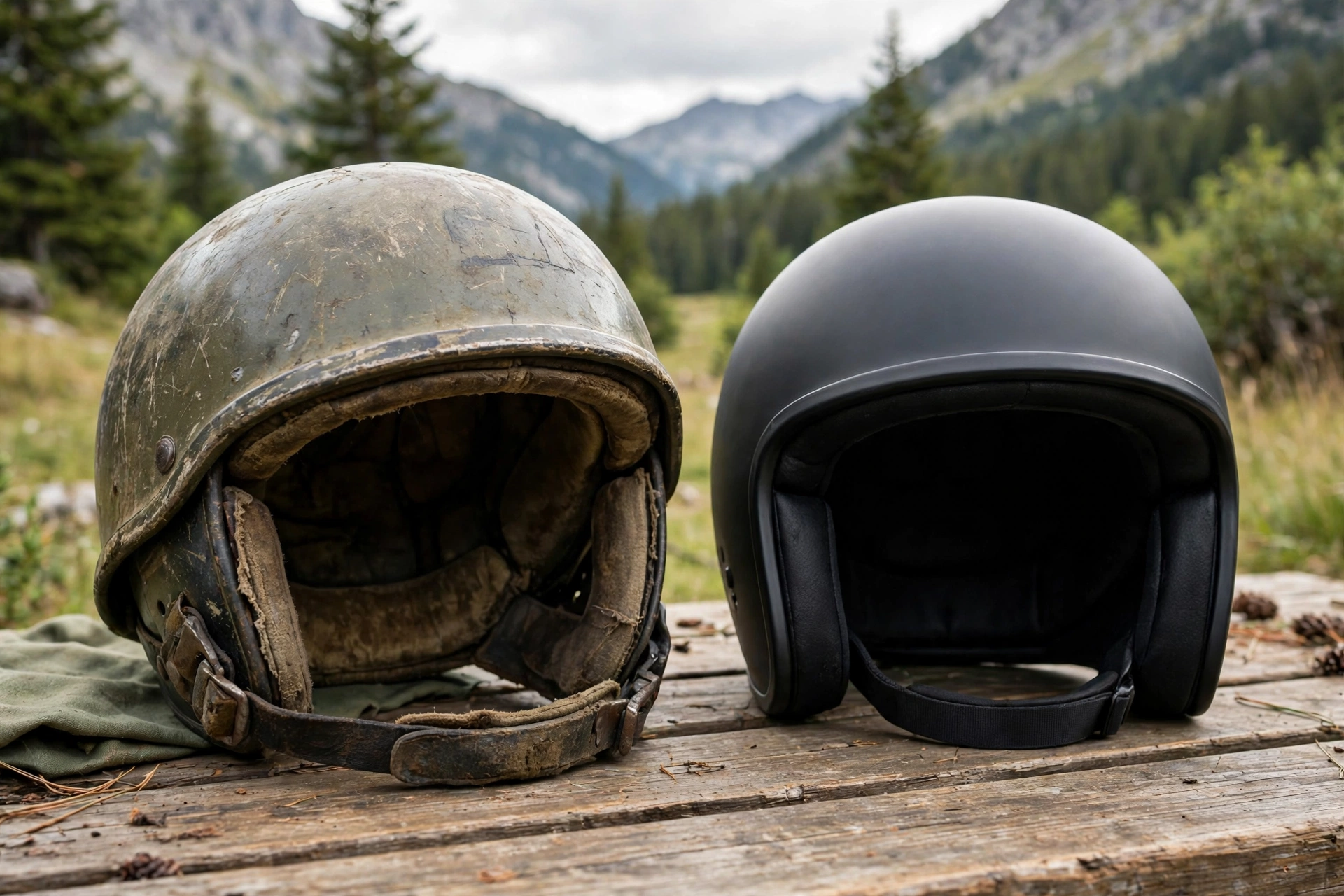
Does an Unused Helmet Age the Same Way?
No — and this is where the calendar alone misleads people. A helmet that has never been worn, stored in its box in a cool, dark, dry place, ages far more slowly than one in daily service. Without sweat, oils, UV exposure, and handling knocks, the main aging processes barely get started, which is why old-stock helmets are not automatically worthless the day they pass an anniversary.
That said, “much slower” is not “not at all.” Materials still age on the shelf over long periods, adhesives dry out, and a helmet that sat for many years in a hot shop window is not the same as one stored properly. Sensible practice is to check the manufacture date when buying, avoid stock that has been sitting for years, and inspect any stored helmet carefully before trusting it.
The reverse case matters too: a helmet can be finished long before five years. Daily use in a hot climate, constant sun exposure, or rough handling can wear a helmet out early. Age is a guide; condition is the verdict.
When Should You Replace a Helmet Sooner Than Five Years?
The clearest rule in all of helmet care: after any crash or significant impact, the helmet is done — immediately, regardless of age. The foam that absorbs impact energy crushes permanently doing its job, and the damage is often invisible from outside. A helmet that took a real hit at two months old is less protective than a careful five-year-old helmet that never has.
Replace early, too, if the fit has gone. If the helmet now rocks on your head, lifts at the back, or the pads have compressed so much that it feels a size larger, it will not stay in position in a crash. The same goes for cracked foam, a damaged or chalky shell, frayed straps, a buckle that does not click positively, or any helmet with an unknown history, such as a secondhand purchase.
Drops deserve a judgment call. A short drop of an empty helmet onto a soft surface is unlikely to matter; a helmet flung off a moving bike or dropped from height onto concrete deserves replacement or, where the manufacturer offers it, an inspection. When in doubt, remember the stakes and lean toward replacing.
How Can You Make a Helmet Last Its Full Life?
Storage does most of the work. Keep the helmet in a cool, dry place out of direct sunlight, away from garage chemicals and fuel fumes, and not hanging by its strap or balanced where it can fall. A helmet bag or its original box protects it from the knocks and UV that quietly add up.
Clean it gently and properly. Mild soap and water for the shell and pads, following the manufacturer’s instructions, and never solvents, which can attack foam and shell materials. Let it dry naturally, away from direct heat. Keeping the inside clean slows the sweat-and-oils cycle that ages pads fastest.
Finally, handle it like safety equipment, because it is. Do not sit on it, use it as a basket, or let it rattle loose in a trunk. A helmet treated well will give you its full intended service life — and when its time comes, replace it and cut the straps so nobody else is tempted to use it.
Frequently Asked Questions
Q: Is the five-year rule counted from manufacture or purchase?
A: Guidance varies by brand; some count from first use, others from the manufacture date printed inside the helmet. Checking the date inside matters, especially if a helmet sat in storage. Either way, treat five years as a prompt to inspect and usually replace, not a legal deadline.
Q: My helmet looks perfect after six years. Can I keep using it?
A: Looks can deceive, because the important aging — pad compression, material degradation, strap wear — is partly hidden. If it has been in regular use, most manufacturers would say its best years are behind it. A lightly used, well-stored helmet is a grayer area, but condition and fit should decide, honestly assessed.
Q: Does a small drop mean I have to replace my helmet?
A: Not automatically. A short fall of an empty helmet onto a forgiving surface rarely does harm, but a drop from height onto concrete, or any impact with your head inside, is different. Inspect for cracks and dents, and if there is any doubt, contact the manufacturer — many offer inspection or crash-replacement programs.

Olivia
Writer at Helmet Today, covering helmet reviews, fit and riding safety.