Virginia Tech helmet ratings are independent star ratings for bicycle helmets produced by a university research lab: helmets earn from one to five stars based on how well they manage impact forces in the lab’s tests, with more stars meaning better measured performance. The ratings are not a legal certification — every helmet sold in the US must already meet the CPSC standard — they are a comparison tool layered on top of it.
Because all certified helmets pass the same legal bar, shoppers often ask which ones pass it best. That is exactly the question the Virginia Tech program set out to answer. Here is how the ratings work and how to use them sensibly.
Who Runs the Virginia Tech Ratings and Why?
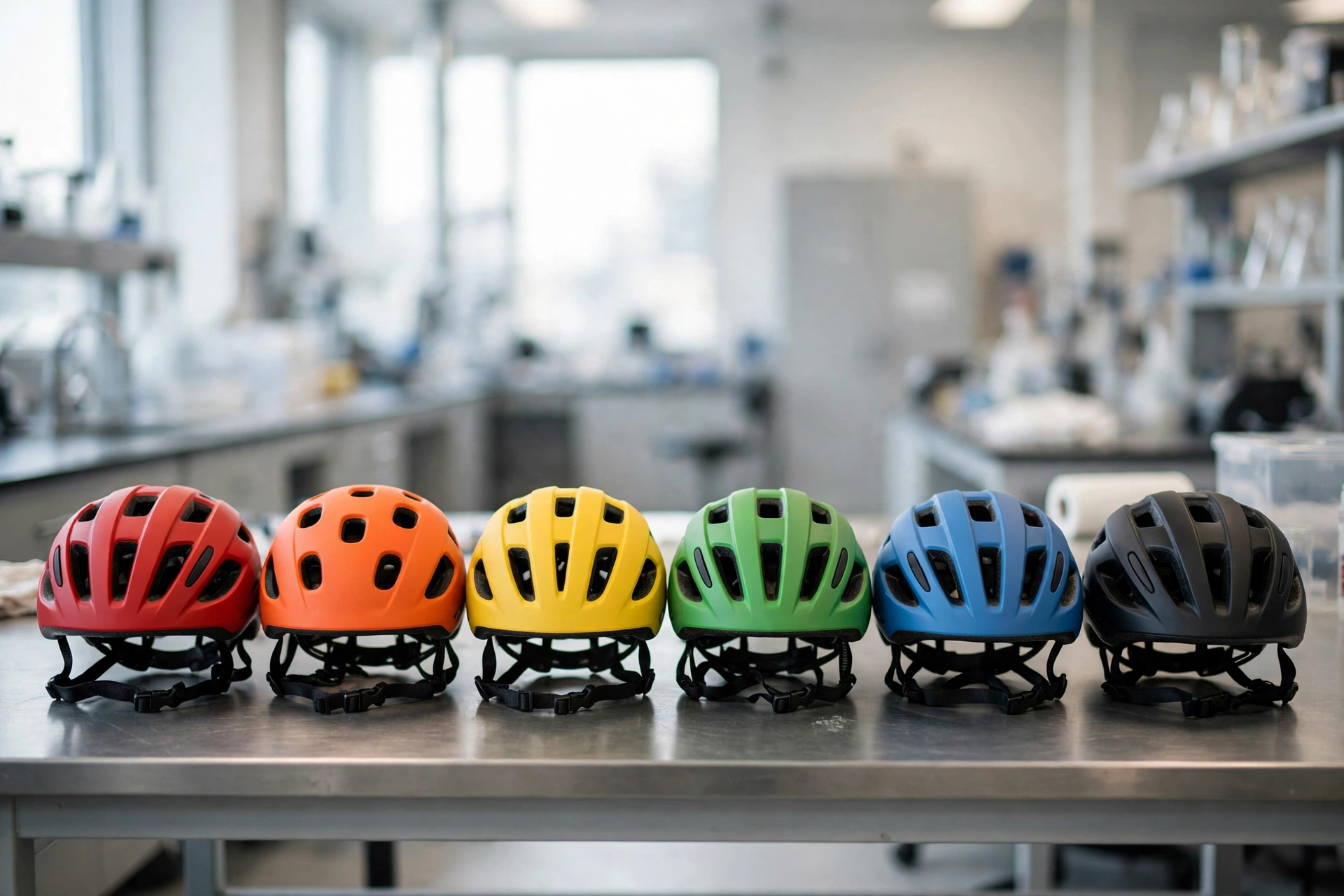
The ratings come from a helmet research program at Virginia Tech, a US university, where researchers study head injury biomechanics. The program buys helmets and tests them in its laboratory, then publishes the results publicly so consumers can compare models on measured performance rather than price or styling.
The key point is independence. The legal standard (CPSC) is pass/fail and its test data are not published model by model. Virginia Tech’s work fills that gap: an academic lab, using a consistent method across many popular helmets, publishing both the star ratings and the reasoning behind them.
The same research group is known for similar rating work in other sports, and the bicycle helmet ratings have been updated over time as new models reach the market and test methods are refined. Checking the current ratings before a purchase is wise, because the list evolves.
How Are the Helmets Tested?
In general terms, the lab subjects each helmet model to a series of impact tests at multiple locations around the helmet and at more than one impact speed, using an instrumented headform. The tests are designed to represent realistic crash conditions rather than only the certification scenario.
Crucially, the measurements include both linear acceleration (the straight-line force of the hit) and rotational acceleration (the twisting motion). Those measurements feed a risk estimate: the researchers use the results to estimate the likelihood of head injury for each impact condition, then combine the outcomes across all tested conditions into one overall score.
That combined score determines the star rating. Helmets whose test results suggest a lower injury risk across conditions earn more stars; helmets closer to the legal minimum earn fewer. The method is a research model, so the stars are best read as a comparative ranking under one consistent protocol — not as a guarantee about any individual crash.
Why Do Rotational Measurements Matter?
Traditional certification tests concentrate on straight-on impacts. Real crashes are usually angled: the head strikes the ground while moving forward, which adds a twisting component. Rotational motion is associated with certain serious brain injuries, so a rating system that measures it can distinguish helmets that look identical under the legal test.
This is also where design features enter the picture. Some helmets add low-friction liners intended to reduce rotational forces in angled impacts — our explainer on how MIPS works describes the best-known example — while other designs address rotation through shell shape and foam structure. Virginia Tech’s protocol measures the outcome regardless of the technology, which is the right way to compare them.
It is worth noting that a helmet without any branded rotational system can still score well, and one with such a system is not automatically top-rated. The stars reflect measured performance of the whole helmet, not a feature checklist.
How Should You Use the Ratings When Buying?
Start with the non-negotiables: the helmet must carry the legal certification for your market (CPSC in the US), it must be the correct size, and it must fit your head shape snugly and comfortably. A five-star helmet that fits badly is a worse choice than a four-star helmet that fits perfectly.
Within the models that fit you, the ratings are a genuinely useful tiebreaker. If two helmets fit equally well and one carries a clearly higher star rating at a similar price, the rating is solid evidence in its favor. If the higher-rated helmet costs much more, the stars help you judge what the extra money buys in measured performance.
A few practical notes:
- Ratings apply to the exact model tested — a different model from the same brand can score differently
- Not every helmet on the market has been tested, so absence from the list is not a failing grade
- Check the ratings close to your purchase date, since the lab adds models over time
What Are the Limits of the Virginia Tech Ratings?
The ratings are a laboratory comparison, not a promise. Real crashes vary enormously in speed, angle, surface, and what else is involved, and no test rig replicates all of that. The injury-risk estimates behind the stars come from research models that relate measured forces to injury probability — reasonable and evidence-based, but still models.
The ratings also focus on impact performance. They do not score ventilation, weight, strap comfort, durability, or how a helmet works with glasses or ponytails — all of which decide whether you will wear the helmet every ride. An unworn five-star helmet protects nobody.
Finally, the ratings do not replace certification or good judgment about replacement: any helmet, however highly rated, should be replaced after a crash impact, and when it ages out. Use the stars as one strong input into a decision that also includes fit, condition, and your type of riding. Read them as “performed best under this lab’s particular set of impacts,” which is genuinely valuable information — just not the whole story of how a helmet will behave in your crash, on your head, on your road.
Frequently Asked Questions
Q: Do Virginia Tech ratings replace CPSC certification?
A: No. CPSC certification is the legal requirement for bike helmets sold in the US, and every helmet must meet it. The Virginia Tech stars are an independent comparison of how helmets perform beyond that pass/fail bar.
Q: What does a five-star rating actually mean?
A: It means that, under the lab’s test protocol and injury-risk model, that model’s results placed it in the best-performing group tested. More stars indicate lower estimated injury risk across the lab’s impact conditions — a comparative ranking, not a guarantee.
Q: A helmet I like is not on the Virginia Tech list. Is it unsafe?
A: Not necessarily. The lab has tested many popular models but not every helmet sold. An unrated helmet that is CPSC certified and fits you well still meets the legal safety standard; the list simply has no data on it.

Olivia
Writer at Helmet Today, covering helmet reviews, fit and riding safety.