The labels inside your helmet tell you four things that matter most: which safety standard the helmet was certified to, what size it is, who made it, and when it was made. That last detail — the month and year of manufacture — is the one riders most often overlook, yet it is how you judge the real age of a helmet and decide whether it is still within its useful life. If you can read those four lines, you can check a helmet’s credentials in under a minute, whether it is your own or one you are thinking of buying used.
Almost every certified helmet carries this information on stickers, printed labels, or sewn tags inside the shell, usually under the comfort padding or on the EPS foam liner. The layout differs between brands and helmet types, but the core information is consistent. This guide walks through what each part means, where to find it, and what warning signs to look for.
Where Do You Find the Labels Inside a Helmet?
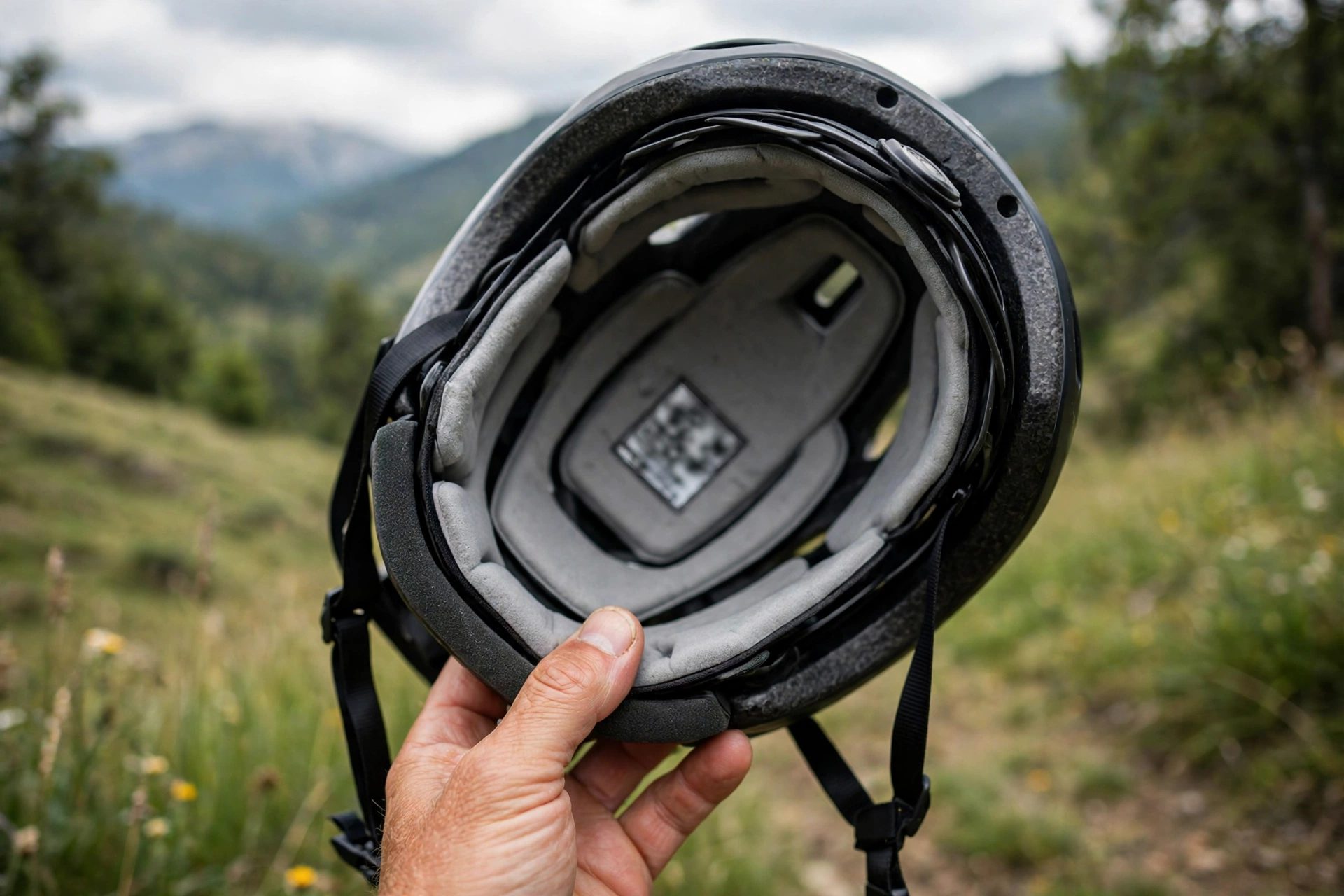
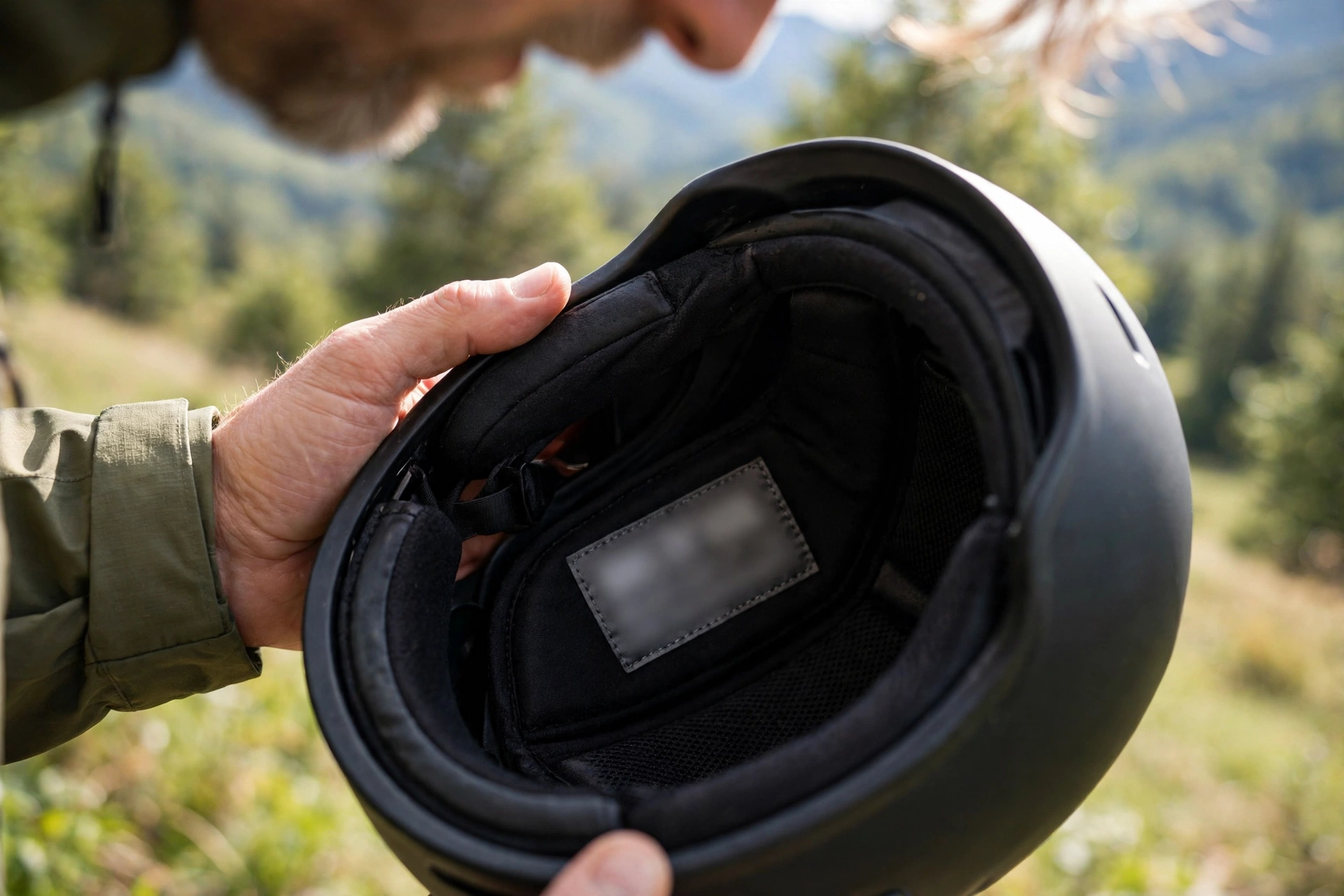
Start by looking inside the helmet, under or behind the removable comfort liner. On many bicycle helmets, the main label is a sticker placed directly on the inner EPS foam, often near the back or top. On motorcycle helmets, you will usually find a sewn or printed tag on the chin strap, a sticker under the liner, or labels attached to the comfort padding itself. Some helmets spread the information across two or three separate labels rather than one.
If the padding is removable, gently lift or unclip it and check underneath. Be careful not to tear the liner or peel at stickers, because a damaged or missing label creates problems later if you ever need to prove the helmet’s certification or check it against a recall notice. A flashlight helps — the print is often small. Any certification sticker on the outside of the shell is only a summary; the inside labels are the detailed record.
What Does Each Line on the Label Actually Mean?
The certification line names the standard the helmet was tested and approved to meet. On a bicycle helmet sold in the US, this is in general terms the CPSC standard; on many helmets sold internationally you may see EN 1078 for bicycle use, and on motorcycle helmets you may see DOT (FMVSS 218) or ECE markings. This line matters because it tells you the helmet was built and tested for a particular kind of riding. A helmet certified only as a bicycle helmet is not a motorcycle helmet, whatever it looks like.
The size marking might be a letter size (S, M, L) or a head circumference range in centimeters or inches. It should match the size on the box and, more importantly, the fit on your head. If it does not match what the seller told you, that is a red flag.
The maker’s name and the model name identify exactly which helmet you have — the information you need for warranty questions, replacement parts such as visors and pads, and recall checks. Finally, the manufacture date, usually a month and year, starts the clock on the helmet’s life. It is the date the helmet was made, not the date it was sold, and the two can differ by a year or more.
Why Does the Manufacture Date Matter So Much?
Helmet materials age even when a helmet is not being used. The EPS foam that absorbs impact energy, the adhesives that hold the helmet together, the comfort padding, and the strap webbing all change slowly over time, and heat, sunlight, and sweat speed that process up. Because of this, manufacturers and safety organizations in general terms suggest replacing a helmet after several years of use, and the manufacture date on the label is the only reliable way to know where a helmet stands.
This is especially important when buying secondhand or old stock. A helmet that looks brand new in its box might already be several years old. Check the date before you pay, and think twice about any helmet whose age you cannot establish at all.
When a maker says a helmet should be replaced a certain number of years after manufacture or first use, the label date is your starting point for that calculation. Write it down or photograph the label when the helmet is new, because years of sweat and cleaning can fade the print.
What If the Label Is Missing, Faded, or Unreadable?
Treat a helmet with no legible label with suspicion. Without the label you cannot confirm what standard it was certified to, who made it, or how old it is — and that uncertainty is exactly what you do not want in a piece of safety equipment. This applies to bargain helmets from unknown sellers, hand-me-downs, and any helmet where the label has been deliberately removed or covered.
A faded label on a helmet you bought new is less alarming, since you know its history, but it still limits you: a recall check or warranty claim may be impossible without the model and date details. If you never recorded them, an unreadable label is one more reason to move replacement up your list.
Also check that the labels are consistent. On a genuine helmet, the maker, model, size, and standard should agree with each other and with anything printed on the box. Spelling mistakes, mismatched model names, or a certification marking for a standard the brand does not actually sell to are classic warning signs of a counterfeit or mislabeled product. Labels inside the helmet work alongside other design details — for example, if you are checking whether a helmet has a rotational protection system, our guide to how MIPS liners work inside a helmet shows what to look for under the padding.
How Should You Record and Protect the Label Information?
The simplest habit is to photograph every label the day you buy the helmet and save the photos with the receipt. That gives you the model, size, standard, and manufacture date even if the print later fades or the padding is replaced. Some riders keep a note in their phone with the same details.
When cleaning the helmet, avoid scrubbing directly over printed labels and keep solvents and strong chemicals away from them — the same caution that protects the foam also protects the print. And whenever you inspect the straps, shell, and foam for wear, glance at the date too: knowing exactly how old your helmet is turns replacement from a guess into a decision.
Frequently Asked Questions
Q: Where exactly is the manufacture date printed on most helmets?
A: In general terms, it appears on the main inside label as a month and year, sometimes stamped separately on a small sticker on the foam or printed near the size marking. Check under the comfort liner if you do not see it at first glance.
Q: My helmet has both a CPSC and an EN marking. Which one applies to me?
A: Both can legitimately appear on a helmet sold in more than one market. What matters is that the helmet carries the certification required where you ride — CPSC for bicycle helmets sold in the US, in general terms — and that the markings match the maker’s genuine labeling.
Q: Is it safe to buy a helmet with no inside label if it looks new?
A: It is not recommended. Without a legible label you cannot verify the certification, the maker, or the age of the helmet, and those unknowns are a real safety concern. A helmet with its labels intact from a reputable seller is always the safer buy.

Olivia
Writer at Helmet Today, covering helmet reviews, fit and riding safety.