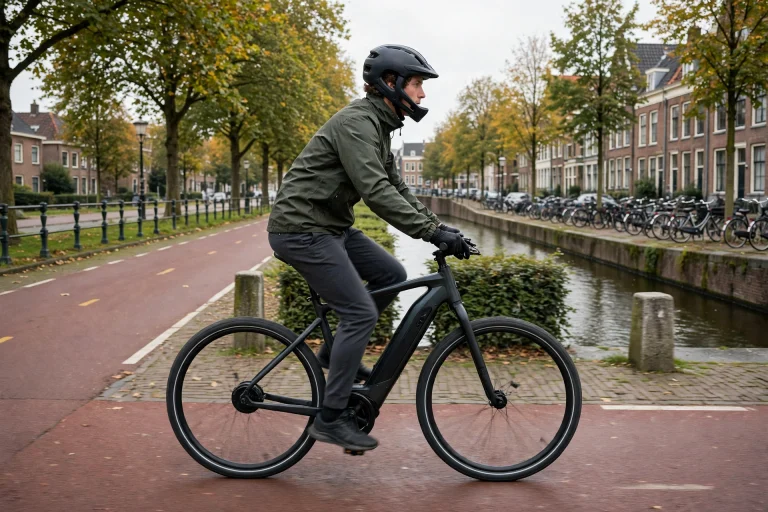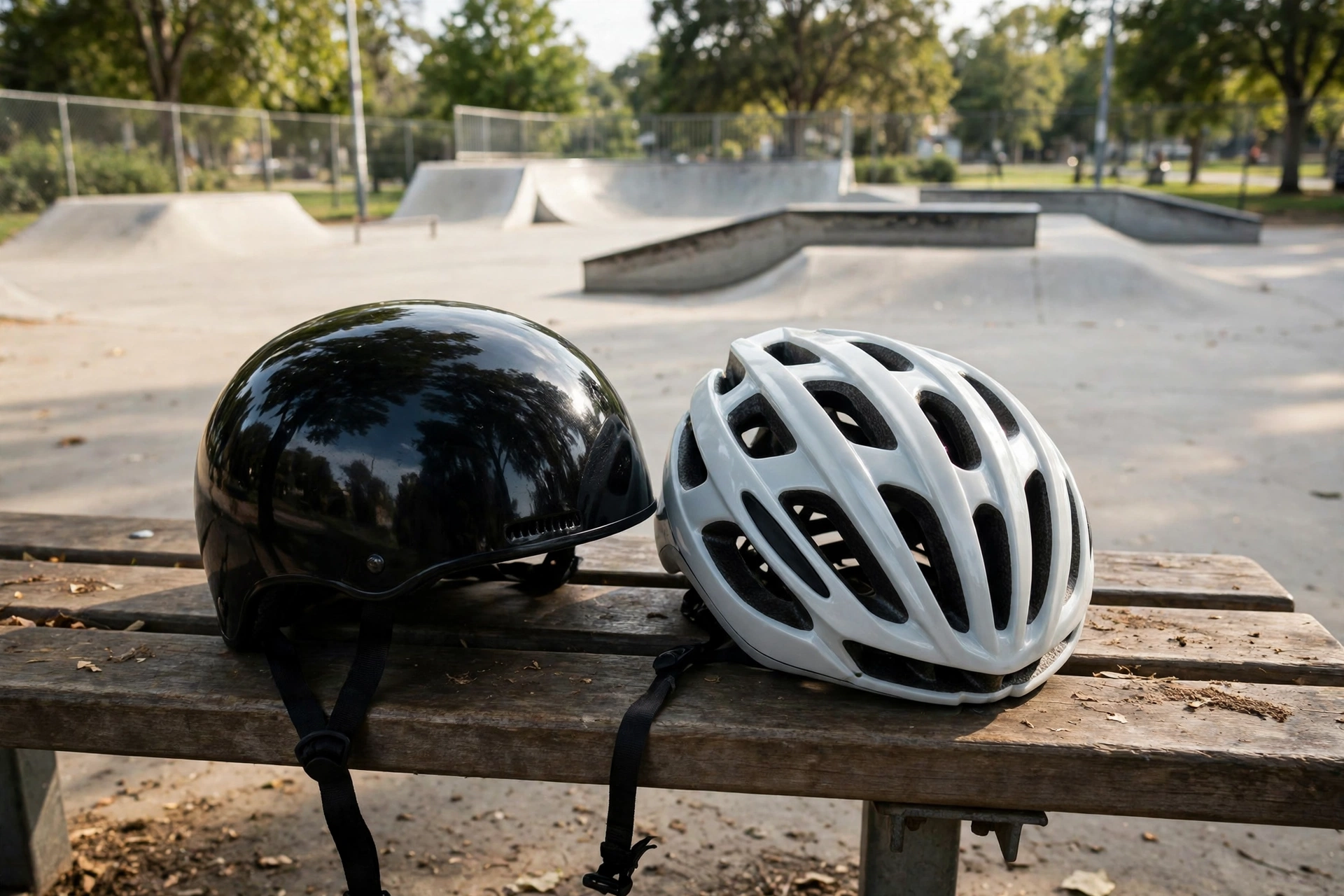
A single-impact helmet is designed to sacrifice itself in one serious crash and then be replaced; a multi-impact helmet is designed to keep working through repeated smaller knocks, the way a skateboarder falls again and again in a single session. The difference comes down to the liner material: single-impact helmets use crushable EPS foam, while multi-impact helmets use rebounding EPP foam or similar materials under a hard shell. Choosing between them is really choosing which crash pattern your sport produces.
Confusion between the two causes real mistakes — riders treating a bike helmet as reusable after a crash, or trusting a skate lid to handle a high-speed impact it was never tuned for. This article separates them properly: how each works, which standards cover which, and how to match the helmet to the falling you actually do.
What Does Single-Impact Actually Mean?
A single-impact helmet — nearly every road bike, mountain bike and motorcycle helmet — is built around an EPS foam liner that absorbs energy by crushing permanently. In one serious impact, that crush is the protection: the foam destroys itself so the force reaching your head stays survivable.
Afterward, the deal is fulfilled. The crushed zone cannot crush again, and the damage is usually hidden under a shell that springs back to shape. The helmet may look perfect and be functionally finished. “Single-impact” therefore describes the liner’s working life, not a prediction that you will only crash once — it means the helmet is certified and designed on the assumption that one real crash ends its service.
This is not a design flaw or a sales trick. Tuning a liner to crush at exactly the right rate for a high-energy hit is how you get the best possible performance in the impact most likely to cause serious injury. The replacement rule is simply the honest consequence of that engineering choice.
What Makes a Helmet Multi-Impact?
Multi-impact helmets are built for sports where falling is routine and impacts are frequent but lower in energy: skateboarding, BMX, roller sports and similar. Their liners use EPP foam or comparable rebounding materials that deform under a knock and then largely recover their shape, ready for the next one.
The outside matches that job. These helmets typically wear a thick, hard ABS-style shell that shrugs off abrasion, drops and daily abuse that would crack the thin microshell of a road bike helmet. The classic round “bucket” shape covers more of the head’s sides and back, which suits the sideways and backwards falls common on boards and ramps.
The trade is single-hit efficiency. In general terms, a rebounding liner manages less energy in one severe impact than an EPS liner tuned to crush, so multi-impact helmets are designed and tested against a different, lower-energy profile of repeated hits. They are not tougher helmets overall — they are helmets optimized for a different distribution of crashes.

Which Standards Cover Each Type?
Standards follow the sports. Bicycle helmets sold in the US must meet the CPSC standard, which is built around single, higher-energy impacts — consistent with EPS liners and the replace-after-a-crash rule. Motorcycle helmets follow their own standards (DOT, and ECE in Europe), likewise oriented to one serious crash.
Skate-style helmets commonly carry ASTM F1492 certification, the standard written for skateboarding, which tests a helmet’s ability to handle multiple impacts at the lower energies typical of that sport. The most versatile lids are dual-certified — meeting both the bike standard and the skate standard — which is why you will see dual-certified helmets recommended for riders who both cycle and skate casually.
Read the labels inside any helmet you are considering. They state which standard it meets, and that statement — not the shape, not the marketing, not the price — tells you which impact pattern it was actually tested for.
Does Multi-Impact Mean the Helmet Lasts Forever?
No. “Multi-impact” describes tolerance for repeated moderate knocks within the tested limits, not immunity to damage or age. A hard enough hit exceeds what any rebounding liner can shrug off, and manufacturers of multi-impact helmets still specify inspection and replacement guidance.
Wear accumulates in quieter ways too. Shells crack, straps fray, fit pads compress, and foam slowly ages with sweat, heat and sunlight. A multi-impact helmet that has taken seasons of daily knocks should be inspected honestly: dents that do not rebound, cracked shell edges, or a fit that has gone sloppy all mean retirement, whatever the label promises.
There is also a diagnostic trap. With an EPS helmet, one known crash settles the question. With a multi-impact helmet, riders must judge cumulative condition — and human nature being what it is, the temptation is to keep a favorite lid too long. Set your own threshold in advance: any hit that rings your bell, cracks the shell, or leaves a permanent mark ends the debate.
Which Type Fits Your Sport?
Match the helmet to your realistic worst day. If your sport’s danger is one fast, high-energy crash — road cycling, mountain biking at speed, motorcycling — choose the certified single-impact helmet for that sport and accept the replace-after-a-crash rule as part of its cost. If your sport involves repeated low-energy falls as a normal part of participation — skateboarding, BMX sessions, derby-style skating — a certified multi-impact helmet is the practical design.
Cross-over riders have a tidy option: a dual-certified helmet covers casual cycling and skating in one lid, which is why that category exists. What it does not do is turn a skate helmet into a motorcycle helmet or vice versa — certification always follows the activity.
Whichever type you choose, the other safety variables still apply: fit, condition, and increasingly, rotational management for angled impacts — the slip-plane approach explained in our guide to MIPS and how it works now appears in both single and multi-impact designs. The liner question comes first, though, because it decides what your helmet can survive — and what it cannot.
Frequently Asked Questions
Q: I crashed in my bike helmet but it looks fine. Can I keep using it?
A: No. A bike helmet is a single-impact design: its EPS liner crushes invisibly under the shell during a crash, and that crushed section cannot protect the same spot again. If your head was in it and it hit something, replace it — the fact that it looks undamaged is exactly the trap.
Q: Can I use a skate helmet for cycling?
A: Only if it is certified for it. A skate-only helmet certified to ASTM F1492 is not a legal or tested bicycle helmet in the US. Look for dual-certified models that meet both the bike standard (CPSC) and the skate standard — those are genuinely fine for both activities.
Q: How many impacts can a multi-impact helmet take?
A: There is no honest number. It depends on the energy of each knock, where it lands, and the helmet’s accumulated condition. Multi-impact means repeated moderate knocks within its tested limits — and any single hard hit, crack, or permanent dent ends its life regardless of count.

Olivia
Writer at Helmet Today, covering helmet reviews, fit and riding safety.