EPS and EPP are both expanded bead foams used inside helmets, but they behave oppositely in a crash: EPS crushes permanently to absorb one big impact, while EPP springs back and can tolerate repeated smaller knocks. EPS — expanded polystyrene — is the white or grey foam in most bike and motorcycle helmets. EPP — expanded polypropylene — is the springier foam found in many skate-style and multi-impact helmets. Which one a helmet uses tells you a lot about what it was designed to survive.
The two materials look similar at a glance — both are made of tiny fused beads — and that similarity hides an important difference. Swap them, and you would change the helmet’s entire protection strategy. Here is how each works, and why the difference decides when a helmet must be replaced.
What Is EPS Foam and How Does It Protect You?
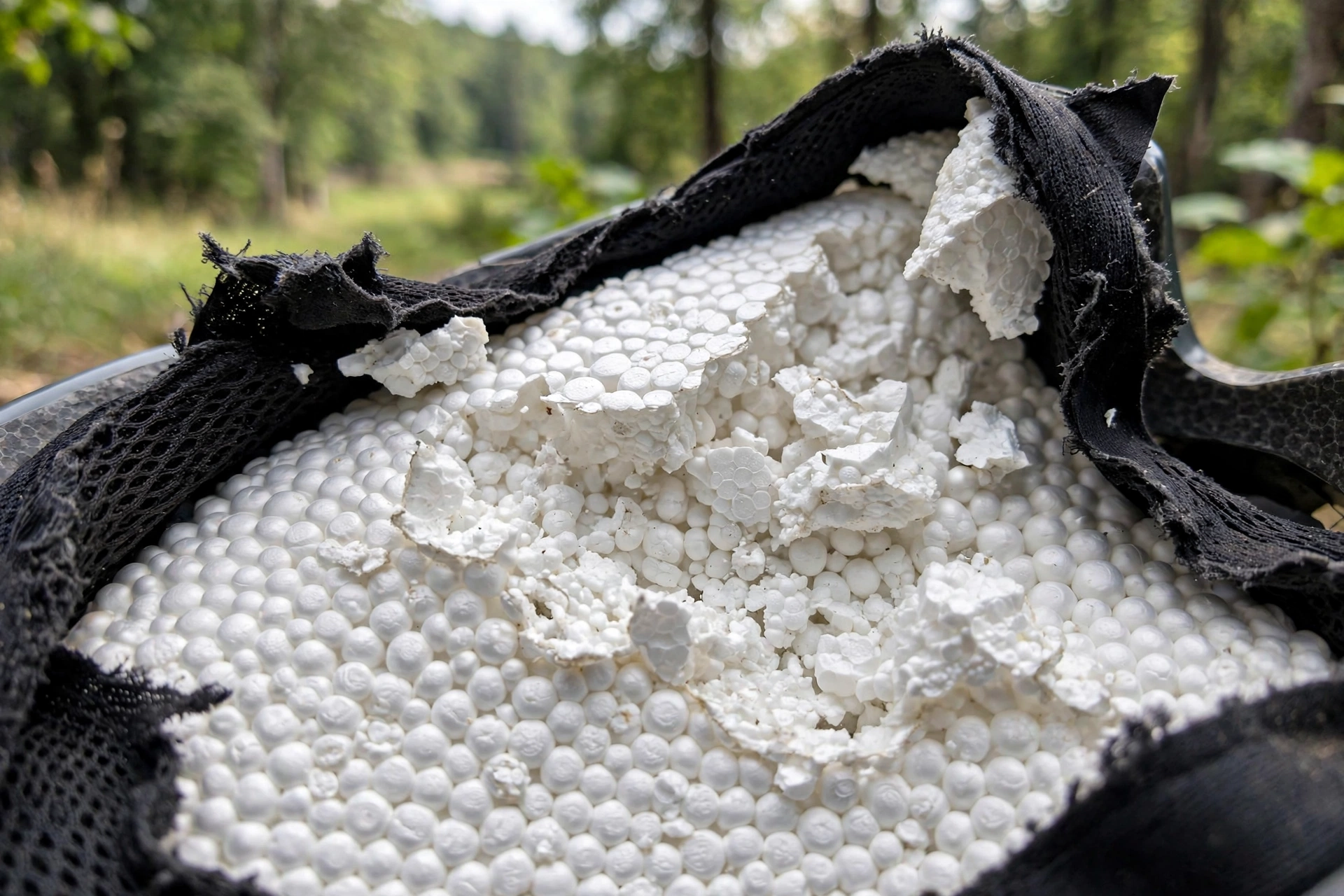
EPS is expanded polystyrene: polystyrene beads puffed up with air and molded into a rigid liner, the same family of material as a foam cooler or packaging insert, but engineered to a precise density for helmets. That rigidity is the point. In an impact, EPS absorbs energy by destroying itself — the bead walls buckle and crush in a controlled way, converting the force of the blow into the work of permanently deforming the foam.
Crushing is an excellent strategy for a single serious impact, because it spreads the stop over the thickness of the liner and caps the peak force passed to the head. Helmet designers tune the density carefully: too soft and the liner bottoms out in a hard hit; too hard and it does not crush enough in a moderate one.
EPS is also light, inexpensive to mold into complex vented shapes, and stable enough to form the structural core of most modern helmets. Its one defining weakness is written into how it works: crushed EPS does not recover. The dent stays, and that spot will never absorb the same energy again.
What Is EPP Foam and How Is It Different?
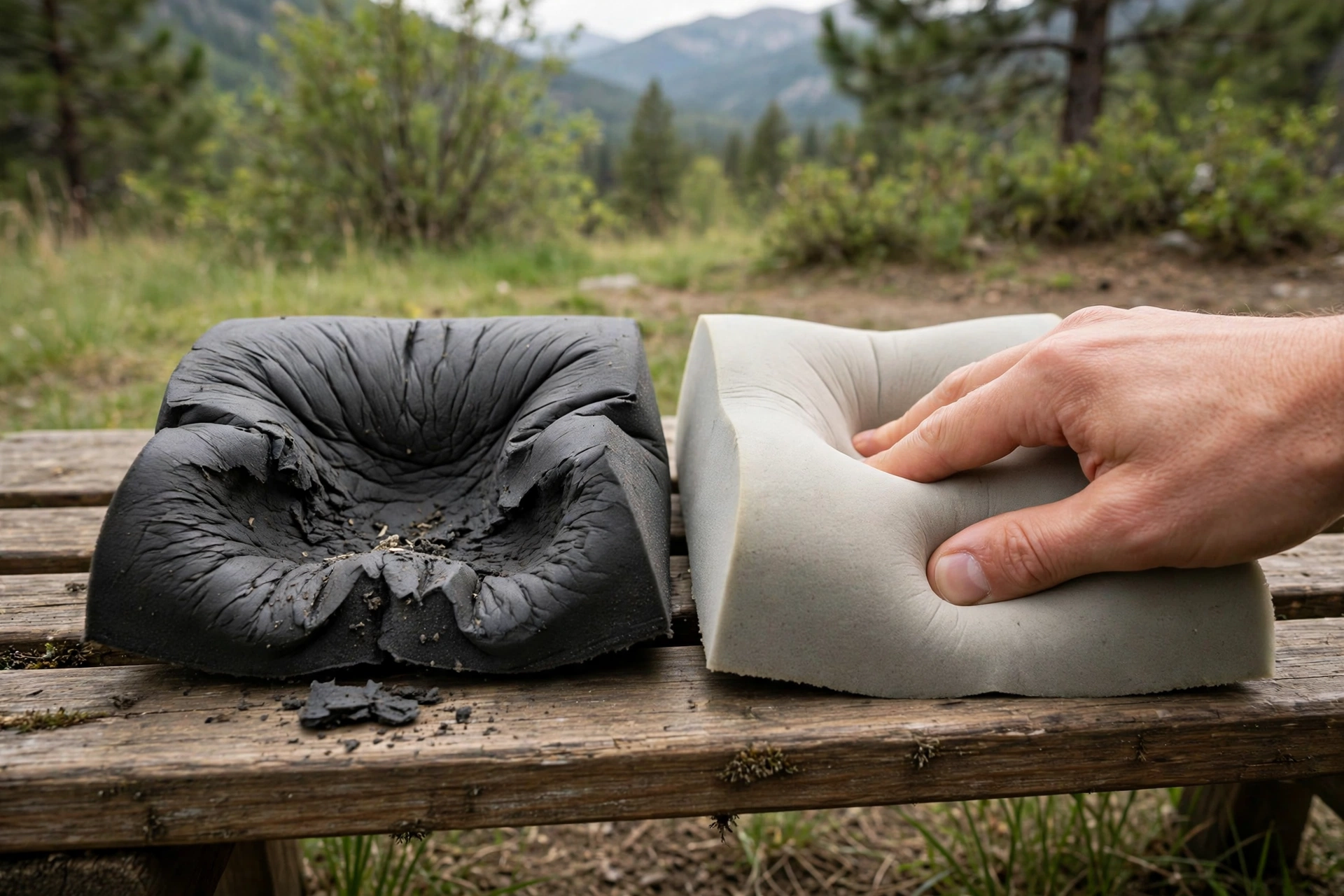
EPP is expanded polypropylene, made from a more flexible plastic. Its beads deform under impact too, but instead of fracturing permanently, the material largely rebounds toward its original shape afterward — press a thumb into an EPP sample and it gives, then slowly recovers, where EPS would stay dented or crack.
That rebound makes EPP the multi-impact material. A skate helmet or hard-shell lid designed for repeated lower-energy knocks — the kind of falls a skateboarder or BMX rider takes in a normal session — can keep working through bumps that would retire an EPS liner one by one.
The trade-off is efficiency per hit. In general terms, EPP manages less energy in a single severe impact than an EPS liner of the same thickness tuned for that blow: the springiness that lets it survive small knocks means it transmits more force in a big one unless it is made thicker. EPP helmets are therefore designed around a different impact profile — frequent and moderate, rather than rare and severe.
Why Does EPS Only Work Once?
Because its protection is stored in its structure, and the structure is spent absorbing the crash. Imagine the liner as millions of tiny air-filled struts. A serious impact collapses the struts across the impact zone; the energy that would have reached your head went into breaking them instead. Afterward, that zone is thinner, denser and already collapsed — hit the same spot again and there is almost nothing left to crush, so far more force passes through.
Crucially, the damage is often invisible. The outer shell can spring back and hide a crushed liner completely, and the dent may be under intact-looking foam. This is why the rule “replace any helmet after a crash” is not marketing — it is materials science. If the helmet did its job, it used itself up doing it.
Drops and knocks sit on a spectrum. A helmet that tumbles off a low table onto carpet has not spent its liner; one that takes a real head-height fall onto concrete, or any impact with a head inside it, should be treated as done. When in doubt, some manufacturers will inspect a helmet if you send it in — but the default assumption protects you, not the helmet.
Where Will You Find Each Foam?
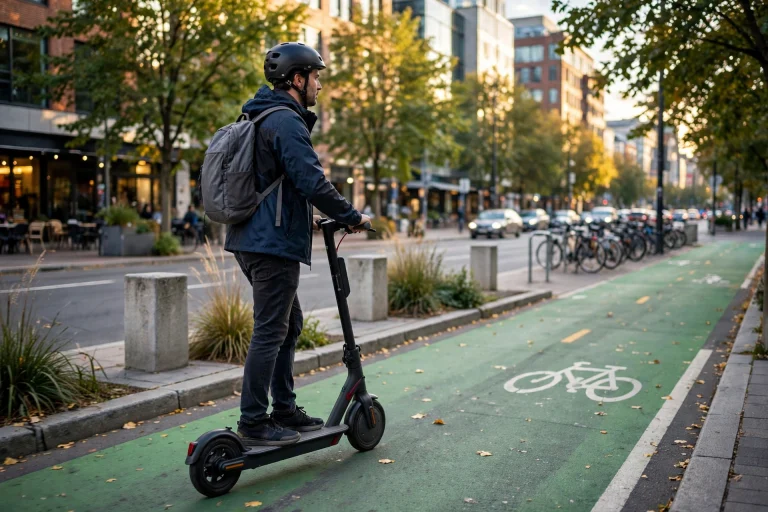
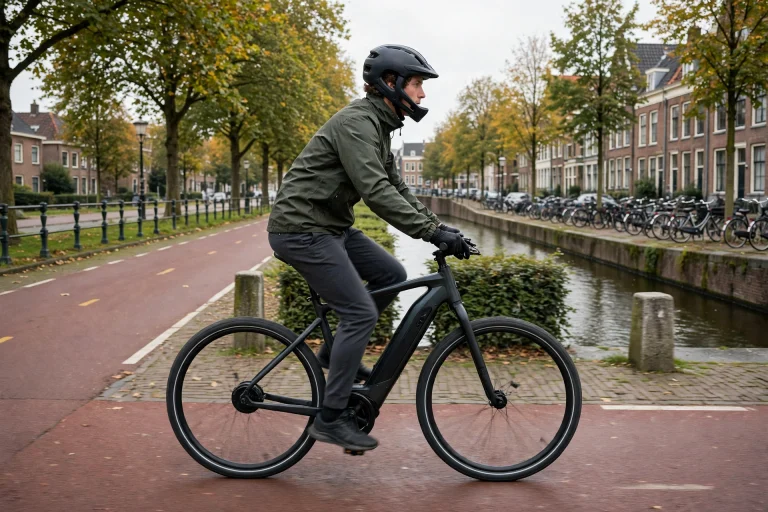
EPS dominates wherever the design threat is one high-energy crash: road and mountain bike helmets, motorcycle helmets, ski racing helmets and most equestrian helmets use EPS liners, usually bonded inside a thin shell. Many liners also mix EPS densities by zone, softer where impacts are gentler, firmer where they are hardest.
EPP appears where repeated knocks are the norm: skate and BMX-style helmets, some whitewater and multi-sport helmets, and certain team-sport and industrial designs. You will also meet hybrid constructions — helmets that combine an EPP or foam layer for repeated low-energy contact with EPS for the big hit — and newer materials and structures that try to blur the line entirely.
Rotational liners are a separate dimension altogether: systems like MIPS are thin layers added alongside the foam, whichever foam it is, to manage angled impacts. If that side of design is new to you, our explainer on what MIPS is and why helmets add it connects the foam story to the rotation story.
Which Foam Is Better for Your Riding?
Neither in the abstract — match the material to the crash pattern. If your sport’s serious accident is a single fast impact — road cycling, motorcycling, skiing at speed — EPS is the right tool, and its one-and-done nature is an acceptable price for the best possible performance in that one hit.
If your activity involves routine tumbles at lower energy — skateboarding, BMX practice, learning new tricks where falling is part of the session — an EPP-based multi-impact helmet makes practical sense, provided it carries the certification your sport calls for. What you must not do is assume multi-impact means infinite: EPP helmets still wear out, still have manufacturer replacement guidance, and still need retiring after a genuinely hard hit or visible damage.
Check the certification and the manufacturer’s own description before you buy, and be wary of any helmet that does not say what its liner is. Reputable brands state it plainly, because the material is the helmet’s whole strategy — and now you know how to read it.
Frequently Asked Questions
Q: Can I tell EPS and EPP apart by looking?
A: Often, yes. EPS is usually rigid, matte and slightly crumbly at a cut edge, and it stays dented if you press a thumbnail in firmly. EPP typically feels smoother and springier and recovers from a thumb press. The reliable method is the manufacturer’s spec sheet — and never press-test your own helmet’s liner hard enough to damage it.
Q: My EPS helmet fell off my bike onto concrete. Is it ruined?
A: A drop with no head inside, from modest height, often causes only cosmetic harm — but a crushed spot cannot be ruled out by looking, because the shell hides the liner. Check for cracks or dents, and if the drop was hard or from height, err toward replacement or ask the manufacturer about inspection.
Q: Why don’t all helmets just use EPP so they last longer?
A: Because rebound costs single-impact performance. For the same thickness, springy foam passes more force in a severe impact than EPS tuned to crush. In sports where the worst crash is the one that matters most, single-use EPS is the safer engineering choice.

Olivia
Writer at Helmet Today, covering helmet reviews, fit and riding safety.