For most electric scooter riders, the baseline helmet is a certified bicycle helmet, because most places regulate stand-up e-scooters under bicycle-style rules — but the faster your scooter, the stronger the helmet you should choose, up to a motorcycle helmet for scooters that approach moped speeds. There is no single e-scooter-specific helmet standard in general use, so riders borrow from the standards on either side: bicycle standards at the low-speed end, motorcycle standards at the high-speed end. Matching the helmet to the scooter’s real speed is the whole game.
The confusing part is that “electric scooter” covers everything from a lightweight rental scooter in a city center to a powerful dual-motor machine that out-accelerates traffic. Those two vehicles need very different helmets, and local rules vary by state and city, so this guide sticks to the general framework: what the rules usually say, which standards apply at which speeds, and how to choose sensibly.
What Do the Rules Usually Require for E-Scooter Riders?
In general terms, most US states and cities that regulate stand-up e-scooters treat them more like bicycles than like motor vehicles, especially the low-powered, lower-speed models used by sharing schemes and most commuters. Where helmet rules exist for these scooters, they commonly point to a bicycle helmet — one meeting the CPSC bicycle standard — and in many places the requirement applies to younger riders, or to all riders, depending on the jurisdiction.
Some places have no helmet requirement for adult e-scooter riders at all, and rules for rental scooters can differ from rules for privately owned ones. Because the patchwork is genuinely local, the only safe statement is this: check the current rule in your state and city before assuming either that a helmet is legally required or that it is not. Legality aside, the physics of falling off a small-wheeled scooter at speed argue for wearing one regardless.
Scooters that exceed the bicycle-style categories — higher power, higher top speed — can fall under moped or motorcycle rules instead, which changes both the licensing and the helmet requirement. If your scooter is registered or plated, that is a strong hint it is no longer being treated as a bicycle-style vehicle.
Which Helmet Standards Apply at Scooter Speeds?
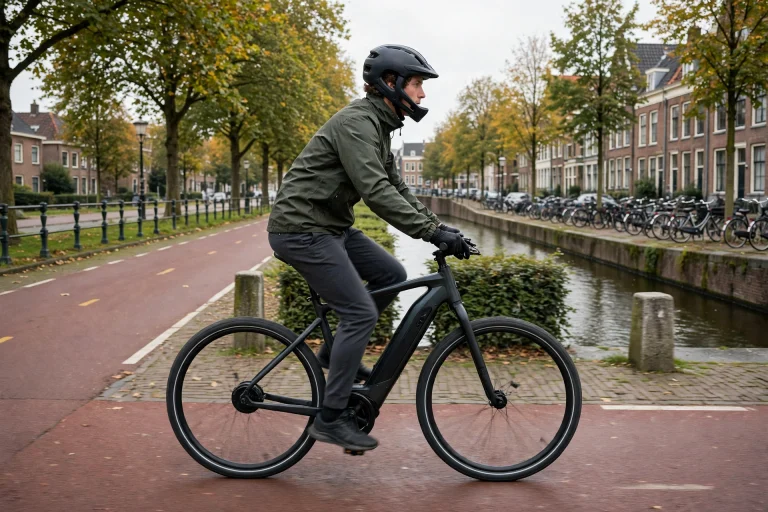
At the low-speed end, the relevant standard is the bicycle one. A CPSC-certified bicycle helmet (or its European EN 1078 counterpart) is designed and tested for the fall energies typical of cycling — in general terms, a fall from riding height at moderate speed. For a scooter used at bicycle-like speeds on bike lanes and paths, that is the proportionate match, and it is the standard most local rules reference.
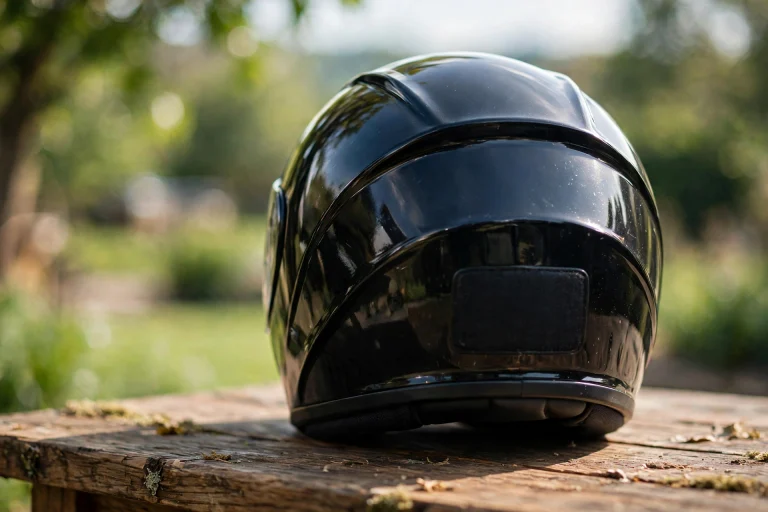
At the high-speed end, the relevant standards are the motorcycle ones: DOT (FMVSS 218) in the US or ECE in Europe. Motorcycle helmets are built for higher impact energies, with full shells, thick EPS liners, and — in full-face form — chin protection. A scooter that cruises at moped-like speeds exposes its rider to moped-like crash energies, and a bicycle helmet is simply not tested for that job.
Between those poles sit e-bike-oriented standards such as NTA 8776, written for speed pedelecs, which offer more coverage and higher-energy testing than a basic bicycle helmet. For a mid-speed scooter, a helmet of that type — or a downhill-rated mountain bike helmet — can be a reasonable step up in general terms, though riders should remember these are still bicycle-family certifications, not motorcycle approvals.
Why Do Scooter Falls Deserve Extra Respect?
Stand-up scooters have small wheels, a short wheelbase, and a high, upright rider position. Small wheels drop into potholes and catch on edges that a bicycle rolls over, and the classic scooter crash is a sudden stop that pitches the rider forward over the front — a fall pattern where head and face injuries feature prominently.
That pattern is why many experienced scooter riders choose helmets with more coverage than a minimal bicycle helmet even at moderate speeds, and why full-face helmets are popular with fast-scooter riders. Coverage at the back and sides, a secure retention system, and a fit that cannot shift in a tumble matter at least as much as the certification line.
It is also why features from the bicycle world can be worth having on a scooter helmet. Rotational impacts are common in real falls, and riders comparing options may find our guide to what MIPS does in a helmet helpful when weighing a bicycle-style helmet with that technology for lower-speed scooter use.
How Should You Match a Helmet to Your Scooter?
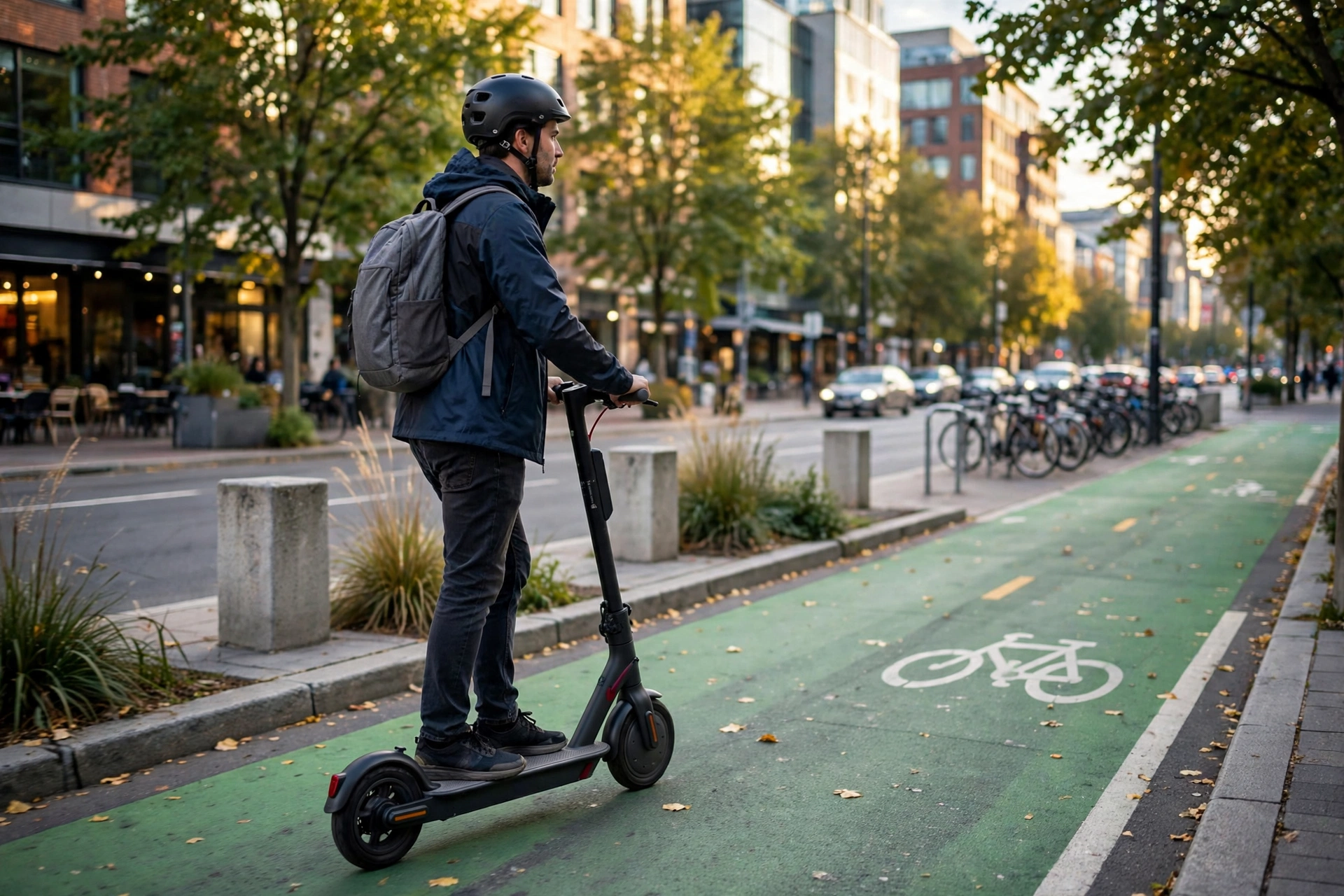
Start with the scooter’s realistic top speed and where you ride it. A lightweight scooter used at bicycle speeds in bike lanes: a certified bicycle helmet is the sensible baseline. A mid-range commuter scooter that regularly travels faster than typical cycling: step up to a higher-coverage bicycle-family helmet, such as an NTA 8776 or downhill-rated model, in general terms.
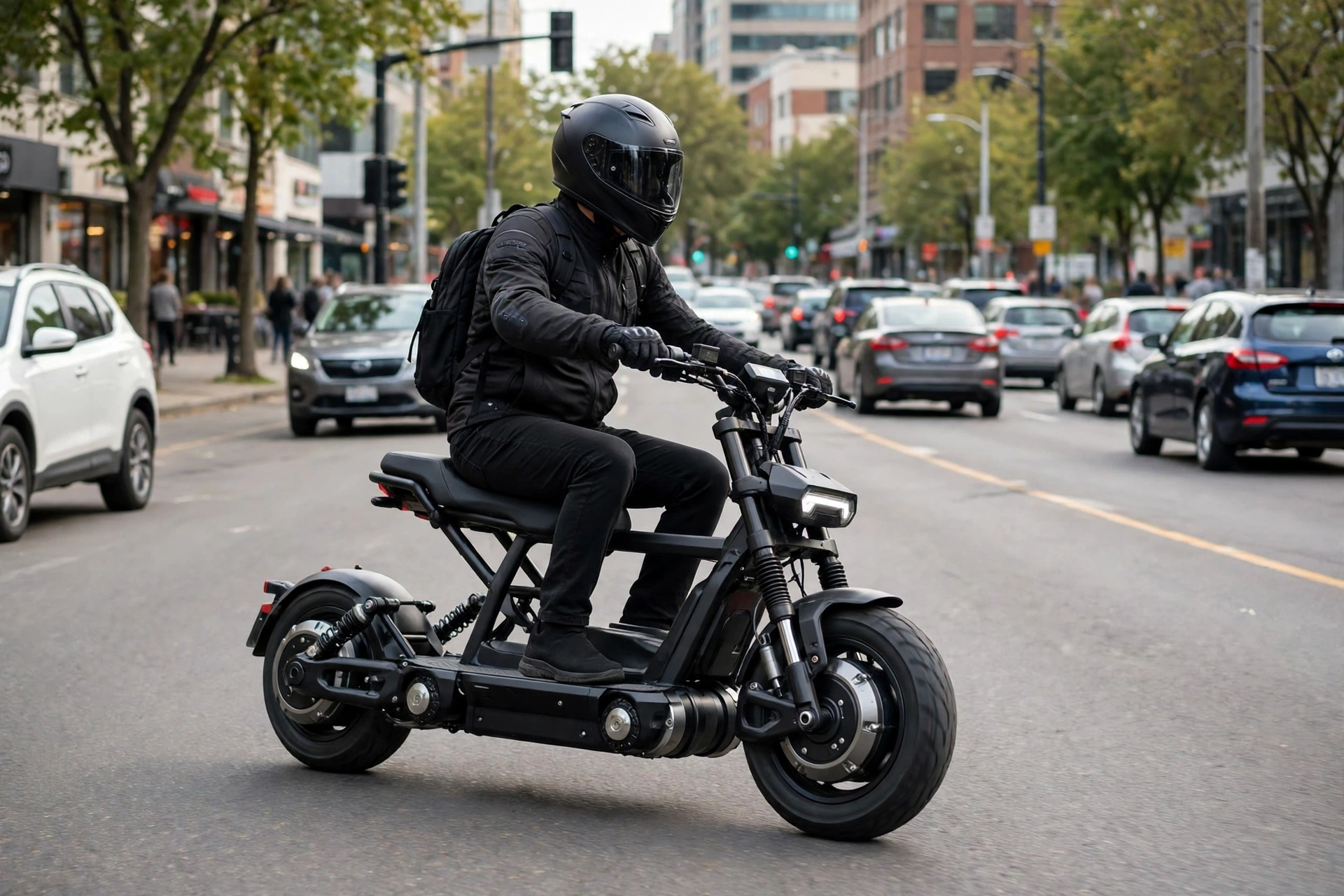
A powerful scooter that keeps up with urban traffic at moped-like speeds should be matched with a motorcycle helmet — ideally full-face, given the forward-pitch fall pattern. At those speeds the extra weight and warmth of a motorcycle helmet are the right trade for tested protection at the relevant energies, and it may also be what your local rules require if the scooter is classed as a moped.
Whatever the category, fit is non-negotiable: the helmet must sit level, feel snug all around, and stay put when you shake your head, with the strap properly fastened. A certified helmet worn loose or unbuckled gives up much of its value in the first moment of a crash.
What About Rental Scooters and Shared Schemes?
Shared scooters add a practical wrinkle: the scooter is provided, but a helmet usually is not, or is offered only optionally in some schemes. Riders who use shared scooters regularly often buy their own lightweight bicycle helmet and carry it, or choose a foldable or easily carried design made for commuting.
The rules point stands even here — some cities require helmets for shared scooter riders while others do not, and the requirement can depend on age. A quick check of your city’s current rules tells you where you stand; your own head argues for wearing one either way.
If you only ride occasionally at low speeds, a certified bicycle helmet you already own for cycling is in general terms a perfectly reasonable choice. The key decisions are certification and fit, not buying a scooter-specific product — because, in standards terms, there really is not one.
Frequently Asked Questions
Q: Is a bicycle helmet legal for e-scooter riding?
A: In general terms, where e-scooters are regulated as bicycle-style vehicles and a helmet is required, a CPSC-certified bicycle helmet is the usual baseline that satisfies the rule. Faster scooters classed as mopeds can require a motorcycle helmet instead — check your state and city rules.
Q: At what point should I switch to a motorcycle helmet on a scooter?
A: When your scooter’s speeds approach moped territory and you ride in traffic at those speeds, a motorcycle helmet is the proportionate choice, in general terms. Bicycle-family helmets are not tested for those impact energies.
Q: Is there a specific helmet standard just for e-scooters?
A: Not in general use. Riders rely on the bicycle standards at low speeds and motorcycle standards at high speeds, with tougher e-bike standards such as NTA 8776 sitting in between. Choose by the speed you actually ride.

Olivia
Writer at Helmet Today, covering helmet reviews, fit and riding safety.