We may earn a commission when you buy through links on this page, at no extra cost to you. Learn more
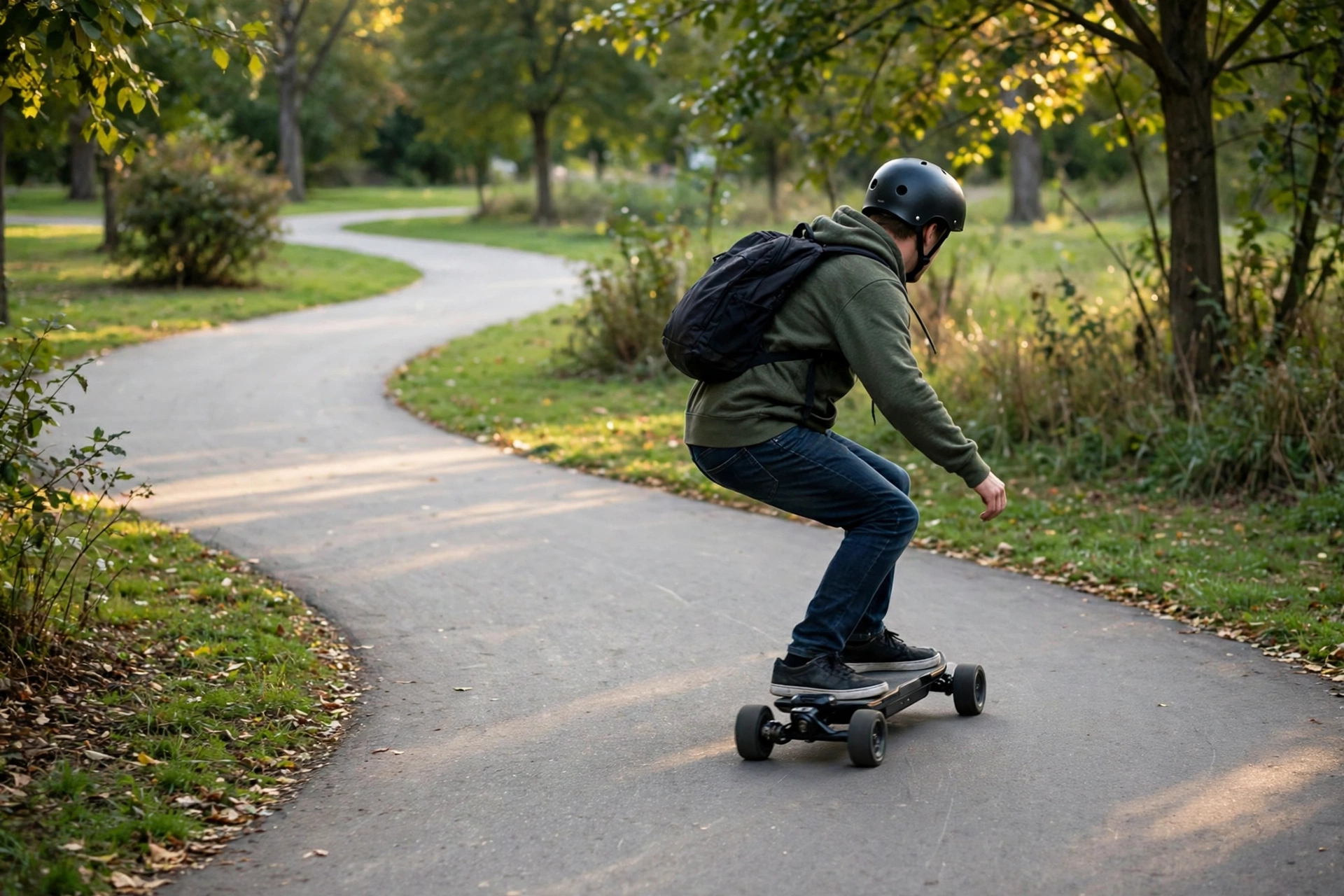
The best helmet for most electric skateboard riders is a certified skate-style helmet — ideally one dual-certified to both the CPSC bicycle standard and ASTM F1492 for skating — because e-skate falls are fast, sudden, and often land on pavement. Riders who regularly cruise at higher speeds, ride hills, or mix with traffic should step up to a lightweight full-face helmet. An uncertified novelty shell, however light or stylish, is not real protection.
Electric skateboards change the risk picture compared with a regular skateboard. The motor holds your speed up hills and across town, the remote can accelerate or brake you in ways your feet never would, and a small wheel hitting a crack or stone at speed can stop the board while you keep going. Helmet choice has to reflect that reality, not just skatepark tradition.
What Makes Electric Skateboard Falls Different?
On a push skateboard, most falls happen at low speed during tricks, and experienced skaters learn to roll out of them. On an electric board, in general terms, the common crash is different: a sudden stop or unexpected acceleration throws the rider forward or backward at cruising speed, often with no time to react. Riders also spend long stretches simply traveling — commuting, carving bike lanes — where the fall risk looks more like cycling than skateboarding.
That matters for helmet design. You need coverage that stays in place during a fast, uncontrolled fall, a shell and foam system tested for real impact energy, and a fit that does not shift when you look over your shoulder in traffic. Speed also means wind, glare, and longer exposure, so ventilation and comfort decide whether the helmet actually gets worn on every ride.
Half Shell or Full Face: Which Is Right for Your Riding?
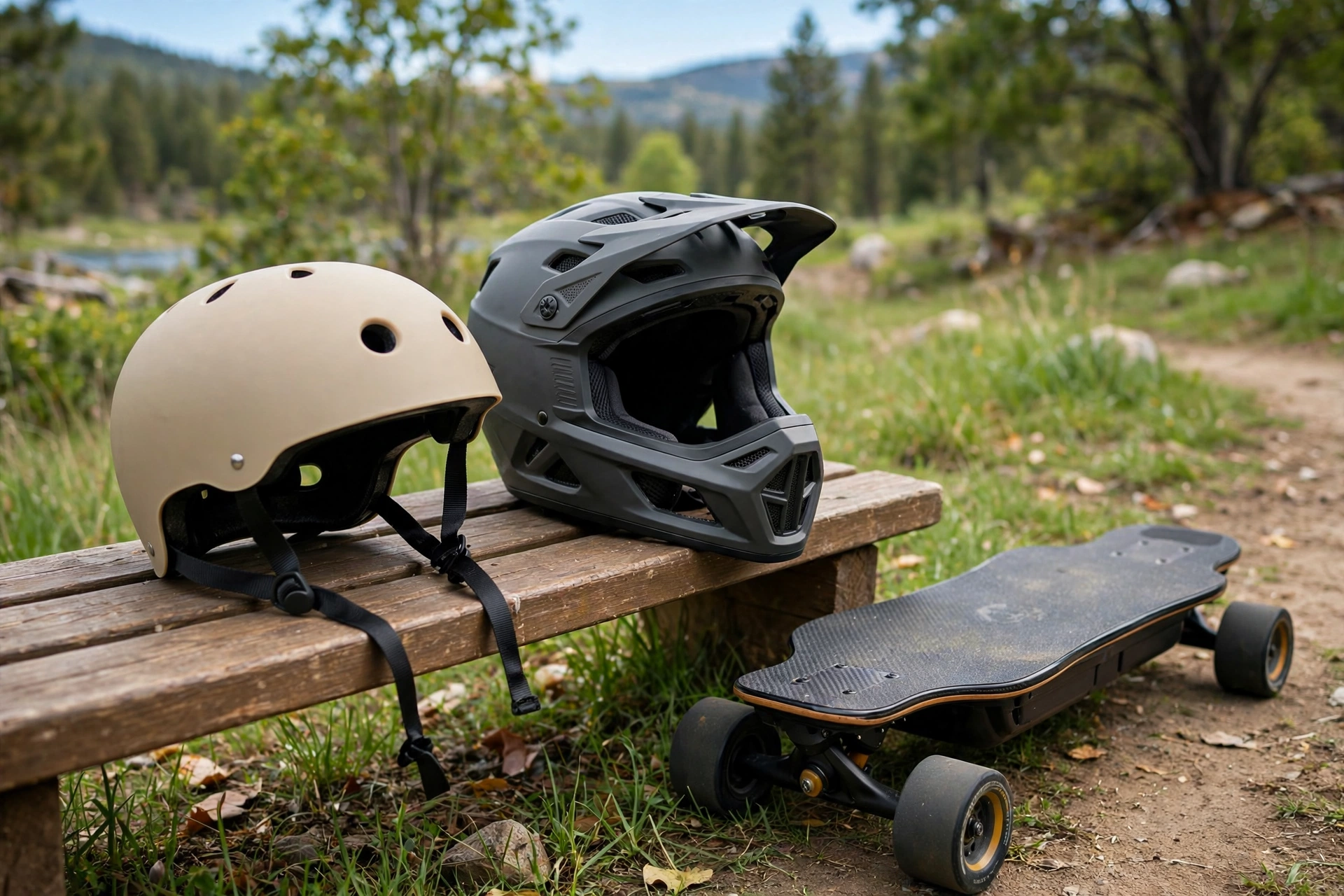
A quality half-shell skate helmet is the sensible default for most e-skate riders. It covers the top, back, and sides of the head, sits low, and works well at the moderate speeds most people cruise at on flat ground and bike paths. It is light enough to wear for a whole commute and easy to carry once you arrive.
A full-face helmet earns its extra weight when speed and exposure rise: fast boards ridden near their top speed, steep hill descents, rough pavement, or regular riding in traffic. The chin bar protects your jaw and teeth in exactly the forward falls electric boards are known for. Many riders who started on a half shell upgrade to a lightweight full face once their cruising speed climbs — think of it as matching the helmet to the fastest riding you actually do, not the slowest.
Which Certifications Should an E-Skate Helmet Carry?
Look for certification labels inside the helmet, not just marketing claims on the box. In the US, bicycle helmets must meet the CPSC standard, and skate helmets are commonly tested to ASTM F1492, which is designed around the repeated lower-energy impacts of skating. A dual-certified helmet — one that carries both — is in general terms the strongest all-round choice for electric skateboarding, because it is tested for both worlds the rider moves between.
Be wary of helmets with no recognizable certification at all. Cheap novelty shells may look like skate helmets but lack the energy-absorbing foam and testing that make a helmet protective. If a listing cannot name the standard the helmet meets, treat that as a failed check, however good the helmet looks.
Some riders also look for rotational-impact protection. Angled falls are common on boards, and our guide to what MIPS is and how slip-plane liners work explains the technology many skate and bike helmets now offer. It is a worthwhile extra where available, but certification and fit still come first.
What Fit and Coverage Details Matter Most?
Measure your head and buy by the maker’s size chart — a helmet that rocks, slips down over your eyes, or squeezes one spot will not stay where it needs to in a crash. The helmet should sit level, low on the forehead, and feel evenly snug all around. The straps should form a V under each ear, with about one or two fingers of room under the chin strap.
Coverage at the back of the head matters for board riders, because backward falls are a real pattern when a board shoots out or brakes unexpectedly. Skate-style helmets typically extend lower at the back than aero road-bike helmets, which is one reason they suit e-skating. Check that the retention system — a rear dial on many models — holds the helmet steady when you shake your head.
Comfort details decide daily use: enough vents for summer cruising, pads you can remove and wash, and a weight that does not strain your neck on a long ride. A helmet that lives on your head protects you; a technically excellent one left at home does not.
When Should You Replace an Electric Skateboard Helmet?
Replace any helmet after a crash in which it struck the ground or another hard surface, even if it looks fine. The foam inside most helmets is designed to crush once to absorb energy, and that damage is often invisible from outside. Multi-impact skate designs tolerate minor knocks better in general terms, but a hard hit still retires the helmet.
Age and wear matter too. Sweat, sun, and everyday knocks degrade foam and straps over time, and makers commonly suggest replacing a helmet after a few years of regular use. Frayed straps, cracked foam, a loose fit that no longer adjusts out, or a shell with visible damage are all end-of-life signs. When in doubt, a new certified helmet is far cheaper than the alternative.
Frequently Asked Questions
Q: Can I use my regular bike helmet on an electric skateboard?
A: A certified bike helmet is far better than nothing and fine for gentle cruising, but a dual-certified skate helmet usually gives better back-of-head coverage and is tested for skating-style impacts, so it is the better match for most e-skate riding.
Q: Do I need a full-face helmet for an electric skateboard?
A: Not for moderate speeds on flat ground, where a certified half shell does the job. If you ride fast, descend hills, or share the road with traffic, a lightweight full face adds jaw and face protection that matches the higher risk.
Q: Are cheap uncertified skate helmets okay for short rides?
A: No. A helmet without recognized certification has not been tested to absorb real impact energy, and short rides include the same pavement as long ones. Choose a certified helmet in your size and wear it every ride.

Olivia
Writer at Helmet Today, covering helmet reviews, fit and riding safety.