Whether a kid can ride an electric scooter depends on a mix of state and city law, rental company rules, and the type of scooter — there is no single national age. In general terms, rental scooters usually require riders to be 18, privately owned low-speed scooters are made for younger teens and children, and many places require helmets for minors even where adults can legally ride without one. Always check your local rules before handing a child a scooter.
This guide explains the patterns behind the rules — why rentals are stricter than private scooters, how helmet requirements for minors usually work, and how to find the actual law where you live.
Can kids legally ride electric scooters?
It depends on where you live and what kind of scooter it is. E-scooters are still regulated patchily: some states set a minimum riding age in law, some cities write their own ordinances, and some places have no specific e-scooter age rule at all, leaving general traffic law and manufacturer guidance to fill the gap.
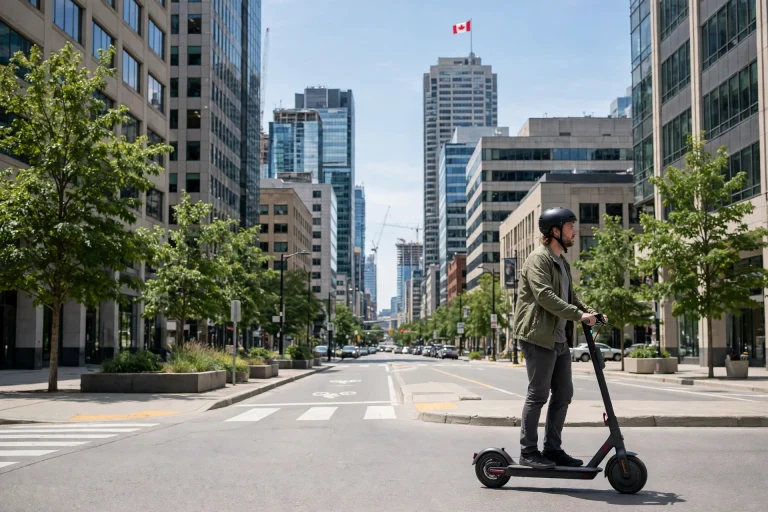
As a pattern, in general terms, laws tend to be stricter about younger riders on faster devices and about riding on public roads versus private property. A child riding a low-powered scooter on a private driveway is in a very different legal — and practical — position from a teen riding a 25 mph scooter in traffic. When there is no clear rule, the safest interpretation is to follow the scooter maker’s stated minimum age for that model and to keep young riders off public roads entirely.
Why do rental scooters have stricter age rules?
Shared rental scooters are usually adults-only. In general terms, the major rental apps require riders to be 18, hold an account in their own name, and accept terms that ban carrying passengers — including small children standing on the deck in front of an adult, which is both prohibited and genuinely dangerous.
The reasons are practical: the companies cannot verify a younger rider’s ability, their insurance is written for adult riders, and the scooters are full-size machines with adult-weight power and speed. That 18-plus pattern in rentals does not mean a younger teen can never ride any e-scooter — it means they cannot ride those scooters, on those terms. Letting a child use an adult’s rental account is a terms violation and can leave you uninsured if something goes wrong.
What about privately owned e-scooters for kids?
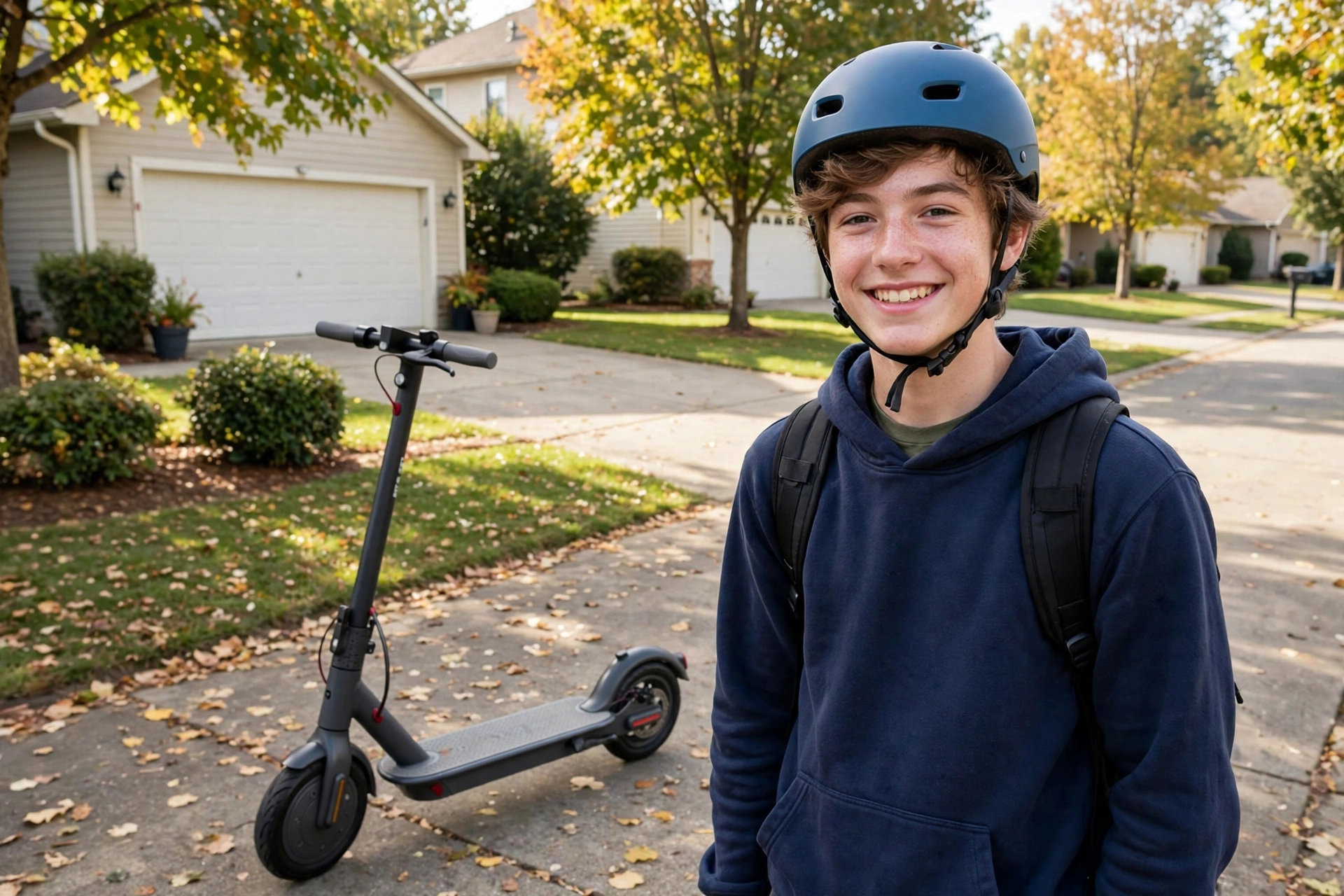
Manufacturers sell scooters designed for children and younger teens: smaller decks, lower power, and top speeds kept modest — often in the range a child could reach on a bicycle. These are a reasonable step up from a push scooter for many families, used in the right places: driveways, quiet paths where motorized devices are allowed, and other low-traffic spots.
Follow the maker’s age and weight guidance for the specific model rather than general assumptions. A scooter built for a 10-year-old is not suitable for a 6-year-old just because the younger child can reach the ground, and an older, heavier teen can overwhelm a small scooter’s brakes and steering. Speed settings, if the scooter has them, should start at the lowest mode until the rider is confident and competent.
Supervision matters as much as equipment. Young riders should start somewhere with no traffic at all — an empty driveway, a quiet cul-de-sac, or a smooth path where motorized riding is allowed — and practice starting, stopping, and stepping off safely before they go anywhere busier. Set clear household rules early: helmet on before the scooter powers up, no passengers ever, no riding in traffic or after dark, and one rider per scooter. Children accept rules much more easily when the rules arrive with the scooter rather than after the first scare, and a parent riding alongside — on their own scooter or a bike, helmet on too — is the best teacher of all.
What helmet should a kid wear on an e-scooter?
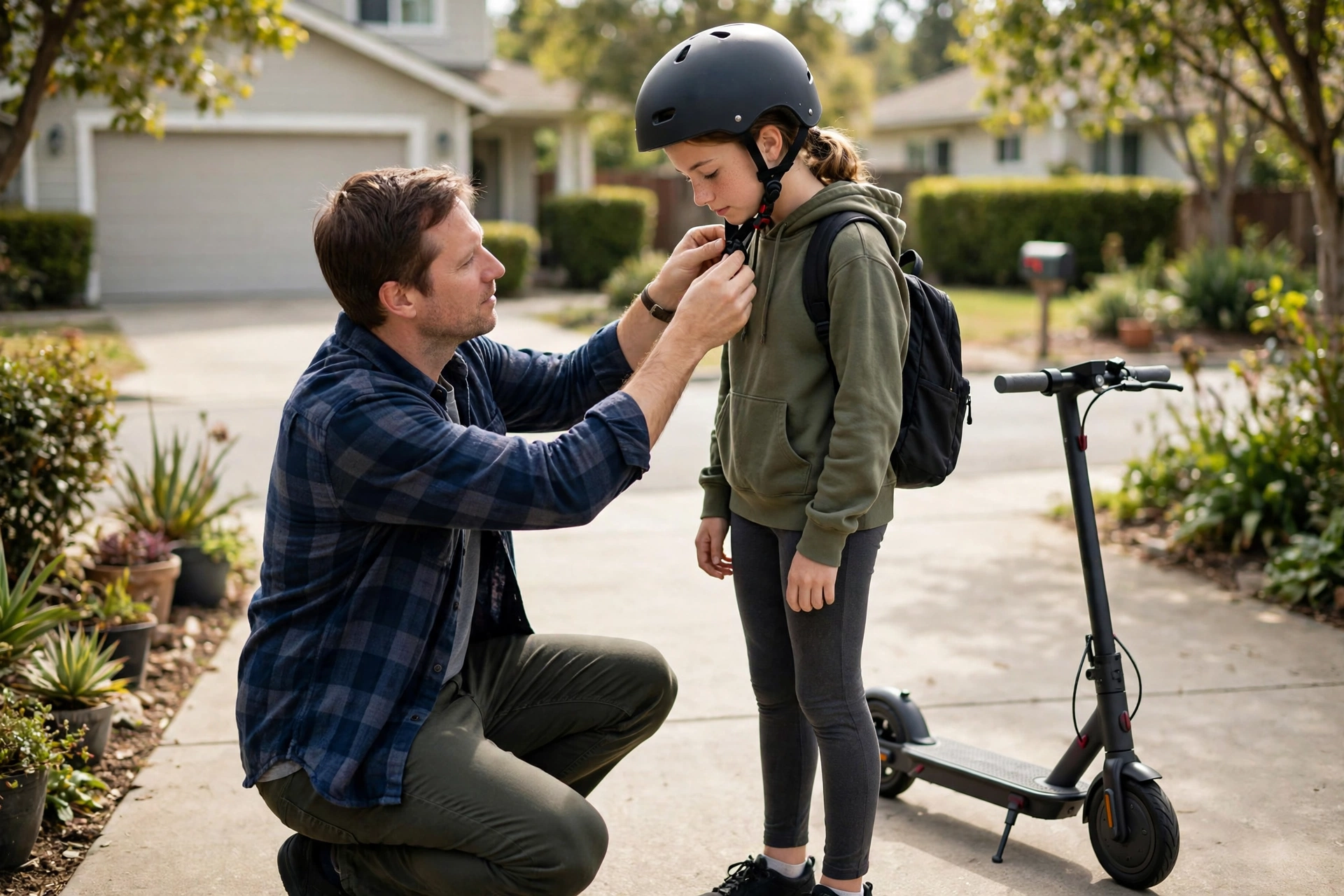
A properly fitted, certified bicycle helmet is the baseline for any child on any e-scooter, full stop. In general terms, many states and cities require helmets for minors on bikes and scooters even in places where adults face no requirement — but the legal question is almost beside the point, because children fall the same way adults do and at scooter speeds a fall onto pavement is a serious event.
Fit matters more than any feature: the helmet should sit level, low on the forehead, snug without pain, with the strap fastened so it cannot slip off. Beyond fit, look for good coverage at the back and sides, and consider rotational protection — our explainer on MIPS and other rotational helmet liners describes how these systems are designed to help in angled impacts, which are the most common kind in real falls. Elbow and knee pads, plus closed shoes, are sensible additions for younger riders still learning balance.
How do you check the rules where you live?
Start with your state’s motor vehicle or transportation department website and your city’s municipal code — search for “electric scooter” or “motorized scooter” rather than guessing. Key things to look for: any minimum age, where scooters may be ridden (roads, bike lanes, sidewalks, paths), speed limits, and whether helmets are required and for whom.
If you rent, read the app’s terms before the first ride rather than after an incident; the rules there bind you contractually even where the law is silent. And remember that rules change — micromobility law is young and actively being rewritten in many places, in general terms, so a quick check at the start of each season is a good habit for the whole family.
Frequently Asked Questions
Q: Can my child ride on a rental scooter with me?
A: No — in general terms, rental terms ban passengers entirely, and riding two-up on a scooter deck is unstable and unsafe even on a private scooter. Every rider needs their own scooter, their own helmet, and to meet the rules for both.
Q: What age can a child ride their own e-scooter?
A: It varies by state and city law and by the scooter’s maker guidance. Low-speed scooters are designed for younger riders, but where they may be ridden (especially public roads) often has its own age threshold. Check your local rules and the model’s stated minimum age before buying.
Q: Does my child legally need a helmet on an e-scooter?
A: In many places, yes — helmet requirements for minors are a common pattern in micromobility law, in general terms, even where adults are exempt. Rules vary, so verify locally; either way, a certified, well-fitted helmet on every ride is the right call for a child.

Olivia
Writer at Helmet Today, covering helmet reviews, fit and riding safety.