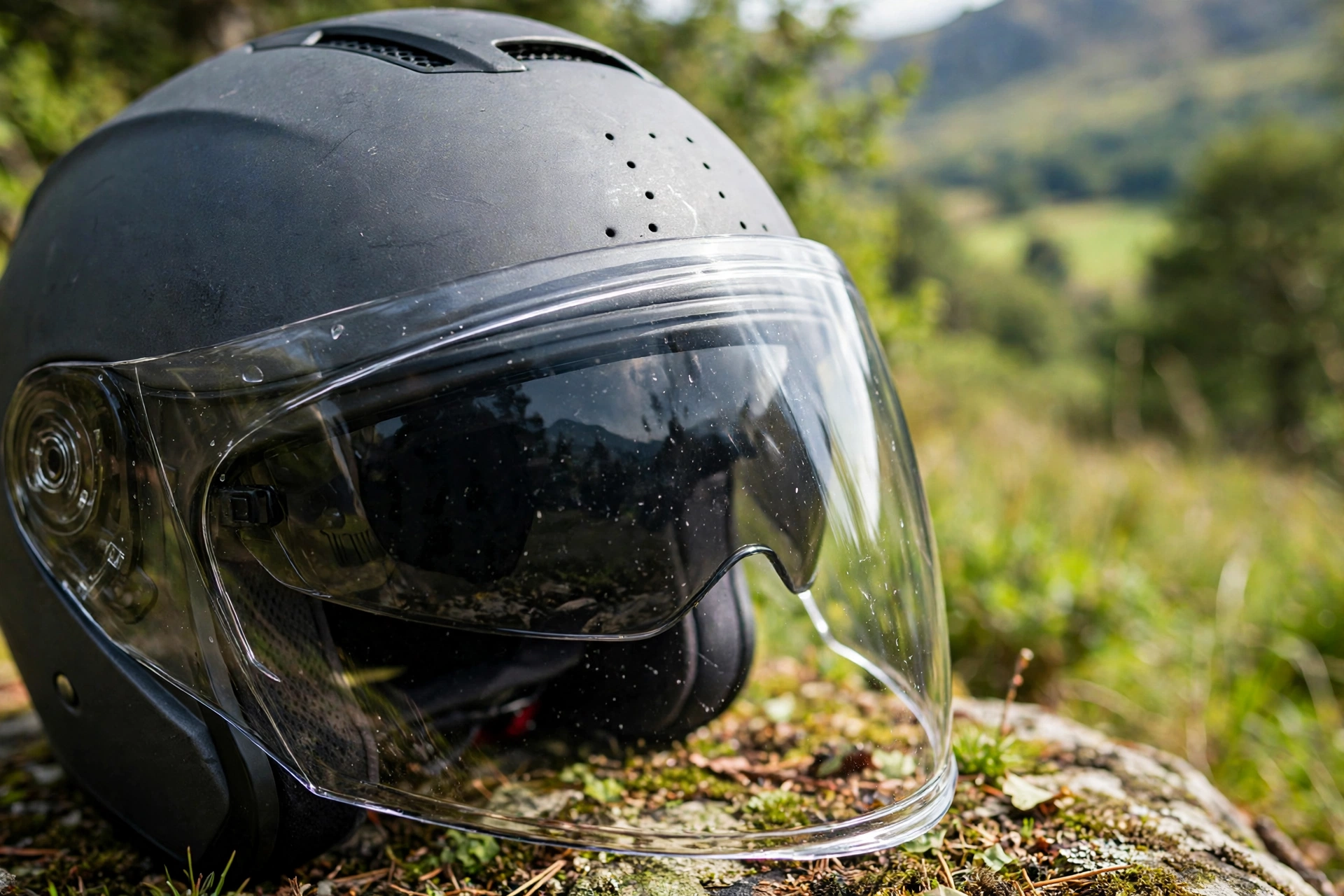
A drop-down visor helmet has a tinted sun shield built inside the helmet that flips down with a small slider or lever, and its main benefit is instant glare protection without stopping to swap shields or fumble for sunglasses. For scooter riders who pass in and out of shade, ride toward a low sun, or commute at changing times of day, it is one of the most practical convenience features a helmet can offer.
The design shows up most often on open-face and modular scooter helmets, where it pairs with a clear outer shield. Understanding what the internal visor does well — and what it does not do — helps you decide whether it is worth choosing on your next helmet.
What Is a Drop-Down Visor Helmet?
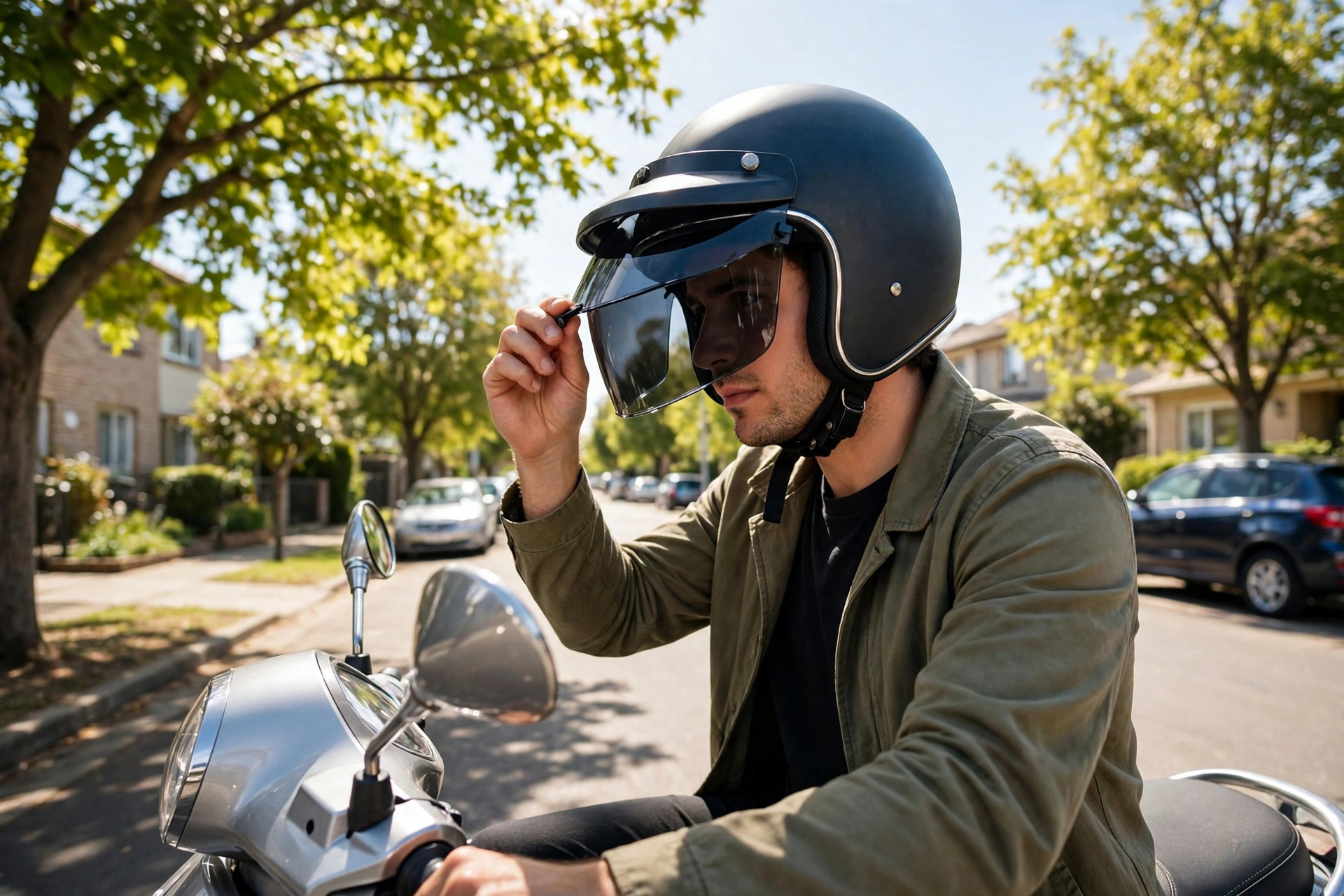
A drop-down visor, sometimes called an internal sun shield, is a tinted panel stored inside the helmet shell above the eye port. A slider, usually at the side or bottom edge of the shell, moves it down over your eyes when you want it and tucks it away when you do not. It sits behind the clear outer face shield on most designs, so the two can be used together or independently.
Riders typically run four combinations: clear shield up and sun visor up on a mild day; sun visor down with the clear shield up for shaded airflow with glare control; clear shield down and visor up at night or in rain; and both down on a bright, windy day. That flexibility is the entire point — one helmet adapts as conditions change mid-ride.
How Does a Drop-Down Visor Help With Sun and Glare?
Glare is more than an annoyance on a scooter. Riding toward a low morning or evening sun, bouncing light off wet pavement, or exiting a shaded street into full sun can all briefly wash out your view of traffic, potholes, and pedestrians. Dropping a tinted visor takes a second and can be done with one hand while riding, so you get shade exactly when conditions change, not at the next red light.
The visor also cuts wind and dust reaching your eyes when the main shield is up, which helps on warm days when you want airflow. Many riders find their eyes water less and stay more comfortable on longer urban rides. Because the panel is right in front of your eyes rather than at sunglasses-arm distance, it also keeps coverage consistent when you turn your head to check traffic.
Does a Drop-Down Visor Replace a Clear Shield or Sunglasses?
No — it complements them rather than replacing either. The internal visor is a sun shade, not primary impact protection; the certified shell, foam, and the outer shield arrangement are what the helmet’s protection is built around. A tinted visor alone also leaves gaps at the sides where wind and debris can reach your eyes at speed.
Compared with wearing sunglasses under a helmet, the built-in visor has real advantages: nothing presses on your temples, nothing fogs as easily, and nothing needs carrying or swapping at a stop. Sunglasses still win for walking around off the scooter, and some riders who need prescription lenses simply prefer glasses underneath — which most drop-down visors are shaped to accommodate, though you should check clearance when trying a helmet on.
One firm rule: a dark sun visor is for daytime. Riding at night or in dark tunnels with the tinted panel down reduces the light you need to see hazards. The convenience cuts both ways only if you remember to retract it.
What Are the Downsides of a Drop-Down Visor?
The mechanism adds a little weight and cost, and it is one more moving part that can loosen or scratch over years of use. Internal visors can also pick up dust and fingerprints, and because they sit close to your face, some riders notice fogging in cold or humid weather, especially with the outer shield closed. Cleaning takes a soft cloth and mild care — harsh chemicals can damage tinted coatings.
Optical quality varies between helmets. On better models the visor is distortion-free; on the cheapest ones the tint can be uneven. When trying a helmet in a shop, drop the visor and look around the room and toward a bright window: wavy vision or a dark band in the wrong place will bother you on every sunny ride.
Finally, on open-face helmets the sun visor covers the eyes but the lower face stays exposed to wind and road grit. Riders wanting fuller wind protection should compare against helmets with a long clear shield or a full-face design, using the drop-down visor as one feature among several rather than the whole decision.
Who Benefits Most From a Drop-Down Visor Helmet?
Commuters get the most from the feature: rides toward the sun in the morning and back into it in the evening, tunnels, shaded avenues, and sudden glare are all daily events, and the one-second adjustment fits stop-and-go riding. Delivery and gig riders, who are on and off the scooter all day in changing light, are close behind.
The feature also suits riders who dislike wearing sunglasses under a helmet because of pressure points or fogging, and riders in changeable climates where a single ride can include bright sun, cloud, and rain. If most of your riding is at night, in winter gloom, or always with a tinted outer shield already fitted, the mechanism matters less. Wherever rotational protection is also on your list, remember that features stack — our explainer on MIPS and other helmet safety technology covers what to look for inside the helmet as well as outside it.
Frequently Asked Questions
Q: Is a drop-down sun visor safe to use while riding?
A: Yes, in daylight. It is designed to be operated with one hand via a slider, and it does not replace the helmet’s certified protection. Just retract it in tunnels, at dusk, and at night so it never dims your view.
Q: Can I wear glasses under a drop-down visor?
A: Usually, yes. Most internal visors are shaped to clear eyeglass frames, but fit varies by helmet and frame size, so try the exact combination on in the shop and work the slider before buying.
Q: Do drop-down visors scratch or wear out?
A: They can scratch if cleaned roughly or stored carelessly, and the slider mechanism can loosen over years. Clean with a soft cloth and mild soap, store the helmet in its bag, and check the mechanism as part of your routine helmet inspection.

Olivia
Writer at Helmet Today, covering helmet reviews, fit and riding safety.