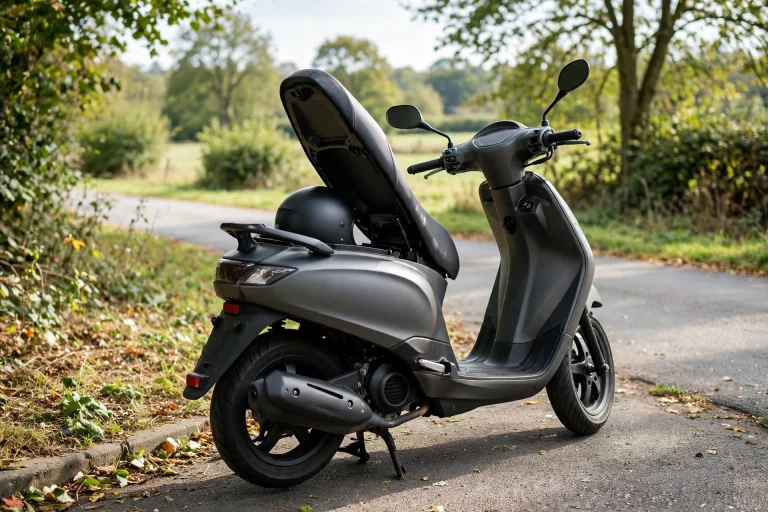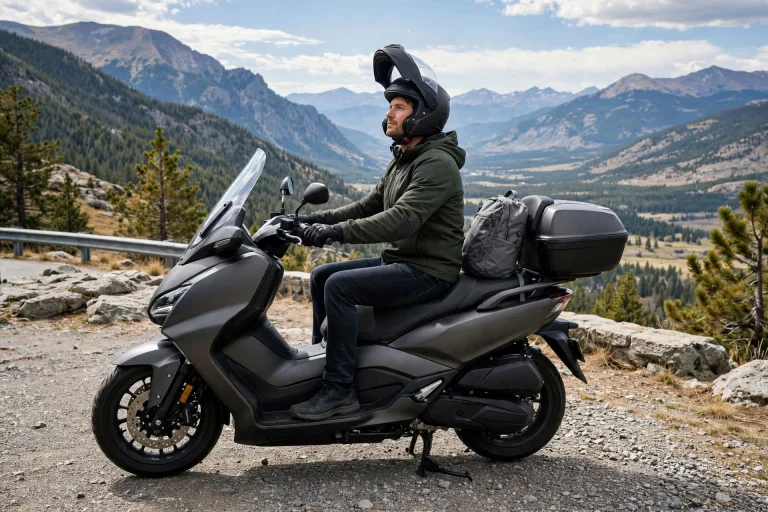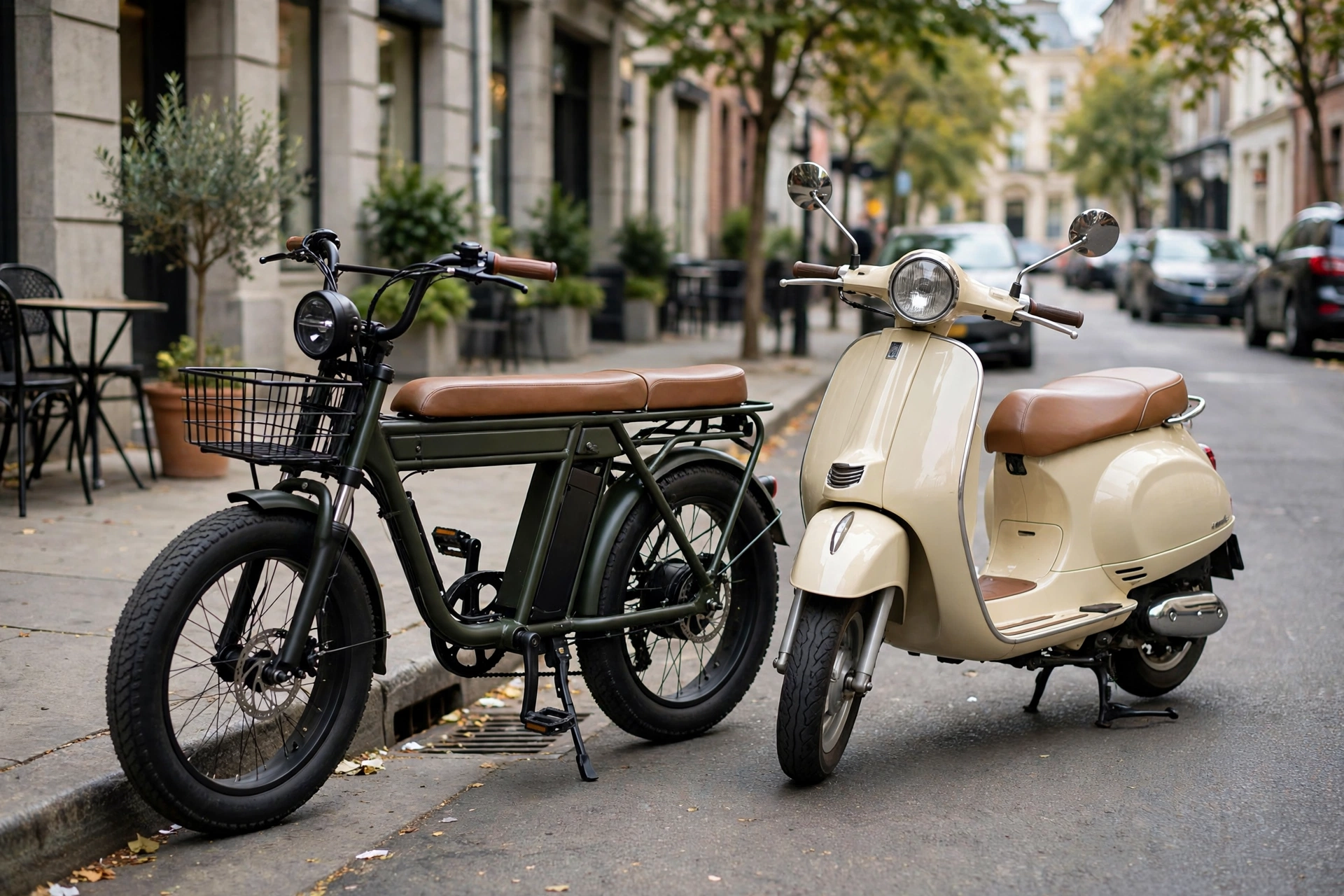
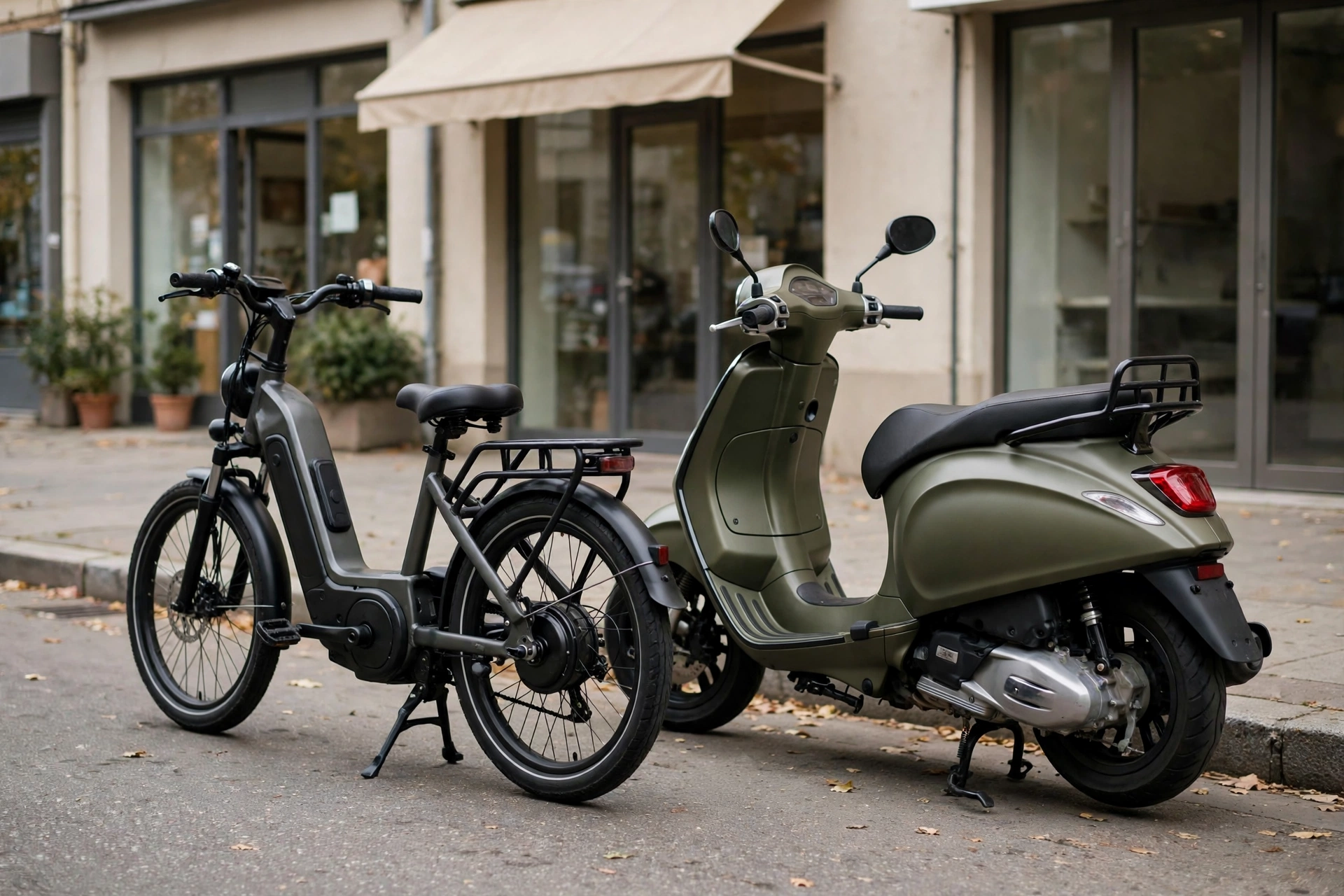
The helmet rules that apply to you are decided by how your vehicle is classified, not by what it looks like. A moped-style e-bike that still meets the standard e-bike class definitions is usually treated like a bicycle for helmet purposes, while a gas scooter or moped falls under the state’s moped or motorcycle helmet rules. Two machines parked side by side, with the same fat tires, bench seat and retro styling, can sit under completely different rulebooks.
This confuses a lot of riders, because moped-style e-bikes are designed to look like small motorcycles. The law, in general terms, does not care about the look. It cares about pedals, motor power and top assisted speed. This guide compares how the rules usually break down for each type of machine, and what happens when an “e-bike” is really something more.
Why Does Classification Matter More Than Styling?
Helmet rules attach to legal vehicle categories. When a state writes a helmet law, it does not say “riders of things that look like mopeds.” It defines categories — bicycle, electric bicycle, moped, motorcycle — using technical criteria such as whether the machine has working pedals, how powerful the motor is, and how fast it can go under power.
Your machine is then matched against those definitions. A moped-style e-bike with functioning pedals, a motor within the usual e-bike limits and a top assisted speed inside the class system is, on paper, a bicycle with a motor assist. A gas scooter with no pedals and an engine is, on paper, a motor vehicle. The styling is marketing; the spec sheet is what counts.
This is also why the same machine can be treated differently in different places. Definitions vary by state, and a vehicle that fits one state’s e-bike definition may fall outside another’s. Frame everything in this article as the general pattern, and check your own state’s definitions for the final word.
Which Helmet Rules Usually Apply to Moped-Style E-Bikes?
Where a moped-style e-bike genuinely meets the e-bike class definitions — working pedals, limited motor power, and a top assisted speed within the Class 1, 2 or 3 framework — it is generally handled under bicycle-style helmet rules. In practice that means the pattern most riders already know from cycling.
In general terms, the common pattern looks like this:
- Many states require helmets for younger riders, often based on age, on any bicycle or e-bike.
- Some states add helmet requirements for faster Class 3 e-bikes, sometimes for all riders and sometimes for younger ones.
- For adult riders on Class 1 and Class 2 e-bikes, many states have no helmet requirement at all, though some do.
- Where a helmet is required, a certified bicycle helmet normally satisfies the rule.
None of this changes what is sensible. A heavy moped-style e-bike cruising at the top of its class speed carries more energy than a lightweight city bicycle, and riders commonly choose helmets with more coverage, or models tested for higher-speed e-bike use, even when the law only asks for a bicycle helmet. The rule is the floor, not the ceiling.
Which Helmet Rules Usually Apply to Gas Scooters and Mopeds?
Gas scooters and mopeds are motor vehicles, so they follow the state’s moped and motorcycle framework rather than the bicycle one. Where a state has a motorcycle helmet law, it typically requires a DOT-compliant motorcycle helmet — a helmet built and certified to the federal motorcycle standard — and a bicycle helmet does not satisfy it.
The details vary. In general terms, states fall into a few broad groups: some require helmets for all motorcycle and moped riders, some require them only up to a certain age, some have requirements tied to the size or speed capability of the machine, and a few have no adult helmet requirement for larger motorcycles but still treat small mopeds differently. Scooter riders are often surprised to find their small machine included in rules they assumed were only for big bikes.
There is a practical side too. A gas scooter that cruises at traffic speed exposes the rider to traffic-speed falls, and a DOT motorcycle helmet is built for exactly that. Riders shopping for one will also come across extra features such as MIPS and other rotational-impact protection systems, which are designed to help with the angled impacts common in real crashes. Whatever the law where you live, matching the helmet to the machine’s real speed is the safer way to decide.
What Happens If an E-Bike Is Too Powerful or Has No Working Pedals?
This is where riders get caught out. In general terms, a machine stops fitting the e-bike definitions when it has no functioning pedals, when its motor exceeds the power limits used in the class system, or when it can travel faster under power than the classes allow. At that point it is generally treated as a moped or motorcycle, whatever the seller called it.
That reclassification can bring several requirements with it: registration and a plate, a license or endorsement, insurance, and a DOT-compliant helmet where the state requires one. Riding such a machine in a bicycle helmet, in a bike lane, or without registration can create legal problems after a crash or a traffic stop, even if nobody questioned it before.
Modifications matter as well. Derestricting an e-bike so it assists well beyond its class speed, or removing the pedals from a moped-style model, can move it out of the e-bike category just as surely as buying an overpowered machine in the first place. If you are unsure which side of the line your machine sits on, compare its spec sheet — pedals, motor rating, top assisted speed — against your state’s e-bike definition before assuming bicycle rules apply.
How Can You Check the Rules Where You Ride?
Start with your state’s department of transportation or motor vehicle agency website, and search for its definitions of “electric bicycle” and “moped.” Those two definitions, side by side, will tell you which category your machine belongs to and which helmet rule follows from it.
Then check the helmet law for that category, including any age-based rules if younger riders will use the machine. City and park rules can add requirements on top — for example on trails or shared paths — so it is worth a quick check of local ordinances for the places you actually ride.
When the answer is genuinely unclear, the low-risk approach is simple: wear the stronger helmet. A DOT-compliant helmet on a machine that turns out to be bicycle-class is legal everywhere and protective; a bicycle helmet on a machine that turns out to be motorcycle-class is neither. When classification is in doubt, dressing for the stricter category removes the guesswork.
Frequently Asked Questions
Q: My e-bike looks like a moped. Do I have to wear a motorcycle helmet?
A: Not because of the looks. If your machine still meets your state’s e-bike definitions — working pedals, motor power and top assisted speed within the class limits — bicycle-style helmet rules usually apply. If it falls outside those definitions, it is generally treated as a moped or motorcycle, and motorcycle helmet rules may follow.
Q: Is a bicycle helmet ever enough for a gas scooter?
A: Legally, in states with motorcycle helmet laws, generally no — those laws call for a DOT-compliant motorcycle helmet. Practically, a gas scooter travels at traffic speeds, so a motorcycle helmet is the appropriate protection in any case.
Q: Can removing the pedals or derestricting my e-bike change its legal category?
A: Yes, in general terms it can. A machine without working pedals, or one modified to go faster than the e-bike classes allow, may no longer fit the e-bike definition and can be treated as a motor vehicle, with registration, licensing and motorcycle helmet rules attached.

Olivia
Writer at Helmet Today, covering helmet reviews, fit and riding safety.