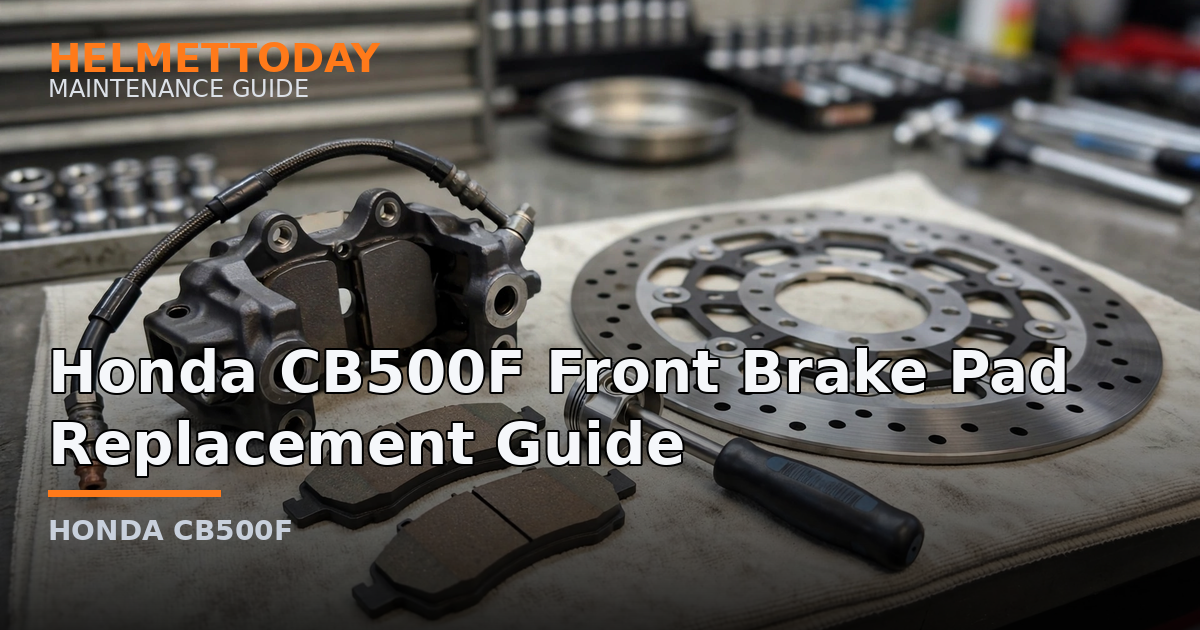
Brake pads are a wear item — check them every service and replace before they hit the wear indicators. On the Honda CB500F, a front pad swap is a straightforward 30-minute job with basic tools.
Use pads matching the OEM compound type, and have fresh Honda DOT 4 brake fluid on hand to top up the reservoir after pushing the pistons back.
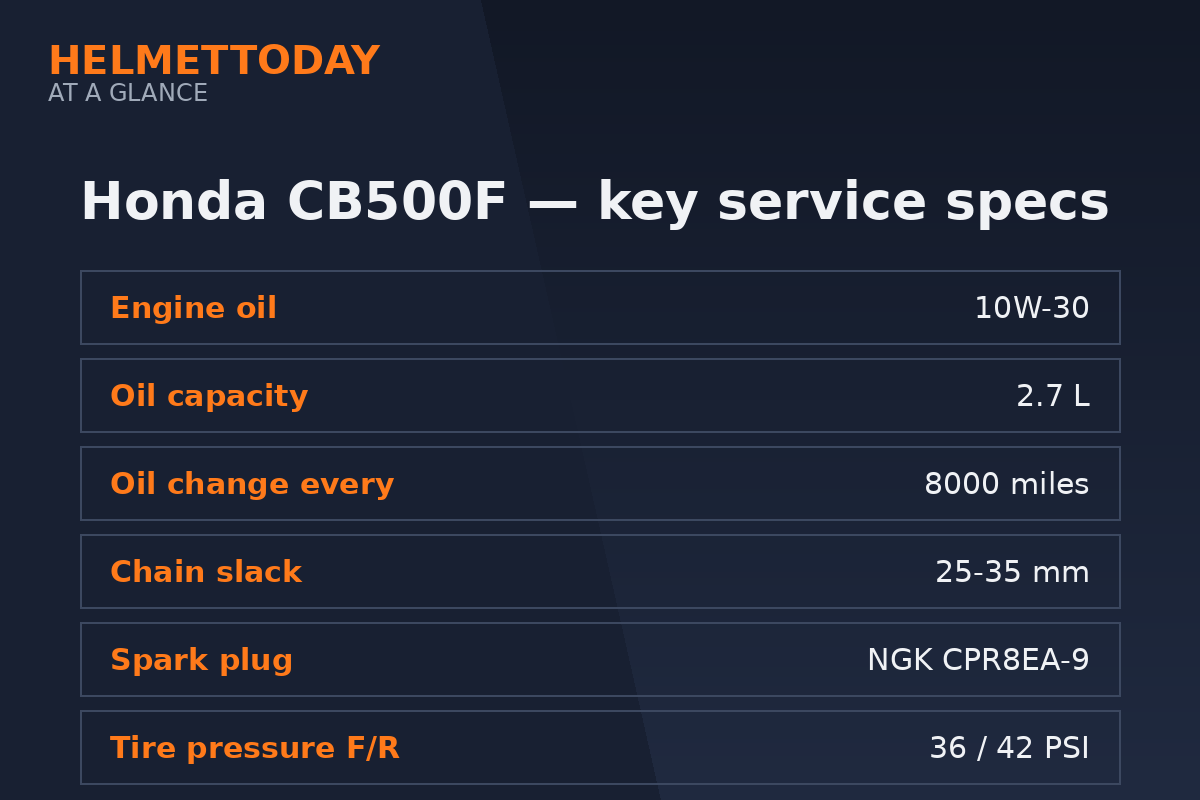
Honda CB500F quick service specs
| Item | Specification |
|---|---|
| Engine oil | 10W-30 |
| Oil capacity | 2.7 liters |
| Oil change interval | 8000 miles |
| Chain slack | 25-35 mm |
| Spark plug | NGK CPR8EA-9 |
| Tire pressure (F/R) | 36 PSI front / 42 PSI rear |
| Battery | 12V 7.0Ah (YTZ8V) |
How to replace the front brake pads, step by step
- Support the bike upright. Remove the caliper mounting bolts and slide the caliper off the disc — don’t let it hang by the brake hose.
- Note the position of pad pins, clips, and shims, then remove the old pads.
- Push the caliper pistons back into their bores evenly. Watch the master-cylinder reservoir — remove excess fluid so it doesn’t overflow.
- Clean the caliper, pins, and pad contact points. Lightly grease sliding pins with brake-specific grease (never on pad or disc surfaces).
- Fit the new pads with all shims and clips in their original positions.
- Remount the caliper, torque bolts to spec, and pump the lever until it’s firm before riding.
- Bed the pads in with 10-15 moderate stops from 30-40 mph, allowing cooling between stops. Avoid hard braking for the first 100 miles.
Common mistakes to avoid
- Getting grease or fluid on the pads/disc — contamination ruins braking and usually means new pads.
- Forgetting to pump the lever — the first pull will go to the bar. Always pump before moving the bike.
- Skipping the bed-in — unbedded pads stop poorly and can glaze.
FAQ
How do I know the Honda CB500F pads need replacing?
Check the friction material against the wear grooves or indicators — replace when nearly flush, or if braking feels weak or noisy.
Sintered or organic pads?
Sintered last longer and bite harder, especially in wet; organic are gentler on discs and quieter. Match your riding.
Should I change brake fluid too?
Fluid absorbs moisture over time — flush with fresh Honda DOT 4 every 2 years regardless of mileage.
Related guides

Dan Heiman
Writer at Helmet Today, covering helmet reviews, fit and riding safety.