We may earn a commission when you buy through links on this page, at no extra cost to you. Learn more
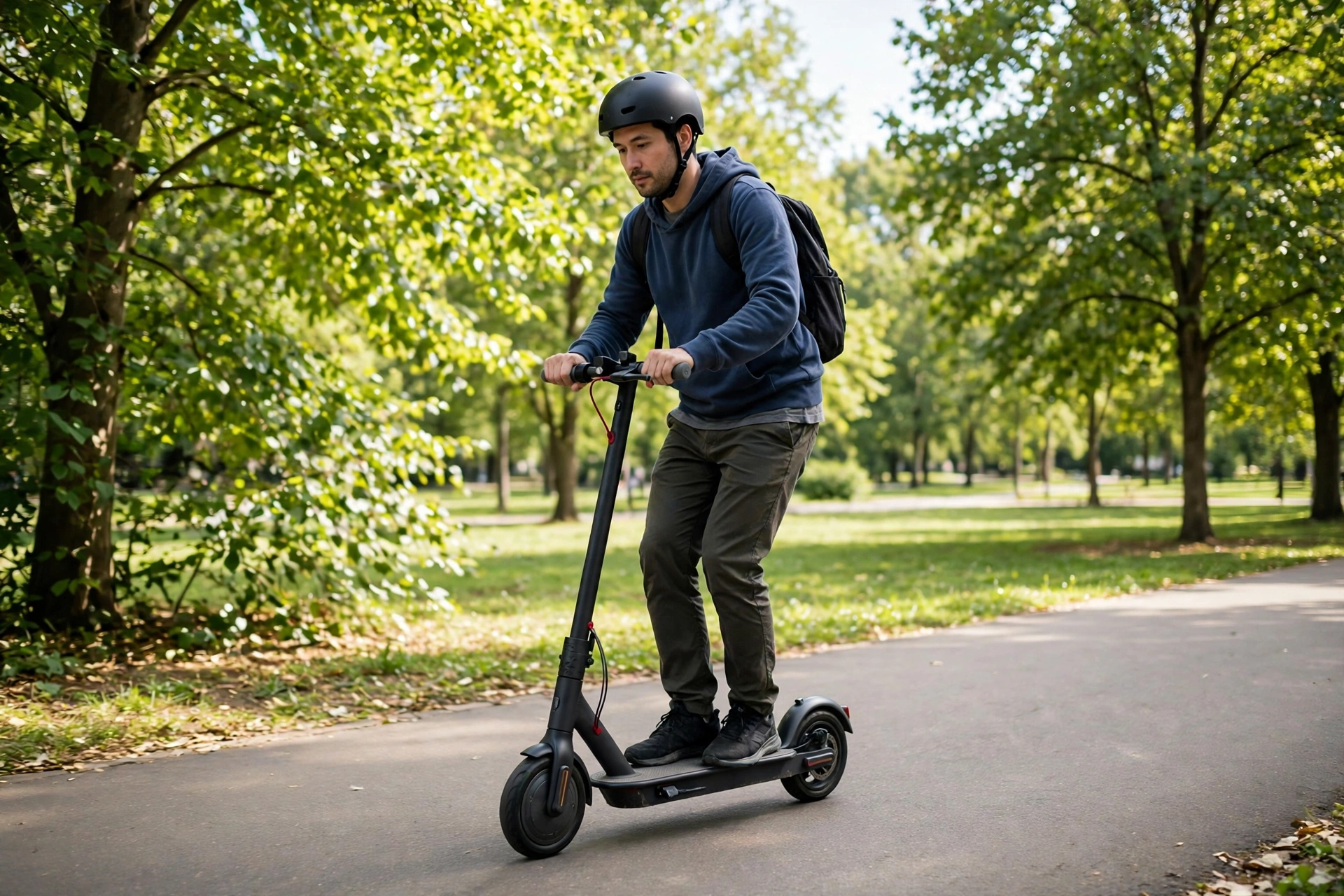
For an adult beginner on an electric kick scooter, the best helmet is a certified bicycle or skate-style helmet that fits snugly, covers the back of the head well, and is comfortable enough that you will actually wear it on every ride. You do not need an expensive or motorcycle-grade helmet at typical e-scooter speeds — you need real certification, a proper fit, and good coverage.
Electric kick scooters feel friendly and stable, which is exactly why beginners underestimate them. Small wheels, a standing riding position, and speeds well beyond a regular kick scooter mean a pothole or sudden stop can put you on the pavement face-first. A helmet is the one piece of gear that turns that fall into a story instead of an injury. Here is how to pick the right one the first time.
What Type of Helmet Suits an Electric Kick Scooter Best?
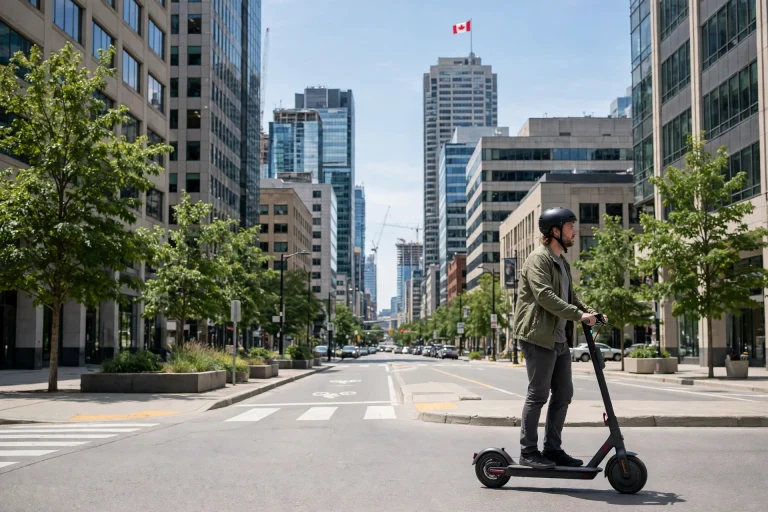
Most beginners do best with one of two styles. A standard bicycle helmet is light, well ventilated, and certified for cycling impacts; it is the most comfortable option in warm weather and for longer rides. A skate-style helmet has a rounder shape, a hard shell, and coverage that extends lower at the back and sides of the head — and because scooter falls often happen at low speed in any direction, many riders prefer that extra coverage. Some skate-style helmets are dual-certified for both cycling and skate use, which is a sensible combination for scooter riders.
Whichever style you choose, certification is non-negotiable. In the US, look for a helmet meeting the CPSC bicycle helmet standard; in Europe, EN 1078 is the cycling standard to look for. Avoid uncertified novelty helmets entirely — they look like helmets but are not tested as protective equipment.
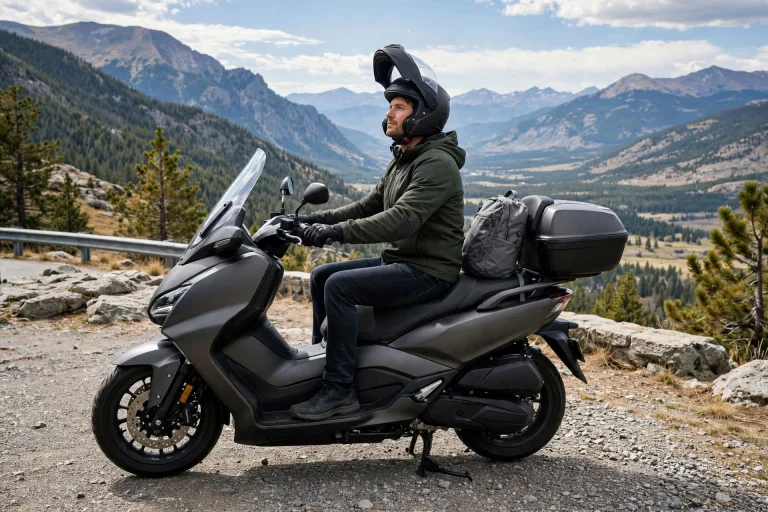
Full-face and motorcycle helmets are overkill for most kick scooter riding at typical speeds, and their weight and heat make beginners less likely to wear them. The exception: if your scooter is a high-performance model capable of much higher speeds, step up your helmet category to match, just as you would on a faster vehicle.
How Should a Beginner’s Helmet Fit?
Fit decides whether the helmet works at all. Measure around your head with a soft tape, about an inch above your eyebrows, and match the number to the manufacturer’s size chart rather than guessing a “medium.” The helmet should sit level — not tilted back like a baseball cap — with the front edge about two finger-widths above your brows.
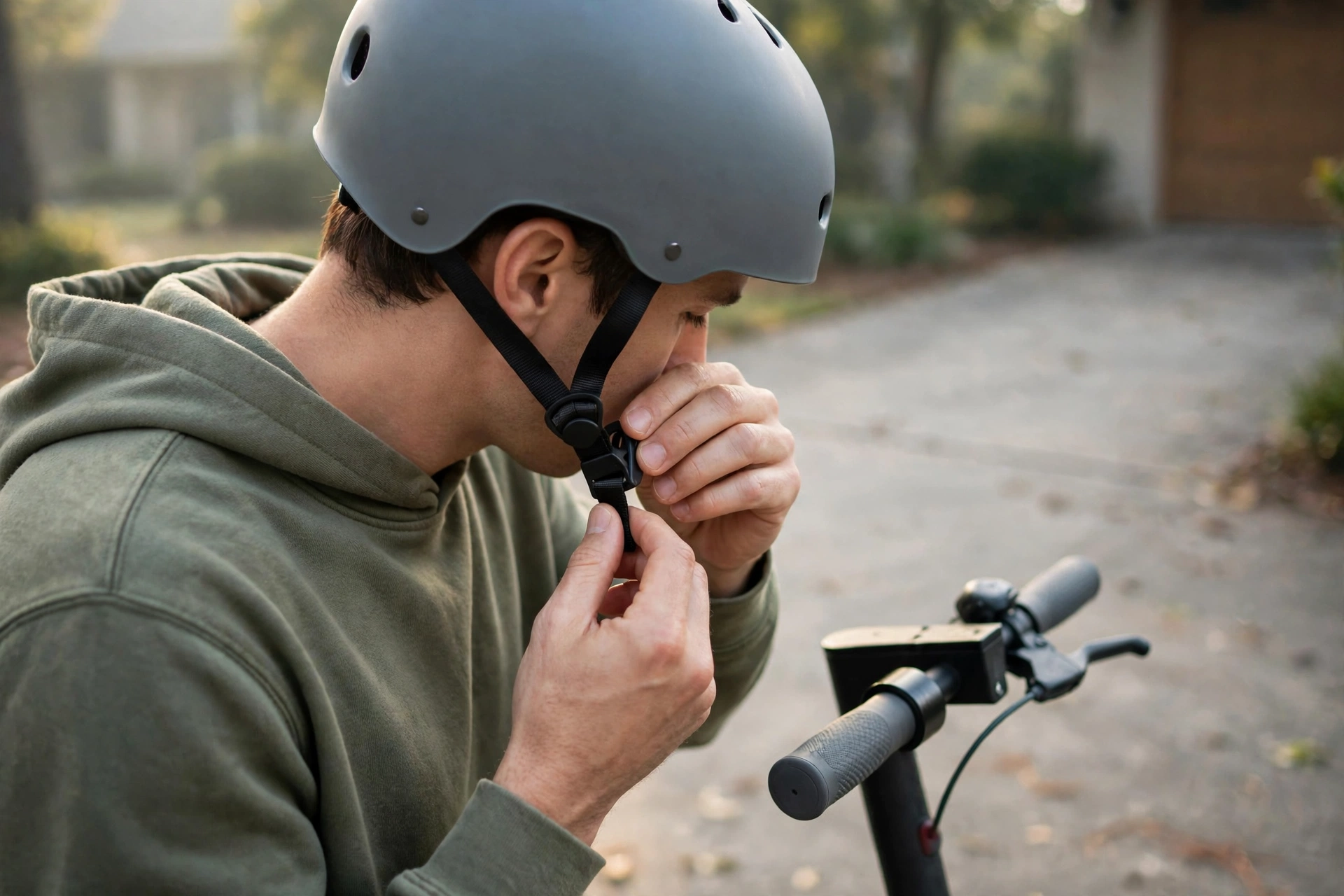
The right fit feels snug and even, with no wobbling when you shake your head and no painful pressure points. The side straps should form a Y just below your ears, and the chin strap should be tight enough that only one or two fingers fit beneath it. Many helmets have a rear adjustment dial; use it to fine-tune the fit, and wear the helmet around the shop or house for ten minutes to check for hot spots before committing.
Beginners often make the mistake of buying a helmet that feels “comfortable” because it is loose. A loose helmet can rotate or come off in the first instant of a fall, before it has any chance to protect you. Snug, level, and strapped — every ride, even a two-minute one.
Which Features Are Worth Paying For as a Beginner?
Spend first on fit and certification; after that, a few features genuinely earn their money. An adjustment dial at the back helps you get the fit right as padding settles. A visor or peak keeps sun and light rain out of your eyes, which matters when both hands are on the bars. Removable, washable pads keep the helmet pleasant through a sweaty summer. Built-in or clip-on lights and reflective details help drivers see you in traffic, and visibility is a real safety feature for a small, quiet vehicle.
You may also see rotational impact liners offered as an upgrade. Our explainer on how MIPS works describes what this low-friction layer is designed to do in an angled fall. It is a worthwhile feature if it fits your budget, but it comes after correct size and certification, not before.
Skip the gimmicks. Bluetooth speakers, novelty shells, and designer styling add cost without adding protection. In general terms, a mid-priced certified helmet from an established brand is the sweet spot for a beginner — safe, comfortable, and easy to replace when the time comes.
How Do You Build the Helmet Habit From Day One?
The most common beginner risk is not choosing the wrong helmet — it is leaving the right one at home. Most scooter trips are short, and short trips are exactly when people skip gear. Yet falls happen on familiar streets, at low speeds, close to home. Make the rule simple: if the scooter moves, the helmet is on.
Store the helmet with the scooter so there is no decision to make. Put it on before you unfold or unlock the scooter, and take it off last. If the helmet is comfortable — the main reason to fit it carefully — wearing it quickly stops feeling like a chore and starts feeling like part of riding, the same way a seatbelt feels in a car.
When Should You Replace a Beginner Helmet?
Replace any helmet after a crash or a hard impact, even if it looks undamaged. The foam inside crushes to absorb energy and does not recover; a helmet that has done its job once cannot be trusted to do it again. Also replace a helmet that no longer fits snugly because its pads have compressed, or one with cracked foam, frayed straps, or a damaged buckle.
Even without a crash, helmets age. Sunlight, heat, sweat, and everyday knocks gradually degrade the materials, and manufacturers in general terms suggest replacing a helmet every few years of regular use. When in doubt, a fresh certified helmet is cheap insurance compared with the alternative.
Frequently Asked Questions
Q: Can I use the bicycle helmet I already own for my e-scooter?
A: Yes, in most cases. A certified bicycle helmet in good condition that fits you properly is a fine choice for typical electric kick scooter speeds. If it is old, crashed, or loose, replace it rather than reusing it.
Q: Is a skate helmet or a bike helmet better for a scooter?
A: Both work when certified and well fitted. Bike helmets are lighter and cooler; skate-style helmets cover more of the back and sides of the head and shrug off small knocks. Choose the one you will wear consistently — ideally dual-certified if you like the skate style.
Q: Do adults legally have to wear a helmet on an electric kick scooter?
A: It depends on where you live. Some states, provinces, and cities require helmets for e-scooter riders, sometimes only for younger riders, and rental companies may require them in their terms. Check your local rules — and wear one regardless, because the physics of a fall does not check the law first.

Olivia
Writer at Helmet Today, covering helmet reviews, fit and riding safety.