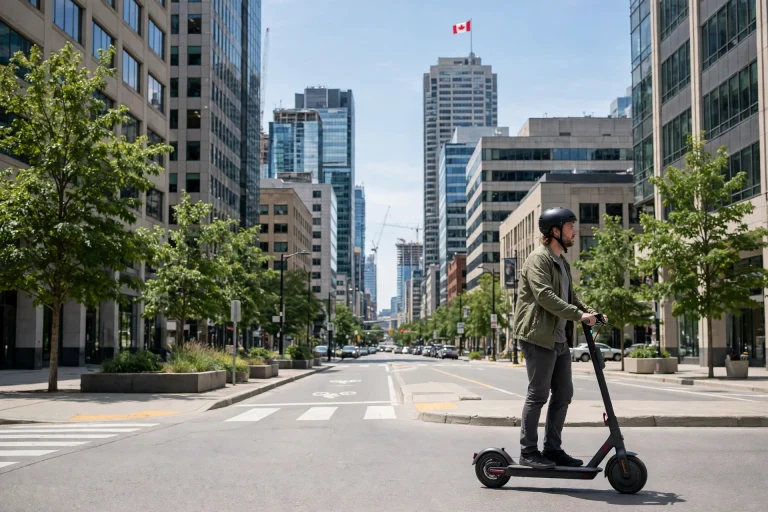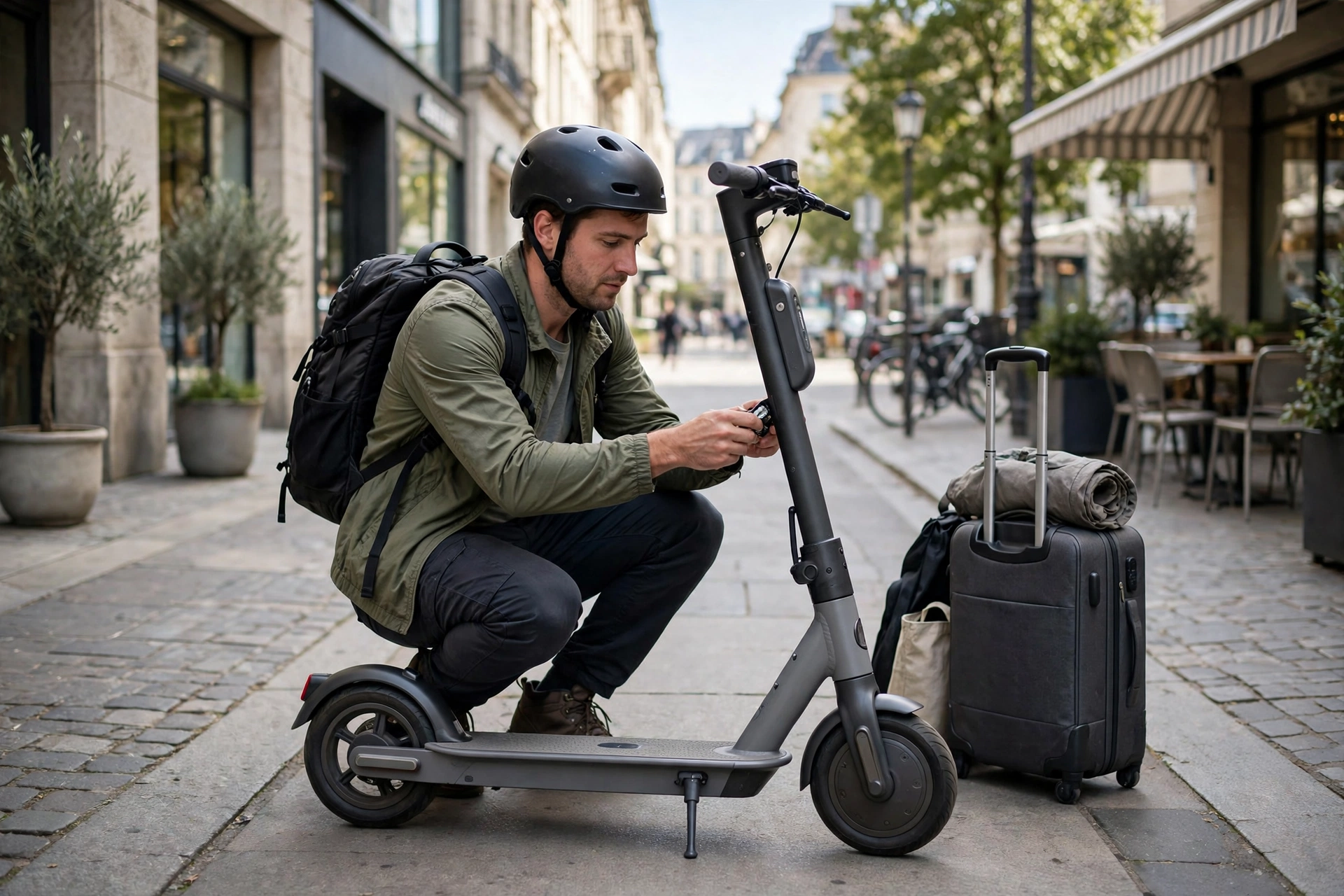
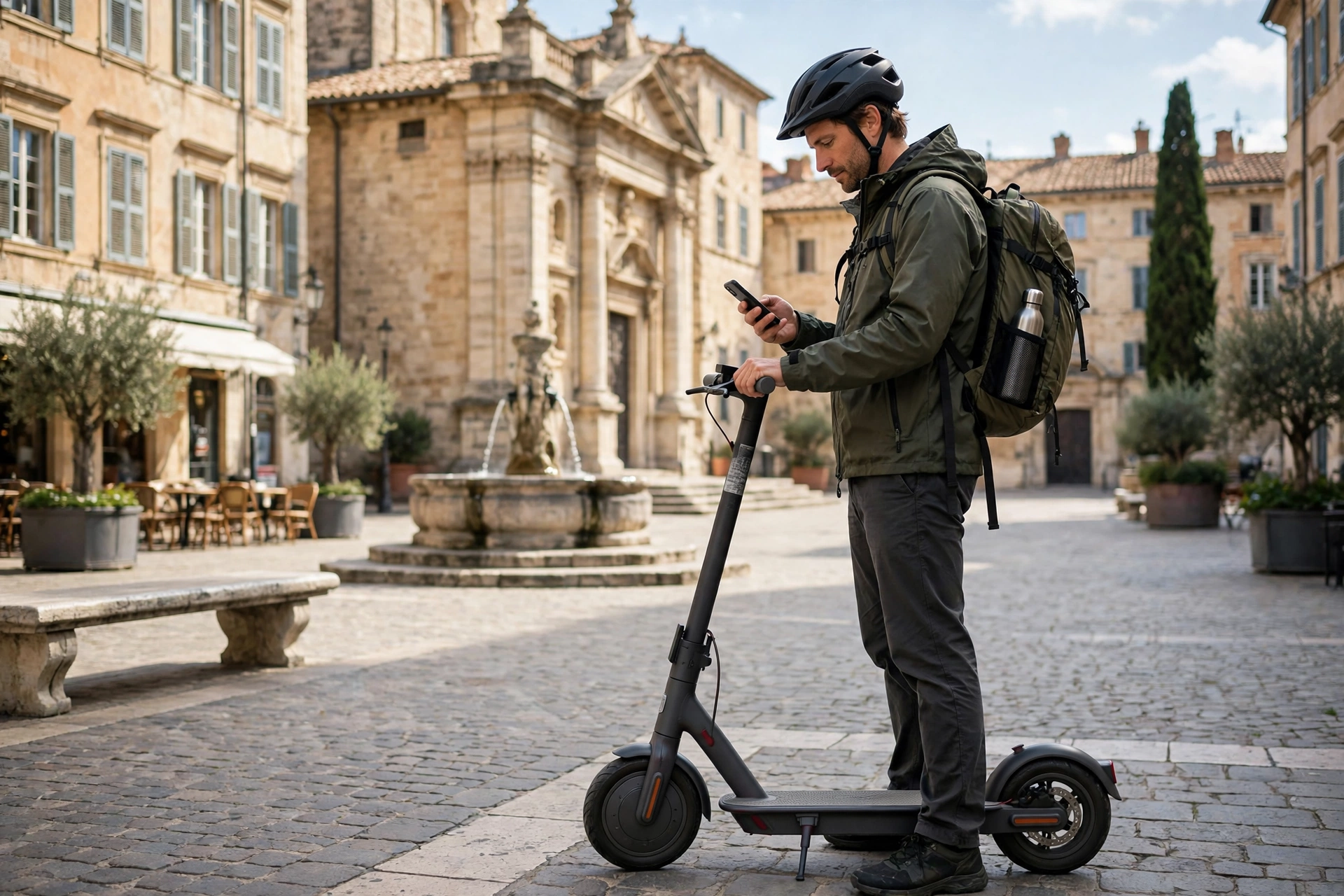
Shared scooter fleets almost never provide a helmet, so as a visiting rider the helmet is your own responsibility. In general terms, your realistic options are to travel with a compact or foldable certified helmet, buy an inexpensive certified helmet when you arrive, or rent one from a local shop in areas where that is offered. Just as important: check the helmet law at your destination before you ride, because it may be stricter than the rules at home.
Dockless scooters are a wonderful way to explore a new city, right up until you are standing on a curb doing the mental math on riding bareheaded. A little planning before the trip removes the problem entirely. Here is how the helmet side of shared scooters actually works, and how tourists usually handle it.
Why Don’t Shared Scooter Companies Provide Helmets?
The short answer is logistics. A dockless scooter changes riders constantly, all day, in all weather. A helmet attached to it would be exposed to rain, sun, drops and vandalism, borrowed by heads of every size, and would need cleaning and inspection between riders to be worth wearing at all. A damaged or filthy helmet that nobody checks is arguably worse than none, because it offers confidence without protection.
Fit is the other problem. A single one-size helmet left with a scooter cannot fit the range of tourists who will unlock it, and a badly fitting helmet can come off or shift in a fall. Operators know this, which is why, in general terms, the apps encourage or remind riders to wear their own helmet while supplying only the scooter itself.
A few cities and operators have experimented with helmet giveaways, dispensers or helmets locked to the scooter at various times, but these remain the exception rather than the system. The safe working assumption for any trip is: if you want a helmet on a shared scooter, you will be the one providing it.
Should You Pack Your Own Helmet for the Trip?
If scooter riding is a real part of your travel plans, yes — bringing your own is the option that guarantees a certified helmet that fits you. A conventional bike or scooter helmet is bulky in luggage, but it can be packed efficiently: stuff it with soft clothing, place it in the center of the case surrounded by padding, and it travels well. Carry-on is even better if space allows, since checked bags get thrown around.
Foldable and collapsible helmets exist specifically for this problem. Certified models fold or nest down to a fraction of their riding size and slip into a daypack, which makes them popular with commuters and tourists alike. The trade-off is usually price and ventilation, and you should confirm the individual model carries a recognized bicycle helmet certification before trusting it.
One caution either way: a helmet that has taken a hard knock in transit — crushed in an overstuffed case or dropped onto concrete — should not be trusted. Inspect whatever you pack when you arrive, and if the trip will involve many rides over many days, your own familiar helmet is a genuine comfort advantage over an unknown local purchase.
Can You Rent or Buy a Helmet When You Arrive?
Often, yes. In tourist areas, bike rental shops, scooter tour companies and some sports shops rent helmets alongside their own vehicles, and in general terms these local rentals are a reasonable source for a short stay — the shop can fit you, and the helmet goes back when you leave. It is worth asking your hotel as well; some keep loaner helmets for guests using local rental bikes.
Buying locally is the other straightforward option. Sporting goods and department stores in most cities stock certified bicycle helmets at modest prices, and for a trip with several days of riding, a basic certified helmet you own outright can cost little more than renting. Some riders donate or leave it behind at the end of the trip if luggage space is tight.
What to avoid is the unknown-quality novelty helmet from a souvenir stall or unbranded marketplace seller. A helmet only counts if it is certified to a recognized standard — look for the certification label inside — and buying from a real shop makes that easy to verify. Saving a small amount on an uncertified helmet defeats the entire purpose of wearing one.
How Do Helmet Laws Affect Visiting Riders?
Tourists are not exempt. Whatever helmet law applies to local riders applies to you the moment you unlock a scooter, and “I didn’t know” is not a defense. The complication is that rules genuinely vary: some places require helmets for all scooter riders, some only for younger riders, some regulate shared scooters differently from private ones, and some cities impose their own rules on top of state law.
Before you travel, spend five minutes checking the situation at your destination — the city’s transportation website or the scooter app itself will usually state the local requirement. Rental agreements in the app often include the helmet rule for that market, because the operator is required to tell you.
Beyond the legal side, consider your travel insurance. Policies sometimes treat injuries from activities done without legally required safety equipment differently, in general terms, so riding helmetless in a place that requires one can create problems well beyond a fine. Wearing a helmet regardless of the local rule is the simplest way to make the whole question irrelevant.
What Should You Check Before Your First Ride in a New City?
Do the same checks you would at home, because the scooter is unfamiliar even if the riding is not. Test the brakes before you reach traffic speed, check the tires look sound, and confirm the throttle response at walking pace in a quiet spot. Small wheels and unknown pavement are the classic tourist combination — tram tracks, cobbles, wet painted lines and metal covers all deserve respect.
Sort your helmet out as part of the same routine: on, level, straps adjusted, every ride, including the short ones. Tourists fall on unfamiliar scooters at low speeds in unfamiliar places, and those are exactly the falls a certified helmet handles best. If your helmet has features such as a MIPS rotational liner, it only does its job when the helmet fits snugly and is fastened properly, so take the extra ten seconds.
Finally, plan for the unglamorous part: where the helmet goes when you stop. Carry a lightweight lock or keep the helmet with you rather than leaving it hanging on a shared scooter you are about to release — once you end the trip in the app, anything left with that scooter is effectively left on the street.
Frequently Asked Questions
Q: Will the scooter app supply a helmet if the city requires one?
A: Generally, no. Even in cities with helmet laws, the rider is expected to provide their own helmet. Some operators run occasional giveaways or trials of attached helmets, but you should never build your plans around finding one waiting on the scooter.
Q: Are foldable helmets actually certified and safe?
A: Some are. Certified foldable helmets are tested to the same bicycle helmet standards as rigid ones. Check the specific model for a recognized certification label before buying — the folding mechanism itself is not the problem, unverified no-name products are.
Q: I only plan one short ride. Is it worth sorting out a helmet?
A: Yes. Most scooter falls happen at modest speeds on short, casual rides, often on unfamiliar streets — precisely the tourist scenario. A locally bought basic certified helmet, or one rented from a shop, covers the whole trip for little effort.

Olivia
Writer at Helmet Today, covering helmet reviews, fit and riding safety.