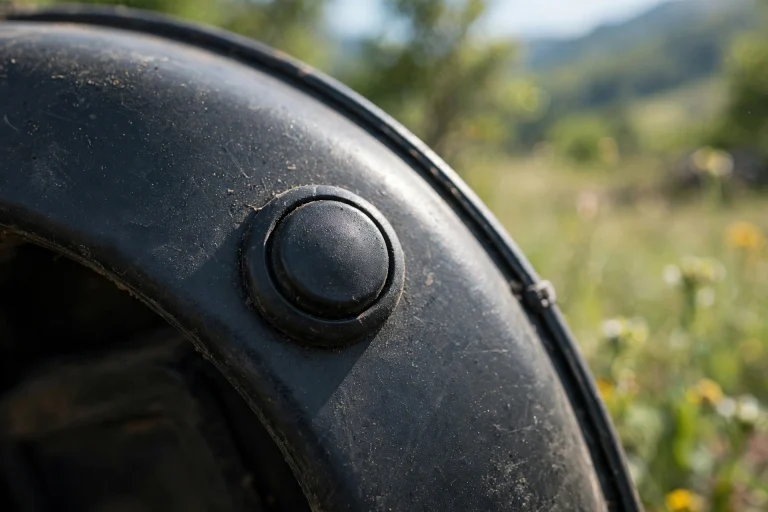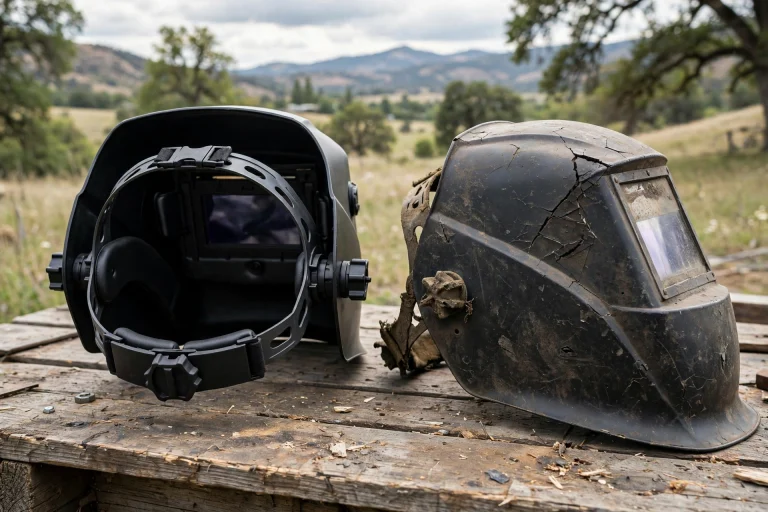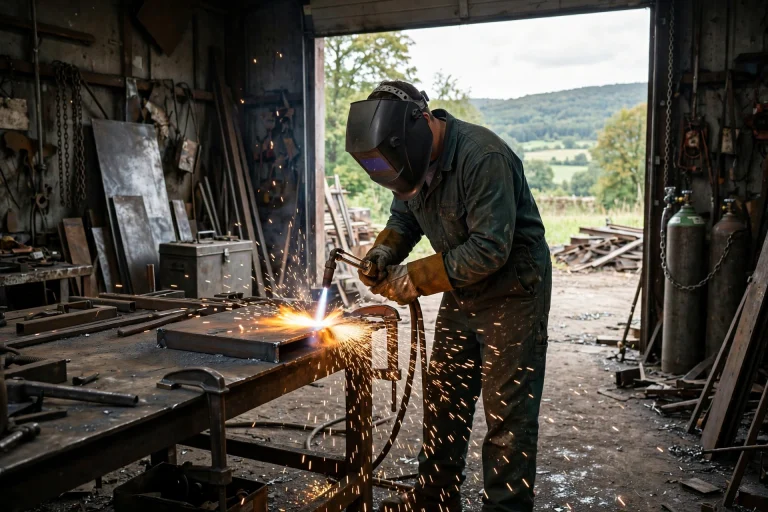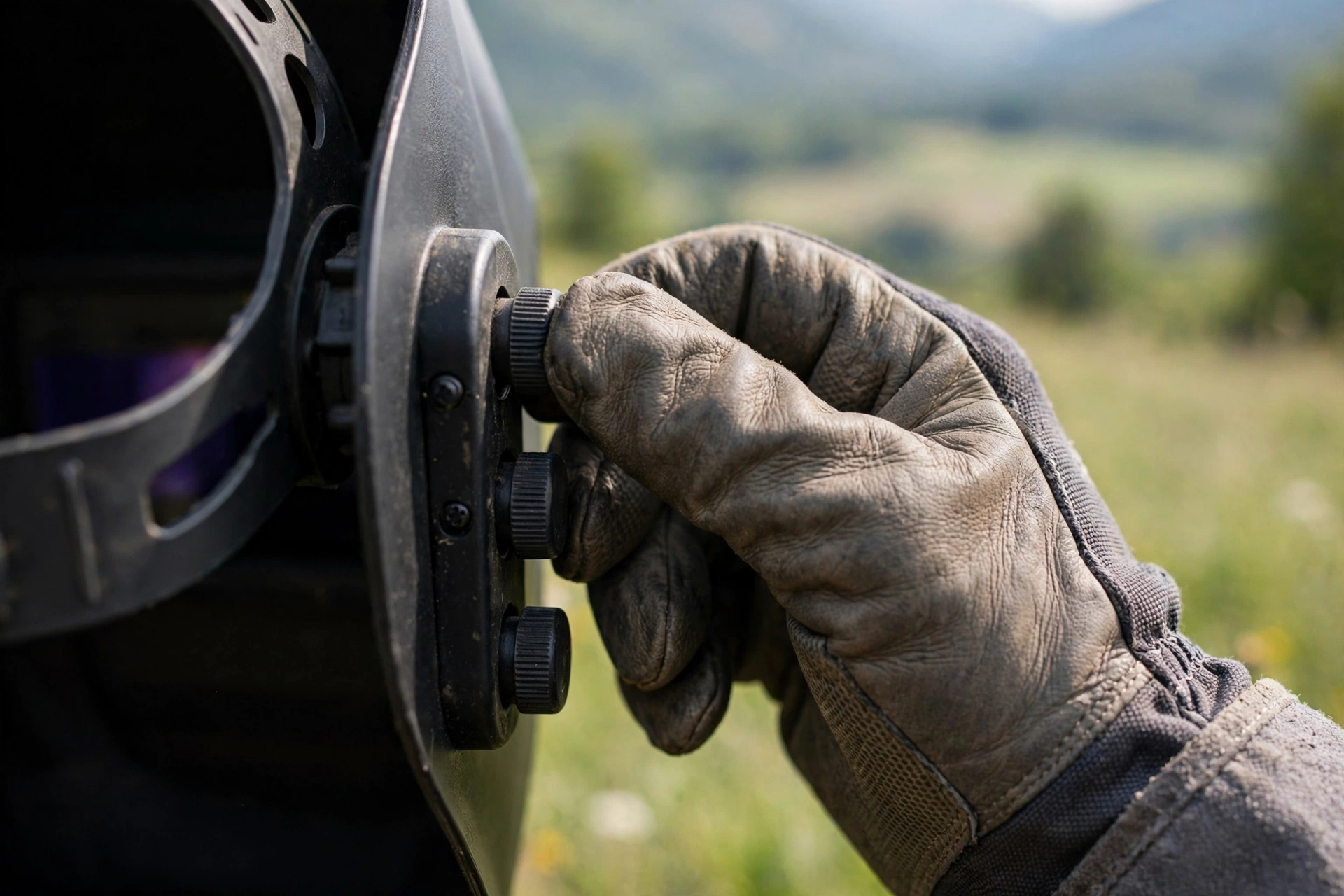
Sensitivity controls how much light it takes to trigger your lens dark, and delay controls how long the lens stays dark after the arc stops. Tune sensitivity so your arc always triggers the lens — without the shop lights or a coworker’s arc setting it off — and set the delay short for quick tack work or longer after hot, high-amp welding, so the lens stays dark while the metal still glows. Change one setting at a time and test on scrap.
Most auto-darkening helmets arrive with both dials somewhere in the middle, which works passably for general work and badly for everything else. A few minutes of tuning for the job in front of you is the difference between a lens that feels invisible and one that flashes you, flickers, or leaves you staring into darkness between welds.
What Does the Sensitivity Setting Actually Do?
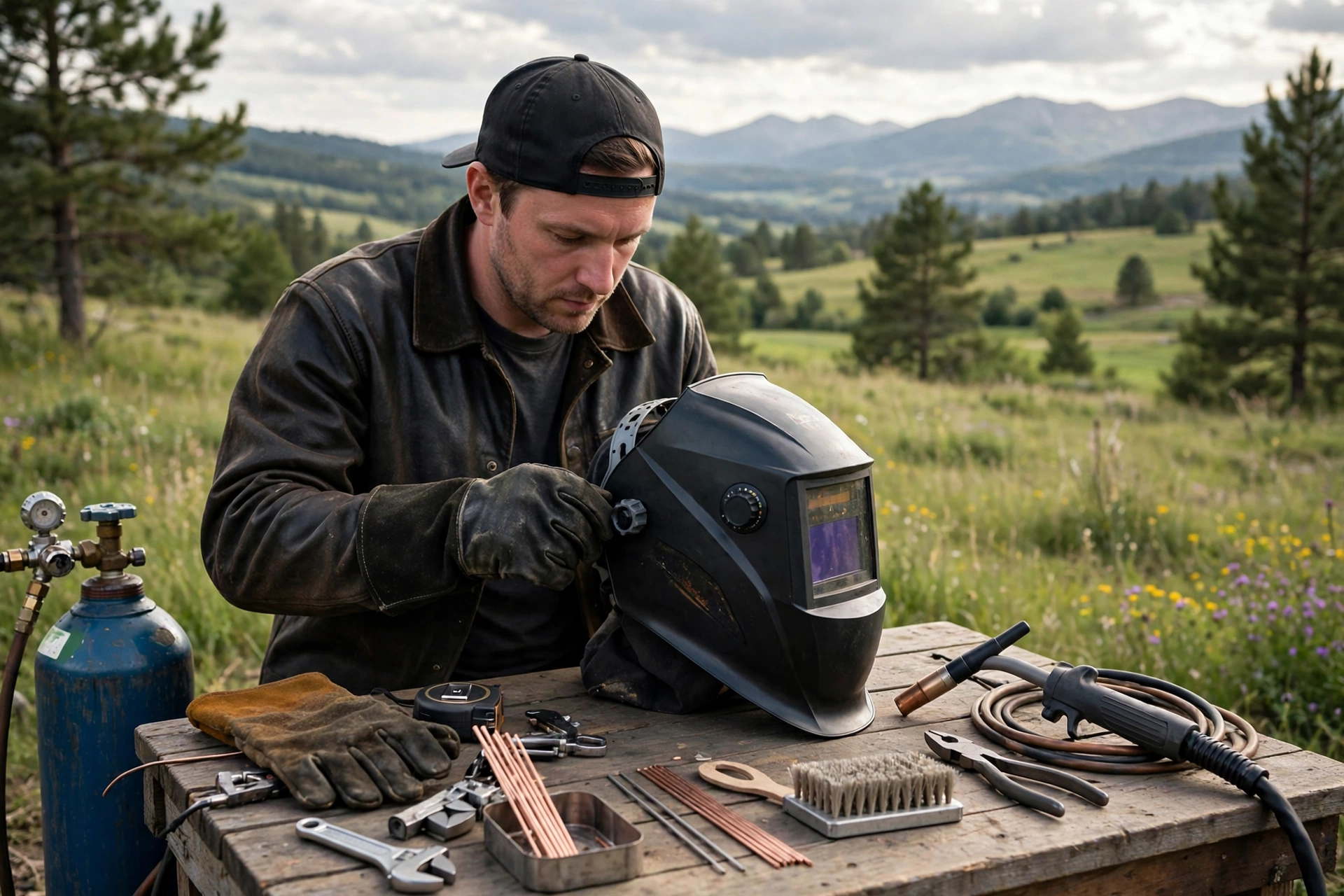
Your helmet’s sensors watch for the sudden burst of light from an arc. Sensitivity sets the threshold they use: how bright that burst has to be before the lens switches dark. Think of it as deciding how eager the helmet should be to react.
Two situations call for adjusting it. The first is a bright environment — a sunlit shop door, strong overhead lighting, reflective walls, or another welder working nearby. With sensitivity set too eagerly, those light sources can trip the lens when you do not want it to, or keep sensors “awake” and confused. Back the sensitivity off until only your arc triggers the lens. The second situation is the opposite: low-amp TIG work, where the arc is small and relatively dim. If the lens fails to darken, or drops out mid-weld because the arc is too faint to hold it, the sensitivity needs adjusting so the helmet can detect that weaker signal — and until it triggers reliably, do not weld.
Blocked sensors complicate both cases. When you weld out of position — under a vehicle, inside a tank, around a corner — your workpiece or your own arm can shade the sensors from the arc. If the lens flickers in those positions but behaves in the open, repositioning your head or the work usually matters more than the dial.
What Does the Delay Setting Actually Do?
Delay sets how long the filter stays dark after the arc goes out, before it returns to the light state. It exists because the weld does not stop glowing the instant the arc stops. On hot, high-amp work, the puddle and the surrounding metal stay bright for a moment, and a lens that clears instantly flashes that glow into eyes that have just adjusted to the dark shade — tiring over a shift, and genuinely uncomfortable weld after weld.
Set the delay to the short end when you are doing lots of quick tacks and fit-up work, where you need to see the joint again right away to reposition. Set it longer for high-amperage welding, long beads, and any work where the metal stays visibly glowing after each pass. In general terms, if you are blinking against afterglow at the end of every weld, your delay is too short; if you are waiting in the dark, lifting the helmet to check your work, it is too long.
How Do the Two Settings Work Together?
Sensitivity decides when the lens goes dark; delay decides when it comes back. They solve different problems, and confusing them leads to chasing the wrong dial. Flicker or failure to darken while the arc is running is a sensitivity or sensor problem. Flashes of bright afterglow between welds, or annoying waits in the dark, are delay problems.
The practical way to tune is in order. First set sensitivity with a test arc on scrap: the lens must darken instantly and hold steady for the whole weld, including when you shift position. Then set delay by watching how the metal looks at the end of the bead: the lens should clear just after the glow fades to comfortable. Adjust in small steps, one dial at a time, and re-test after each change.
How Should You Set Them for Common Jobs?
For low-amp TIG, the priority is a lens that triggers on a small arc and never drops out. Adjust sensitivity so the faint arc holds the lens dark, keep sensors unobstructed, and use a short-to-medium delay so you can see the joint between precise, short welds. For MIG and stick welding at higher amps, the arc is bright and easy to detect, so sensitivity can sit more conservatively without false triggers from the surroundings; a medium-to-long delay protects you from the stronger afterglow of hot metal.
For tack-heavy fabrication — fitting, tacking, checking, moving on — a short delay keeps your rhythm, because the metal cools fast and you need your clear view back. For long, hot runs like heavy plate or repeated passes, lengthen the delay and let your eyes rest behind the shade a moment longer each time. Overhead and out-of-position work benefits from a sensitivity check from the actual position you will weld in, not from standing comfortably at the bench.
Whenever you change process, amperage, or workplace, treat the settings as part of the new setup — the same two minutes you spend swapping wire or tungsten.
What Problems Point to the Wrong Settings?
A few symptoms map cleanly to causes:
- Lens flashes you at arc start, or flickers during the weld: sensitivity too low for the arc, blocked or dirty sensors, or a weak battery.
- Lens goes dark when no arc is running: sensitivity too high for a bright shop, or another welder’s arc nearby is triggering it.
- Eyes feel tired and you see afterglow flashes between welds: delay too short for the heat of the work.
- You keep lifting the helmet to see the joint: delay too long for tack-and-fit work.
- Settings seem to change nothing: clean the sensors and cover lenses, check the battery, and test again — grime and low power imitate bad settings.
The same fit-and-verification mindset applies to any safety helmet: it has to suit the task and be checked before use. Riders make identical judgments with motorcycle and bike helmets, where proper fit and certification — and features such as MIPS — only count if the basics are right for the job.
Frequently Asked Questions
Q: What is a good starting point for sensitivity and delay?
A: Start with both near the middle, then tune sensitivity first with a test arc until the lens triggers instantly and holds, and set delay second so the lens clears just after the metal’s glow fades. Re-tune whenever the process or amperage changes.
Q: Why does my lens keep dropping out during low-amp TIG?
A: The TIG arc is small and dim, close to the sensor’s threshold. Adjust the sensitivity so the helmet can detect it, make sure nothing blocks the sensors, and check the battery. If it still drops out, the filter may be failing.
Q: Does a longer delay make the helmet safer?
A: Only up to a point. A longer delay protects against residual glow and repeated flashing after hot, high-amp welds. Set too long for light work, it just slows you down and tempts you to flip the helmet up at exactly the wrong moment.

Olivia
Writer at Helmet Today, covering helmet reviews, fit and riding safety.