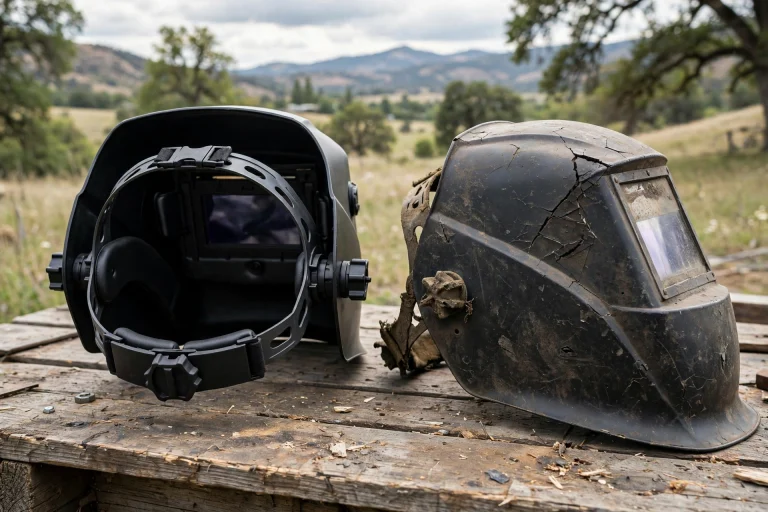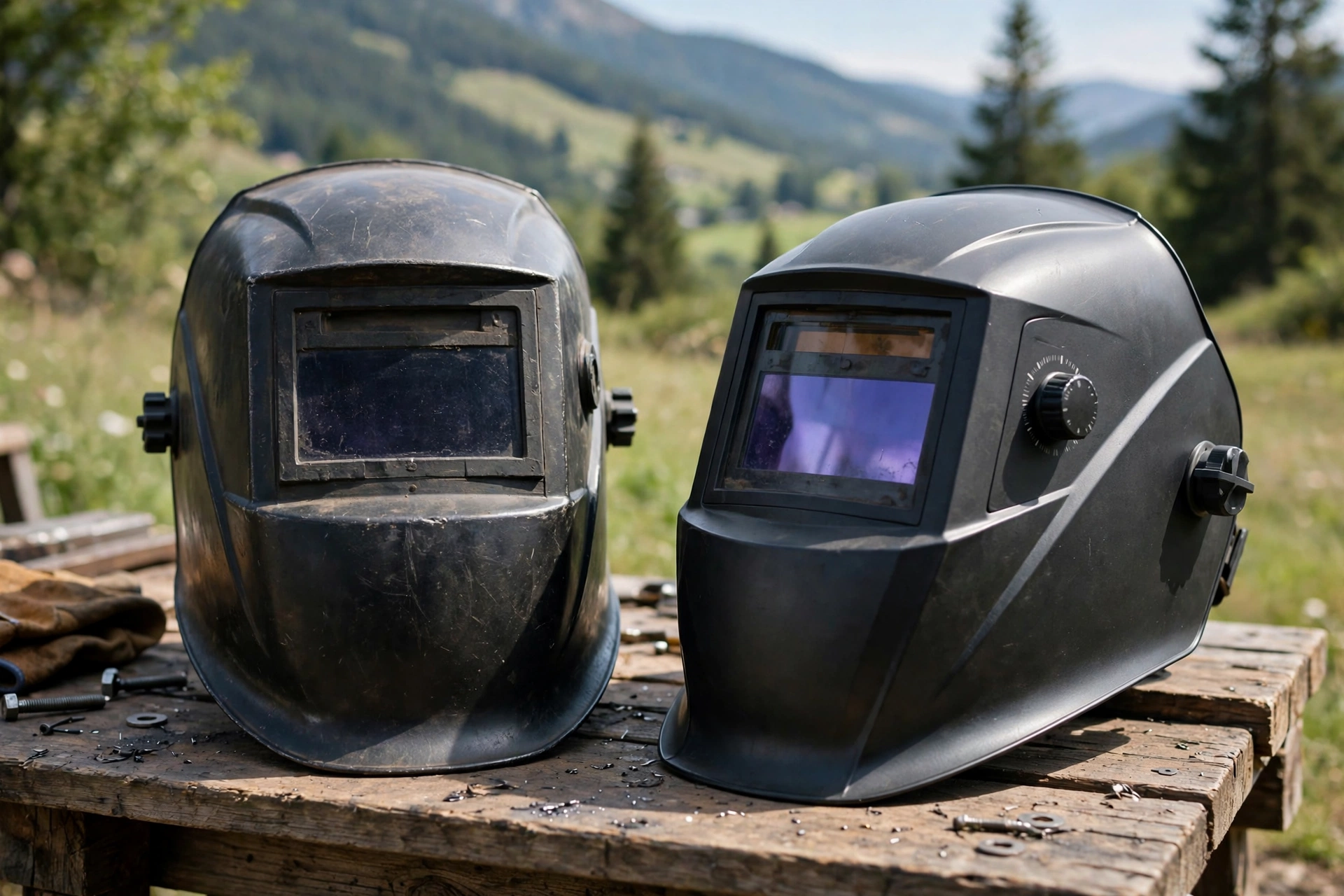
A fixed shade helmet is dark all the time — one shade, no batteries, nothing to fail — while a variable shade helmet lets you adjust the darkness to suit different processes, usually with an auto-darkening filter that stays clear until the arc fires. Neither is simply better. Fixed shade suits repetitive work done at one setting all day; variable shade suits mixed work where processes, amperages, and materials keep changing. The right choice is the one that matches your actual welding.
Every experienced welder has an opinion on this, usually formed by the kind of work they do. Understanding how each type works — and where each one gets in the way — makes the choice straightforward.
How Does a Fixed Shade Helmet Work?
A fixed shade helmet, also called a passive helmet, holds a single piece of dark filter glass. It is the same darkness whether you are welding, positioning your workpiece, or walking across the shop. Welders traditionally flip the helmet down with a nod of the head — the “nod-to-weld” routine — at the moment they strike the arc, because with the helmet down, you cannot see the joint.
That simplicity is the whole appeal. There are no batteries to die, no sensors to blind with grime, no electronics to fail in heat, dust, or damp. The helmet is light, cheap, and durable, and it works exactly the same on its thousandth day as its first. Many welders keep one as a backup even if they normally use something fancier, and many shops keep them as spares and loaners.
The cost of that simplicity is convenience. You position your torch, electrode, or workpiece largely by memory and feel, flip the helmet down, and hope everything is where you left it. On long, repetitive runs that hardly matters. On precise fit-up work, it matters a lot.
How Does a Variable Shade Helmet Work?
A variable shade helmet lets you choose the darkness, typically across a range of shades, so the lens can be matched to the brightness of the arc — brighter, high-amperage arcs call for darker shades, while low-amp work stays visible at lighter ones. Most variable shade helmets are auto-darkening: the filter sits in a light state that you can see through while you line up the weld, sensors detect the arc, and the lens switches to your chosen shade instantly.
That clear-then-dark behavior changes how you work. You can see the joint, the puddle, and your hands with the helmet down the whole time, which means fewer mis-strikes, easier starts, and no nodding. Most auto-darkening models also add sensitivity and delay controls, and many include a grind mode so the lens stays light for grinding without swapping helmets.
The trade-offs are the moving parts: batteries or solar cells to manage, sensors to keep clean, a higher price, and a filter that eventually needs replacing. In general terms, a variable shade helmet asks a little maintenance in exchange for a lot of convenience.
Which Jobs Suit a Fixed Shade Helmet?
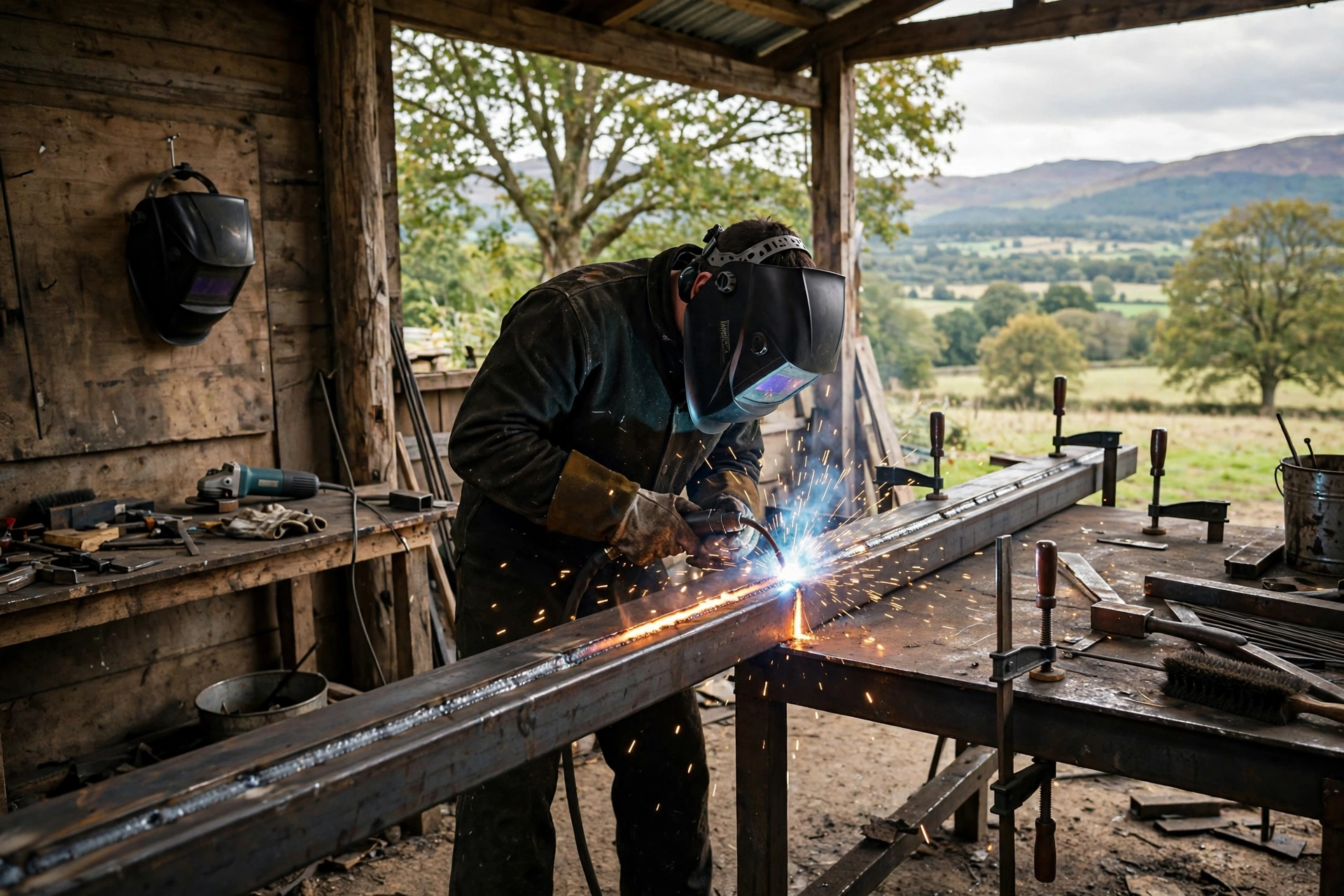
Fixed shade shines when the work never changes. A production welder running the same joint, the same process, and the same amperage all day gains nothing from adjustability — the shade is right, the helmet is light, and there is nothing to check beyond a quick glance at the cover lens. Repetitive stick or MIG work on a line, in a jig, or on a farm repair bench fits the same pattern.
It is also the natural choice where electronics suffer: heavy grinding dust, outdoor work in all weather, hot and rough environments where a helmet gets knocked around. And because passive helmets are inexpensive, they make sense for occasional welders whose helmet hangs on a hook for months between jobs — a fixed shade glass does not care how long it sat in the dark, while a neglected auto-darkening filter may greet you with a dead battery.
Which Jobs Suit a Variable Shade Helmet?
Variable shade earns its money when the work keeps changing. A fabricator who TIGs thin stainless in the morning, MIGs brackets after lunch, and stick-welds a repair before quitting needs different shades across the day, and the auto-darkening view makes constant repositioning painless. Anyone doing lots of fit-up, short welds, and starts and stops benefits for the same reason: you can see everything with the helmet down.
Learners often progress faster with one too. Seeing the joint and the arc start with the helmet already down removes the hardest coordination problem in welding — striking an accurate arc blind. And for low-amp TIG, where the arc is dim, matching a lighter shade to the arc means actually seeing the puddle instead of a dark smudge.
What Trade-Offs Should You Weigh Before Buying?
Run through the honest list: price and ongoing cost (the passive helmet wins easily); weight over a long shift (passive usually wins); convenience and accuracy on varied work (variable wins); reliability and upkeep (passive never needs batteries or sensor cleaning); and versatility (variable, especially models with grind mode and a wide shade range). Also consider optical clarity — a better-rated filter in either type gives a truer, less tiring view, and it is worth paying for in the helmet you will wear daily.
Many welders land on owning both: a variable shade auto-darkening helmet as the daily driver, and a cheap fixed shade helmet as the indestructible backup for rough days and dead batteries. That combination covers nearly every situation a shop can produce.
Whichever route you choose, the principle is the same one riders use with motorcycle and bike helmets: match the protection to the task, check it before you trust it, and make sure the fit lets you wear it all day — the thinking behind features like MIPS starts from exactly those basics.
Frequently Asked Questions
Q: Is a fixed shade helmet less safe than a variable shade one?
A: No. In general terms, both types block the harmful ultraviolet and infrared radiation from the arc continuously — on an auto-darkening helmet that protection is present even in the light state. Safety depends on using an appropriate shade, a sound helmet, and proper technique with either type.
Q: What shade should a beginner start with?
A: A mid-range shade commonly used for general welding is the usual starting point, adjusted until you can see the puddle and joint clearly without squinting or glare strain. A variable shade helmet makes experimenting easy; when in doubt, follow the shade guidance for your process and amperage.
Q: Can a fixed shade helmet be used for TIG welding?
A: It can, and plenty of welders learned that way, but it is harder: you cannot see the arc start or your positioning with the helmet down, and low-amp TIG arcs are dim. Most TIG welders prefer a variable shade helmet set to a lighter shade for that work.

Olivia
Writer at Helmet Today, covering helmet reviews, fit and riding safety.