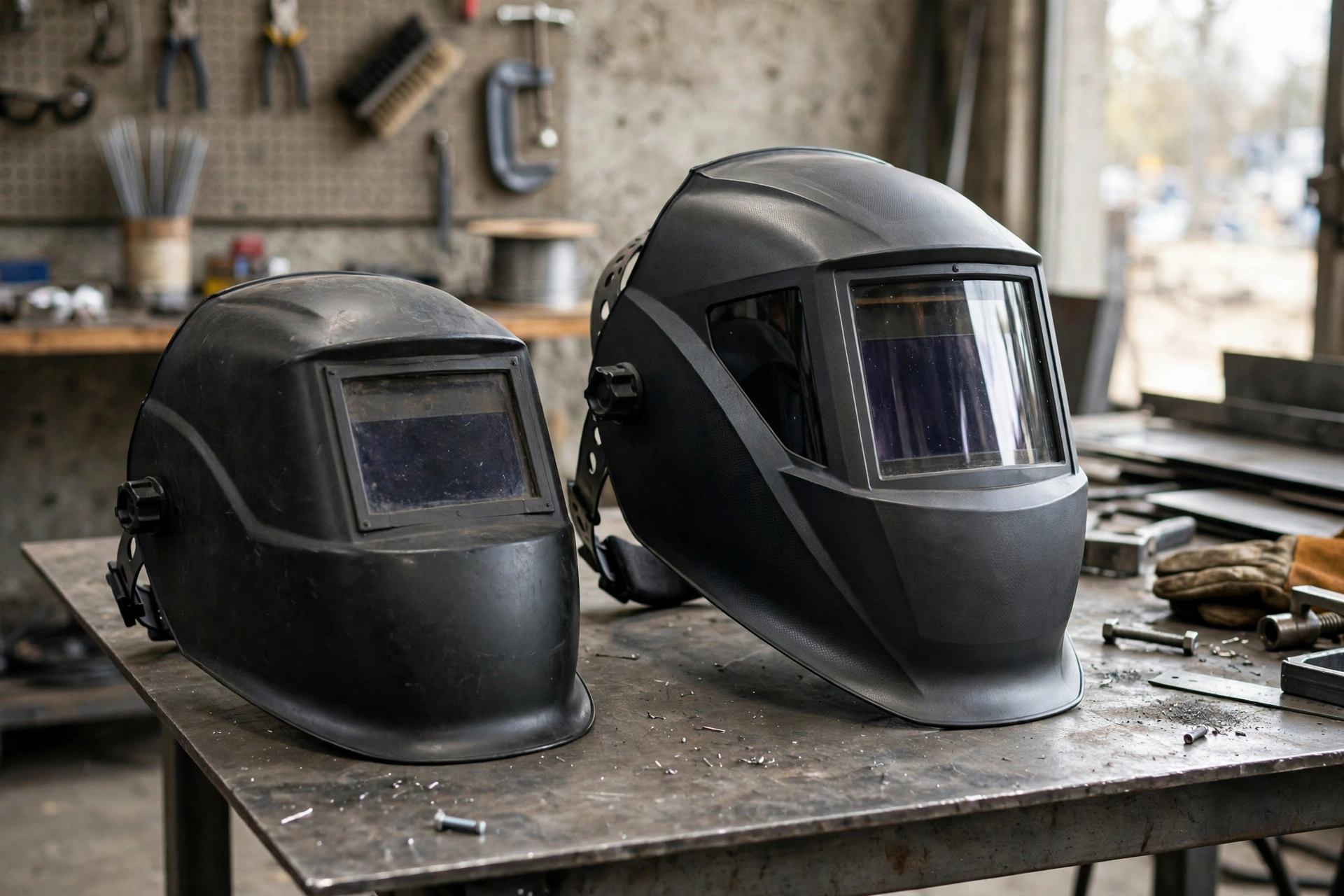
What actually differs between a cheap and a premium welding helmet is not basic eye safety — in general terms, the UV and infrared protection is built into the filter material itself and works the same whether the lens is dark or light, cheap or premium — but clarity, reliability, and comfort: optical clarity ratings, the number and placement of arc sensors, switching reliability on faint low-amp TIG arcs, viewing area size, headgear quality, and how many parts you can replace instead of replacing the whole helmet. A cheap helmet protects your eyes; a premium one shows you the puddle better and keeps working on the jobs where cheap filters struggle.
Price gaps in welding helmets look suspicious at first glance: if the cheap one is also “auto-darkening, shade 9–13,” what is the expensive one selling? This guide breaks down the differences that are real, the ones that are marketing, and how to decide where your money earns its keep.
Does a Cheap Welding Helmet Protect Your Eyes as Well?
In general terms, yes — for UV and IR. The filter in an auto-darkening helmet blocks ultraviolet and infrared radiation permanently, by its material construction, whether or not it has switched dark. That protection does not switch on with the electronics, and it is present in budget filters too. What the electronics control is visible brightness: how dark the lens gets against glare.
The caveat is standards and honesty. A helmet from a reputable maker is tested to the applicable safety standards for shade accuracy, switching, and UV/IR filtering. A no-name helmet at an implausible price may claim the same numbers without the testing behind them. Buy certified helmets from makers who publish their standards compliance — that matters more than the price tier itself.
So the honest framing is: among genuine, standards-compliant helmets, eye protection is the floor every tier stands on. The tiers diverge above that floor, in how well you can see and how reliably the lens behaves.
What Is an Optical Clarity Rating and Why Does It Cost Money?
Auto-darkening filters are graded with an optical rating — a series of numbers scoring optical clarity, light diffusion, shade consistency across the lens, and how much the shade shifts at viewing angles. A top rating (often shown as 1/1/1/1) means the view is clear, even, and true from edge to edge; lower numbers mean some blur, unevenness, or angle shift you may notice as a slightly murky or patchy view.
This is the single biggest real difference most welders feel. Through a premium filter the puddle edges, the joint line, and color differences in the metal are simply easier to read, which shows up directly in weld quality — especially on TIG and on thin or fussy material. Through a budget filter the view is serviceable but greener, darker, and less even.
Newer “true color” style filters, more common at premium tiers, further improve how natural the view looks outside the arc. None of this changes safety; all of it changes how well you can see the work you are being paid (or trying) to do well.
Why Do Sensors and Switching Matter on TIG and Low Amps?
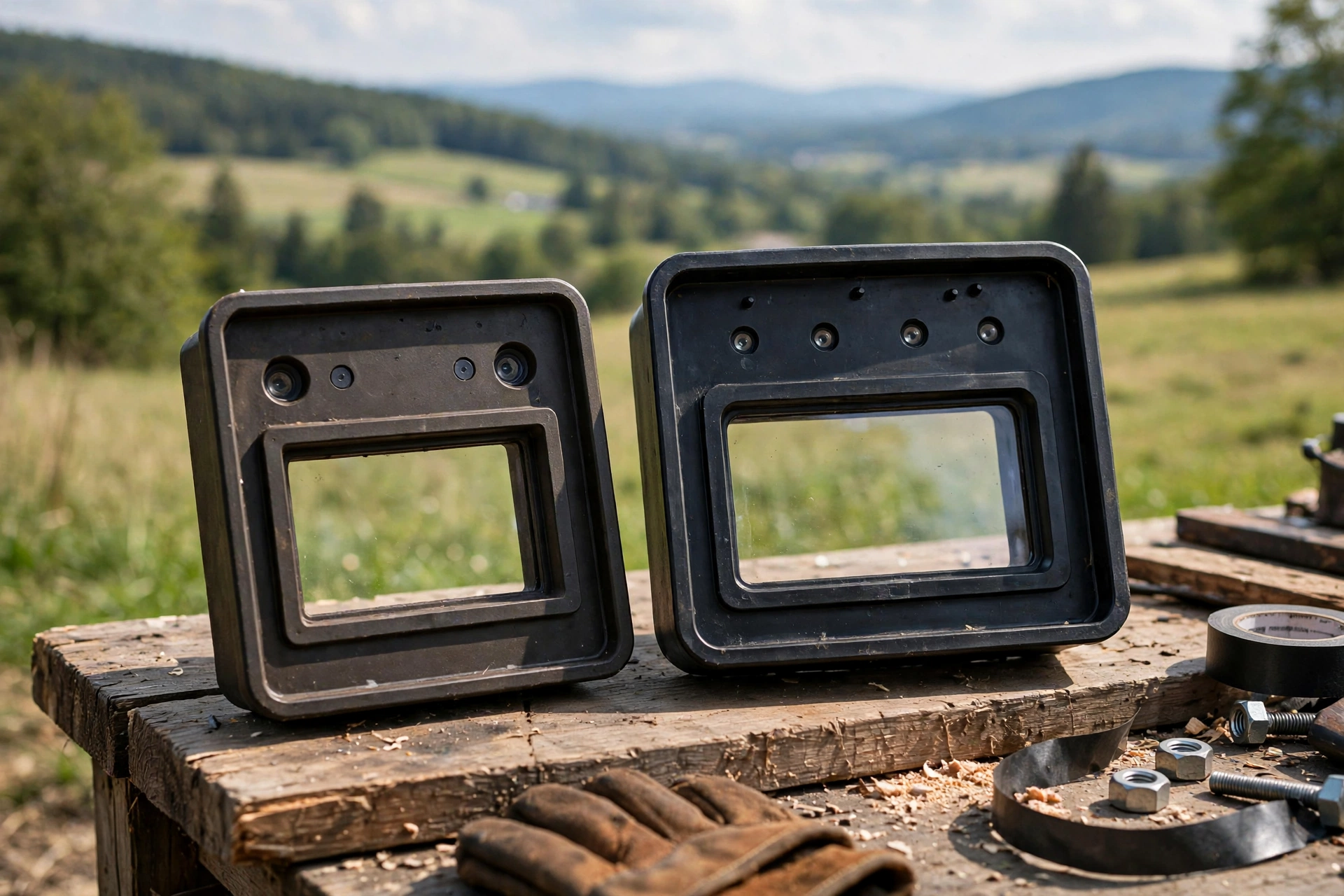
An auto-darkening filter only darkens when its arc sensors see the arc. Cheap helmets typically have two sensors in a narrow field; premium helmets have three or four, spread wider, so an arc is still detected when your hand, the torch, or the workpiece blocks one sensor’s view — a very common cause of the dreaded “flash” where the lens stays light for a beat.
Low-amp TIG is the stress test. A small, stable TIG arc is far less bright than a stick or MIG arc, and budget filters can fail to trigger or flicker on and off at low amperages, which is fatiguing and miserable. Premium filters are built and tuned to sense and hold on faint arcs reliably.
Switching speed claims, by contrast, are mostly saturated: in general terms even budget filters switch fast enough on paper. What separates tiers is not the headline speed but consistency — darkening fully, evenly, every time, from every angle, at every amperage you actually use.
What Else Does the Premium Price Buy?
Viewing area is an obvious one: bigger windows cost more to make well, and premium helmets offer larger, more even filters, sometimes with side panels. Headgear is another — premium multi-point harnesses with better padding and ratchets genuinely improve a long day, and they are often replaceable as assemblies.
Replaceability runs through the whole premium proposition: cover lenses, inner lenses, headgear, sweatbands, batteries, sometimes the filter itself, all available as spares. A budget helmet is closer to disposable — when the headgear cracks or the sealed battery dies, the whole helmet is done. Over years of use, that difference can erase the price gap entirely.
You also tend to get better controls: external shade or grind-mode buttons you can reach with gloves, clearer settings, and sensitivity/delay adjustments that actually behave predictably. Useful, not life-changing — but they add up over thousands of arcs.
Who Should Buy Cheap and Who Should Pay for Premium?
A cheap, standards-compliant helmet is a rational buy for occasional stick or MIG work at moderate amps, learning, and as a spare or a loaner. The protection is real, and at higher amperages with a clear view of the arc, budget sensors rarely miss.
Premium earns its price for daily welders, TIG work (especially low-amp), out-of-position welding where sensors get blocked, and anyone whose welds are inspected or cosmetic. In those cases clarity and switching reliability are not luxuries — they are the tools of the trade, and eye fatigue across a full shift is a real cost.
The middle of the market is where most hobbyists should land: a reputable brand, a good optical rating, at least a published standards claim, and replaceable batteries and headgear. Decide by your process and hours, not by the price tag’s bragging rights.
The pattern — paying for clarity, fit, and replaceable parts rather than for basic certified protection — shows up across helmet types. Riding helmets work the same way, as our explainer on MIPS and rotational protection in bike helmets shows: the certification is the baseline, and the money buys refinement on top of it.
Frequently Asked Questions
Q: Can a cheap welding helmet damage my eyes?
A: A genuine, standards-compliant budget helmet blocks UV and IR in general terms just as a premium one does — that protection is in the filter material. The risk is in uncertified no-name helmets whose claims are untested. Buy from reputable makers and check the standards marking.
Q: Why does my cheap helmet flicker on low-amp TIG?
A: A faint TIG arc can fall below what budget sensors reliably detect, or a blocked sensor can miss it. Raising sensitivity helps; if it persists, a helmet with more sensors and proven low-amp performance is the real fix — this is one of the clearest premium differences.
Q: Is the optical rating worth paying for if I only weld on weekends?
A: It improves every weld you look at, but occasional MIG and stick work at moderate amps is where budget filters perform closest to premium ones. If your weekend work is mostly TIG or detail work, clarity pays off faster; for general fabrication, mid-range is usually the sweet spot.

Olivia
Writer at Helmet Today, covering helmet reviews, fit and riding safety.