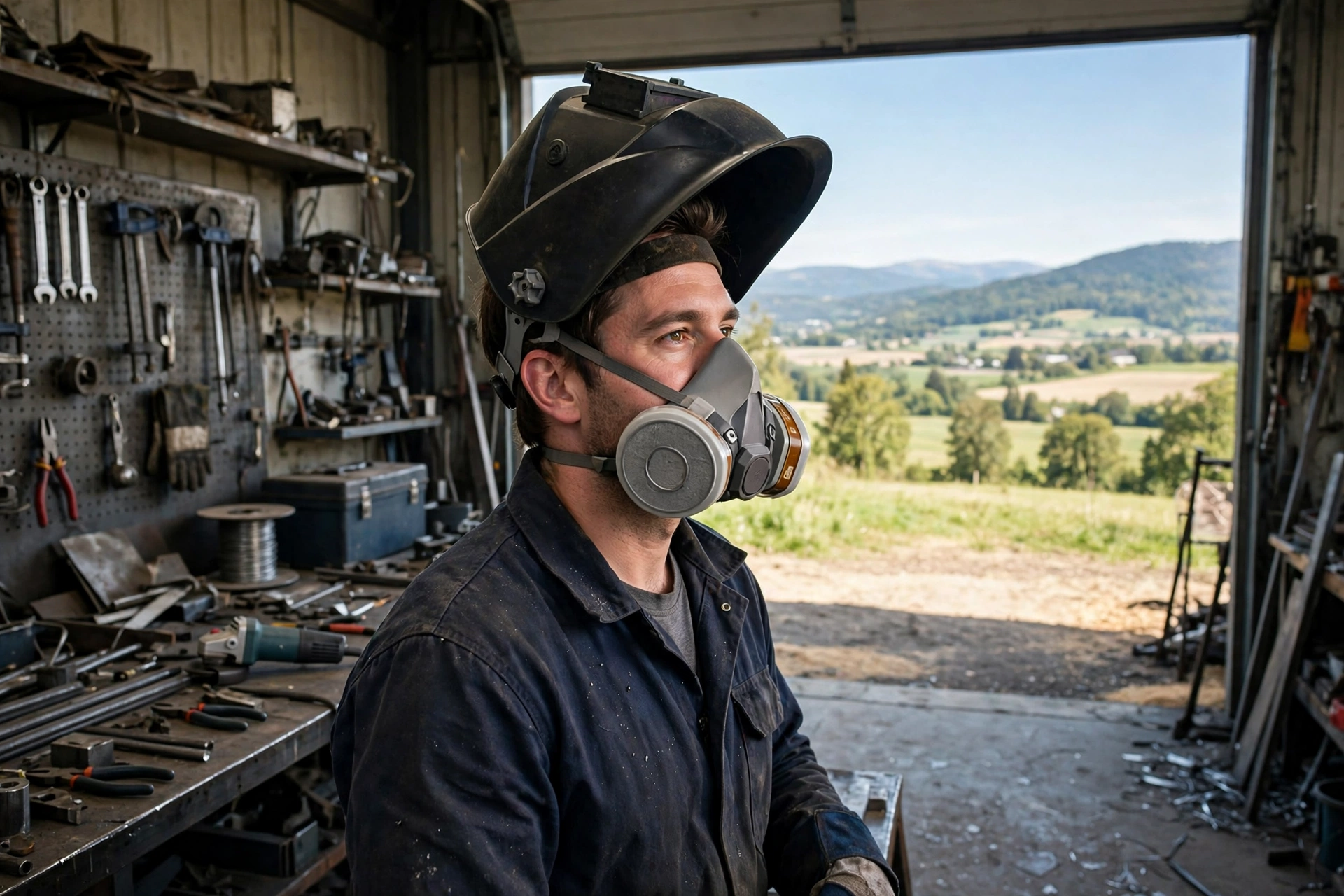
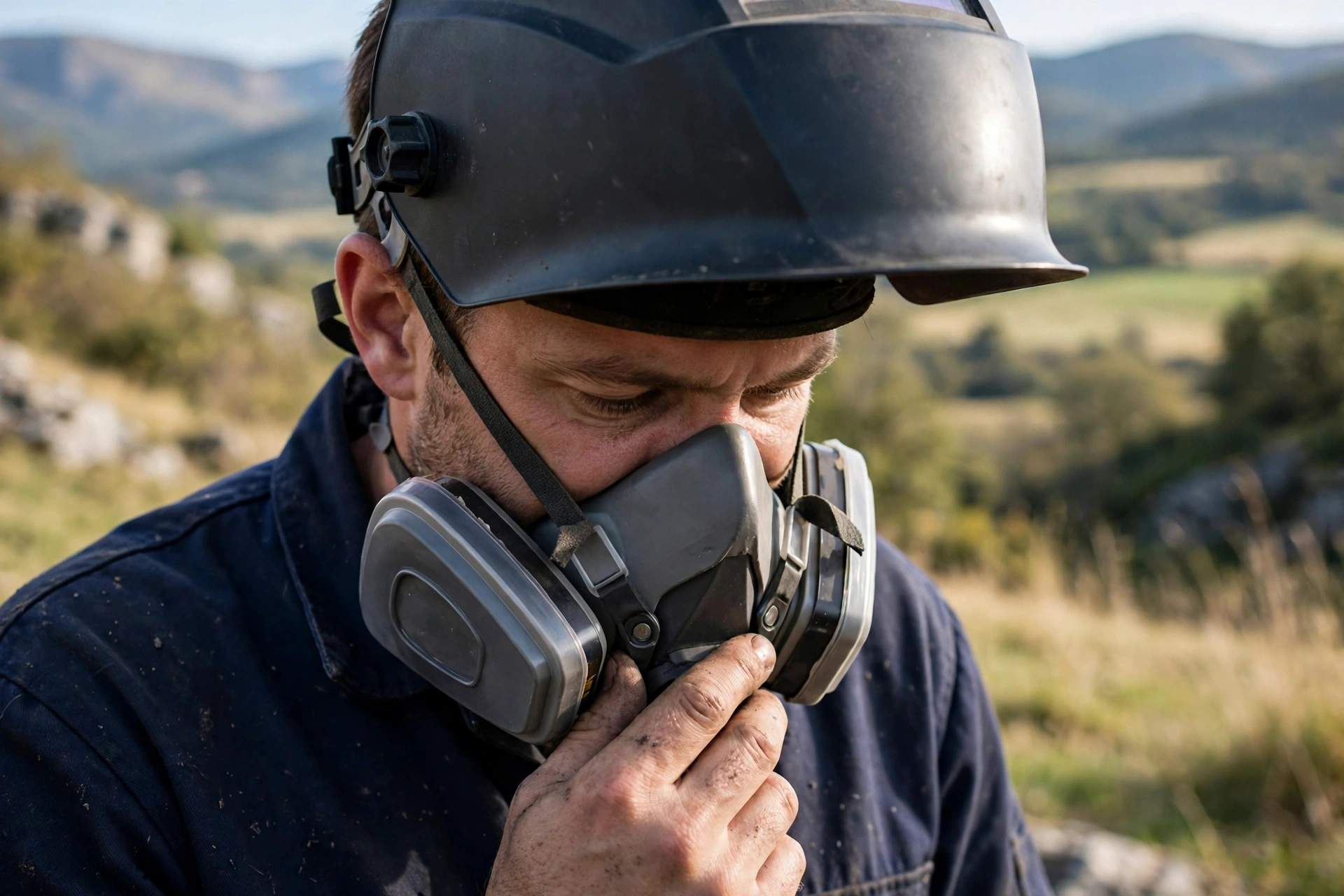
Yes — you can wear a respirator under a welding helmet, and for a lot of welding work you should. The combination that works is a low-profile half-mask respirator: its compact shape sits under the helmet’s headgear without pushing the hood up or breaking its fit. The fit of both pieces has to be checked together, because a mask that lifts the helmet or a headgear strap that breaks the mask’s seal defeats the purpose of wearing either.
Welding fume is the part of the job you cannot see doing harm, and many welders only think about respiratory protection after years of shop air. This guide covers which masks fit under a hood, how to check the combined fit, and when to step up to powered air.
Why Do Welders Need Respiratory Protection?
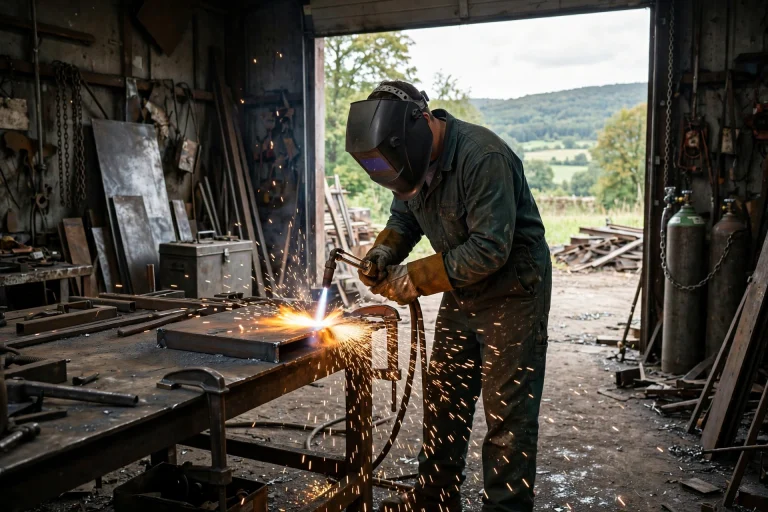
An arc does more than make light. It vaporizes metal and flux into a fine fume that rises straight into the breathing zone of someone leaning over the work — which is where a welder’s face spends the day. Ventilation and fume extraction help, but they do not catch everything, especially in tanks, corners and field work where extraction cannot follow.
Certain work raises the stakes in general terms: stainless and other alloy steels, galvanized metal, painted or coated surfaces, and long production runs in enclosed spaces all produce fume worth keeping out of your lungs. Your employer’s safety rules or the job’s requirements may mandate a respirator for exactly these situations.
A respirator is one layer among several — extraction, position (keeping your head out of the plume), and shop ventilation still matter — but it is the layer that is always with you, including the moments the other layers are not enough.
Which Respirators Fit Under a Welding Helmet?
The standard answer is a low-profile half-mask: a reusable rubber or silicone mask with flat, pancake-style particulate filters, or a slim disposable respirator rated for welding fume. The key word is low-profile. The mask and filters must sit close to the face so the helmet’s headgear clears them and the hood nods down without the mask’s bulk shoving it around.
Bulky cartridge respirators designed for painting or chemical work usually fail this test — the cartridges stick out to the sides, foul the headgear, and make the helmet sit high and crooked. If a mask makes your helmet uncomfortable, do not conclude that masks and helmets do not mix; conclude that you have the wrong mask shape for under-hood use.
Beards are the other fit reality: any facial hair in the seal area breaks a tight-fitting respirator’s seal, helmet or no helmet. Welders who keep a beard generally end up at loose-fitting powered systems, covered below, because those do not rely on a face seal.
How Do You Check the Fit of Mask and Helmet Together?
Fit the mask first, on its own: straps adjusted, seal checked with the maker’s user seal check, breathing comfortable. A respirator that does not seal by itself will not seal better under a hood.
Then add the helmet and check three things. The hood should sit at its normal height, with your eyes level with the middle of the filter — if the mask’s nose bridge or straps have pushed the headgear up, you will see it in a lowered, tilted view. The helmet should nod down and stay put through the movements your work needs. And nothing should press the mask’s straps off position when the hood comes down.
Finally, re-run the seal check with the helmet on and down. If adding the helmet breaks the seal, adjust in small steps: reposition the mask straps, reset the headgear’s top strap, or try a slimmer mask. Treat the two as one system and tune them together, once, before the work starts — not mid-weld with gloves on.
What Is a PAPR, and When Is It Worth It?
A PAPR — powered air-purifying respirator — replaces the passive mask with a battery blower that pushes filtered air into the helmet through a hose, keeping a gentle positive pressure inside. Welding versions integrate the air supply with the helmet itself, so there is no separate mask under the hood at all.
In general terms, PAPR systems earn their cost in three situations: long shifts where breathing through a passive filter becomes fatiguing, hot environments where the airflow is also welcome cooling, and welders with beards or faces that cannot seal a tight-fitting mask. The moving air also reduces lens fogging, a side benefit many users rate highly.
The trade-offs are price, weight on the belt, and maintenance — filters, batteries and a blower that must all be kept charged and clean. For occasional hobby welding, a low-profile half-mask is usually the proportionate choice; for daily production welding in fume-heavy work, powered air is the professional standard for a reason.
What Problems Should You Watch For?
Fogging is the common one: exhaled air escaping upward from a poorly sealed mask fogs the filter. A better nose seal usually fixes it; persistent fogging is a sign the mask fit needs work, not something to tolerate.
Heat and discipline are the quieter problems. A mask under a hood is warmer and less comfortable, and the temptation is to skip it for “one quick weld” — which is how protection habits unravel. Keep the mask with the helmet, as one kit, so using both is the default rather than a decision remade every job.
And keep the system maintained: replace filters on the maker’s schedule or when breathing resistance rises, store the mask clean and out of the dust, and check straps for stretch. A neglected respirator worn faithfully protects less than a fresh one.
Layered protection only works when every layer still fits — the same principle behind checking helmet fit alongside features like MIPS in modern bike helmets, where the gear has to sit exactly as designed to do its job. Mask and hood deserve the same combined check before the arc starts.
Frequently Asked Questions
Q: Will a respirator fog up my welding lens?
A: It can if exhaled air leaks upward past the nose seal. Refit the mask, mold the nose clip or bridge carefully, and do the seal check with the helmet on. Persistent fogging means the mask is not sealing — fix the fit rather than cracking the helmet open for air.
Q: Can I just use a paper dust mask from the hardware store?
A: Basic dust masks are not rated for welding fume and seal poorly in general terms. Use a respirator rated for metal fume particulates — a proper disposable welding respirator or a half-mask with the right particulate filters — and make sure it is low-profile enough to fit under your hood.
Q: Does a beard really stop a respirator from working?
A: For a tight-fitting mask, yes — hair in the seal area lets unfiltered air leak in with every breath, and no strap adjustment fixes geometry. Bearded welders who need respiratory protection generally use a loose-fitting PAPR hood system instead, which does not depend on a face seal.

Olivia
Writer at Helmet Today, covering helmet reviews, fit and riding safety.