For automotive welding, look for a helmet with multiple arc sensors, a compact shell that fits into engine bays and wheel arches, a grind mode for prep work, and headgear that stays put when you are lying on a creeper. Car work means awkward positions and blocked sightlines, so the helmet has to cope with all of it.
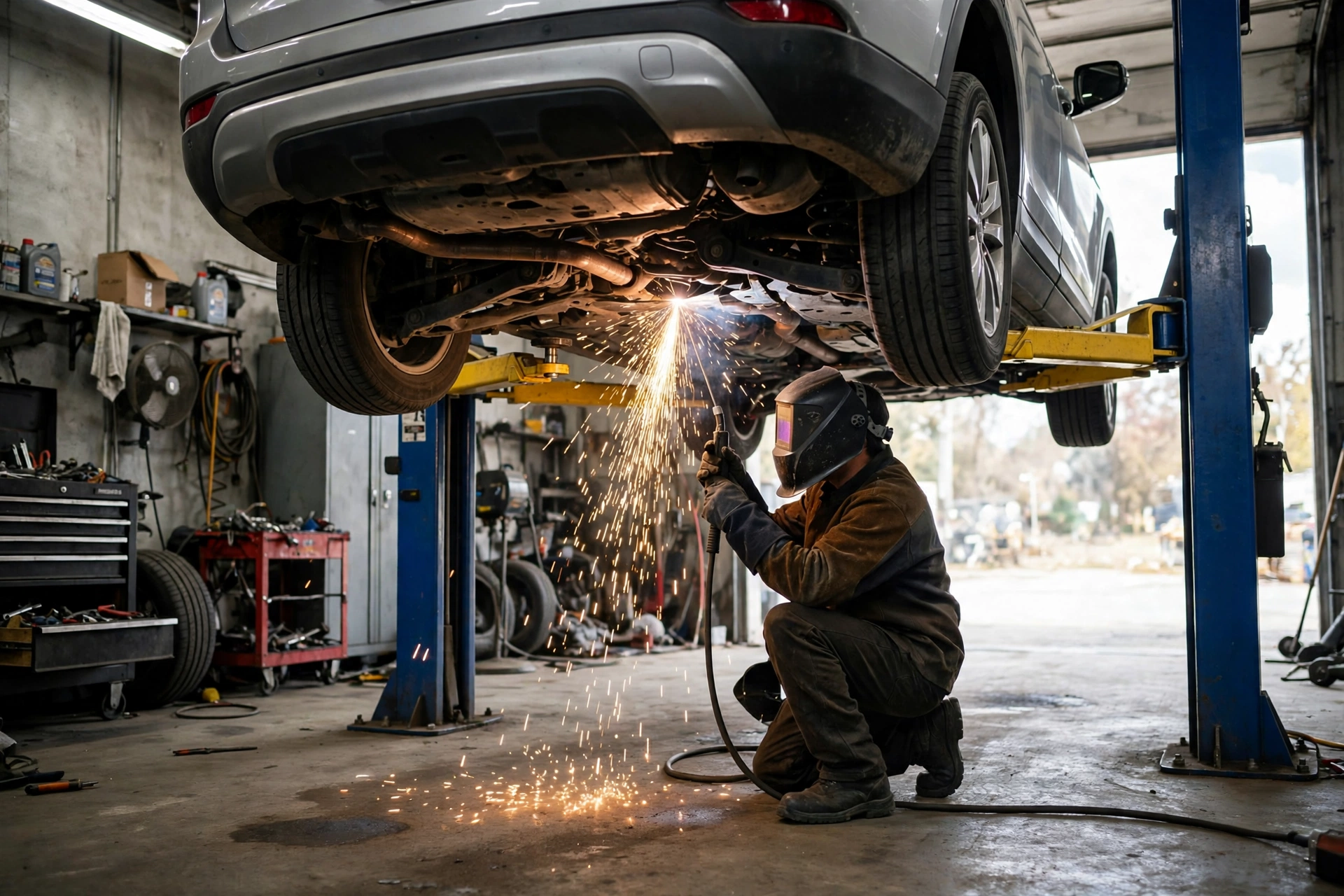
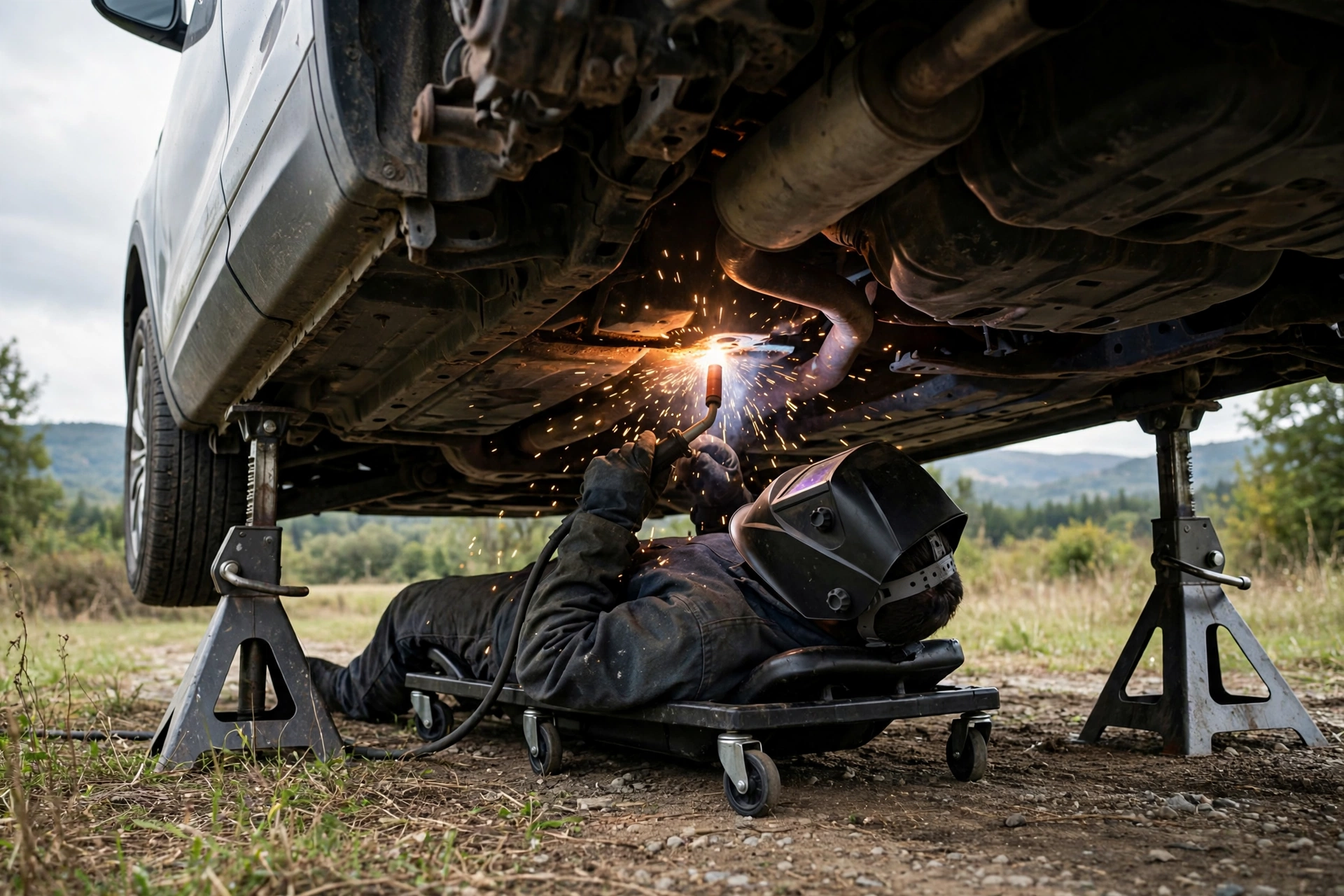
Panel repairs, exhaust fabrication, cage work, and subframe patches all share the same problem: the weld is rarely right in front of you at bench height. You weld overhead under a lift, squeezed beside a wheel tub, or on your back looking up at a floor pan. A helmet that is fine for flat bench work can be frustrating — or unreliable — in those positions, and the features below are what make the difference.
Why Do Multiple Sensors Matter So Much on Cars?
Auto-darkening sensors need a clear view of the arc, and automotive work constantly takes that view away. Your glove, a suspension arm, the edge of a sill, or the torch itself can shade a sensor when you are welding out of position, and a two-sensor helmet may then fail to darken or drop out mid-weld.
A filter with four sensors, spread across the top and corners of the lens, is much harder to block completely. In general terms, that extra coverage is the single most valuable feature for underbody and engine-bay work, because at least one or two sensors will usually still see the arc even when the rest are shaded. If you already own a helmet that misses arcs in odd positions, this is almost certainly why.
What Shell Shape Works in Tight Spaces?
Room is the other constraint. Tall, bulky shells knock against bulkheads, strut towers, and lift posts, and a helmet that keeps catching on the car makes you rush welds you should take slowly. A compact, close-fitting shell with rounded edges slides into engine bays and under dashboards far more easily.
Viewing area is a trade-off here. A large window helps you see panel gaps and follow a seam, but the biggest filters usually come in bigger shells. For most car work, a mid-to-large viewing area in a compact shell is the practical compromise, and a true-colour style lens helps when you are judging a puddle on thin sheet metal where heat control matters.
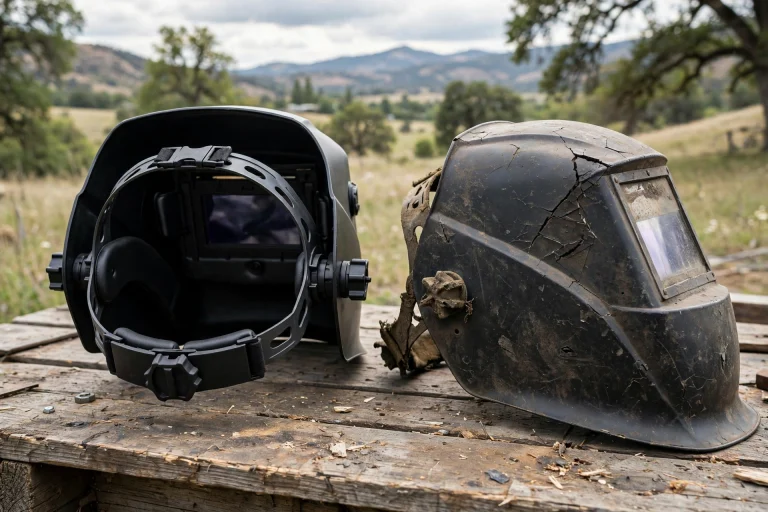
Also think about how often you flip the helmet up. Automotive jobs involve constant test-fitting — offer the panel up, check the gap, tack, check again — so the pivot hardware gets worked far harder than in bench fabrication. A helmet whose pivot nuts loosen with every flip, or whose shell will not stay parked in the raised position, quickly becomes a helmet you hold up with one hand while your other hand holds the panel. That is neither safe nor accurate. In the shop, flip a display helmet up and down a dozen times before buying: it should move with smooth resistance and stay exactly where you leave it, at every angle.
Why Is Grind Mode So Handy in a Body Shop?
Automotive welding is rarely just welding. The same panel gets cut, ground, test-fitted, tacked, ground again, and finish-welded, often within the same hour. A grind mode that holds the lens light lets the helmet double as a face shield, so you keep eye and face protection on through the whole cycle instead of swapping gear constantly.
An external grind button is even better in the workshop, because you can switch modes with gloves on and the helmet down. Just build the habit of switching back before you strike an arc — a helmet left in grind mode will not darken, and under a car is the worst place to discover that.
What Headgear Features Matter on a Creeper?
Welding on your back reverses the usual problem: instead of the helmet nodding down, it wants to slide back off your head or shift sideways. Look for headgear with a good top strap, a secure ratchet, and an angle stop you can set firmly, then adjust it slightly snugger than you would for bench work.
Weight matters too, because your neck is working at an angle for long stretches under a vehicle. A lighter helmet with balanced headgear is easier on your neck than a heavy premium shell. Check that the sweatband and pads are replaceable — underbody work is hot, dirty work, and the pads absorb it all.
Anything Else Worth Checking Before You Buy?
Think about the processes you actually run. Thin body panels mean low-amp TIG or careful MIG work, so the filter needs to trigger reliably at low amps and offer a shade range that goes light enough. Rust repair also means lots of tacks: a shorter delay setting helps you see each tack placement quickly instead of waiting for the lens to clear.
One more automotive-specific point: cover lenses die fast in this trade. Underbody work showers the front of the helmet with rust scale, grinding grit, and spatter, and a pitted or cloudy cover lens hides the puddle long before the filter itself is in trouble. Keep spare cover lenses in the toolbox, swap them the moment your view degrades, and clean sensor windows at the same time — half of all “unreliable helmet” complaints in a body shop trace back to a filthy front end rather than faulty electronics.
Finally, check the basics that apply to every kind of head protection: the gear has to be sound, correctly adjusted, and replaced when its parts wear out — the same thinking behind choosing and maintaining riding helmets, as covered in this explainer on MIPS and how protective helmet liners work. A worn-out ratchet strap on a welding helmet deserves the same zero tolerance as a worn-out strap anywhere else.
Frequently Asked Questions
Q: How many sensors do I need for underbody welding?
A: Four is the practical target. Two-sensor helmets are easily blocked by arms, clamps, and car parts when you weld out of position, while four sensors spread across the filter keep at least one with a clear view of the arc.
Q: Is a big viewing area worth it for panel work?
A: It helps you track seams and gaps on sheet metal, but only within a shell compact enough for engine bays and arches. A mid-to-large window in a close-fitting shell is usually the best balance for cars.
Q: Why does my helmet keep slipping when I weld on a creeper?
A: Lying back loads the headgear differently, so a loose top strap or worn ratchet lets the helmet slide. Tighten the fit, set the angle stop firmly, and replace worn headgear parts rather than overtightening a strap that no longer holds.

Olivia
Writer at Helmet Today, covering helmet reviews, fit and riding safety.