When an auto-darkening helmet fails to darken, work through the fixes in order: clean the cover lens and sensor windows, check or replace the batteries, raise the sensitivity setting, and make sure nothing is blocking the sensors. Most no-trigger faults are dirty sensors or tired batteries, not a dead lens.
Getting flashed once is enough to ruin your trust in a helmet. The good news is that an auto-darkening filter is a simple system — sensors watch for the arc, a small power supply runs the electronics, and the lens switches. When the chain breaks, the cause is usually one of a handful of things you can check on the bench in a few minutes, before you spend anything on a replacement.
What Do the Arc Sensors Actually Do?
The small windows on the front of the filter are light sensors. When an arc strikes, they detect the sudden burst of light and tell the lens to darken in a fraction of a millisecond. Most filters rely on two or more sensors, and many are set up so the lens only switches when the sensors agree that a real arc is present.
That design is what makes the failure modes so predictable. If the sensors cannot see the arc clearly, or the power behind them is weak, the lens never gets the signal. In general terms, the filter itself rarely dies outright — it is usually starved of light information or power long before the electronics fail.
Why Does Dirt on the Sensors Cause Most Failures?
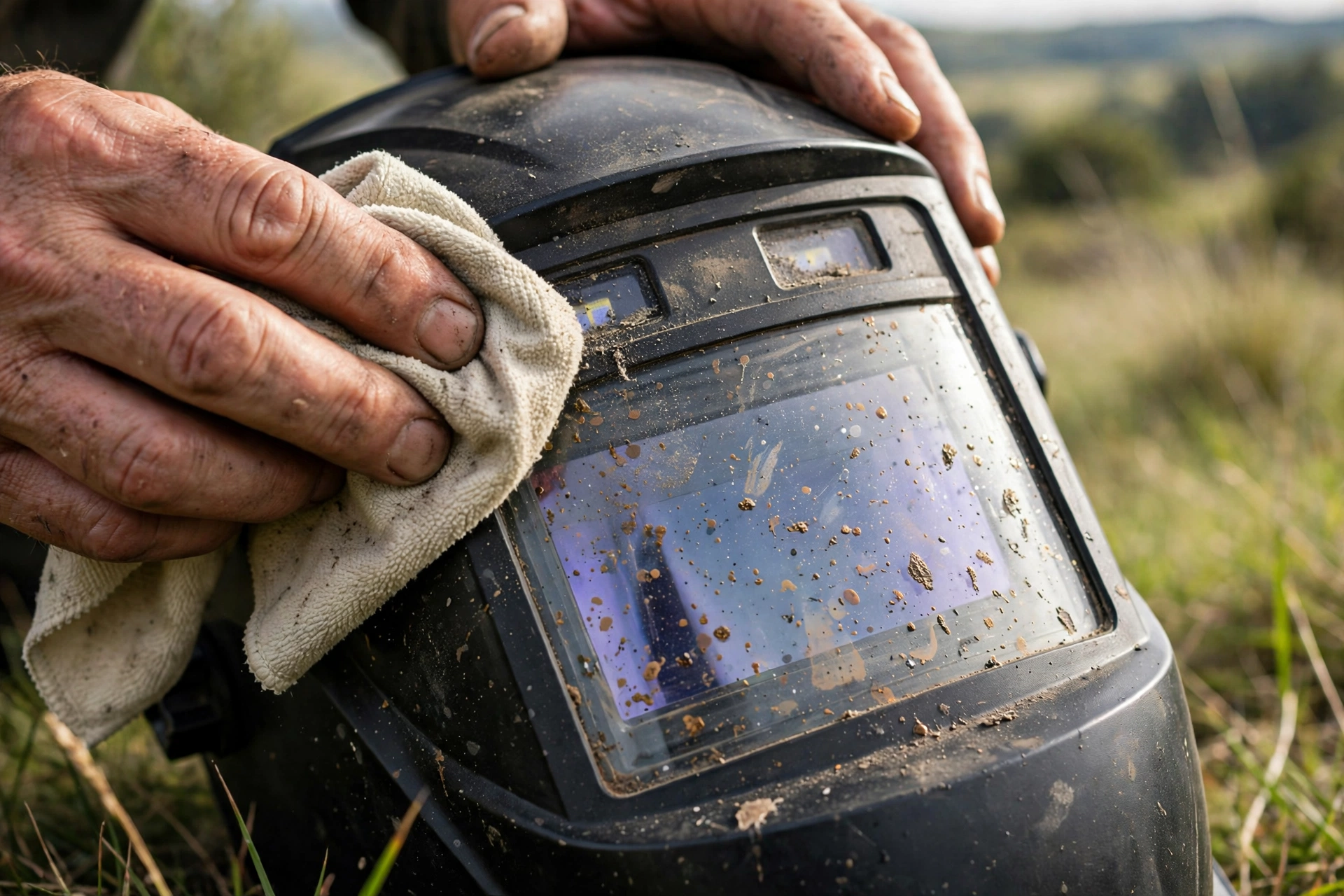
A welding shop is a dirty place, and the sensor windows sit facing the work. Spatter, grinding dust, and smoke film build up on the cover lens and over the sensor windows until the sensors are effectively looking through frosted glass. A low, soft arc may then not register at all.
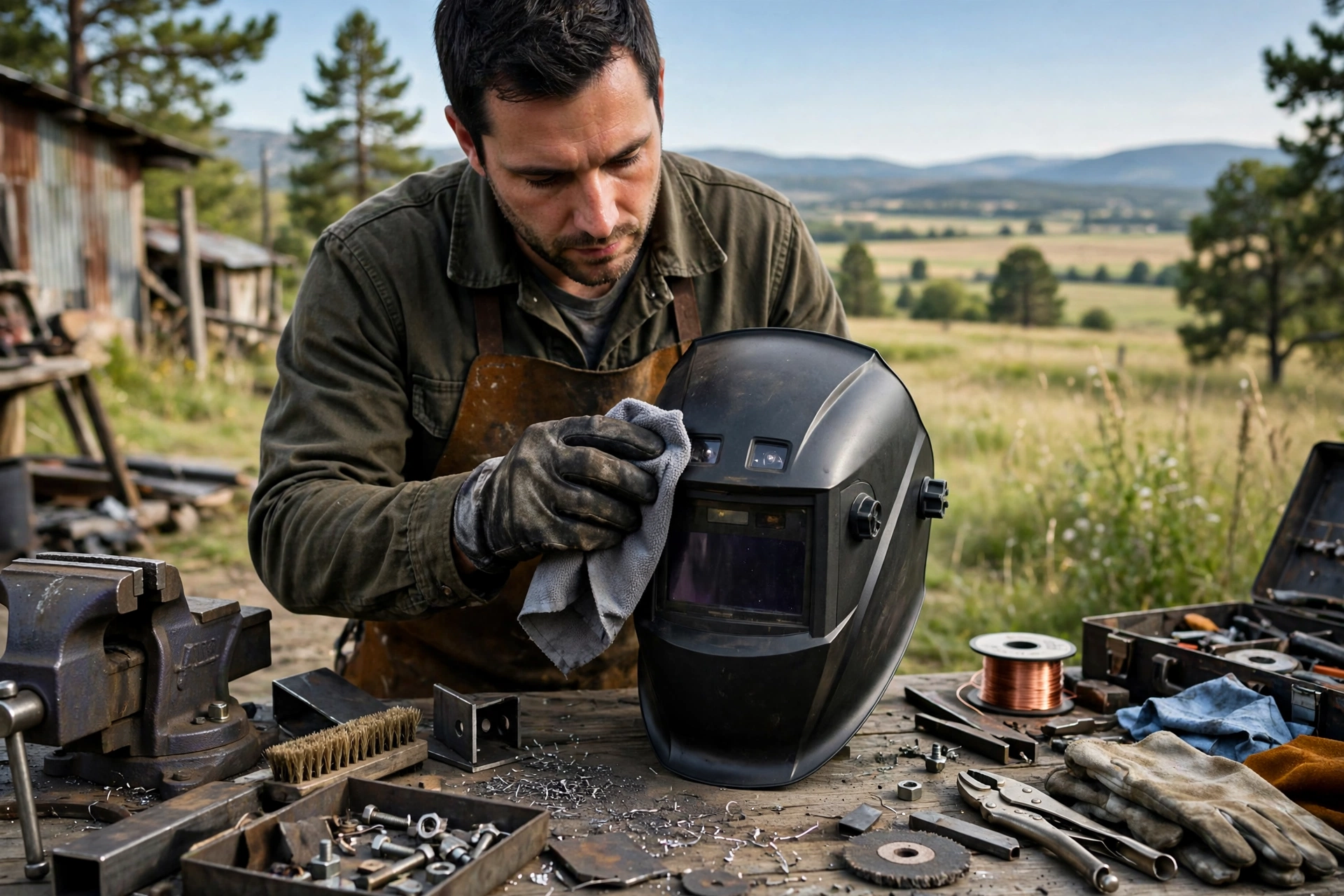
Start here every time. Remove the outer cover lens, clean it or replace it if it is pitted, and gently wipe the sensor windows on the filter with a soft, dry or slightly damp cloth. Do not use solvents on the filter. While the cover lens is off, check that no spatter has burned through and marked the filter itself.
Could It Just Be the Batteries?
Very often, yes. Many helmets run on replaceable coin or AAA cells, sometimes backed up by a solar panel. A weakening battery may still pass a casual test in bright shop light but fail to switch the lens fast enough when a real arc strikes — and a slow switch feels exactly like no switch.
Check the low-battery indicator if your helmet has one, and if the cells are replaceable, fit fresh ones of the correct type and test again before you condemn the filter. On solar-assist models, leave the helmet facing a bright light source for a while to charge, then retest. If the helmet has a self-test button, use it — it tells you the electronics are alive even before you strike an arc.
How Do Sensitivity and Blocking Cause Missed Arcs?
If the helmet is clean and powered but still misses arcs, look at the sensitivity setting. Sensitivity controls how much light the sensors need before they trigger. Set too low, a small or distant arc falls under the threshold. Raise it a step at a time and test, especially for low-amp work.
Blocking is the other common cause. The sensors need a clear line of sight to the arc. Your glove, the workpiece, a clamp, or the rim of the joint can shade one or more sensors, and out-of-position work — welding around a corner or inside a structure — is where this happens most. In general terms, low-amp TIG arcs are the hardest to trigger reliably, because the arc is small, sometimes shielded by the torch cup, and does not flood the sensors with light the way a stick or MIG arc does. Helmets with more sensors, spread wider across the filter, cope better because it is harder to block all of them at once.
How Should You Test the Helmet Safely?
Never test by striking an arc and looking to see whether the lens darkens — that is the flash you are trying to avoid. Instead, test away from the arc first. Many filters respond to a striker spark, a camera flash, a bright torch, or direct sunlight, and some have a dedicated test button. Watch the lens from the inside as a helper triggers the light source, and confirm it darkens evenly with no flicker or delay.
Then make one careful test weld on scrap, at settings similar to your real work, in a position similar to your real position. Sensors that trigger fine on the bench can still miss when your glove shades them in a tight corner, so test the way you actually weld.
When Should You Stop and Replace the Filter?
If you have cleaned everything, fitted fresh batteries, raised the sensitivity, and confirmed the sensors have a clear view — and the lens still misses, flickers, darkens unevenly, or has visible dark spots or cracks — stop using that helmet for welding until the filter is repaired or replaced. There is no safe workaround for a filter that cannot be trusted, and arc flash injuries build up quietly over a career.
Before you do, one last check: head protection works the same way in every trade — it only helps when it is sound and correctly set up, whether that is a welding filter or the impact liners explained in this guide to what MIPS is and how helmet liners work. Treat a suspect welding filter with the same respect: retire it, do not lend it, and do not keep it as a spare for a helper.
Frequently Asked Questions
Q: Why does my helmet work for MIG but not for low-amp TIG?
A: A low-amp TIG arc is small and often partly hidden by the torch cup, so it delivers far less light to the sensors than a MIG or stick arc. Raise the sensitivity, clean the sensors, and consider a filter with more sensors if the problem persists.
Q: Can I test the lens without striking an arc?
A: Yes. Use the helmet’s self-test button if it has one, or trigger the sensors with a striker spark, a camera flash, or a bright light while you watch the lens darken from inside. Never test by looking at a live arc.
Q: The lens flickers instead of staying dark. What does that mean?
A: Flicker usually means weak batteries, a sensor that keeps losing sight of the arc, or a sensitivity setting near the threshold. Work through the cleaning, battery, and sensitivity checks in order before assuming the filter has failed.

Olivia
Writer at Helmet Today, covering helmet reviews, fit and riding safety.