We may earn a commission when you buy through links on this page, at no extra cost to you. Learn more
For a hobby welder, the features that matter are a reliable auto-darkening filter with a sensible shade range, decent optical clarity, two to four arc sensors, comfortable headgear, and replaceable cover lenses and batteries. That combination covers everything a home workshop throws at a helmet. What you can safely skip, at least on a first helmet, is paying a premium for huge panoramic windows, exotic color technology and long lists of modes you will rarely touch.
Helmet listings throw dozens of specs at a first-time buyer. This guide sorts them into what earns its money at hobby scale, what is nice later, and how to choose a first helmet you will still be happy with in three years.
What Does a Hobby Welder Actually Need?
Start with the job the helmet does in a home shop. Sessions are shorter than a professional’s but less predictable: a Saturday might mix MIG repairs, a bit of stick work on a gate, and grinding in between. The helmet sits in a garage between weekends, gets knocked around, and has to work the moment you pick it up.
That pattern points to versatility and forgiveness: a variable shade range that covers common home processes, a grind mode for the between-weld clean-up, power that survives storage, and parts you can replace when — not if — the cover lens gets pitted.
It also points away from extremes. The cheapest novelty helmets cut corners on the filter itself, and the flagship professional models charge for durability and features measured in eight-hour shifts. The hobby sweet spot is the honest middle.
Which Features Matter Most for Occasional Use?
Optical clarity is the one beginners underrate. A clearer filter — better rated for distortion, shade consistency and angle performance in general terms — makes the puddle and the joint line easier to follow, and learning is mostly seeing. Of all the upgrades, this is the one that visibly improves your welds.
Sensors and shade range come next. Two sensors are fine for open bench work, but four give insurance for the awkward angles hobby projects specialize in — under the car, inside the trailer frame. A variable shade range covering the common processes means one helmet handles your MIG, stick and light TIG experiments without compromise.
Power you can maintain matters more in a garage than a pro shop. Solar-assisted helmets charge from use and shop light, but a helmet that sleeps in a dark drawer for a month can wake up flat. Replaceable batteries, or a solar setup you remember to leave in the light, keep the helmet ready. If the helmet you like is solar-only with a sealed battery, store it where it sees daylight.
What Can You Safely Skip on a First Helmet?
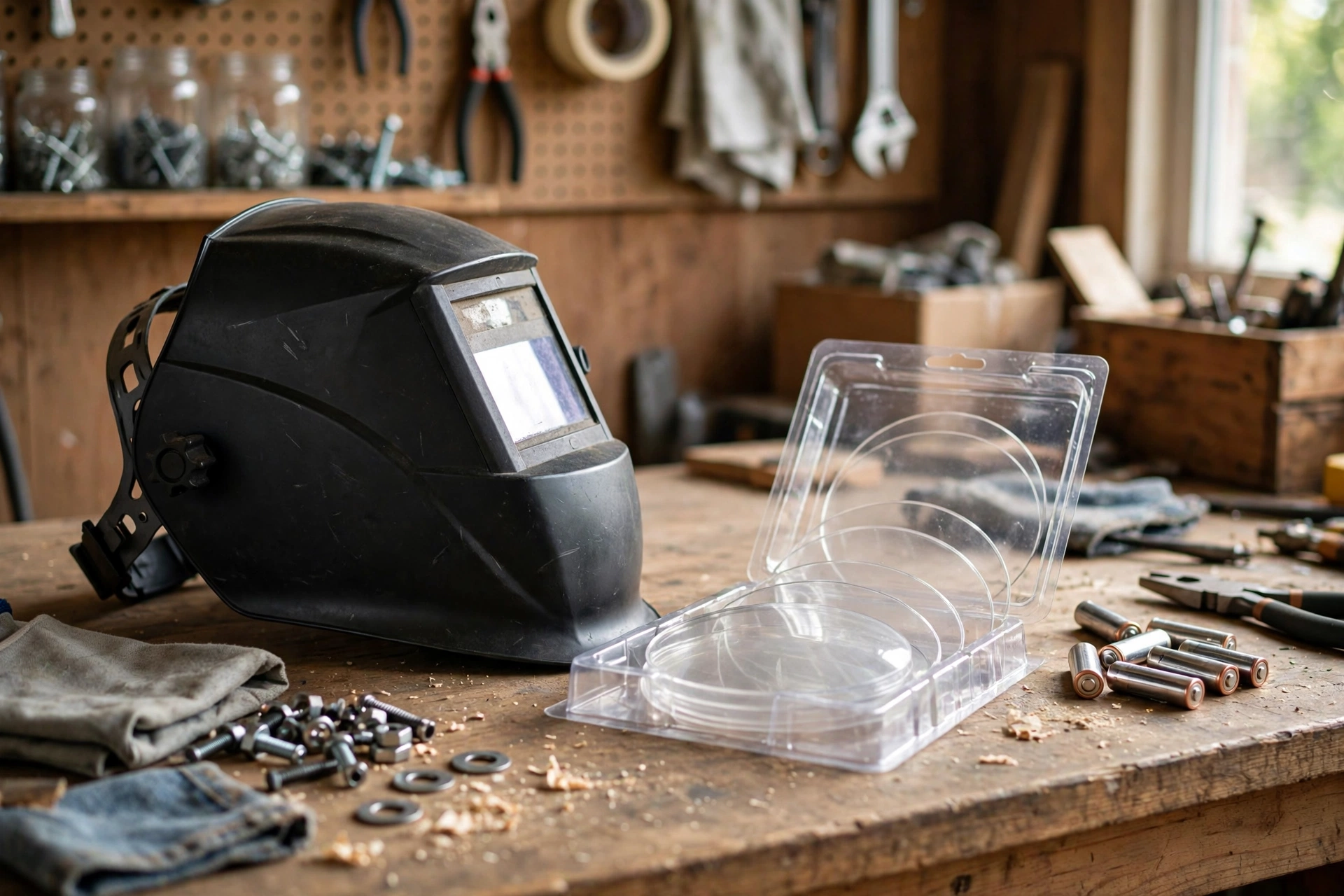
Panoramic side windows are the clearest skip for a solo garage welder: they buy workshop awareness in a busy shared shop, and there is nobody to be aware of. True-color and other premium lens tints are pleasant, and you may love one later, but they refine the view rather than change what protection or clarity class you get — buy basics first.
Bluetooth, app controls and long feature-mode lists are similar: genuinely useful to some professionals, mostly decoration at hobby scale. Each added system is also one more thing to go flat, fail or need a manual at 9 p.m. on a Sunday.
A giant viewing area sits in between. A reasonably large window is comfortable and helps beginners keep their bearings, but the very largest professional windows add cost and weight. Mid-size is the sensible hobby target; if you later find yourself welding all weekend, you will know exactly which upgrade you want.
How Do Comfort and Replaceable Parts Pay Off?
Headgear is the feature you feel on every weld. A multi-point adjustable headgear with a decent sweatband keeps the helmet from sliding mid-bead and stops the end-of-session headache that makes beginners rush. Since hobby sessions are stop-start — measure, tack, check, weld — you will nod the hood hundreds of times; smooth, balanced movement is worth real money.
Replaceable parts decide the helmet’s lifespan. Cover lenses are consumables and should be cheap and stocked for your model. Sweatbands, headgear and batteries wear too. Before buying, check that the maker sells these spares for the helmet you are looking at; a helmet whose first clouded cover lens cannot be replaced is a disposable helmet at a non-disposable price.
Fit one more check in before purchase if you can: try the helmet on, nod it down, and look at something at arm’s length. The view should be even, the helmet should stay where it lands, and your eyes should sit near the middle of the window.
How Should You Choose Your First Helmet?
Set the budget by the filter, not the shell graphics. Decorative shells cost money that does nothing; two helmets at the same price can carry very different filters. Read the specs in this order: optical rating, shade range, sensor count, viewing size, then everything else.
Match the helmet to your actual welder and likely projects. Mostly MIG on a bench? Two sensors and clarity are your priorities. Planning under-car and frame work? Lean toward four sensors. Thinking about TIG later? Make sure the shade range and sensitivity reach down to low-amp starts.
Then commit to the boring accessories: a pack of spare cover lenses and a spare battery in the drawer from day one, so the helmet never sits unusable. Reliability in a hobby shop is mostly logistics.
The general rule — buy the protection and fit first, and let fashion and features follow — is one riders use too, weighing basics like fit and MIPS rotational protection in a cycling helmet before colors and extras. A first welding helmet chosen the same way tends to stay in service for years.
Frequently Asked Questions
Q: Is an auto-darkening helmet worth it for a beginner, or should I start with a fixed shade?
A: For learning, auto-darkening is worth it. Being able to see the joint while positioning the torch removes the nod-and-guess problem that frustrates beginners with passive helmets, and welds improve faster when you can watch the puddle from the first arc.
Q: How many sensors should a hobby helmet have?
A: Two are enough for flat bench work in the open. Four are the safer pick if your projects involve the awkward angles hobby work is full of — under vehicles, inside frames, around obstructions — because extra sensors keep the lens triggering when the arc is partly hidden.
Q: What is the first spare part I should buy with a new helmet?
A: A pack of the correct outer cover lenses for your model. They pit and cloud faster than any other part, a fresh one restores your view instantly, and having spares on hand means a scratched cover never tempts you to weld with it removed.

Olivia
Writer at Helmet Today, covering helmet reviews, fit and riding safety.