Most hard hats do not need a chin strap for ordinary work on the ground — the suspension alone is designed to keep the hat in place — but a chin strap becomes important, and is often required by site policy, when you work at height, climb, work in high wind, or bend and move in ways that would knock an unstrapped hat off. If losing your hat mid-task would leave your head bare in a hazard zone, that is exactly when the strap is needed.
Chin straps are one of those topics where habit and rules collide: some trades would never work without one, others have never seen one. This guide explains when a strap matters and how to fit it.
Do Hard Hats Come With Chin Straps as Standard?
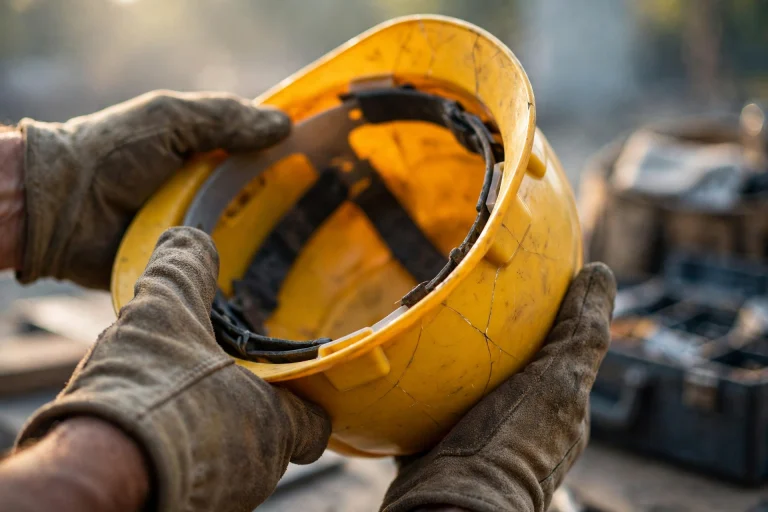
Many do not. A typical construction hard hat is sold with a suspension only, and the design assumption is that gravity and a snug headband keep it in place for upright, ground-level work. Chin straps are usually an accessory you add, or a built-in feature on certain hat styles.
The main exception is the climbing-style helmet — the close-fitting, smaller-brim design modeled on mountaineering helmets that has become common in construction. Those come with a chin strap as part of the design, because they are made for people who climb, lean, and look up and down all day.
Whether your hat includes one or not, the attachment points matter. Use straps made for your hat model, fitted to the maker’s points, so the strap works with the suspension instead of fighting it.
That also means the strap is part of the hat you were issued, not an optional extra to leave in the locker. If a hat is supplied with a strap, the expectation on most sites is that it is fitted — and used when the task calls for it.
When Does a Hard Hat Need a Chin Strap?
Work at height is the clearest case. On scaffolding, steel, roofs, and towers, a hat that slips off leaves your head exposed — and becomes a falling object aimed at the people below. In general terms, site rules for height work commonly require the hat to be retained, and a chin strap is how that is done.
Wind is the second case. Rooftops, coastal sites, crane work, and open structures in gusty weather all strip unstrapped hats off heads. The third is movement: climbing, crawling through plant rooms, tree work, and rescue or confined-space work all involve positions where a loose hat simply falls away.
There is a personal case too. If your hat regularly gets knocked by what you carry, the loads you pass, or the spaces you squeeze through, a strap keeps it where it belongs instead of in your hands or on the ground.

What Is the Difference Between 2-Point and 4-Point Chin Straps?
A 2-point strap anchors on both sides of the hat and passes under your chin in a single band. It is simple, light, and stops the hat lifting off or tipping forward. It is the common choice for adding retention to a standard hard hat.
A 4-point strap anchors at four places and typically forms a harness under the chin, sometimes with a chin cup. It holds the hat more securely in every direction — forward, back, and sideways — which is why it is standard on climbing-style helmets and preferred for serious height and climbing work.
Think of it as a ladder of security: suspension alone for steady ground work, 2-point when hats keep coming off, 4-point when coming off is not an option. Match the strap to the risk, and to what your site policy names for the task.
Can a Chin Strap Cause Problems of Its Own?
It can if it is wrong for the setting. Around rotating machinery and moving equipment, anything that can snag deserves thought, and in general terms some workplaces prefer breakaway-style straps that release under a set load so a caught hat pulls free rather than dragging the wearer. Ask what your site specifies before assuming one strap style suits everything.
A badly fitted strap causes the everyday problems: too loose and it does nothing; too tight and it digs in, gets unclipped, and gets left undone. Straps also wear — webbing frays, buckles crack — and a strap is part of the inspection routine, not an install-and-forget accessory.
The underlying point is that retention is part of the protective system. Keeping head protection positioned correctly is what lets it manage impact energy as designed — the same reason sports helmets pair their straps with liners and rotational-impact systems like MIPS that only work when the helmet stays in place. A hard hat’s strap does the same job in a simpler world.
How Should a Chin Strap Fit?
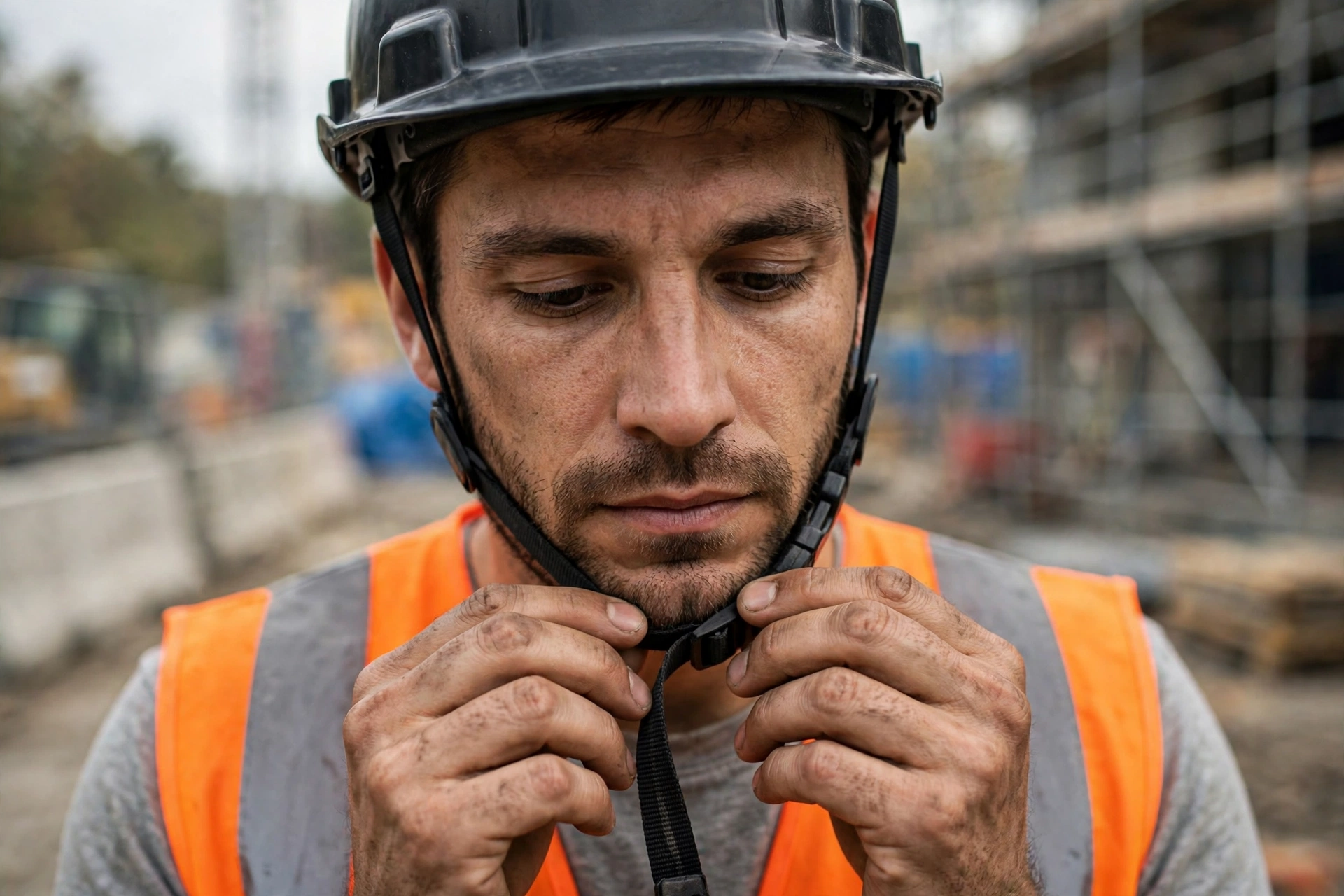
Fasten it so it sits snugly under your chin — firm enough that the hat cannot be pushed off with a shake or a tilt of your head, loose enough that you can talk, look up, and work without it sawing at your jaw. A common field check is that you can fit a finger or two between strap and chin.
Center the buckle and even out both sides so the hat is not pulled crooked. With a 4-point strap, adjust until the hat feels held from all directions, then re-check after a few minutes of work — webbing settles, and straps often need a second snug-down.
If you wear the strap every shift, comfort decides whether it stays fastened. Pad it, route it clear of your ears, and replace it when the webbing or buckle wears. A strap that lives in your pocket protects nothing.
Frequently Asked Questions
Q: Is a chin strap legally required on a hard hat?
A: In general terms, the law focuses on head protection being provided and worn; whether a strap is required usually comes from site policy, the task risk assessment, or the hat’s intended use — height work is the common case where straps are specified. Check your site’s rules for your task.
Q: Can I add a chin strap to any hard hat?
A: Most hard hats have attachment points or approved accessory straps from the maker. Use a strap designed for your model rather than drilling or improvising fixings, which can damage the shell and void its rating.
Q: Why do climbing-style helmets always have chin straps?
A: Because they are designed for climbing, leaning, and looking up and down — positions where an unstrapped hat falls off. The strap is part of the design, and on those helmets it is meant to stay fastened whenever the helmet is on.

Olivia
Writer at Helmet Today, covering helmet reviews, fit and riding safety.