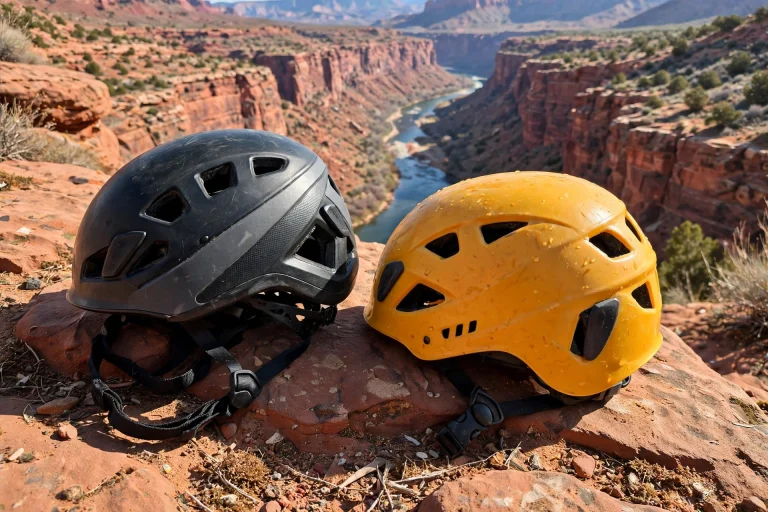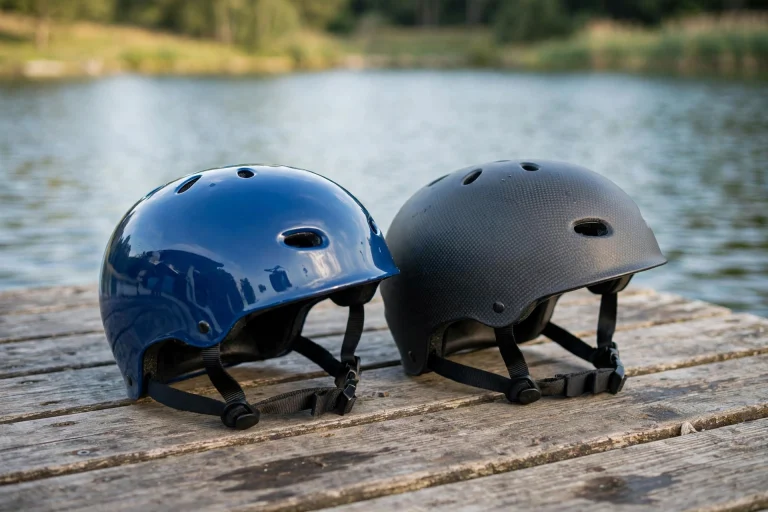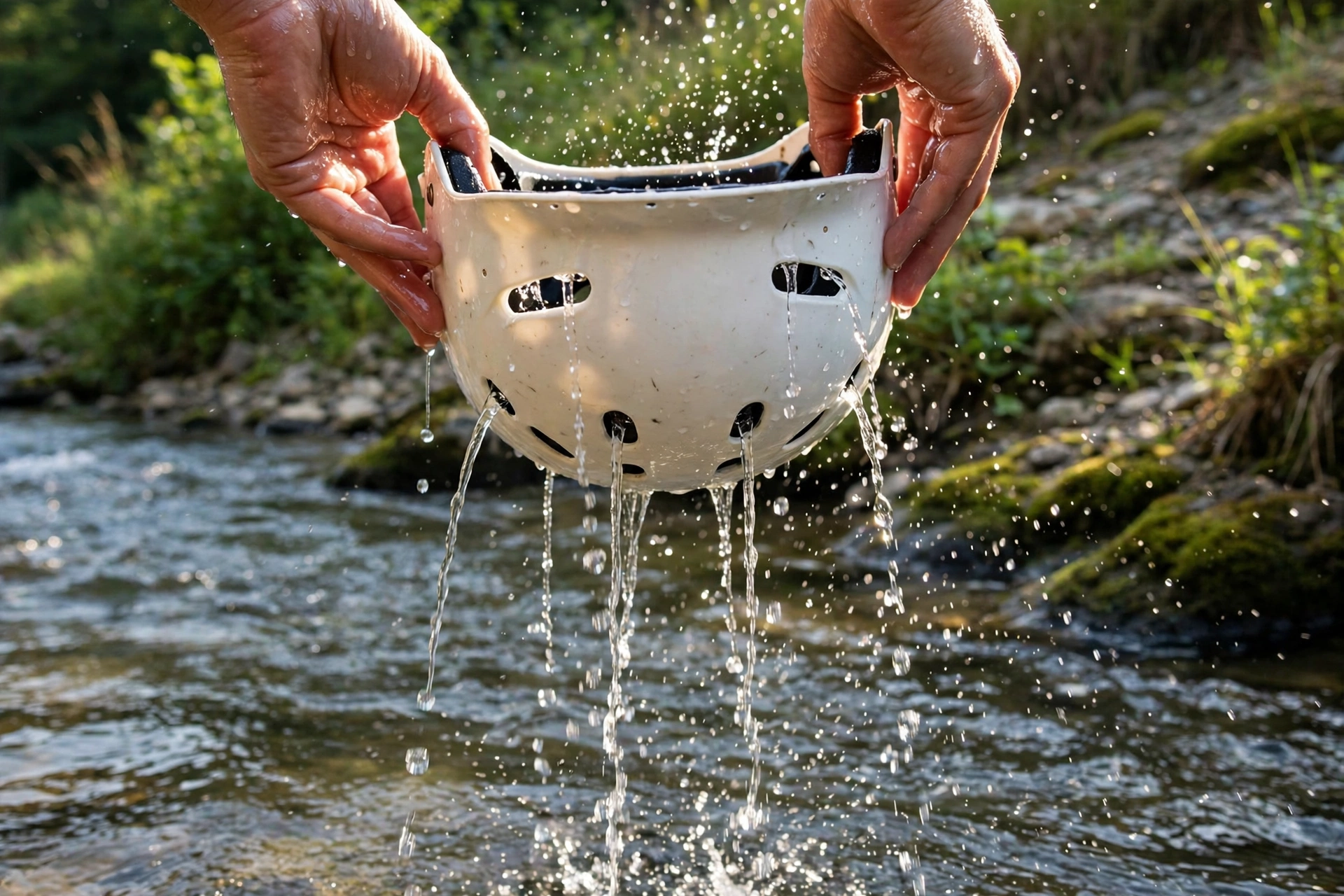
Water sports helmets do not strictly need drainage holes, but most have them — as holes, vents, or gaps in the liner — because a helmet that holds water after every roll, wave, or wipeout becomes heavy, shifts on your head, and distracts you; drainage clears that water in seconds so the helmet sits light and stable again. It is a practical design feature, not a protective one.
This guide explains how helmet drainage works, why it matters more in some sports than others, and what to check when you buy.
Why Do Water Helmets Have Holes in Them at All?
Because water gets in. A helmet is a bowl worn open-side down, and every roll, swim, wave, and fall tips water into it. Without a way out, that water sits in the liner and shell until it slowly seeps away — and water is heavy. A helmetful held against your head adds noticeable weight exactly when you are trying to roll up, swim, or regain control.
Holes solve it simply. Openings through the shell and liner, usually placed high on the crown and sides, let water escape as your head comes up and moves, and most of the load is gone within moments. The same openings double as ventilation on hot days, which is why many designs describe them as drain vents.
The holes are not a weakness. Makers place and size them so the shell still spreads impacts and the liner still cushions as designed; a properly made watersport helmet is tested and sold as a complete system, holes included.
How Does Drainage Affect Fit and Safety?
Indirectly, through weight and stability. A helmet holding water is top-heavy and prone to shifting as the load sloshes — forward over your eyes as you look down, or sideways mid-roll. Since a helmet protects only where it sits, anything that helps it return quickly to its fitted, balanced state is working for safety, even though the holes themselves absorb nothing.
Drainage also affects what you do next. A paddler whose helmet clears in seconds gets on with scanning the river; a paddler shaking water out for half a minute is looking at their own helmet instead of the next rapid. Small distractions stack up in moving water.
Note what drainage does not do: it does not meaningfully change impact protection either way. The protective work belongs to the shell, the foam liner, and the fit — including design ideas for angled, rotational impacts explained in this guide to what MIPS is for helmets. Judge holes as a comfort and stability feature when you compare helmets, never as a measure of how protective one is.
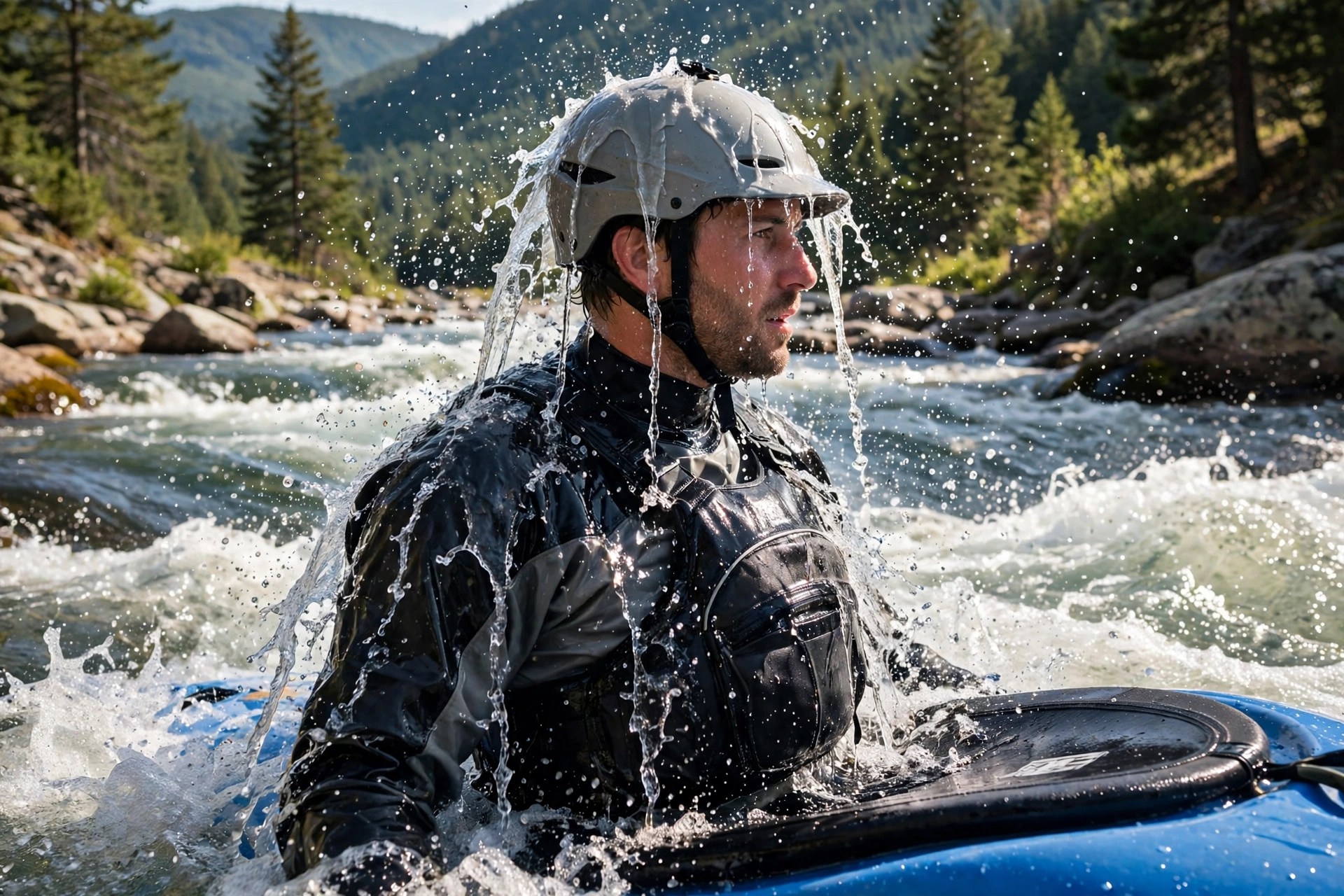
Which Water Sports Rely Most on Helmet Drainage?
Whitewater kayaking and rafting sit at the top of the list, because heads go fully under, repeatedly, and the helmet must be ready again immediately for the next rapid. Surfing and wake sports are close behind: wipeouts are constant, and a waterlogged helmet that pulls at your neck on every fall quickly becomes one you stop wearing.
At the other end, a helmet worn mainly for occasional protection — a sailing or jet ski helmet that gets spray rather than immersion, or a flatwater helmet worn against launching slips — drains less often simply because it fills less often. Drainage still helps when a wave does come over, but fit and coverage rightly dominate the choice there.
- Essential: whitewater, surf, wake — repeated full immersion
- Useful: rafting, canyoning, coasteering — frequent immersion
- Nice to have: powered craft, sailing, flatwater — spray and occasional dunking
Match the drainage to the immersion. The more time your head spends underwater, the more every second of waterlogging costs you.
Can Drainage Holes Cause Any Problems?
Two minor ones are sometimes raised. The first is cold: holes let cold water and wind reach the head more freely, which winter paddlers notice. The usual answers are a neoprene hood or skull cap worn under the helmet — fitted with the helmet, so the fit is checked in that configuration — rather than blocking the holes, which the maker put there deliberately.
The second is the idea that holes weaken the shell. In a helmet designed with them, the shell, liner, and openings are engineered together, and the helmet meets its standard as sold. What does weaken a helmet is modifying it: drilling your own extra holes in a shell is never acceptable, because you are cutting a tested structure in ways nobody has evaluated.
Blocked holes are the practical problem to actually watch. Sand, grit, and dried weed clog drainage after beach launches and silty rivers, and a clogged helmet drains like a bucket. Rinse the helmet in clean water after sessions and check the holes as part of your normal kit care.
What Should You Check About Drainage When Buying?
Do the sink test in the shop’s water tank, a basin, or at home before the first real trip: dunk the helmet, lift it out, and watch. Water should run out freely from several points within seconds, not dribble from one corner while the liner stays heavy. Tilt and shake it as you would after a roll and see how much remains trapped.
Check where the holes sit. Openings placed so water escapes when the head is upright and when it tips forward suit paddling, because you drain in both positions. Look inside too: channels or gaps in the liner that guide water out are as much a part of the system as the visible shell holes.
Finally, weigh the whole picture. Drainage is one line on the checklist, behind fit, coverage, retention, and condition. A fast-draining helmet that rocks on your head is a bad helmet; a snug, sound helmet that drains a few seconds slower is a good one. Choose the good helmet and let it drip.
Frequently Asked Questions
Q: Do drainage holes weaken a water helmet?
A: No — not in a helmet designed with them. The shell and liner are engineered and tested as a system with the openings included. What weakens a helmet is drilling or cutting it yourself, which should never be done.
Q: My helmet holds water for ages after a roll. What can I do?
A: First check the holes for sand, grit, and weed and rinse them clear — clogging is the most common cause. If it still drains slowly with clear holes, that is the design’s limit; a quick shake and tilt forward after surfacing helps, and drainage is worth weighing when you replace the helmet.
Q: Are helmets without any holes suitable for whitewater?
A: In general terms they are a poor match for it. A sealed or undrained design will carry water after every roll and swim, adding shifting weight at the worst moments. Most whitewater helmets include drainage for good reason; choose one that clears quickly and fits securely.

Olivia
Writer at Helmet Today, covering helmet reviews, fit and riding safety.