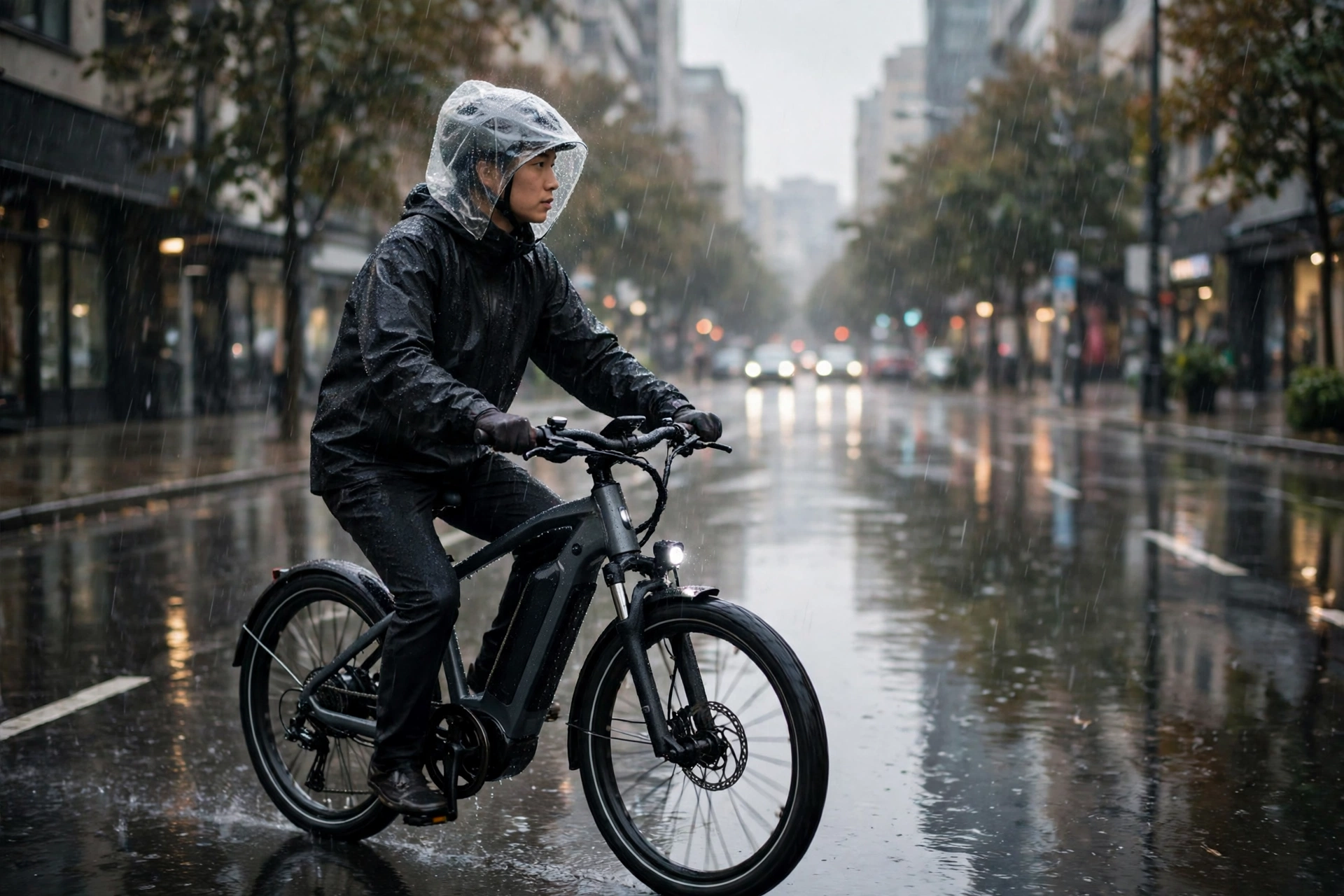
For rainy-day commuting on an e-bike, look for a helmet with a rain cover or a peaked design, a clear visor to keep spray out of your eyes, and sealed vents you can close — because staying dry is about managing water from above and from the road, not just owning a waterproof jacket. Rain changes everything about a commute: grip drops, visibility shrinks, drivers see less, and a helmet that works beautifully in dry weather can become a funnel for cold water down your neck.
This guide explains what to look for in a rainy-day e-bike helmet setup, and the habits that keep a wet commute safe and tolerable.
How Does Rain Actually Get Into a Helmet?
Rain reaches you from two directions, and most riders only prepare for one. Water falls from above, running through the helmet’s vents and down onto your head — annoying, but rarely dangerous. The worse water comes from the road: spray thrown up by your own tyres, by passing vehicles, and by puddles, which hits you from below and from the sides, soaking your face, neck, and back.
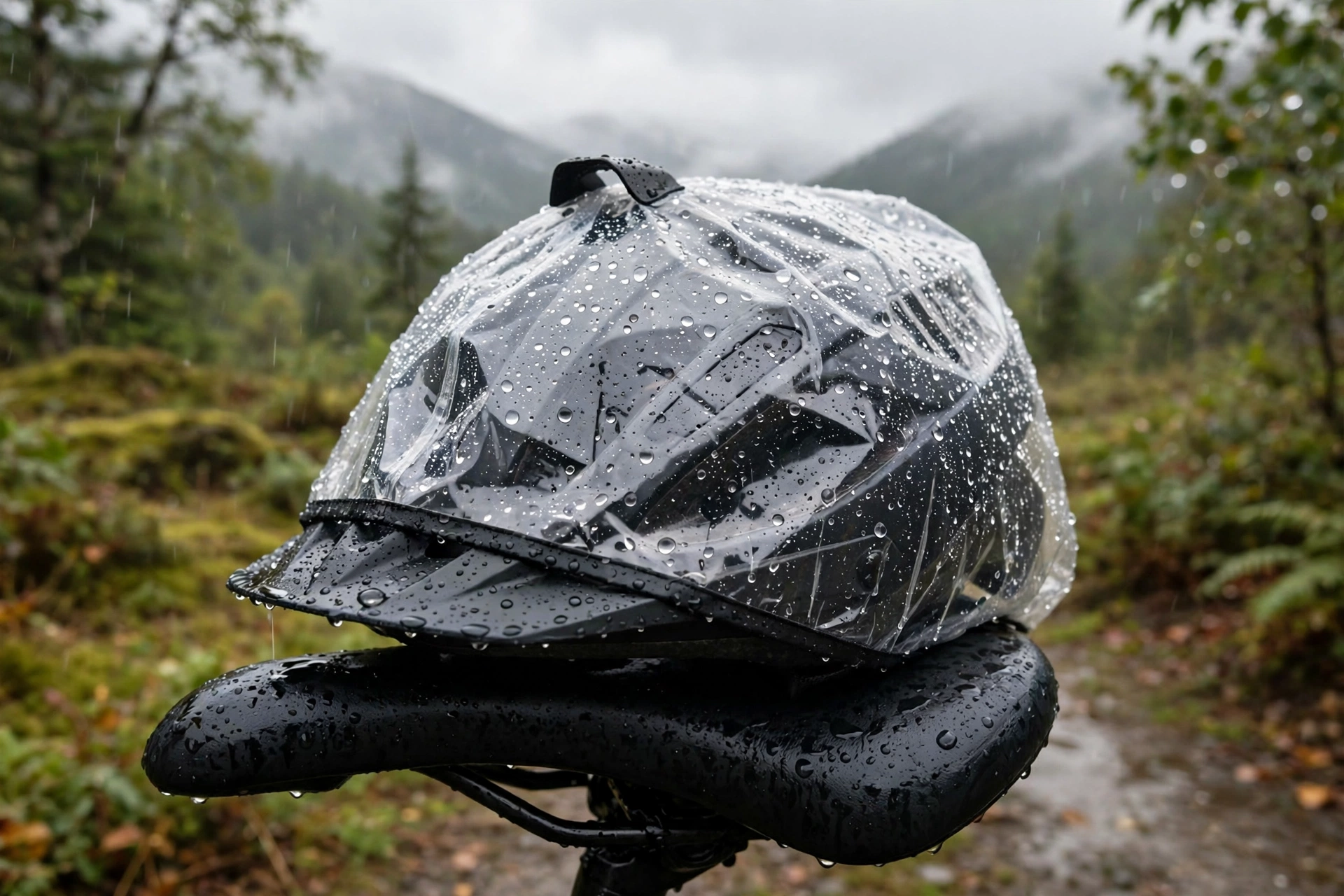
Helmet vents are the main entry point from above. A helmet designed for maximum summer airflow has large, open vents that are wonderful in July and miserable in a downpour. Some helmets offer vent plugs or a rain cover that stretches over the shell, closing those vents and shedding water — and for a rainy-day commuter, that feature alone can be worth choosing a helmet for.
The neck gap is the other weak spot. Water runs down the back of the helmet and straight inside your jacket collar, which is why a helmet with a slightly extended rear or a peak that sheds water forward helps more than it looks like it should. A rain cover that extends a little at the back does the same job, and it costs very little.
What Features Matter Most in a Rainy-Day Helmet?
A rain cover is the single most useful rainy-day accessory. It is a thin, waterproof shell that pulls over the helmet, sealing the vents and shedding water before it reaches the liner. Good ones are bright or reflective, which adds visibility exactly when drivers need it most — in rain, when their windscreens are streaked and their mirrors are spotted.
A peak or short brim is the second feature worth having. A peak keeps rain off your face and, more importantly, off your visor or glasses, where droplets blur vision at the worst moments. Some e-bike helmets include a small peak that can be removed in dry weather, which is ideal for a commuter who rides in all conditions.
A clear visor completes the trio. In rain, your eyes face spray, wind, and droplets, and a clear visor shields them without reducing light — crucial on grey, overcast rainy days when visibility is already poor. A tinted visor in rain is a mistake: it darkens an already dim scene. If your helmet has no visor, close-fitting clear glasses or cycling glasses do much of the same job.
How Do You Keep Vision Clear in the Rain?
Vision is the biggest rainy-day safety issue, because rain attacks it from every side: droplets on your visor, spray from the road, misted lenses, and drivers’ headlights scattered by wet surfaces. Start with a clean visor — dirt and scratches scatter light and make droplets cling, while a clean surface sheds water better. Clean it with a soft cloth and mild soap, never with paper towels or harsh cleaners that scratch.
Water-repellent treatments made for visors and glasses can help droplets bead and roll off, though they need reapplying and they work better on some coatings than others — test any treatment before relying on it in a storm. A peak helps here too, by keeping the worst of the rain off the visor in the first place, and lifting the visor briefly at stops clears the buildup before you set off again.
Fogging is the other half of the problem. Warm breath inside a sealed visor fogs it fast in cold rain, so keep the helmet vents open enough for airflow, or crack the visor slightly when stopped. If fogging persists despite ventilation, an anti-fog treatment made for visors is worth trying — just confirm it suits your visor’s coating.
How Should Your Riding Change in the Rain?
Slow down and brake earlier — rain lengthens stopping distances, and e-bikes carry speed easily, so the combination needs respect. Brake gently and progressively rather than grabbing the levers, since a locked wheel on wet paint, metal, or leaves will slide. If your e-bike has different assistance levels, dropping to a lower one in heavy rain is a simple way to keep speeds sensible.
Avoid the slippery stuff: painted road markings, metal drain covers, manhole covers, wet leaves, and the oily centre strip of the lane, which is slickest at the start of a rainstorm. Ride around them where you safely can, and cross them upright and without braking or steering sharply if you cannot avoid them.
Give yourself more space. Drivers in rain have worse visibility, longer stopping distances, and windscreens full of spray, so they need more time to see you and react. Ride where you are visible, signal early, and assume drivers have seen you later than you think. Bright clothing and lights, used in the daytime too, close much of that gap — in heavy rain, your lights are daytime safety equipment, not just night equipment.
What About the Helmet After a Wet Ride?
Dry it properly, every time. Bring it indoors, open the straps, remove the pads if they come out, and let it air-dry at room temperature — never on a radiator or with a hot hair dryer, since heat warps shells and ages foam invisibly. A helmet put away wet will smell, grow mildew, and degrade faster, so drying is maintenance, not housekeeping.
Check the retention system and straps after wet rides too. Webbing can stretch when soaked and tighten as it dries, so re-check the fit before your next ride. Buckles and adjusters collect grit from road spray, so rinse them occasionally and make sure they still click firmly.
Finally, inspect the helmet itself. Rainy riding means more drops, knocks, and general abuse, and any helmet that has taken a hard impact should be replaced — the foam inside can be damaged without visible cracks. The protective systems in modern helmets, including low-friction layers that reduce rotational forces, are explained in this guide to what MIPS is for helmets.
Frequently Asked Questions
Q: Do I need a special rain helmet, or will a rain cover do?
A: In general terms, a rain cover over your normal helmet is enough for most commuters. It seals the vents and sheds water, and you can remove it in dry weather. A dedicated rain helmet only makes sense if you ride in heavy rain daily and want the features built in.
Q: Can I wear a tinted visor in the rain?
A: No — rain already reduces light, and a tinted visor darkens the scene further. Use a clear visor or clear glasses in rain, and keep the tinted visor for bright, dry days.
Q: How do I dry a soaked helmet quickly?
A: Remove the pads if they come out, open all the straps, and put the helmet in moving air at room temperature — a fan helps a lot. Never use direct heat: radiators and hot hair dryers damage the shell and foam invisibly, and that damage cannot be undone.

Olivia
Writer at Helmet Today, covering helmet reviews, fit and riding safety.