On youth rafting trips, the working rule for parents is simple: the outfitter supplies a helmet for every child, it is worn fastened for the whole time on the water — and in many operations from the moment the group is at the river’s edge — and in general terms minimum ages, sizes, and trip grades are set by the operator and local rules, so ask them directly rather than assuming. A helmet only counts when it fits the child’s own head and stays on.
This guide explains what to expect, what to check on the day, and the questions worth asking before you book.
Are Helmets Required for Children on Rafting Trips?
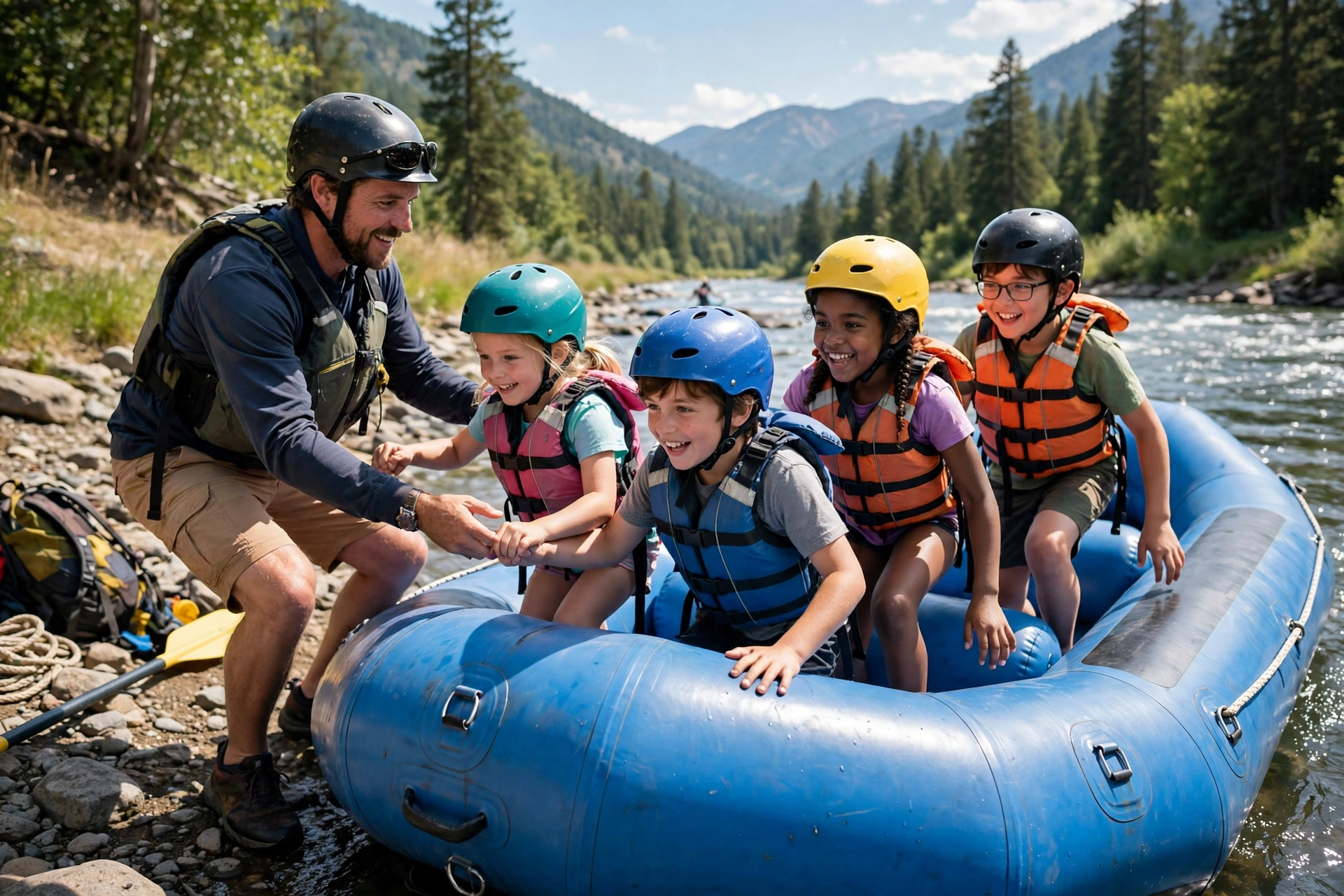
On commercial rafting trips, helmets for all passengers — children included — are the normal standard of practice, in general terms, because rafting puts heads near rocks, oars, and other boats in moving water. Reputable outfitters issue a helmet with the buoyancy aid as standard kit, and guides will insist it is worn and fastened before the raft launches.
The details around the edges vary by operator and place: whether the helmet goes on at the vehicle, at the bank, or at the waterline; and the minimum age or size for each grade of river. These are the operator’s rules, shaped by local regulation and their own safety practice, and they override any general guide — this one included.
Private family rafting follows the same logic even without a guide enforcing it. If the river is rocky enough that the adults are wearing helmets, the children wear helmets, fitted properly — children fall, bounce, and get knocked about in a raft at least as much as adults do.
What Should Parents Check About a Child’s Helmet Fit?
Operators carry fleets of helmets in sizes, and the guide will pick one — but a parent’s two-minute check is worth doing, because children rarely complain about fit until something hurts. The helmet should sit level on the child’s head, low enough to protect the forehead, and feel snug all round rather than resting on top like a hat.
Do the shake test together: with the strap fastened, ask the child to shake and nod. The helmet should move with the head, not slide over the eyes or tip back. The chin strap should be snug under the chin, and the side straps should sit neatly below the ears. If it rocks, ask the guide for a different size or the fit pads — a good crew will swap without fuss.
- Level: straight, not tipped back like a cap
- Snug: no rocking or sliding on a head shake
- Strap: fastened and snug under the chin, every time
- Comfort: no hard pressure points the child keeps touching
Speak up early. Once the raft is in current, nobody can refit a helmet properly, and a helmet a child pushes up or unclips is one the adults need to know about at the bank, not mid-rapid.
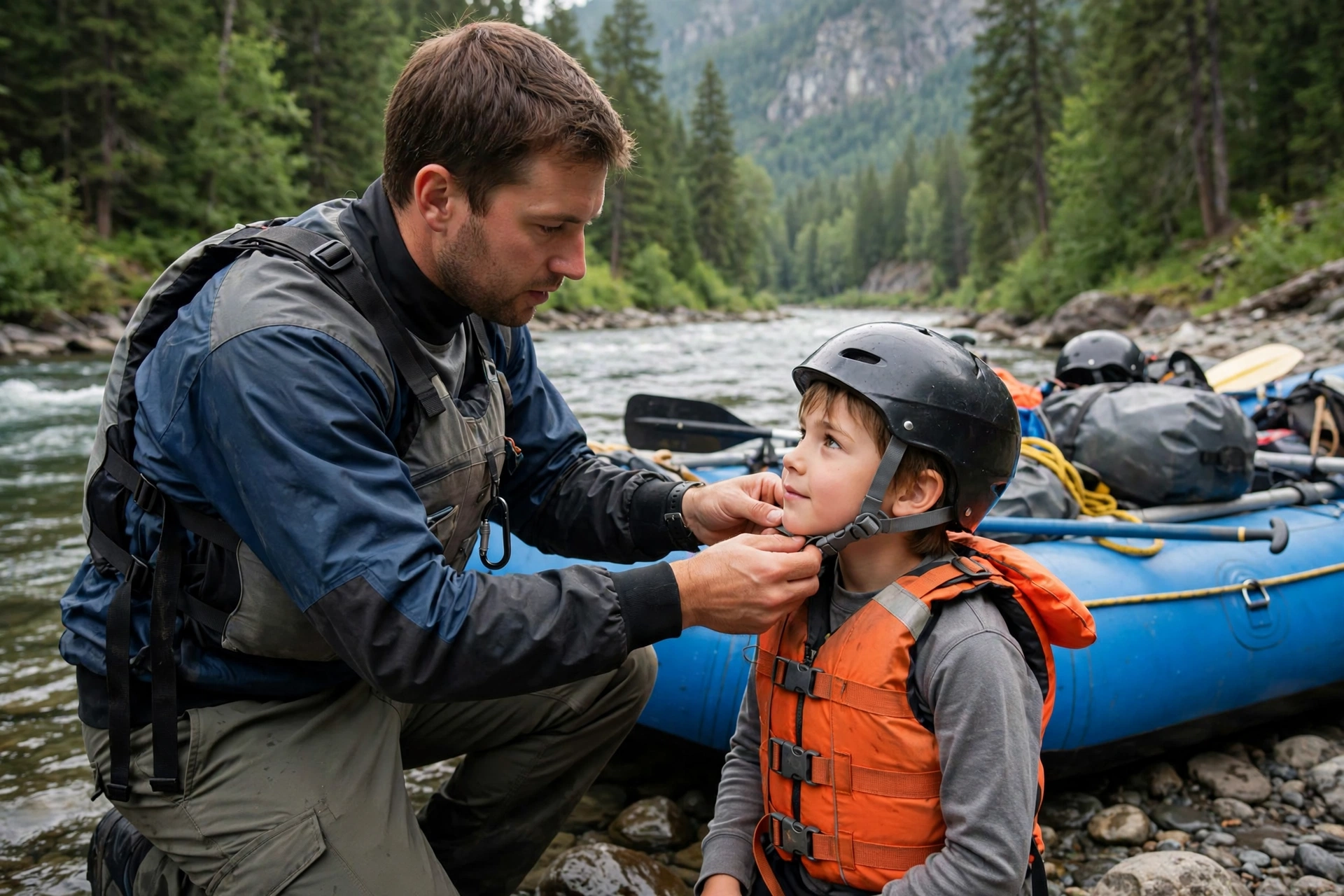
Why Do Guides Insist Helmets Stay On the Whole Trip?
Because the risky moments are not only in the rapids. Children climb over tubes, bounce against oar frames, get bumped by paddles, and pile into each other laughing when the raft drops and bucks. Between rapids there are rocks at swims, slippery banks at stops, and boats bumping at take-outs. The helmet covers the whole outing, not just the white water on the brochure.
There is also a discipline reason guides are strict: one rule, worn all the time, is enforceable with a group of excited children in a way that “put it on when it looks rough” is not. Rapids arrive quickly, and the moment a helmet is needed is never announced in advance. Parents help most by backing the rule — helmet on, strap done up, no negotiations at the waterline.
It is worth explaining the why to the child before the trip: the helmet is there because the river has rocks and the boat has hard bits, the same reason the crew wear theirs. Children copy adults; a parent who wears their own helmet properly, strap fastened, teaches more than any lecture.
What Else Should Parents Ask Before Booking?
Ask about ages, sizes, and grades in plain terms. What is the youngest or smallest child taken on the trip you are considering, and will the river grade suit a nervous first-timer? Operators grade their trips and set their limits from experience and local rules, and a good one will steer a young family to gentler water without being pushed.
Ask about the kit itself. Are child sizes carried in helmets and buoyancy aids — a child in a baggy adult aid and a slopping helmet is not equipped, whatever the booking page says. And ask what happens on a swim: how the crew briefs children, where they are positioned in the raft, and who looks after them at stops.
If your child has their own watersports helmet from kayaking or another activity, ask whether they may wear it instead. Many operators prefer their own fleet, which they can inspect and fit consistently, and that preference is reasonable — the protection inside works on the same shell, foam, and fit principles, including the angled-impact ideas in this explanation of what MIPS is for helmets, whoever’s logo is on the shell.
How Can Parents Prepare a Child for Wearing One?
Normalise it before the day. Let the child try a helmet on at home or at the outfitter’s base without time pressure, fasten the strap themselves a few times, and wear it for a few minutes of play so the feel is familiar rather than strange. Children who have fiddled with the buckle on dry land do not fight it at the river.
Pack for comfort around the helmet: a thin cap or buff for a cold day can sit under it if the guide agrees and the fit is rechecked, sun protection matters on open rafts, and wet hair braided flat or worn low stops the helmet riding up. Tell the guide about anything relevant — a child who is frightened of water over the face, ears that hurt under pressure, a recent knock.
Then relax into the trip: the helmet rule is one of the simplest safety systems in outdoor activities, and you have checked your part of it at the bank. Enjoy the river.
Frequently Asked Questions
Q: Can my child wear their bike helmet for a rafting trip instead?
A: No. A bike helmet is built for a single hard impact on land and is not designed for repeated immersion, drainage, or staying secure in moving water. The outfitter’s watersports helmets are the right equipment, and operators will expect their own or an approved watersports helmet to be used.
Q: What if my child refuses to keep the helmet on?
A: Treat it as non-negotiable, the same as the buoyancy aid, and tell the guide early — crews are experienced at winning children round with a better size, a pad change, or a quick game. If a child truly will not wear one, the safe answer is to skip the trip rather than raft without it.
Q: Is there a minimum age for children to go rafting?
A: In general terms there is no single universal age; operators set their own minimums for each trip based on the river grade, the sizes of kit they carry, and any local rules, and these vary a lot between a gentle float and a steep whitewater run. Ask the operator directly for the trip you are considering and follow their answer.

Olivia
Writer at Helmet Today, covering helmet reviews, fit and riding safety.