To stop a hockey visor fogging during a game, start with a clean visor treated with an anti-fog product before you play, keep air moving across it by skating with the visor seated correctly, and avoid the habits that trap warm breath behind it — in general terms, fog is moisture from your own breath and sweat condensing on a cold shield, so anything that warms the shield, dries the air, or blocks condensation will help.
This guide explains why visors fog, what actually prevents it, and what to do when the mist arrives mid-shift anyway.
Why Does a Hockey Visor Fog Up in the First Place?
Fog is condensed water. Your face gives off warm, moist air with every breath and vapour from sweating skin, and the visor — chilled by rink air and the cold coming off the ice — is the coldest surface nearby. When that moist air touches the cold plastic, it condenses into tiny droplets, and your clear shield turns white.
That is why fogging follows a pattern. It is worst when you stop moving: sitting on the bench or standing still, because there is no airflow to carry the moist air away. It is worse in the first period, when the visor is at its coldest, and worse for heavy breathers and anyone whose visor sits close to the face.
Dirt makes it worse. A visor carrying a film of sweat, glove grime, and dressing-room dust gives condensation far more to grab onto, so a dirty visor fogs faster and clears slower than a clean one — which is why cleaning is step one of every fix that follows.
How Should You Prepare a Visor Before the Game?
Clean it properly first. Wash the visor gently with water and, if needed, a drop of mild soap, rinse, and dry with a clean microfibre cloth — not your jersey, not a glove, and not the towel that lives in your bag, all of which smear as much as they clean. A spotless visor is the base every anti-fog method needs.
Then apply an anti-fog treatment made for hockey visors or sports eyewear. These products leave a thin layer that makes moisture spread into an invisible film instead of beading into droplets. Follow the maker’s directions: most work best applied to a dry visor and left to set, not wiped on in the dressing room just before warm-ups.
Some players use home remedies — a tiny amount of shaving foam or dish soap buffed clear is the classic — and they work on the same principle. They are a backup, though: a proper product lasts longer and is made for the plastic. Never use anything abrasive or solvent-based; it can damage coatings permanently.

What Can You Do During the Game to Keep the Visor Clear?
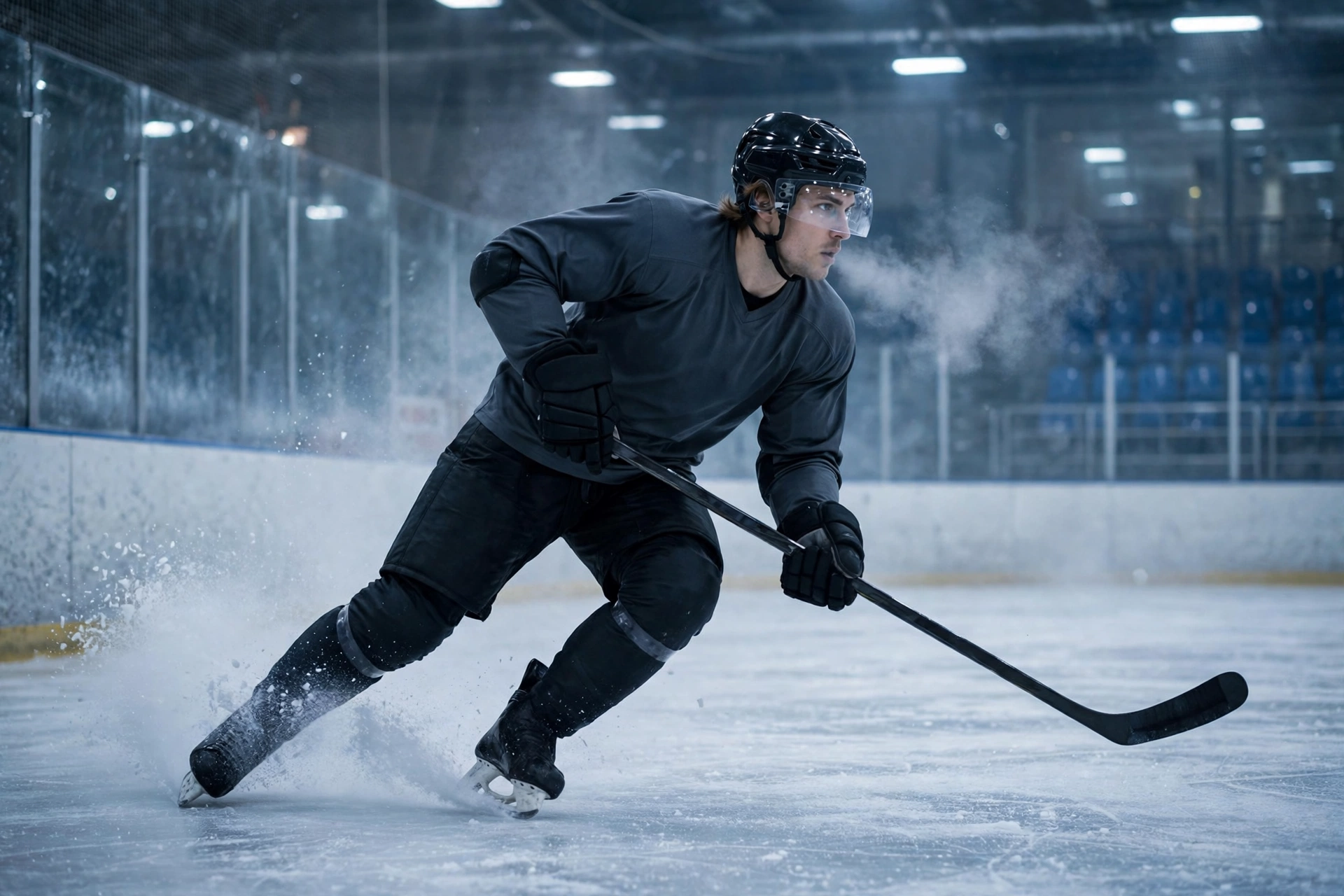
Keep air moving. Fog forms in still air, so the simple act of skating usually clears a visor within a few strides. On the bench, avoid sitting hunched with your chin down breathing into your chest; sit up, let the rink air reach the shield, and resist wiping it with a gloved hand, which only smears the moisture around.
Seat the visor correctly. A visor mounted too low or tilted so its bottom edge sits hard against your cheeks traps a pocket of warm air behind it. Check the mounting: in general terms there should be a small gap for air to circulate, and the visor should sit as the maker intended rather than pressed to your face. If your visor fogs instantly even while skating, the fit and mounting are the first suspects, before any product.
- Skate it clear: airflow over the shield clears light fog in a few strides
- Sit up on the bench: let air reach the visor instead of breathing into your chest protector
- Carry a clean cloth: a dry microfibre in your pocket beats a glove wipe every time
- Flip it briefly: if your league permits, lifting the visor for a few seconds on the bench clears heavy fog fast
Manage your own moisture too. A sweatband or a helmet liner in good condition keeps sweat from running and evaporating upward, and drying your face between periods helps in the third.
What If the Visor Fogs Mid-Shift Anyway?
First, don’t panic and don’t stare at it. A fogged visor usually clears from the edges inward as you skate, so keep your head up, follow the play by its movement and sound for a few seconds, and let the airflow do its work. If vision is genuinely gone, that is a safety problem: get to the bench at the first safe moment instead of guessing through the shift.
On the bench, dry the inside of the shield with your microfibre cloth — the fog is on the inside surface, so wiping the outside achieves nothing. One proper dry wipe lets the anti-fog layer work again; scrubbing hard with anything abrasive strips coatings, so keep it gentle.
Between periods, reset properly. Clean and dry the visor, and if your treatment can be reapplied, do so. A visor that fogs badly every game despite clean preparation is telling you something: the coating may be worn out, the mounting may be wrong for your face, or the model may sit too close — and persistent fog is a real reason some players switch to a cage, which cannot fog at all.
Does Visor Choice and Helmet Fit Affect Fogging?
Yes. Visors differ in how close they sit, how much they wrap, and what coatings they carry. A model with a quality factory anti-fog coating, a shape that leaves breathing room, and vents or a raised brow area will fog less than a flat, close-fitting shield. Try a visor on your own helmet, breathing hard — the shop is a kinder place to discover a fog problem than the second period.
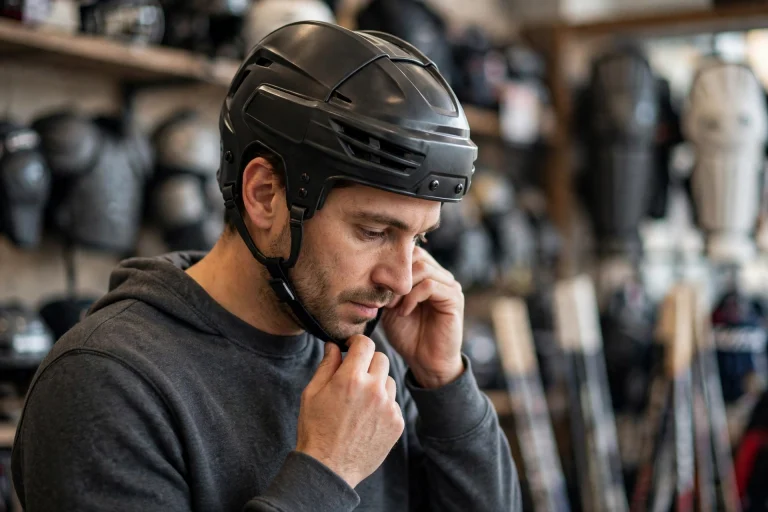
Helmet fit plays its part too. A helmet sitting too low pushes the visor toward your cheeks and nose, shrinking the air gap; one that rocks keeps changing the airflow. The helmet’s real job is absorbing impact, including the rotational forces in angled hits that systems described in this guide to what MIPS is for helmets are designed to reduce — but a correctly fitted helmet holds its visor where the maker designed it to sit, and fogging improves as a side effect.
Treat fog as a system problem: clean shield, working coating, correct mounting, decent airflow, and dry-bench habits together will keep almost any visor clear. Fix them one at a time and you will find your visor’s weak point quickly.
Frequently Asked Questions
Q: Why does my visor only fog when I sit on the bench?
A: Because skating creates airflow that carries your warm, moist breath away and dries the shield’s surface. On the bench the air is still, your breath rises straight behind the cold visor, and condensation forms. Sitting up, letting air reach the visor, and avoiding breathing down into your gear all help.
Q: Do anti-fog sprays actually work on hockey visors?
A: In general terms, yes — when applied to a clean, dry visor and allowed to set as directed. They fail mostly when they are sprayed onto a dirty shield or wiped straight off. No treatment is permanent; expect to reapply regularly through the season.
Q: Is a cage better than a visor if fogging drives me crazy?
A: For fogging alone, yes — a cage has no surface to mist up, and it gives full face protection as well. The trade-off is the different feel and look, and some players notice the bars at first. If fog costs you vision every game despite trying the fixes here, a cage is a sensible switch.

Olivia
Writer at Helmet Today, covering helmet reviews, fit and riding safety.