To replace a hockey helmet ear cover, buy the exact replacement cover or ear loop made by the helmet’s maker for your model, remove the old one by undoing its screws or clips, seat the new cover in the same position, and refasten the hardware snugly without overtightening — in general terms it is a ten-to-twenty-minute job with a small screwdriver, and the one rule that matters is using the correct part, because ear covers are part of the certified helmet, not an accessory.
This guide covers finding the right part, the replacement steps, and the checks to do before you play in it again.
Why Do Ear Covers Need Replacing on a Hockey Helmet?
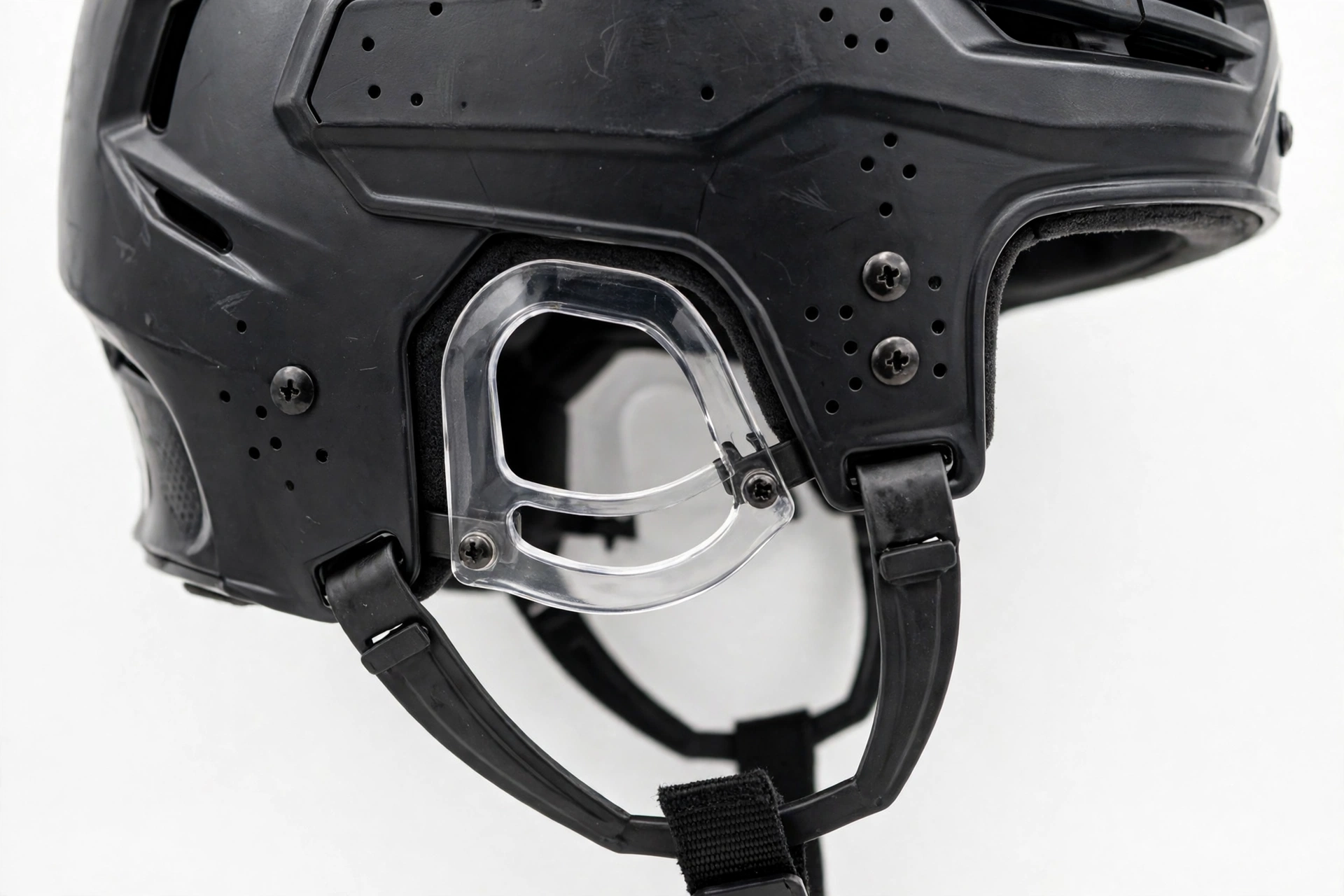
Ear covers — the protective pieces that sit over your ears, often holding the chin strap’s path — live a hard life. They get cracked by pucks and sticks, their mounting tabs snap in cold rinks, the screws work loose and fall out in the bag, and the plastic goes brittle with age and sweat. A cover that is cracked, loose, or missing leaves a gap exactly where the helmet is supposed to protect the side of your head.
There is a rules angle as well. In general terms, league rules and helmet certification both treat the helmet as it was sold: ear covers fitted by the maker are part of the certified design, and playing with one missing or dangling can get your helmet failed at an equipment check, apart from the obvious safety gap.
Replacement is also sometimes a fit job rather than a repair: a cover that digs into your jaw or presses your ear can occasionally be swapped for the alternative style the maker offers for the same shell. Either way, the answer starts with the correct part.
How Do You Find the Right Replacement Ear Cover?
Start with the helmet itself. The maker, model, and size are printed on labels inside the shell or on the back, and replacement ear covers are sold by model and usually by size range — in general terms, a cover for a different model will not fit even if it looks close, because the mounting points and curvature differ.
Buy the maker’s own part, or one the maker lists as compatible. Ear covers look like simple plastic, but their shape decides how the helmet sits and how the strap runs, and an ill-fitting substitute can leave gaps, rattle, or pop off under the strap’s tension. Hockey shops can order them, and makers sell them as spare parts; they are inexpensive compared with a helmet.
- Identify: maker, model, and size from the helmet’s labels
- Match: the exact cover or ear loop listed for that model
- Check the side: left and right covers are not always interchangeable
- Keep the hardware: note whether screws and clips come with the new cover or must be reused
If your helmet is old enough that its covers are discontinued, that is useful information in itself: a helmet whose parts can no longer be replaced is nearing the point where a whole new helmet is the sensible spend.
How Do You Replace the Ear Cover Step by Step?
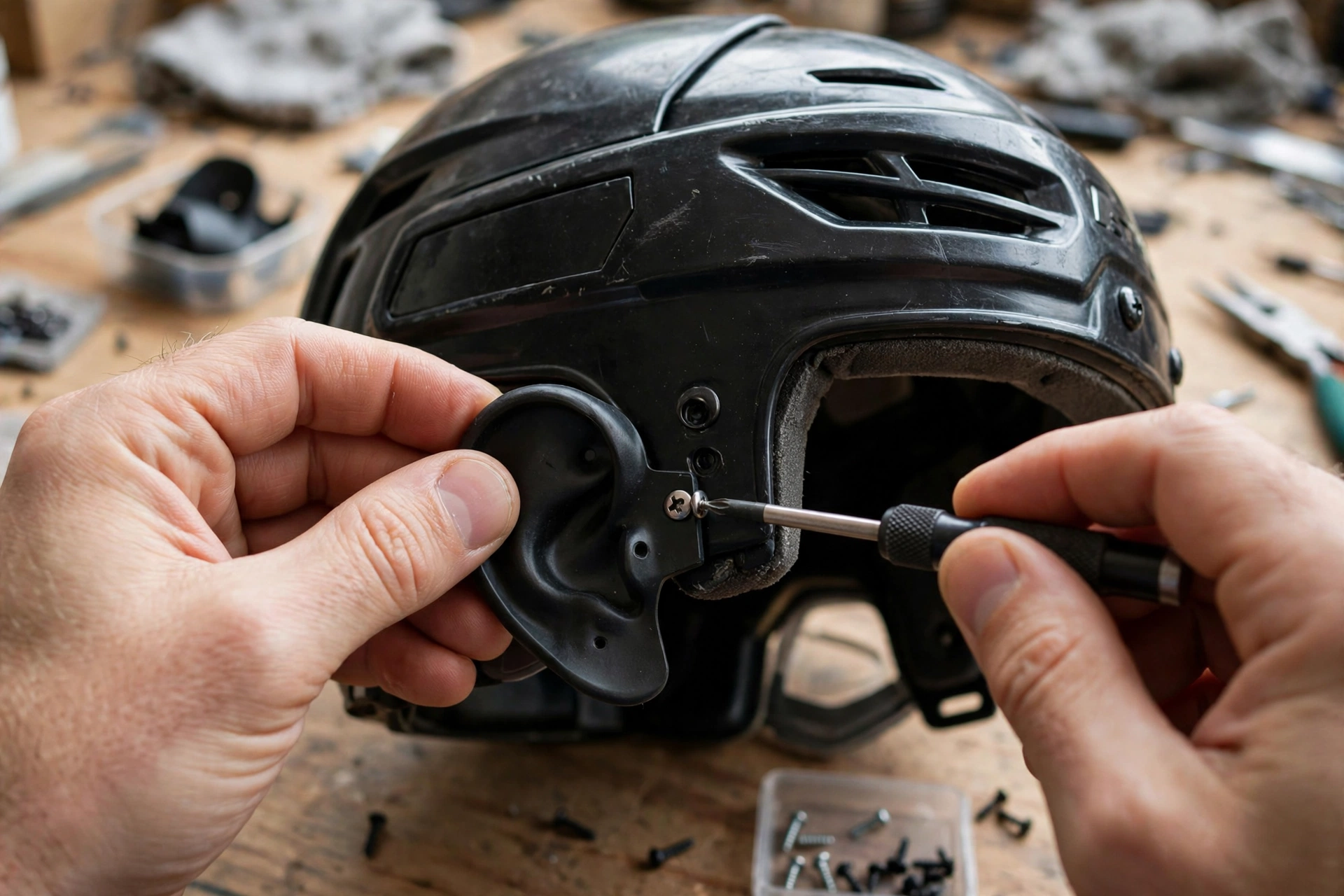
Work on a clean table with the helmet in front of you, and take a photo of the original setup before you touch anything — strap routing is easy to forget and annoying to reconstruct. Most covers attach with one or two small screws, sometimes combined with a clip or a post that the cover slides onto.
- Undo the screw or release the clip holding the old cover, keeping the hardware in a cup.
- Lift the old cover away, noting how the chin strap passes through or under it.
- Seat the new cover in exactly the same position, routing the strap the way your photo shows.
- Refit the screw or clip and tighten snugly — firm, not forced; overtightening cracks the mounting tab.
- Wiggle the cover firmly: it should feel solid, with no rocking or clicking.
Do the same on the other side if you are replacing a pair, and compare the two sides when you finish. They should sit at the same height and angle; an asymmetric setup usually means one cover is not fully seated on its post.
What Should You Check After Fitting the New Ear Cover?
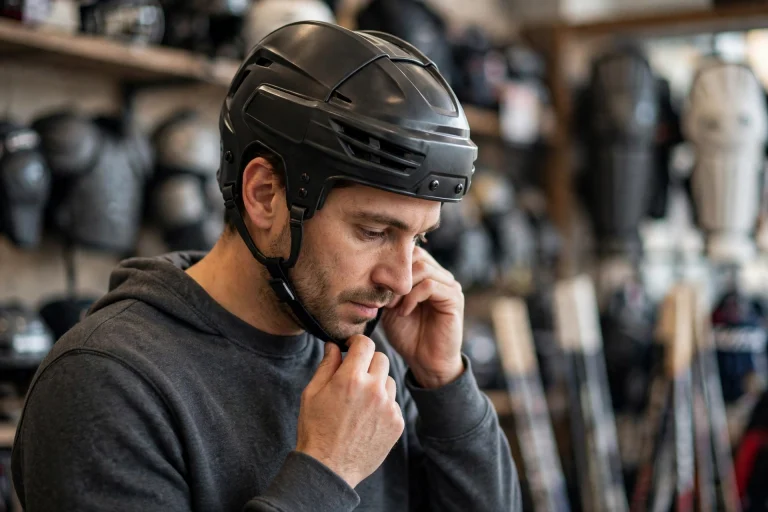
Put the helmet on and run the full fit check again. The cover changes how the helmet feels at the ears and jaw, so confirm: the helmet still sits level and snug, the cover does not press painfully on your ear or jaw, and the chin strap fastens to its normal snugness with the buckle where it should be.
Shake and nod hard. A correctly fitted cover is silent and still; a rattle or a clicking movement means a screw is short of tight or the cover is not on its mount properly. Also check the strap path with your fingers — the webbing should run flat, untwisted, and through the cover exactly as the maker intended, because the strap is what keeps the whole helmet in place in a fall.
None of this is separate from the helmet’s core job. The shell and foam manage impact — including the rotational component of angled hits, described in this guide to what MIPS is for helmets — and the ear covers and straps are what keep that shell positioned over the side of your head. A cover fitted loosely is a gap in the system, not a cosmetic flaw.
When Should You Replace the Whole Helmet Instead?
Sometimes the ear cover is the messenger, not the problem. If the cover cracked because the helmet took a major hit, inspect the shell and foam around the mounting point very carefully: cracks radiating from a screw hole, or foam that has gone soft or crumbly nearby, mean the helmet itself is finished, and a new cover would only hide it.
Age is the other judgement call. If the plastic of the old cover has gone brittle, the shell and straps of the same helmet have lived the same years; add an expired certification sticker or a liner that no longer fits snugly, and the honest answer is a new helmet rather than another season of replacement parts.
And if the correct cover simply cannot be found — discontinued, out of stock everywhere, no maker support — do not improvise with another model’s cover or tape and glue. A helmet that cannot be kept in its certified configuration has reached the end of its useful life.
Frequently Asked Questions
Q: Can I play with one ear cover missing while I wait for the part?
A: You should not. The ear cover is part of the helmet’s certified design and protects the side of your head and ear; in general terms league equipment checks can fail a helmet with a missing cover. Borrow a complete helmet or wait for the part — the covers are cheap and usually quick to arrive.
Q: Are ear covers and ear loops the same thing?
A: They do the same job with slightly different designs. Some helmets use a solid plastic ear cover; others use a loop style that the strap passes through. They are not interchangeable between designs — order the style and part listed for your exact helmet model.
Q: My new ear cover rattles. What did I do wrong?
A: Usually the screw is not fully snug, the cover is not seated on its mounting post, or the part is for a different size or model. Take it off, compare it against the other side and the old cover, reseat it carefully, and tighten firmly without forcing. If it still rattles, suspect the wrong part.

Olivia
Writer at Helmet Today, covering helmet reviews, fit and riding safety.