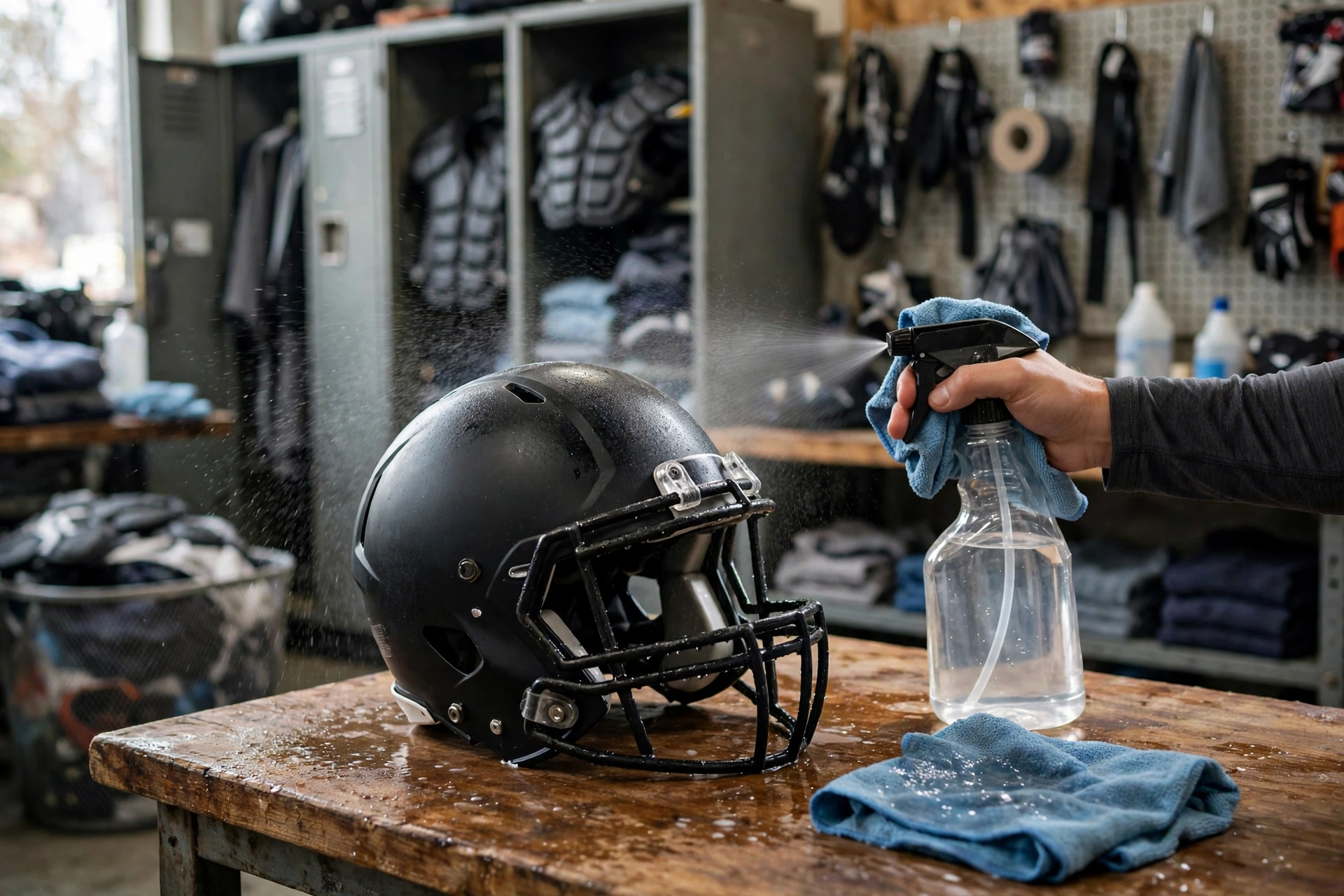
To disinfect a football helmet between players, first wash every removable pad and the shell with warm water and mild soap, then apply a disinfectant product that is made for sports equipment or approved by the helmet maker, let it work for the time its label states, and dry everything completely before the helmet is worn again. The rules that keep it safe are simple: no bleach, no harsh solvents, and no heat drying.
This guide gives the full step-by-step process, the products that are safe, and the mistakes that damage foam while trying to clean it.
Why Does a Helmet Need Disinfecting Between Players?
A football helmet is worn against sweating skin for hours, shared across a season in many programmes, and handed from one player to the next at reissue. In that warm, damp padding, bacteria thrive — the smell of an old helmet is exactly that — and skin infections and general grime can travel with the equipment when it changes heads.
Washing alone removes dirt and sweat salt, but disinfecting is the step that deals with what washing leaves behind. Between different wearers it is basic hygiene, and within one player’s season it is worth doing periodically too, because the bacteria build-up is what degrades pads and creates the stink that never quite leaves.
That said, disinfection is hygiene, not reconditioning. It does not inspect the shell, test the foam, or recertify anything. A clean helmet still needs its condition checked — ideally through the programme’s inspection and reconditioning cycle — before it goes to a new player.
What Products Are Safe to Use on a Football Helmet?
Safe means made for the job or cleared by the maker. Equipment disinfectant sprays and wipes formulated for sports gear are widely available and are designed to be used on helmet pads and shells. Mild soap — a gentle hand soap or a small amount of mild detergent in warm water — handles the washing stage for pads, straps, and shell alike.
- Use: warm water, mild soap, sports-equipment disinfectant spray or wipes, soft cloths
- Follow: the product label’s contact time — disinfectants need their stated minutes to work
- Avoid: bleach, ammonia and solvent cleaners, abrasive pads, and anything not intended for plastics and foam
When in doubt, the helmet maker’s care instructions are the authority. A product not on their list can attack the impact foam or soften adhesives without showing any immediate sign, and invisible damage is precisely what you cannot afford in protective equipment.
How Do You Disinfect a Football Helmet Step by Step?
Start by stripping the helmet down as far as the maker allows: facemask off if it unbolts with ordinary tools and you can refit it correctly, removable pads and jaw pads out, chin strap unclipped. Note what came from where — a phone photo saves confusion at reassembly.
Wash first. Hand-wash the removable pads in warm water with mild soap, working the soapy water through them, then rinse until the water runs clear and press them in a towel. Wipe the shell inside and out, and the facemask and chin strap, with a cloth in the same mild soapy water, getting into the pad attachment points and around the hardware where grime collects.
Then disinfect. Apply the equipment disinfectant to the shell interior, pads, and straps as its label directs, and respect the contact time — spraying and immediately wiping dry defeats the purpose. Reassemble only when every part is completely dry, checking pad positions and hardware tightness as you go, and finish with a fit check on the new wearer.
What Cleaning Mistakes Damage a Football Helmet?
Chemistry is the biggest danger. The foam liner protects by crushing in a controlled way, including in the angled impacts whose rotational forces are explained in this guide to what MIPS is for helmets — and strong solvents, bleach, and degreasers can degrade that foam invisibly. The liner can look perfect while its ability to absorb energy has been quietly reduced. Nothing stronger than mild soap and proper equipment disinfectant should ever touch it.
Heat is the second mistake. Hot water soaks, hair dryers, radiators, and tumble dryers used to speed drying can warp shells and age foam and glue. Air drying in moving air is slower and is the only safe method — plan the clean early enough that the helmet can dry overnight.
The third is soaking and force. Drowning a fixed liner for hours leaves deep foam wet for days and invites mildew, and forcing out pads that were not designed to be removed tears the very attachments the fit depends on. If a part does not come out with gentle hand pressure, clean it in place.
How Should a Cleaned Helmet Be Dried, Stored, and Reissued?
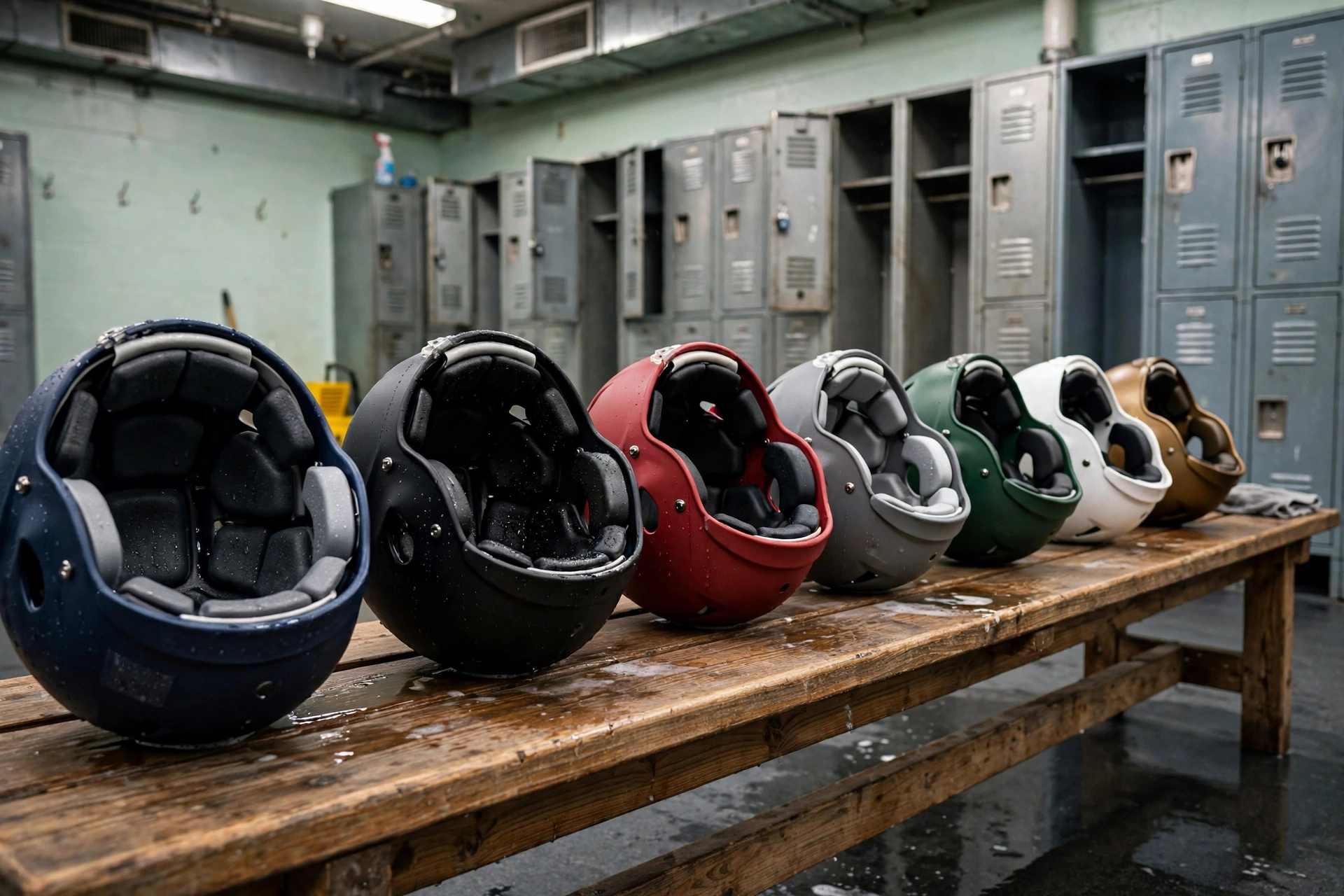
Dry everything in open, moving air at room temperature — pads separated from the shell, straps opened out — until nothing feels cool or damp to the touch and there is no smell of moisture left. A fan helps; a sealed bag or locker undoes everything, because damp foam in the dark is where the bacteria you just removed will happily regrow.
Store the helmet dry, indoors, and out of direct heat and sun. If helmets are being held between seasons, a final inspection at storage time — shell, hardware, pad condition — means no surprises at reissue.
At reissue, treat disinfection and fitting as one job. The helmet goes to its new player clean, dry, and complete, and then it is fitted: correct size, level position, padding and any air bladders adjusted, chin strap set. A spotless helmet that fits badly is still the wrong helmet, so the handover is only finished when both halves are done.
Frequently Asked Questions
Q: Can I use household disinfectant spray or bleach wipes on a helmet?
A: Household bleach and strong general cleaners are on the avoid list — they can degrade impact foam and adhesives invisibly. Use a disinfectant made for sports equipment, or one the helmet maker approves, and mild soap for washing. If a product’s label warns it off plastics or foam, keep it away from the helmet.
Q: Can helmet pads go in the washing machine?
A: In general terms, no — machine washing combines strong detergent, heat, and agitation, all hard on foam and fasteners. Hand-washing removable pads in warm water with mild soap, rinsing well, and air-drying is the method makers intend and takes only a few minutes.
Q: How often should a shared helmet be disinfected?
A: Every time it changes wearer, without exception — that is the core rule. For a single player’s own helmet, a wash-and-disinfect every few weeks of regular play, and promptly after illness or any skin infection in the squad, keeps bacteria and smell from establishing themselves.

Olivia
Writer at Helmet Today, covering helmet reviews, fit and riding safety.