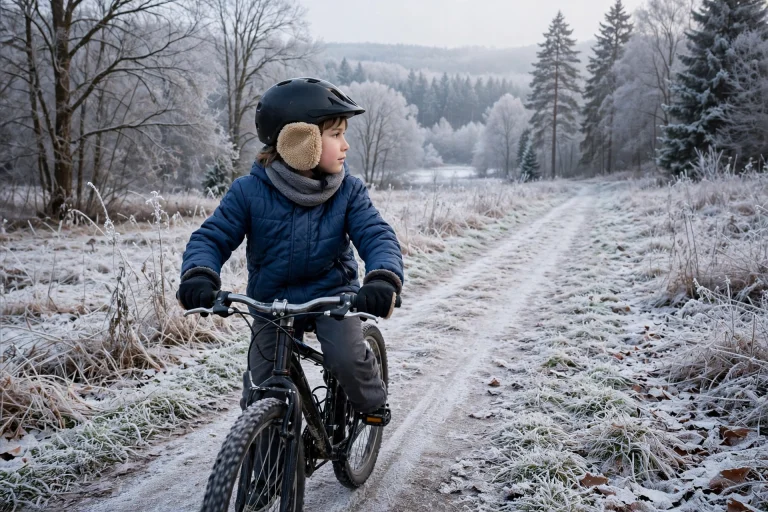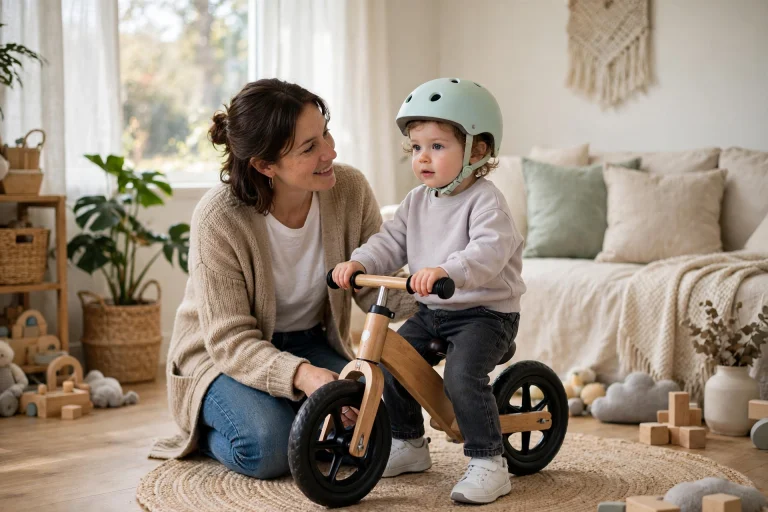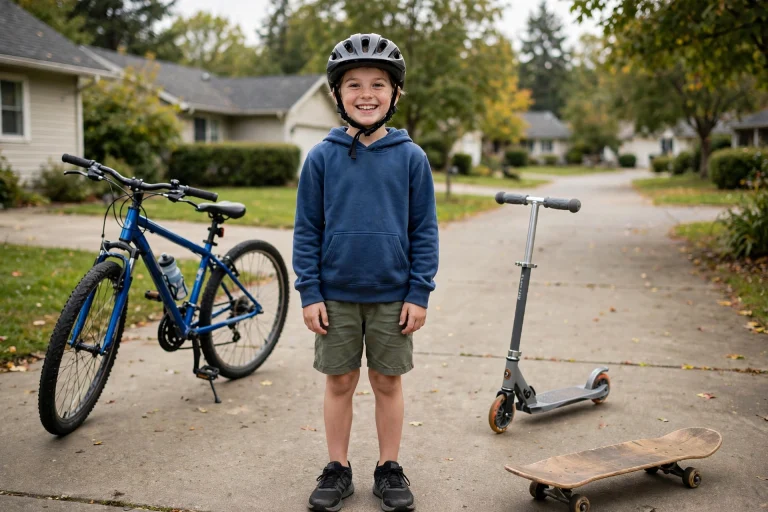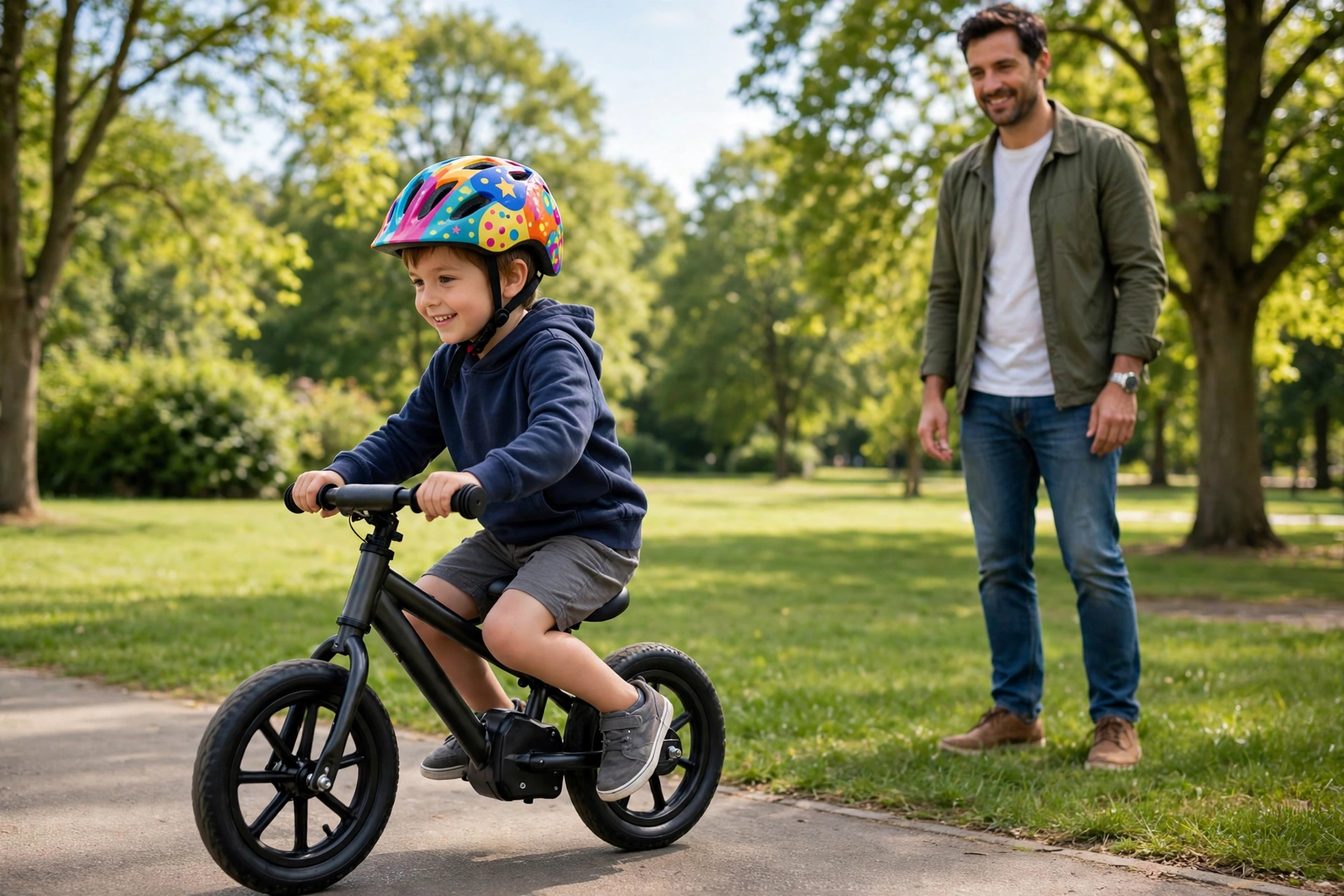
Children riding electric balance bikes should always wear a correctly fitted kids bike helmet, even though these bikes are small and slow. In general terms, choose a lightweight helmet made for cycling, sized to your child’s head, with a snug chin strap and good coverage, and make helmet-wearing part of every ride from the very first one.
Electric balance bikes look like toys, and that is exactly why helmet habits matter so much with them. They give toddlers and young children their first taste of powered speed, balance, and independence, often on driveways, pavements, and parks where falls happen in an instant. A child who learns that a helmet is simply part of riding will carry that habit onto bigger bikes later.
What Is an Electric Balance Bike, and Why Does It Need a Helmet?
An electric balance bike is a small, pedal-free bike with a small motor that helps a young child glide along while they learn balance and steering. Speeds are low compared with adult e-bikes, but a child can still fall from their own height onto concrete, and their head is proportionally larger and heavier relative to their body than an adult’s. Even a slow tumble can therefore end with a bumped head.
The motor adds a factor that a push-along balance bike does not have: unexpected acceleration. A child who twists the throttle too eagerly, or who is startled by a bump, can move faster than they expected and lose balance before they know how to recover. In general terms, that unpredictability is the reason a helmet is worth it even for the shortest garden ride.
Parents sometimes worry that a helmet will put a small child off riding. In practice, children usually accept helmets happily when they are introduced early, fit comfortably, and come in a colour or design the child likes. The trick is to fit the helmet properly and keep it comfortable, not to skip it.
How Do You Choose the Right Helmet for an Electric Balance Bike?
Start with size, not style. Measure around your child’s head just above the eyebrows and ears, and match that measurement to the helmet maker’s size range. A helmet that is too large will wobble and may slide over the eyes, while one that is too small will pinch and be refused. Many kids helmets have a fit dial or adjustable pads: use them, and re-check the fit as your child grows.
Weight matters more for small children than for adults. A heavy helmet can tire a toddler’s neck quickly and make them tilt their head forward, which affects balance. In general terms, look for a light kids cycling helmet with good ventilation, since young children overheat faster and will complain sooner about a hot, sweaty helmet.
Coverage is worth checking too. A helmet that covers the back and sides of the head a little more generously gives extra protection for the sideways falls that are common when children are learning. A small peak or visor can help with sun, but make sure it does not block your child’s view of the ground ahead, where they need to see bumps and kerbs.
How Should a Kids Helmet Fit?
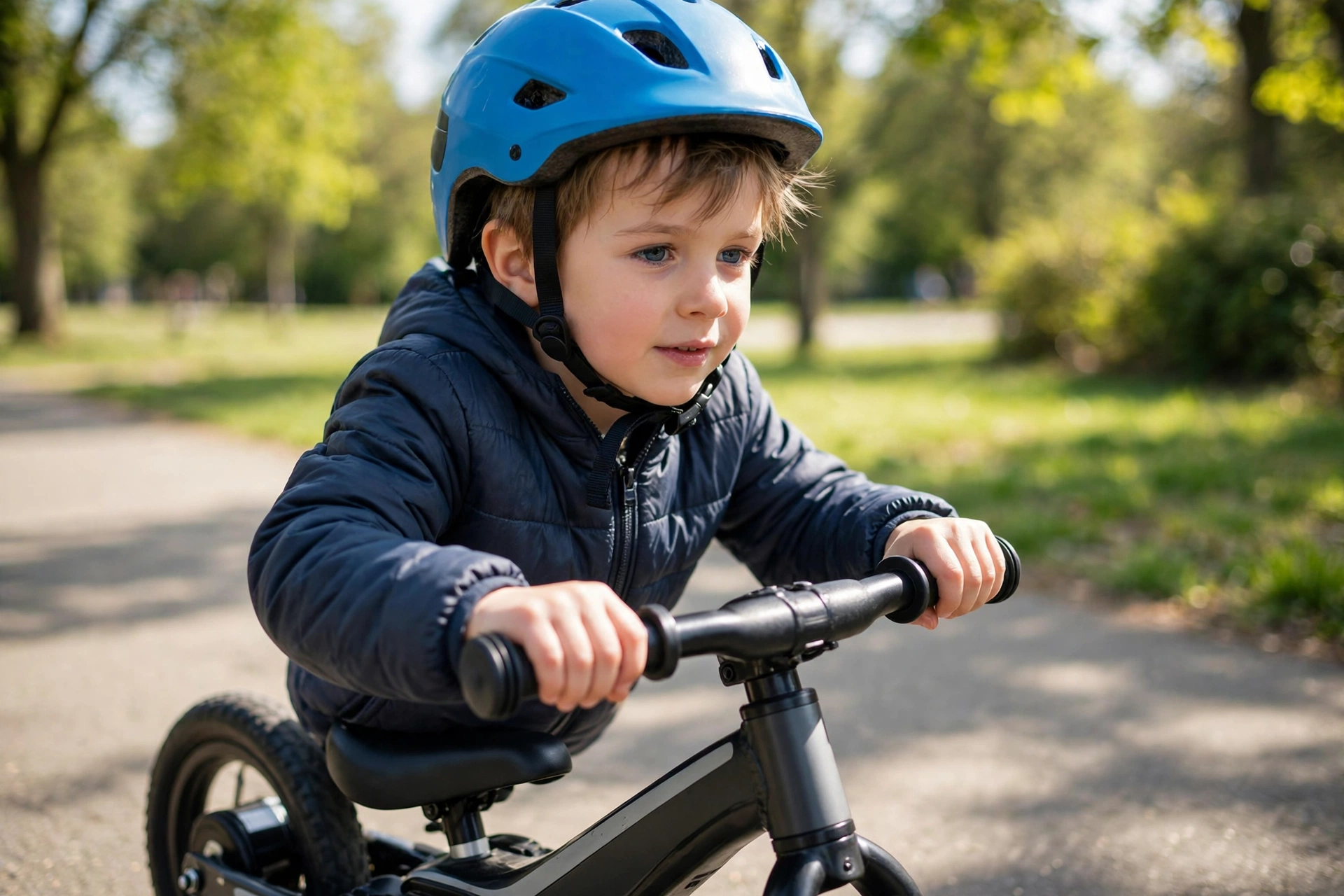
A correctly fitted kids helmet sits level on the head, low on the forehead, about a finger or two above the eyebrows. It should not tip back, exposing the forehead, or tip forward, covering the eyes. The side straps should form a neat shape just below each ear, and the chin strap should be snug enough that only one or two fingers fit between the strap and the chin.
Test the fit with the shake check: ask your child to shake their head gently, and the helmet should stay in place without sliding around. Then give the helmet a gentle push from the front, back, and sides. It should move the head slightly with it, not slide freely over the scalp. If it slides, tighten the fit system or try a different size.
Re-check the fit often. Children’s heads grow quickly, and a helmet that fitted in spring may be snug by autumn. Also re-check after haircuts, since a thick head of hair can change the fit more than you might expect. If the helmet no longer fits even at its loosest setting, it is time for the next size up.
What Safety Habits Should Parents Teach Alongside Helmet Use?
A helmet is only one part of safe riding. Start electric balance bike riding in a safe, flat, traffic-free area, away from roads, driveways with reversing cars, and steep slopes. Supervise closely at first, and keep early sessions short so your child builds confidence gradually rather than getting tired and careless.
Teach the basics early: how to stop, how to steer around obstacles, and how to get off the bike safely. Set simple rules, such as no riding near roads, no riding in the wet until they are confident, and always wearing closed shoes. In general terms, children learn these rules best when they are consistent and explained simply, not shouted mid-fall.
Check the bike itself too. Keep the tyres inflated, the brakes or throttle working as the maker intends, and the battery charged and stored according to the maker’s instructions. A well-maintained bike is less likely to surprise a young rider, and a quick pre-ride check becomes a good habit for the whole family.
How Do You Care for a Kids Helmet?
Kids helmets live hard lives: they get dropped, kicked, left in the rain, and used as dressing-up props. Inspect the helmet regularly for cracks, dents, or crushed foam, and replace it after any significant impact, even if the damage is not visible. Foam can be damaged internally while the shell looks fine.
Cleaning is simple. Wipe the shell with a damp cloth, wash removable pads by hand with mild soap, and let everything air-dry fully. Never use harsh cleaners or solvents, and never dry a helmet on a heater. Store it indoors, out of direct sun, rather than in a hot car or a damp shed.
It is also worth understanding what is inside a modern helmet. Many kids helmets now include a low-friction liner designed to reduce rotational forces in certain angled impacts, and our guide to what MIPS means for helmets explains that system in plain terms. It is a useful feature to look for, but correct fit and regular replacement matter more than any single technology.
Frequently Asked Questions
Q: Does my child really need a helmet for a slow electric balance bike?
A: Yes. Falls happen at any speed, and a child’s head can hit the ground even in a gentle tumble. A helmet is cheap, light, and easy to make part of the routine, and it builds a habit that will protect your child on bigger bikes later.
Q: Can my child wear a skateboard or scooter helmet instead?
A: In general terms, a helmet certified for cycling is the right choice for an electric balance bike. Some helmets carry more than one certification, so check the label inside the helmet to make sure cycling is covered before relying on it.
Q: How often should I replace my child’s helmet?
A: Replace it after any significant impact, when it no longer fits even at its loosest setting, or when the straps, pads, or fit system are worn out. In general terms, a helmet that is cracked, dented, or has crushed foam should be replaced straight away.

Olivia
Writer at Helmet Today, covering helmet reviews, fit and riding safety.