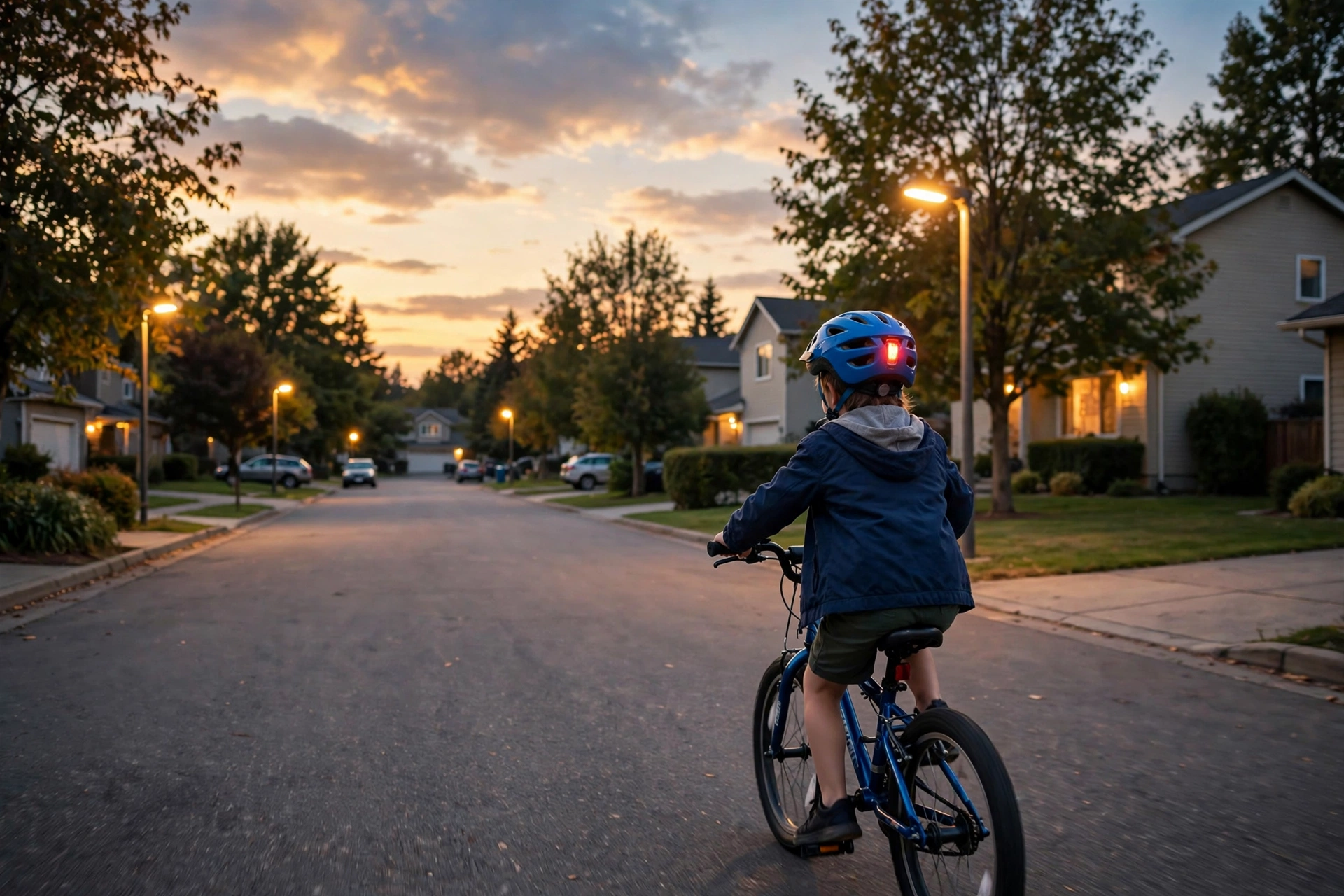
Yes, a kids helmet with a rear light is a smart choice for dark evenings. In general terms, a small red light on the back of the helmet helps drivers, cyclists, and pedestrians notice your child sooner when daylight fades, and it works alongside reflective clothing and street lighting rather than replacing them. If your child rides after school in winter or on dim evenings, a rear light adds a simple layer of visibility that costs little and needs almost no effort to use.
Many parents only think about the front of the bike when evenings get darker, but traffic approaching from behind is a real concern too. A rear light sits at roughly head height, which is often higher and easier to spot than a light mounted low on the seat post or rear rack. That extra height can matter on streets with parked cars, hedges, and driveways breaking up the view. For a child who is smaller and harder to see than an adult rider, anything that raises their profile in traffic is worth considering.
Why Is a Rear Light Useful on a Kids Helmet?
A rear light does one job: it makes your child visible from behind. In general terms, a steady or flashing red light catches the eye far more quickly than a dark helmet and dark jacket alone, especially at dusk when contrast is low and drivers are still adjusting to headlights. It also helps when your child rides through patches of shadow between street lights, where reflective material alone may not show up until a car’s headlights hit it directly.
- A helmet light sits higher than most bike lights, so it can be seen over parked cars and low hedges.
- It moves with your child’s head, staying visible when they look around at junctions.
- It works in both steady and flashing modes, so you can choose what suits the ride.
- It is easy to switch on before the ride and switch off afterwards, with no tools needed in most cases.
What Type of Rear Light Should You Choose for a Kids Helmet?
In general terms, the best rear light for a kids helmet is a small, lightweight, clip-on or strap-mounted light designed for helmets. Heavy lights can pull the helmet out of position or make it uncomfortable, which defeats the purpose, so weight matters more than brightness alone. Look for a light that clips firmly to the rear of the helmet or fits the helmet’s vents without wobbling, and check that it stays in place when your child shakes their head.
Most helmet lights offer a steady mode and one or more flashing modes. A flashing mode tends to attract attention more quickly, while a steady mode gives drivers a clearer sense of your child’s position and speed. Some families use flashing on busy roads and steady on quiet paths, and either choice is reasonable. Rechargeable lights charged by USB are convenient for regular use, while battery lights can be simpler if you only ride occasionally in the dark. Whichever type you choose, make it part of the pre-ride routine to check that the light is charged or has fresh batteries.
It is also worth thinking about the helmet itself before adding accessories. A light should never be screwed, glued, or drilled into a helmet shell, because that can damage the helmet’s structure. Clip-on and strap-mounted lights avoid that problem entirely. If you are buying a new helmet anyway, some models come with an integrated rear light built into the design, which can be a tidy option. And while you compare features, it is worth learning what MIPS means for helmets, since it is another feature that often appears on kids helmets and is worth understanding before you buy.
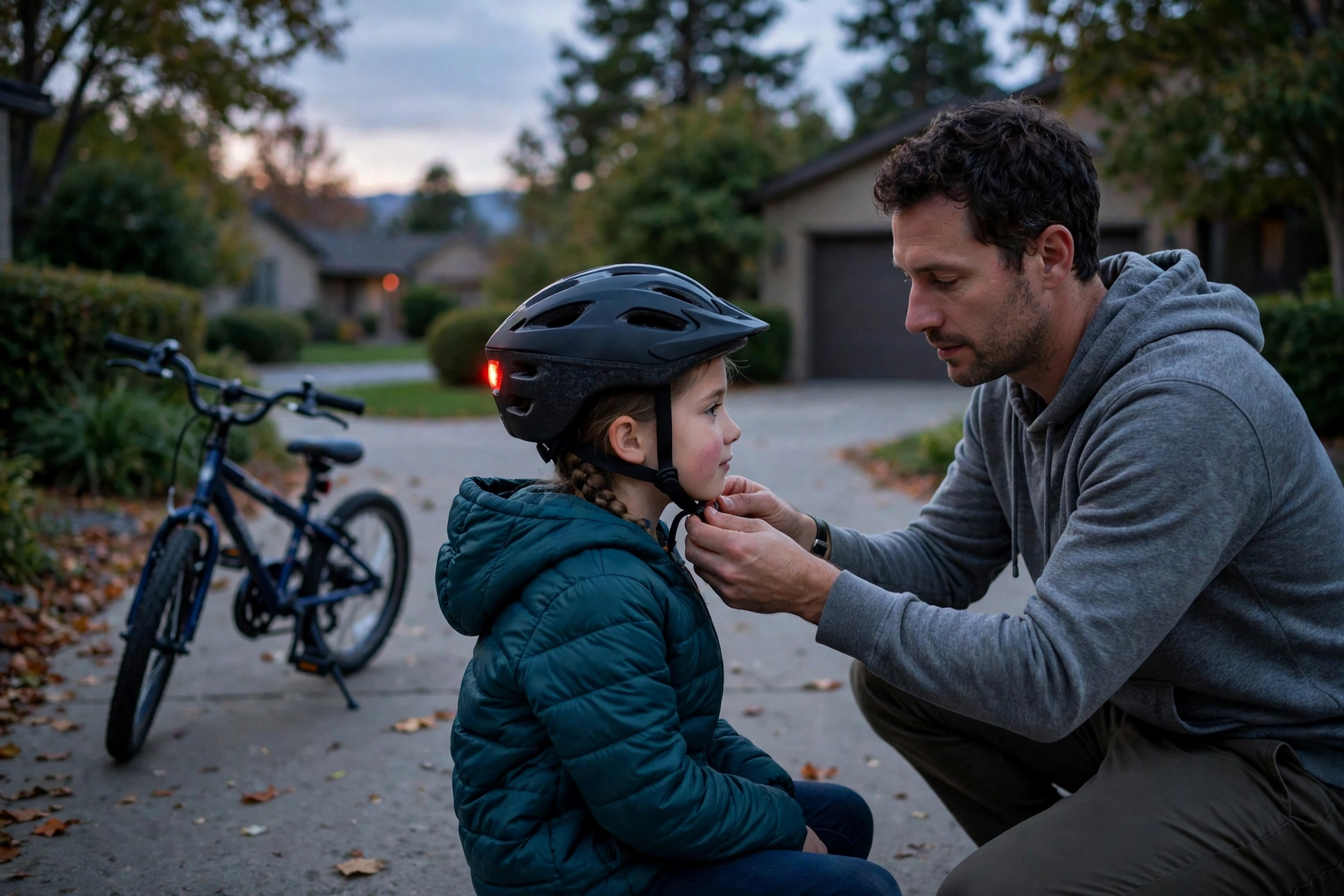
How Do You Fit a Rear Light to a Kids Helmet?
Fitting a helmet rear light is usually a quick job. Most clip-on lights attach to the rear edge of the helmet or thread through the rear vents, and strap-mounted versions wrap around the back of the shell. Start by reading the light maker’s instructions, then attach the light with the helmet off your child’s head so you can see what you are doing. Once it is clipped on, give it a gentle tug to make sure it will not fall off on a bumpy path.
After fitting the light, always re-check the helmet fit with your child wearing it. The helmet should sit level on the head, covering the forehead without sliding down over the eyes, and the straps should form a snug fit under the chin. If the light has pulled the helmet backwards or made it sit unevenly, move the light to a different vent or try a lighter model. A light is only helpful if the helmet still fits properly, so fit always comes first and the accessory comes second.
When Should Your Child Use the Rear Light?
The simple rule is to use the rear light whenever visibility is reduced, not only when it is fully dark. That includes winter afternoons when the sun sets during the ride home, overcast evenings, rainy weather, and foggy mornings. In general terms, if you would switch on car headlights, your child’s helmet light should be on too. Waiting until it is properly dark means riding through the riskiest period, dusk, without it.
Even on a lit street, a rear light is still useful. Street lighting can be patchy, and a small rider in dark clothing can disappear between pools of light. The light also helps on shared paths, where walkers and other cyclists approach from behind and may not hear a child coming. As a habit, switching the light on for every ride from late afternoon onwards in the darker months is simpler than trying to judge the exact moment it becomes necessary.
What Else Helps Keep Kids Visible on Dark Evenings?
A rear light works best as part of a wider visibility plan. Reflective strips on a jacket, backpack, or ankle bands catch headlights and add movement that drivers notice. Light-coloured clothing also helps at dusk, when reflective material has not yet caught a beam. In general terms, combining a helmet light, a bike light, and something reflective gives drivers several chances to spot your child, which is better than relying on any single item.
Finally, check the whole setup regularly. Lights lose charge, batteries run flat, and clips loosen over time. A quick check before the ride, light on, helmet level, straps snug, takes less than a minute and catches most problems. If the light has stopped working, fix or replace it before the next evening ride rather than letting it slide for a week. Visibility gear only helps when it is actually switched on and working.
Frequently Asked Questions
Q: Does a rear light replace a bike light?
A: No, in general terms a helmet rear light is best used alongside a bike rear light, not instead of it. The two together give drivers a clearer and higher-visibility signal, and if one fails, the other still provides some warning.
Q: Are flashing or steady lights better for children?
A: Both have advantages: flashing tends to attract attention faster, while steady helps drivers judge position and speed. Either mode is a good choice, and many families use flashing on roads and steady on paths.
Q: Can I add a rear light to any kids helmet?
A: In general terms, yes, as long as the light clips or straps on without drilling, gluing, or screwing into the shell. Avoid any fitting method that damages the helmet, and always re-check the helmet fit after attaching the light.

Olivia
Writer at Helmet Today, covering helmet reviews, fit and riding safety.