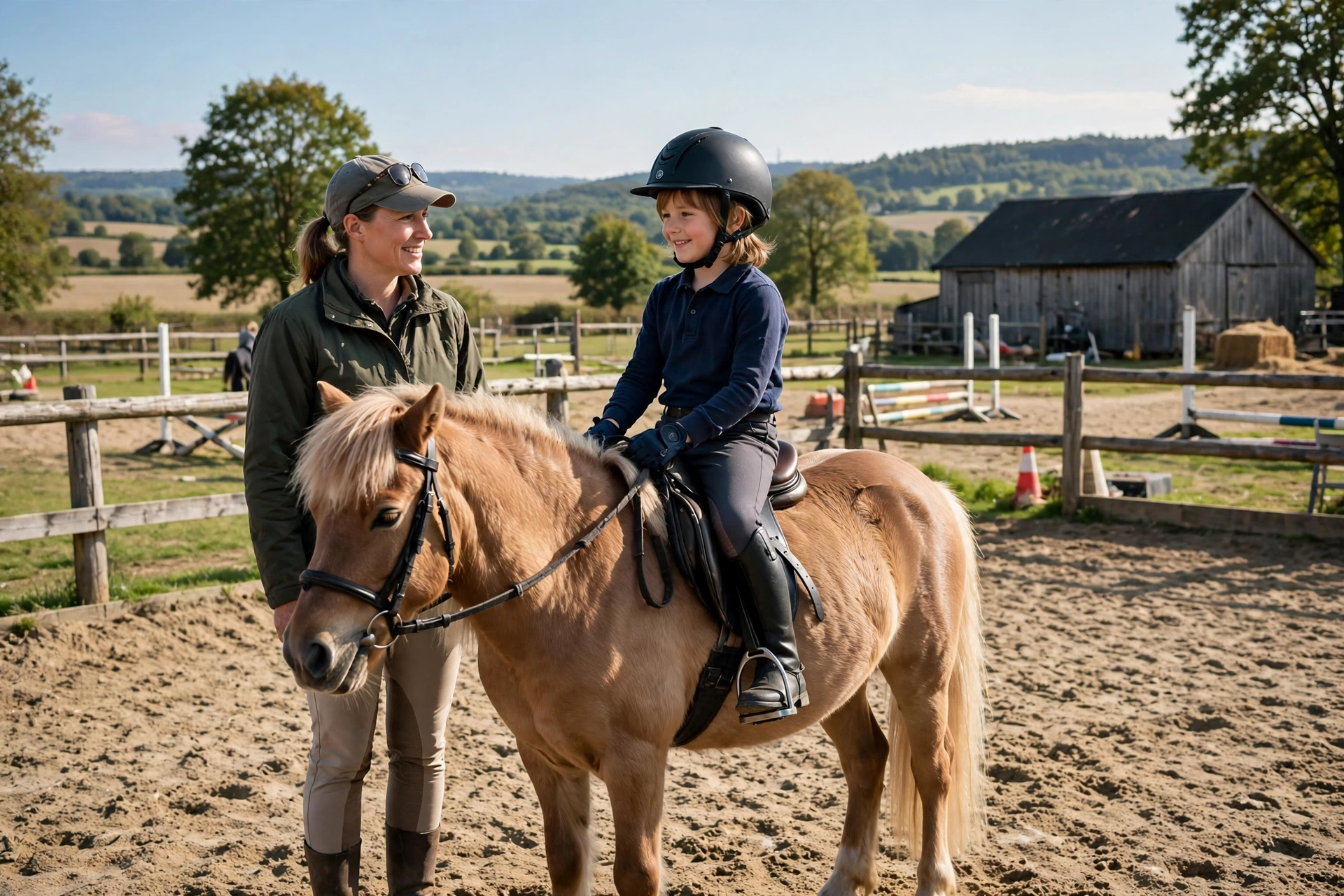
For horse riding lessons, your child needs a proper riding helmet, not a bike helmet, and the riding school will usually tell you exactly what standard it must meet. In general terms, a riding helmet is designed for falls from height onto hard or uneven ground, which is a different kind of impact from a cycling fall, so the two types are not interchangeable. Before the first lesson, ask the school about its helmet rules, and arrive early enough for a proper fitting check.
Most riding schools keep a stock of helmets for beginners to borrow, which is a good way to start without buying straight away. Borrowed helmets let your child try the sport and let you learn what size and style suits them. If your child sticks with lessons, though, most parents eventually buy their own helmet, because a personal helmet fits better, is more hygienic, and is always available in the right size. This guide covers what to check, what to ask, and what to avoid.
Why Can’t My Child Just Wear a Bike Helmet for Riding Lessons?
A bike helmet and a riding helmet may look similar at a glance, but they are built and tested for different situations. In general terms, cycling helmets are tested for impacts at cycling speeds and angles, while riding helmets are tested for falls from a horse, which can involve greater height and impacts with hooves, fences, or hard ground. The coverage also differs: riding helmets typically extend further down the back of the head to protect that area in a fall from height.
Riding schools and competitions also work to specific safety standards, and a bike helmet will not carry the riding standard the school requires. Turning up with the wrong helmet can mean your child is not allowed to ride, which is disappointing for everyone. If you are unsure whether a helmet is a riding helmet, check the label inside: it should name a riding standard, and the retailer or school can confirm whether it is accepted for lessons.
What Should Parents Check When Choosing a Riding Helmet?
The first check is the standard. In general terms, riding helmets sold for lessons should meet a recognised riding safety standard, and the riding school is the best source for which standards it accepts, since rules can vary by school and by country. Ask before you buy, and keep the answer in mind when shopping, because a helmet that meets one standard may not meet another. Do not rely on a product title alone: look for the standard named on the label inside the helmet.
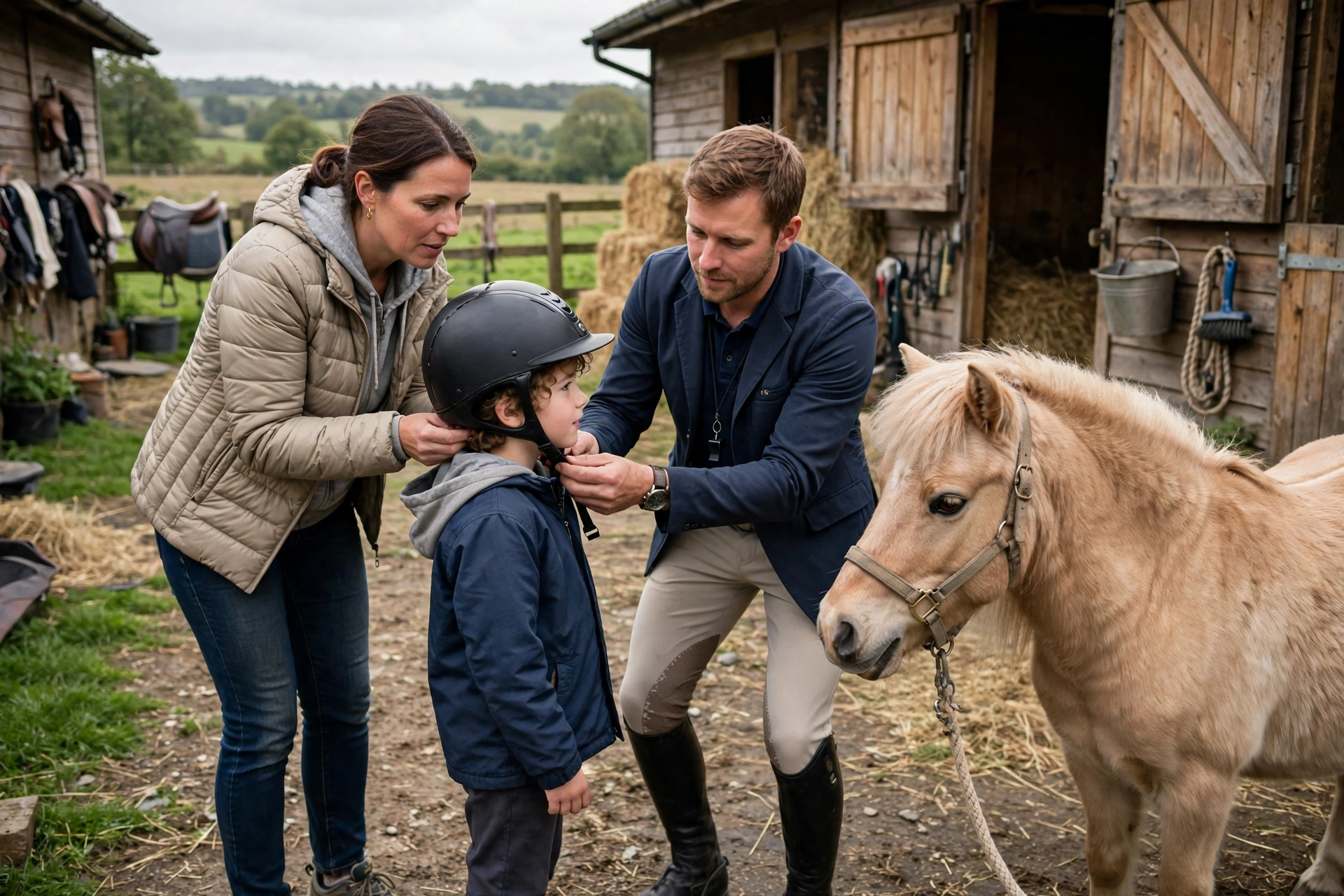
The second check is fit, and it matters as much as the standard. A riding helmet should sit level on the head, low on the forehead, and feel snug all round without pressure points or wobbling. When the harness is fastened, the helmet should not rock forwards, backwards, or side to side when your child shakes their head gently. Many riding helmets come with adjustable fitting systems or interchangeable padding, which helps fine-tune the fit as your child grows.
Comfort is the third check, especially for a child who may be nervous at first. A helmet that pinches, slips, or feels heavy will distract them and make lessons less enjoyable. Let your child wear the helmet around the shop or yard for a few minutes before deciding, and check that the harness sits comfortably under the chin without rubbing. If you are comparing helmets and want to understand the wider world of helmet safety features, reading what MIPS means for helmets can help you make sense of the technology labels you will see, even though MIPS itself is more common in cycling helmets.
Should We Borrow a Helmet or Buy One Straight Away?
Borrowing is a sensible starting point for most families. Riding schools usually provide helmets for first lessons, and this lets your child discover whether they enjoy riding before you spend money. It also gives you a chance to see what size your child wears and which styles they find comfortable. Ask the school how its helmets are cleaned between riders and how often they are replaced, since a well-run school will have clear answers.
Buying becomes the better option once lessons become regular. A personal helmet guarantees the right size every week, avoids sharing, and can be fitted once and checked quickly before each lesson. It also means your child is not relying on the school having a spare in their size on a busy day. If cost is a concern, ask the school or local tack shop about junior sizes and whether they offer part-exchange as children grow.
How Should a Riding Helmet Fit, and How Often Should We Check It?
A good fit starts with measuring. Measure around your child’s head just above the eyebrows and ears, and use the maker’s size guide as a starting point, since sizing can vary between brands. When trying helmets on, start with the size the measurement suggests, then go up or down until the helmet feels snug without squeezing. The helmet should sit level, not tilted back like a cap, and the front edge should sit just above the eyebrows.
Once the size is right, fasten the harness and check the fit properly. The straps should sit snugly under the chin, with enough room for comfort but not so loose that the helmet slides. Ask your child to shake their head gently and look up, down, and side to side: the helmet should move with the head, not independently of it. If it rocks or slips, try adjusting the fitting system or a different size before giving up on that model.
When Should a Riding Helmet Be Replaced?
In general terms, a riding helmet should be replaced after any significant fall or heavy impact, even if it looks undamaged from the outside. The protective lining inside a helmet is designed to absorb impact by deforming, and once it has done that job, it may not protect as well a second time. After a fall, tell the instructor straight away, and follow the school’s advice about whether the helmet needs replacing. If in doubt, replace it.
Growth is the most common reason children need a new riding helmet, and it is worth budgeting for it. A helmet that has become tight is uncomfortable and may tempt a child to wear it tilted back, which reduces protection. When the fit can no longer be adjusted to sit level and snug, it is time for the next size up, even if the old helmet still looks new. Passing a well-fitting helmet down to a younger sibling is fine only if it has no fall history and still fits that child properly.
Frequently Asked Questions
Q: Can my child wear a bike helmet for horse riding lessons?
A: No, in general terms riding lessons require a proper riding helmet that meets a riding safety standard. Bike helmets are tested for different impacts and do not carry the riding standard most schools require.
Q: Is it okay to borrow a helmet from the riding school?
A: Yes, borrowing is a normal and sensible way to start. It lets your child try lessons before you buy, and schools usually provide helmets for beginners. Buy a personal helmet once lessons become regular.
Q: When should a child’s riding helmet be replaced?
A: Replace it after any significant fall or heavy impact, when it no longer fits properly, or when it shows wear such as cracks, damaged lining, or frayed straps. If you are unsure after a fall, ask the instructor and replace it if there is any doubt.

Olivia
Writer at Helmet Today, covering helmet reviews, fit and riding safety.