Go-karting is an exciting first motorsport for children, and a proper helmet is the single most important piece of safety kit. In general terms, most kart tracks provide helmets for junior drivers, but parents should still understand what a good helmet looks like, how it should fit, and what rules to check before the visit. A well-fitting kart helmet protects the head and face, and it helps your child enjoy the session with confidence.
Children’s go-karting usually takes place at indoor or outdoor tracks with junior karts, speed limits, and supervision. Tracks take safety seriously, and helmet rules are part of that. Some tracks insist on their own helmets for hygiene and consistency, while others allow a personal helmet if it meets their standard. Checking the track’s policy before you go avoids disappointment on the day and lets you prepare your child for what to expect.
What Type of Helmet Does a Child Need for Go-Karting?
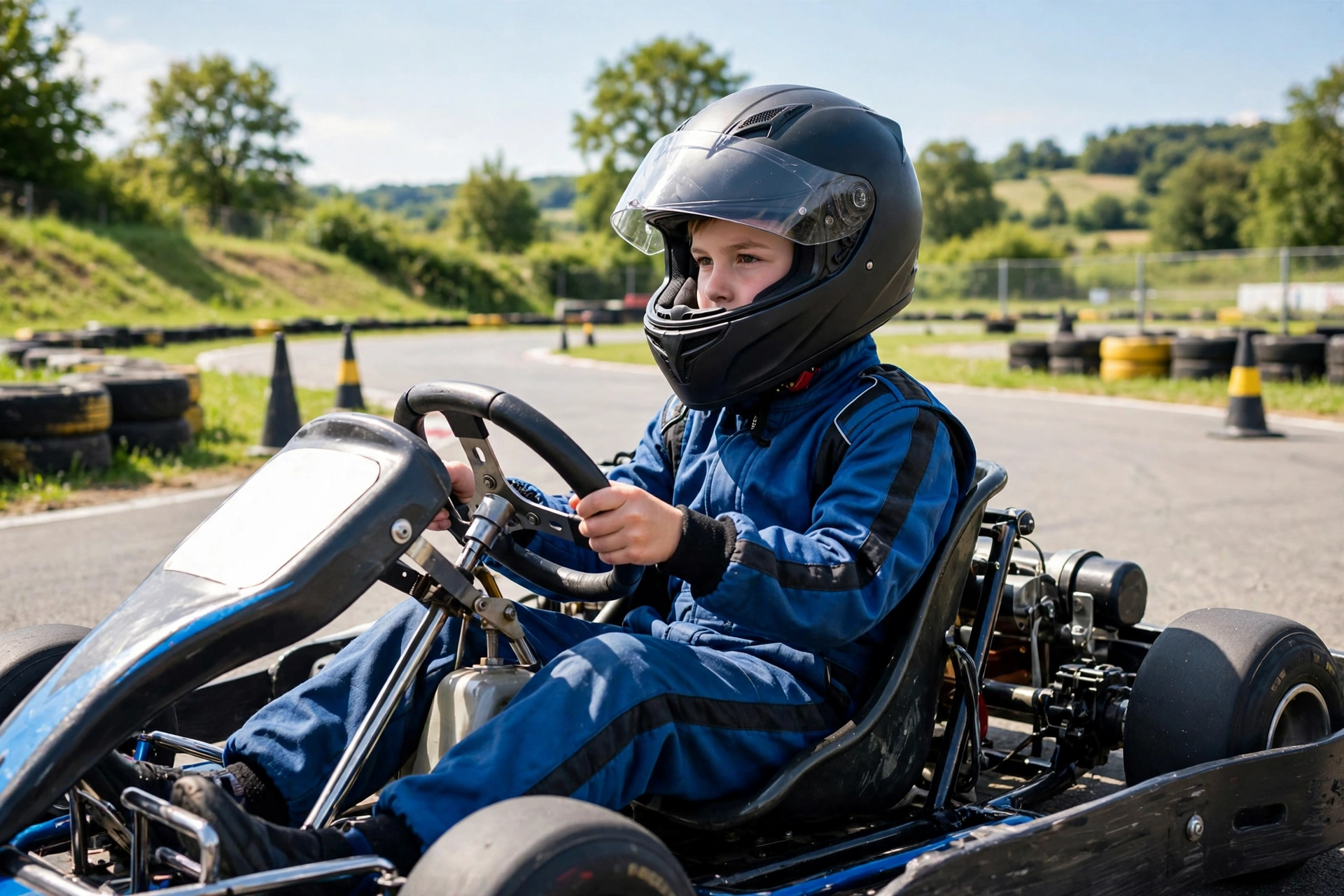
In general terms, children need a full-face helmet for go-karting, not a bike helmet or a skate helmet. A full-face kart helmet covers the chin and jaw, includes a visor or eye protection, and is designed for the kind of impacts and debris that karting can involve, such as stones flicked up from the track. Open-face helmets leave the face exposed, and most tracks will not accept them for junior drivers.
Kart helmets come in junior sizes, and a helmet made for adults will rarely fit a child properly, even on its smallest setting. If the track provides helmets, it should have a range of junior sizes and staff who can help with fitting. If you are buying a personal helmet, look for one marketed for karting or motorsport use in a junior size, and check the track’s rules before buying, since accepted standards can vary between venues.
How Should a Child’s Go-Kart Helmet Fit?
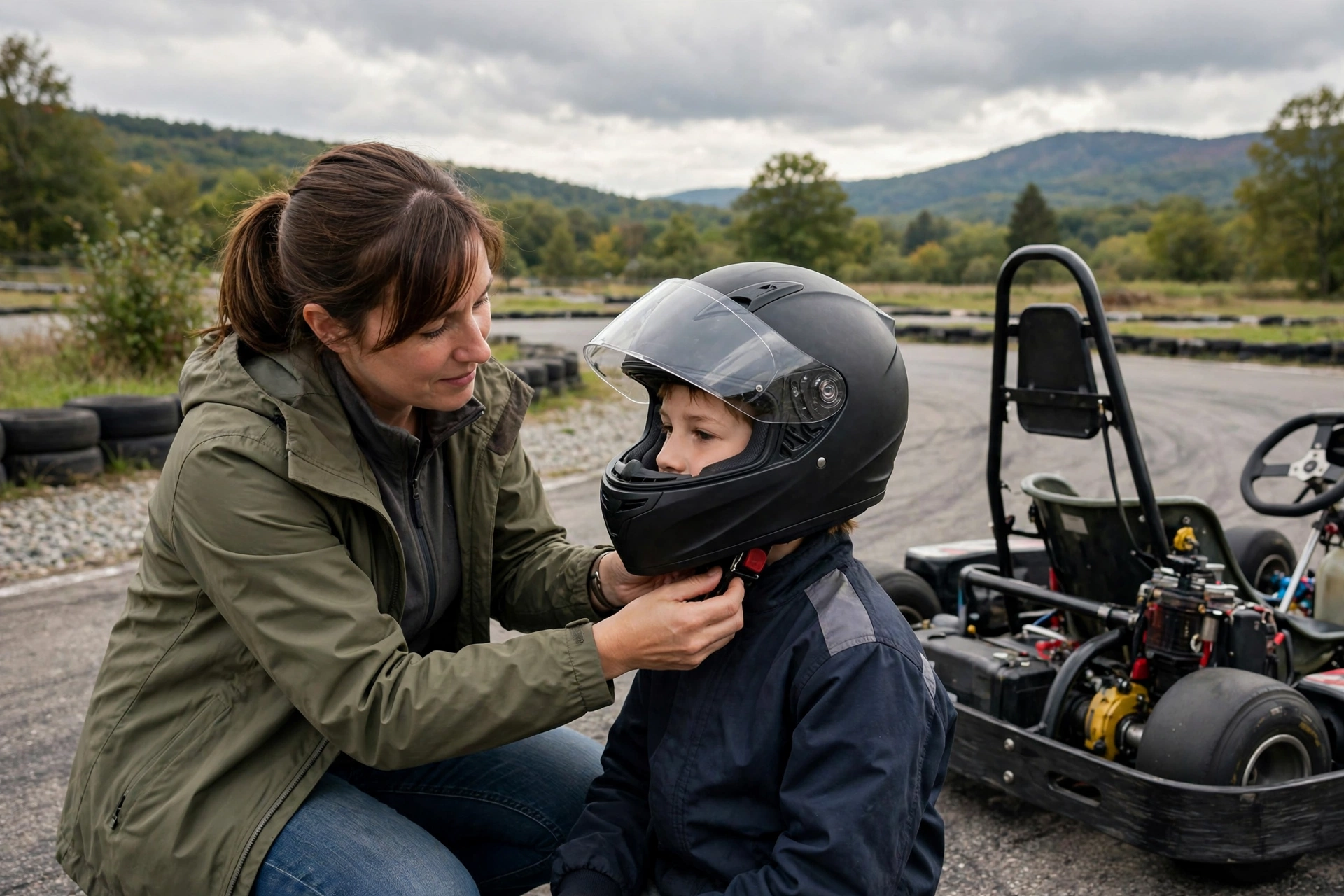
Fit matters more than brand or colour. A kart helmet should feel snug all round, with no pressure points that hurt and no looseness that lets the helmet rock or rotate. When your child shakes their head gently, the helmet should move with the head rather than sliding independently. The chin strap must be fastened properly, snug under the chin, and the visor should close fully without gaps.
To check the fit, start with your child wearing any head covering the track requires, such as a balaclava or hair net, since that affects the size needed. Put the helmet on straight, not tilted back, and fasten the strap. Ask your child to open their mouth wide: you should see the helmet pull down slightly, which shows the strap is snug. Then check vision: your child should be able to see clearly to the sides as well as straight ahead, without the helmet edge blocking their view of the track.
Comfort checks matter too, because an uncomfortable helmet distracts a young driver. Ask whether anything pinches, presses on the ears, or feels heavy at the front. A helmet that is too big can also cause neck strain as it moves around during the session. Track staff fit helmets every day and are usually happy to swap sizes, so speak up rather than accepting a poor fit. If you are learning about helmet features in general, reading what MIPS means for helmets is a useful background read, even though MIPS is a cycling-focused technology and kart helmets follow their own motorsport standards.
What Safety Rules Should Parents Know Before a Karting Session?
Every track has its own briefing, and listening to it matters. In general terms, junior sessions include rules about speed, overtaking, flags, and what to do if a kart stops on track. Children should understand that they must keep their hands inside the kart, keep the helmet fastened at all times while driving, and stop when instructed. Going through these points with your child before the visit helps them feel prepared rather than overwhelmed on the day.
Age, height, and weight limits vary by track and by kart type, so confirm that your child meets the requirements for the session you have booked. Some tracks run separate junior sessions with lower speeds and extra supervision, which are ideal for a first visit. Choosing a junior-specific session rather than a mixed session gives your child a calmer introduction and lets them build confidence at their own pace.
Should You Buy a Go-Kart Helmet or Use the Track’s Helmets?
For a first visit or occasional karting, using the track’s helmets is the sensible choice. Track helmets are sized for juniors, checked by staff, and included in the session price at most venues. This lets your child try the sport without an upfront purchase, and it avoids the risk of buying a helmet that a particular track will not accept.
Buying a personal helmet makes more sense if your child karts regularly, joins a junior club, or competes. A personal helmet guarantees a consistent fit, is more hygienic over time, and can be chosen for comfort features such as better ventilation or a preferred visor. Before buying, confirm with the track or club which standards it accepts, and try helmets on in person where possible, since junior sizing varies between brands.
As with other helmet types, avoid a second-hand kart helmet from an unknown source. In general terms, a helmet that has taken a heavy impact may have hidden damage, and its history cannot be verified. If you buy used, only accept a helmet from someone you trust who can confirm it has never been crashed or dropped heavily, and inspect it carefully for cracks, damaged lining, and a working visor and strap. For most families, a new helmet in the right size is the safer option.
How Do You Look After a Child’s Kart Helmet?
Good care keeps a kart helmet comfortable and effective. After a session, wipe the visor clean with a soft cloth, since scratches and grime build up quickly and reduce visibility. Clean the inside lining according to the maker’s instructions, and let the helmet air-dry fully before storing it. Avoid harsh cleaners or solvents, which can damage the visor or shell.
Finally, know when to replace it. In general terms, a kart helmet should be replaced after a significant impact, if the shell is cracked, if the lining is compressed or crumbling, or if the visor or strap no longer works properly. Children also outgrow helmets, so check the fit before each season or club term. A helmet that no longer fits snugly should be replaced even if it still looks new, because fit is what allows the helmet to do its job.
Frequently Asked Questions
Q: Can my child wear a bike helmet for go-karting?
A: No, in general terms go-karting requires a full-face kart or motorsport helmet. Bike helmets do not cover the face and jaw or meet the standards most tracks require for junior drivers.
Q: Do kart tracks provide helmets for children?
A: Yes, most tracks provide junior-sized helmets and include them in the session price. Staff will help with fitting, and a hair net or balaclava is often provided or required under a shared helmet.
Q: When should a child’s kart helmet be replaced?
A: Replace it after a significant impact, if the shell is cracked, the lining is damaged, or the visor or strap fails. Also replace it when your child outgrows it and the fit can no longer be adjusted to sit snugly.

Olivia
Writer at Helmet Today, covering helmet reviews, fit and riding safety.