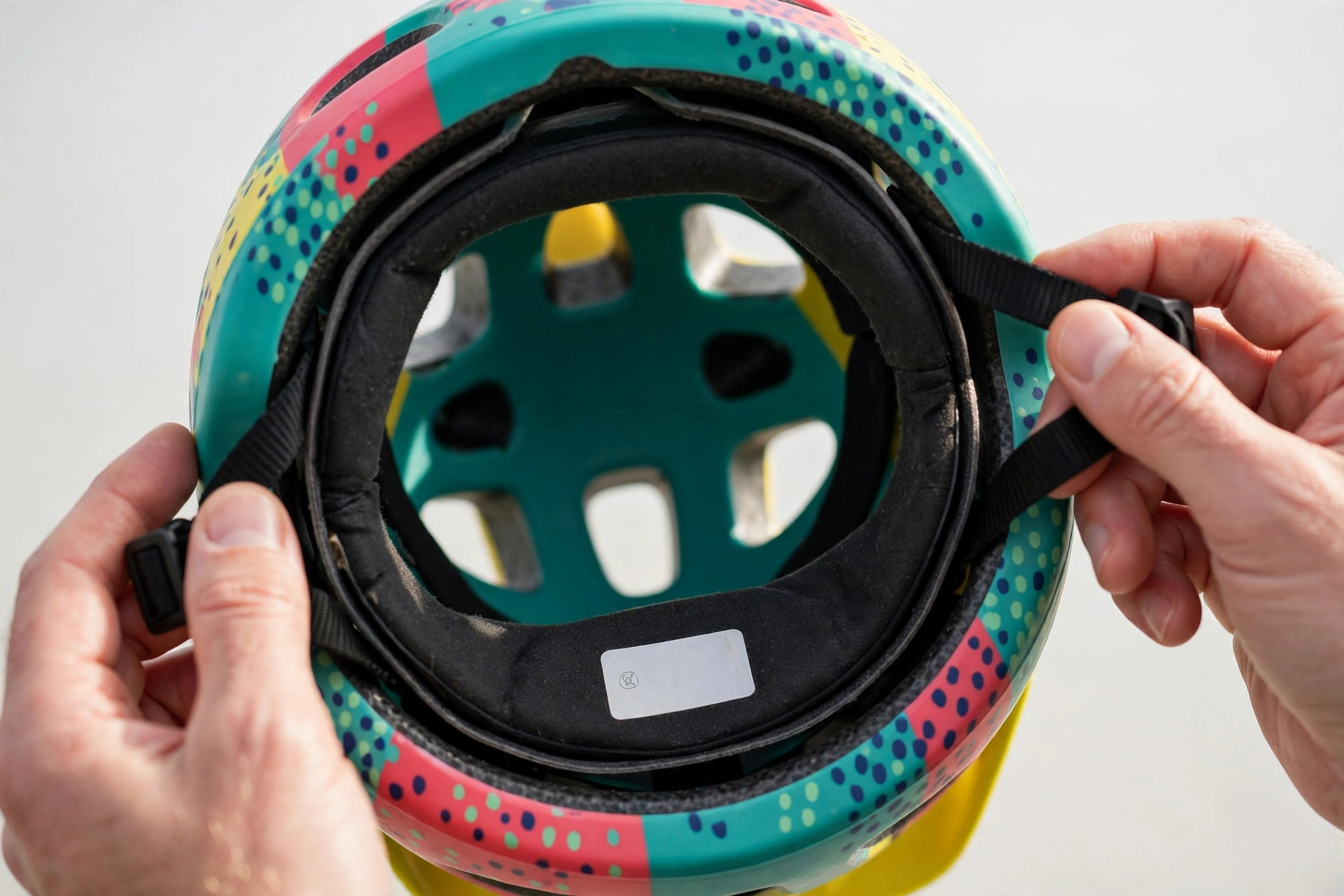
The quickest way to tell if a kids helmet is properly certified is to look for a certification label inside the helmet that names a recognised safety standard for the activity your child will do. In general terms, a certified helmet has been tested to a published standard, and the label, usually a sticker or printed mark inside the shell, tells you which standard it passed. If you cannot find any label, treat the helmet with caution and check with the retailer or maker before letting your child use it.
Certification can feel confusing because different activities have different standards, and labels often use short codes rather than plain language. A bike helmet, a riding helmet, and a ski helmet are certified to different standards, so a label that is correct for one sport may not be right for another. This guide explains where to look, what the labels mean in general terms, and the other checks that matter alongside certification.
Where Do You Find the Certification Label on a Kids Helmet?
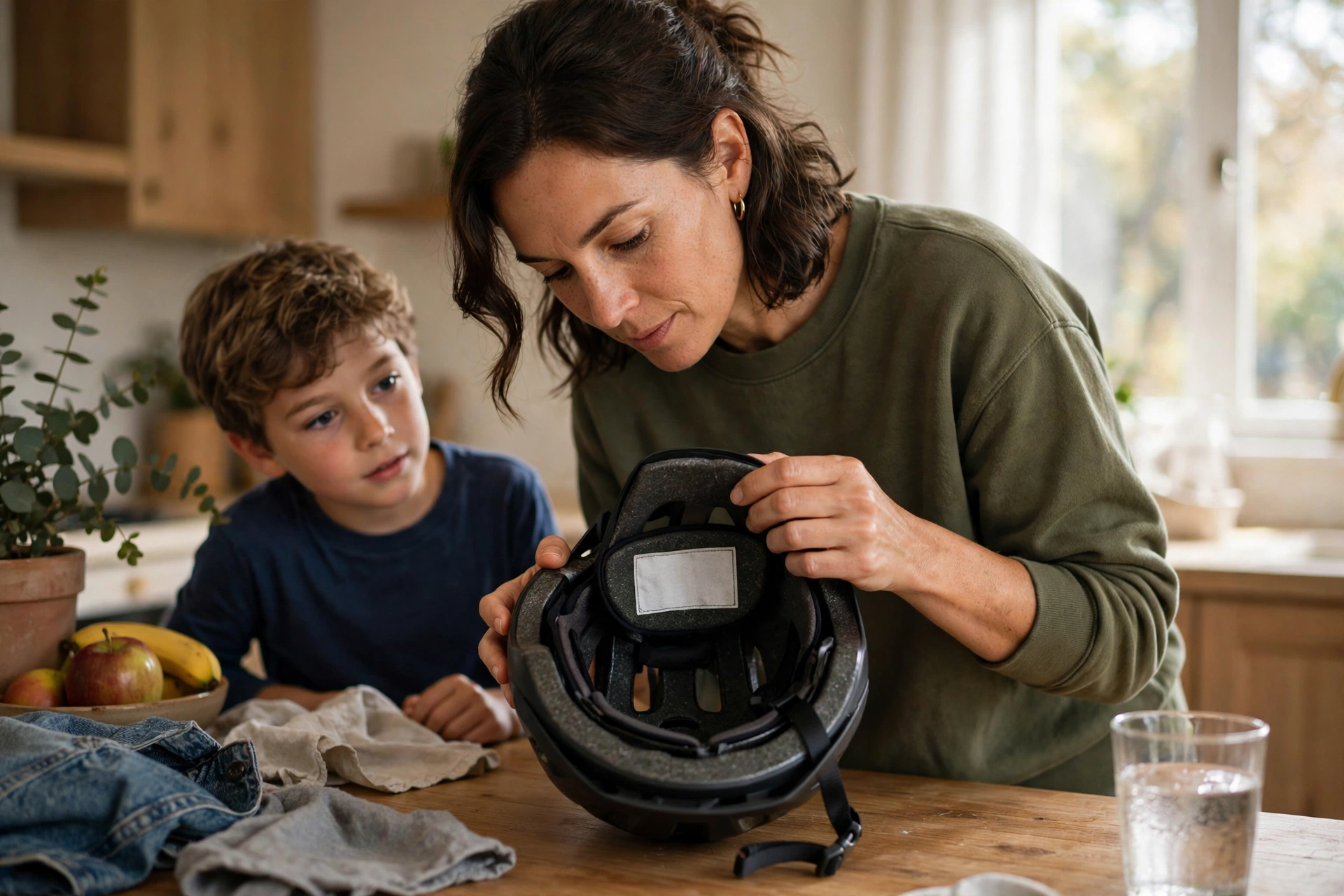
In most helmets, the certification label sits inside the shell, often near the back or under a removable comfort pad. Lift the pads gently and look for a sticker or printed text naming a standard. Some helmets also print certification details on the outside of the box or in the instruction leaflet, but the label inside the helmet itself is the one that counts, because it stays with the helmet for its whole life.
If the label is worn, peeled off, or hard to read, try checking the maker’s website with the helmet’s model name, which is usually printed nearby. Reputable makers list the standards each model meets. If you still cannot confirm the standard, contact the retailer with the model name and ask directly. A seller who cannot tell you the certification standard of a helmet they stock is a warning sign, and in general terms, it is better to choose a different helmet than to guess.
What Do the Common Certification Standards Mean?
For cycling, the most widely recognised standards in general terms include CPSC in the United States, EN 1078 in Europe, and AS/NZS 2063 in Australia and New Zealand. A kids bike helmet sold in one of these regions should carry the standard that applies there, and many helmets carry more than one. The label may show the standard code and the name of the testing body, and that combination is what you are looking for.
Other activities have their own standards, and this is where parents sometimes go wrong. A helmet certified for cycling is not automatically certified for horse riding, skiing, or motorsport, and vice versa. Each activity involves different impact types, speeds, and coverage needs, so each has its own testing regime. Before buying, confirm which activity the helmet is certified for, and match it to what your child will actually do.
It is also worth knowing that certification is about the helmet passing a set of tests, not about one helmet being “the safest” in every situation. Two certified helmets can still differ in fit, ventilation, weight, and extra features. Certification is the entry ticket: it tells you the helmet meets a minimum tested level for its activity. Fit and correct use then decide how well it protects your child in practice. If you want to understand extra safety features beyond certification, reading what MIPS means for helmets explains one technology that is often listed alongside certification labels on cycling helmets.
How Can You Spot a Fake or Misleading Certification Claim?
In general terms, a genuine certification label names a specific standard and usually a testing organisation, and the wording is consistent with the maker’s other documentation. Vague claims such as “safety approved” or “meets international standards” without naming any standard are not the same as certification. If a listing or label avoids naming a standard, treat that as a gap rather than reassurance.
Counterfeit helmets are a real concern with unbranded products sold online, and they can be hard to spot from photos alone. Buying from established retailers, keeping the receipt, and registering the helmet with the maker where offered all help. If you have already bought a helmet and now doubt its certification, stop using it for the activity until you have verified it, and seek advice from the retailer or maker. A short delay is far better than relying on a helmet that may not protect as claimed.
Does Certification Guarantee the Helmet Fits and Protects?
No, certification alone does not guarantee protection, because a certified helmet that fits badly or is worn incorrectly will not do its job properly. The helmet must sit level on the head, cover the forehead, and feel snug without rocking or sliding. Straps must be fastened and adjusted so the helmet stays in place. A certified helmet worn tilted back like a cap, or with loose straps, offers far less protection than its label suggests.
Age and condition matter too. A certified helmet that has taken a heavy impact, been dropped repeatedly onto hard floors, or shows cracked shells or compressed lining may no longer perform as it did when tested. In general terms, certification describes the helmet when new and undamaged, not after years of hard use. Regular checks for cracks, worn straps, and damaged pads are part of keeping a certified helmet effective.
What Should You Do Before Buying a Kids Helmet?
Start by confirming the activity and the standard. Ask the club, school, or track which standards it accepts, then shop with that answer in hand. When you find a helmet you like, check the label inside, not just the product title, and confirm the standard matches what you need. If you are shopping online, ask the seller to confirm the standard in writing before ordering if the listing is unclear.
Next, prioritise fit over features. Try the helmet on your child where possible, using the maker’s size guide as a starting point. Check that it sits level, feels snug, and stays put when your child shakes their head. A helmet with the right label but the wrong fit is not the right helmet for your child, and a different model in the same size range often fits better.
Keep the documentation that comes with the helmet, including the instruction leaflet and receipt. These help if you ever need to verify the standard, claim under warranty, or check replacement guidance. And once the helmet is in use, add a regular habit of checking the label, straps, and shell condition, especially at the start of a new season or after any fall. Certification gets your child started safely; ongoing checks keep them safe.
Frequently Asked Questions
Q: Where is the certification label on a kids helmet?
A: In general terms, it is a sticker or printed mark inside the shell, often near the back or under a comfort pad. It names the safety standard the helmet passed, and it stays with the helmet for its whole life.
Q: Can a helmet be certified for one sport but not another?
A: Yes. Cycling, horse riding, skiing, and motorsport each have their own standards, so a helmet certified for one activity is not automatically suitable for another. Always match the label to your child’s activity.
Q: What if a helmet has no certification label at all?
A: Treat it with caution and do not assume it is certified. Check with the retailer or maker using the model name, and if the standard cannot be confirmed, choose a different helmet that clearly carries one.

Olivia
Writer at Helmet Today, covering helmet reviews, fit and riding safety.