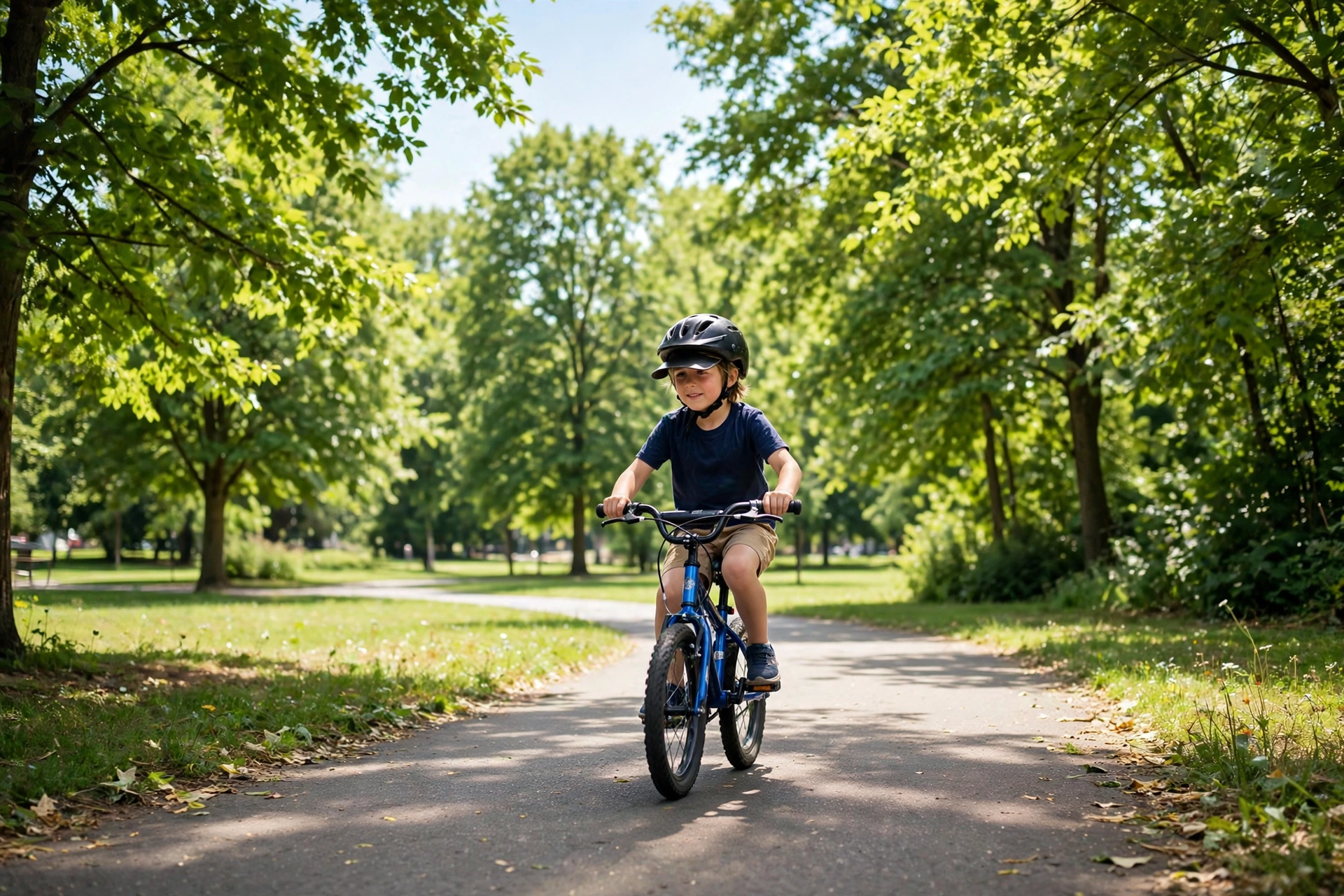
Yes, a sun visor on a kids bike helmet can be a useful feature, but it is not essential for every child. In general terms, a visor helps on sunny rides by shading the eyes from glare and low sun, which can make riding more comfortable and help your child see the path ahead more clearly. Whether it is worth choosing depends on when and where your child rides, how sensitive they are to bright light, and whether the visor fits well without getting in the way.
Many kids helmets come with a small peak or visor at the front, while others have a smooth shell with no visor at all. Neither design is automatically better. Some children love the shade a visor gives, especially on summer rides and when cycling towards the sun. Others find visors catch on branches on wooded trails or prefer wearing sunglasses instead. This guide will help you weigh up the pros and cons for your own child.
How Does a Sun Visor Help a Child on a Bike?
The main benefit of a visor is glare reduction. When the sun is low, in the morning or late afternoon, it can shine directly into a rider’s eyes, making it harder to see potholes, kerbs, and other path users. A visor shades the upper part of the field of vision and cuts that glare, which in general terms helps a child ride more confidently and spot hazards sooner. It also offers some shelter from light rain and from insects and dust on faster rides.
A visor can also help children who are sensitive to bright light or who squint a lot in sunshine. Squinting is tiring and distracting, and a child who is uncomfortable is less focused on the path ahead. A visor is not a substitute for sunglasses where those are needed, and it does not protect against reflected glare from below, but for many children it takes the edge off bright conditions and makes sunny rides more pleasant.
Are There Any Downsides to a Helmet Sun Visor?
Visors do have some drawbacks, and they are worth knowing before you buy. On wooded trails or narrow paths with low branches, a visor can catch on twigs, which is annoying and can jolt the helmet. Some visors also slightly reduce upward vision, which matters less on a bike path but can be noticeable when a child looks up at traffic lights or overhanging signs. In general terms, these are minor issues for most path and pavement riding, but they matter more for mountain biking through trees.
Fit is the final point to check. A visor should not push the helmet backwards or make it sit unevenly on the head. When trying a helmet with a visor, check that the helmet still sits level, covers the forehead, and feels snug. If the visor makes the helmet rock or slide, try a different model. As with any helmet feature, it is worth understanding the wider picture too, and reading what MIPS means for helmets can help you compare helmets on more than just visor design when you are shopping.

Should a Child Wear Sunglasses Instead of a Visor?
Sunglasses and visors solve slightly different problems, and some children use both. Sunglasses protect the eyes from glare in all directions, including reflected light from roads and water, and they stay with the child off the bike too. Sport-style sunglasses with a secure fit and shatter-resistant lenses are the best option for cycling, since ordinary fashion sunglasses can slip or break in a fall.
A visor, by contrast, shades without anything touching the face, which suits children who dislike wearing glasses or who find sunglasses uncomfortable under a helmet. It also keeps light rain and insects away from the forehead area. For a child who already wears prescription glasses, a visor can be especially useful, since it adds shade without needing a second pair of glasses or clip-on shades.
In general terms, there is no rule that says a child must have one or the other. Some families choose a helmet with a visor for everyday sunny rides and keep sunglasses for longer rides or very bright days. Others skip the visor entirely and rely on sunglasses alone. The right answer is the combination your child will actually use happily, because a visor or glasses left at home help no one.
What Should You Look for in a Visor Helmet?
If you decide a visor is worth having, a few details make the difference. First, check that the visor is securely attached but removable if possible, so you can take it off for wooded trails or replace it if it breaks. Second, check the size: a visor that is too long can block upward vision, while one that is too short gives little shade. A medium peak that shades without dominating the helmet is usually the best balance for children.
Third, check ventilation. Some visors sit close to the helmet vents and can reduce airflow, which matters on hot days. Look for a design where the vents remain open and air can still flow through the helmet. Finally, consider the helmet as a whole: fit, certification, weight, and comfort matter far more than the visor alone. A well-fitting helmet without a visor is always better than a poor-fitting helmet with one.
When shopping, let your child try the helmet on and ride with it if the shop allows, or at least walk around in it for a few minutes. Ask them whether the visor helps or gets in the way, and whether it feels balanced. Children are good judges of what they will actually wear, and a helmet they like is one they will keep on without arguments.
When Is a Sun Visor Most Worth Having?
A visor is most useful for children who ride regularly in sunny conditions, especially on open paths, roads, and parks where there is little tree cover. It is also helpful for rides at times when the sun is low, such as the school run on bright mornings or evening rides in summer. If your child’s riding is mostly in these conditions, a visor is a genuinely useful feature rather than a gimmick.
Whatever you choose, build a habit of checking the helmet before sunny rides: visor secure, straps snug, helmet level. If the visor is damaged, remove it before riding rather than letting a cracked edge flap in the wind. And remind your child that a visor helps with glare but does not replace looking carefully at junctions, signalling, and riding predictably. Good habits and good equipment together make sunny rides safer and more enjoyable.
Frequently Asked Questions
Q: Do all kids bike helmets come with a sun visor?
A: No, many kids helmets have a small peak or visor, but others have a smooth shell with none. Neither design is automatically better, and the choice depends on where and when your child rides.
Q: Can a visor replace sunglasses for cycling?
A: Not fully. A visor shades from above and helps with glare, but sunglasses also protect against reflected light from below and from the sides. Some children use both, and others prefer one or the other.
Q: Should I remove a broken helmet visor?
A: Yes, in general terms a cracked or flapping visor should be removed or replaced before riding. A damaged visor can distract your child or catch on branches, and a helmet without a visor is still perfectly usable.

Olivia
Writer at Helmet Today, covering helmet reviews, fit and riding safety.