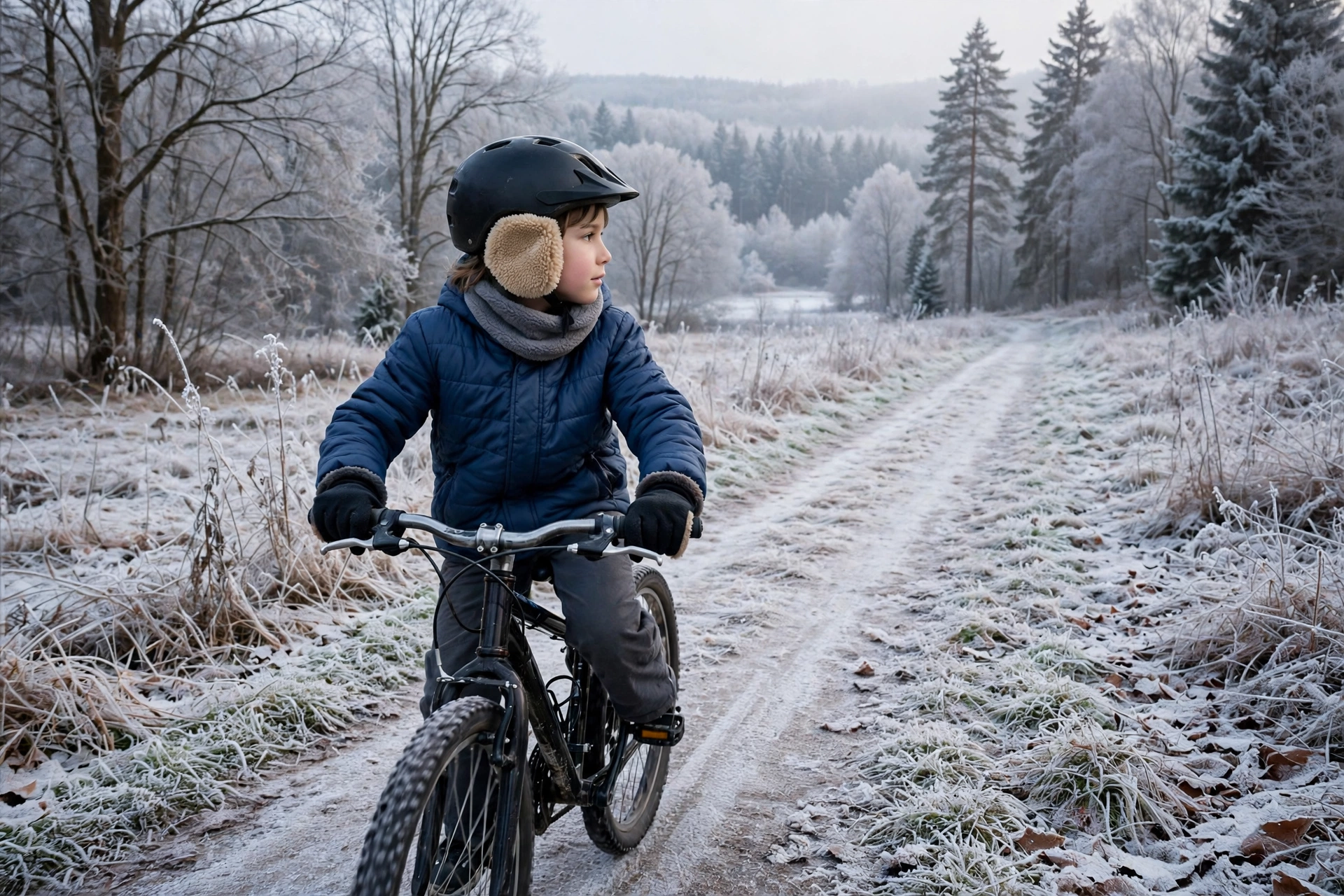
In general terms, a kids’ helmet with ear covers is a good choice for cold-weather riding, because it keeps ears warm without adding a bulky hat underneath the helmet. Standard helmets leave the ears exposed, and a thick hat worn underneath can lift the helmet, change its position, and loosen the straps. Ear covers solve that problem by adding warmth in a way that is designed to work with the helmet, so the fit stays correct while your child stays comfortable.
Cold ears are one of the main reasons children resist winter riding. A child who is warm and comfortable is far more likely to keep their helmet on and enjoy the ride. Ear covers come in several forms — built-in pads, clip-on covers, and full winter liners — and the right choice depends on how cold it gets where you ride and how often your child rides in winter. Understanding the options helps you pick warmth that does not compromise safety.
What are helmet ear covers, and how do they work?
Ear covers are pads or flaps that sit over or around the ears while the helmet is worn. Some helmets come with them built in, as soft fleece pads attached to the straps or shell. Others use clip-on covers that attach to the helmet straps, or a winter liner that fits inside the helmet and covers the ears and sometimes the back of the neck. All of them work the same way: they trap a layer of warm air around the ears while leaving the helmet’s shell and straps in their correct positions.
The key advantage over a hat is fit. A beanie or bobble hat underneath a helmet pushes the helmet up and out, so it may sit too high on the forehead and rock from side to side. Ear covers, by contrast, are thin where they meet the helmet and padded only where they cover the ears, so the helmet still sits level and snug. That is why many winter cycling helmets include ear covers as standard, and why they are worth looking for if your child rides through the colder months.
Do ear covers affect how a helmet fits or protects?
In general terms, ear covers designed for your child’s helmet should not affect protection, provided the helmet still fits correctly with them in place. That last point is important: always check the fit after adding covers or a liner, just as you would after any change. The helmet should still sit level, low on the forehead, and snug all the way around, and the straps should still form a V shape below each ear. If the covers make the helmet feel tight or push it out of position, try thinner covers or a different style.
Covers made for a different helmet, or a thick improvised layer stuffed under the straps, can change the fit in ways that are harder to spot. Stick to covers designed for your helmet model, or universal covers that attach to the straps without going between the helmet and the head. If you are unsure, fit the helmet with the covers on and run through the usual checks: level position, gentle head shake, and chin strap snugness. If it passes all three, the covers are working with the helmet, not against it.
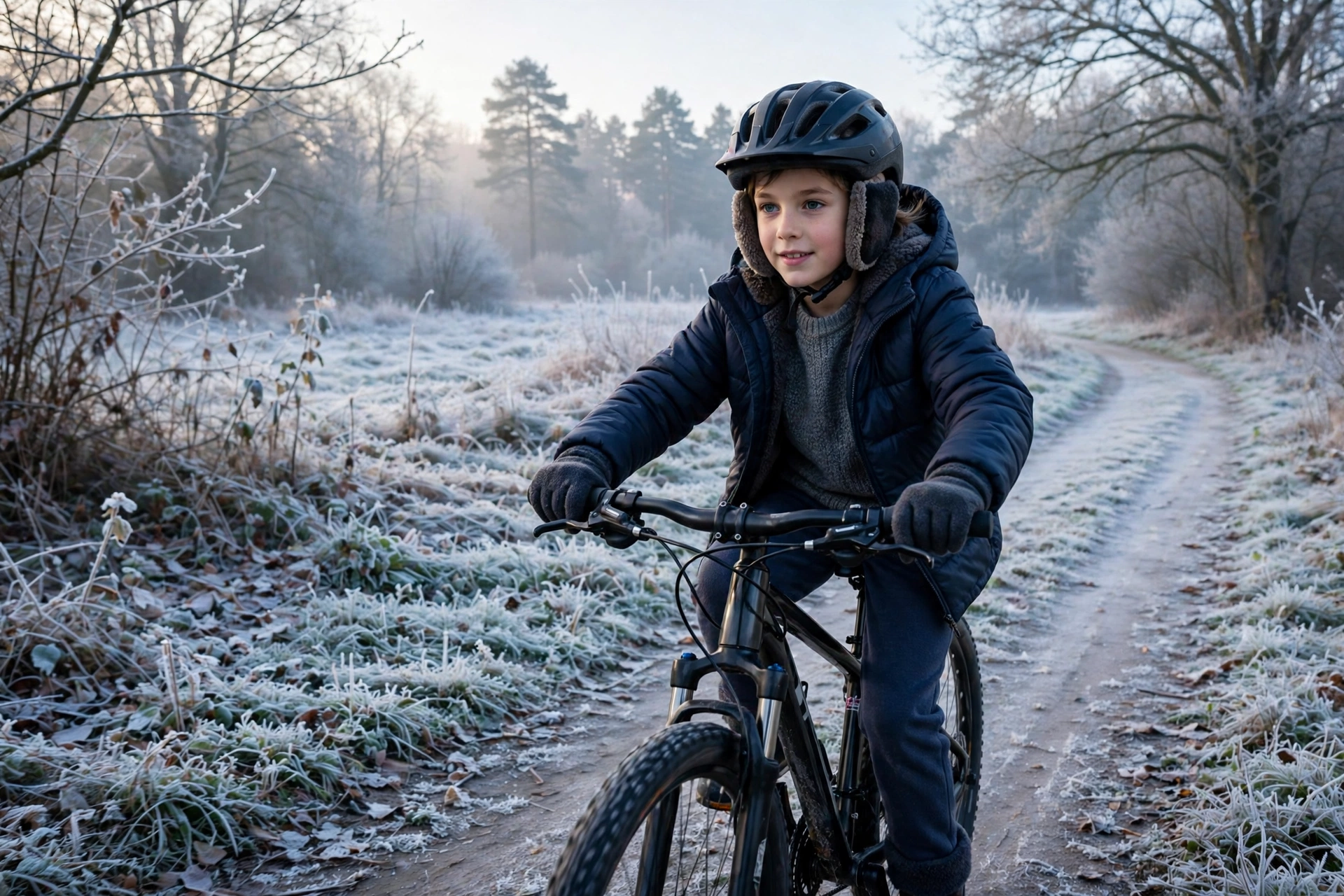
Which type of ear cover is best for cold-weather riding?
Built-in fleece ear pads are the simplest option for mild cold, and they are ideal for children who ride occasionally in winter. They add a little warmth without bulk, they cannot be lost, and they do not change the fit much. Clip-on covers offer more warmth and can be removed when the weather improves, which makes them a flexible choice for changeable autumn and spring weather. Full winter liners give the most warmth, covering the ears and neck, and they suit children who ride regularly in genuinely cold conditions.
Consider your local winters when choosing. In mild climates, built-in pads or clip-on covers are usually enough, and a full liner may make your child overheat on milder days. In colder climates, a liner is worth the investment, especially if your child cycles to school or rides for longer periods. Whichever type you choose, make sure it is washable — ear covers collect sweat and dirt quickly in winter, and clean covers are more comfortable and last longer.
Can ear covers affect hearing while riding?
This is a common worry, and in general terms, thin ear covers have only a small effect on hearing. Your child should still be able to hear traffic, voices, and warnings clearly while wearing them. Thicker liners muffle sound a little more, so if your child rides on roads, it is worth checking that they can still hear you speaking at a normal volume from a few steps away while wearing the liner. If hearing is noticeably reduced, switch to thinner covers for road riding and save the thick liner for off-road paths.
It also helps to remind children to stay alert in winter regardless of what they wear. Cold weather brings quieter roads, earlier darkness, and slippery surfaces, so visibility and caution matter as much as warmth. Bright clothing, lights on the bike, and a helmet that fits well all contribute to safer winter riding. Ear covers are one part of that picture, not a substitute for the rest of it.
What should you avoid when keeping kids’ ears warm on a bike?
Avoid thick hats underneath a standard helmet, because they lift the shell and loosen the fit. Avoid scarves wrapped around the helmet straps, which can slip, catch, or interfere with the buckle. Avoid earmuffs worn over the helmet, which sit awkwardly and can push the helmet out of position. And avoid anything that covers the eyes or blocks peripheral vision, such as a hood pulled tight around the face, because seeing clearly matters as much as staying warm.
Also avoid assuming that one winter setup works all season. A liner that fits perfectly over a thin cap in deep winter may feel loose in spring when the cap comes off, so re-check the helmet fit whenever layers change. If you are buying a new winter helmet and comparing features, it can help to read about what MIPS for helmets means alongside the ear-cover options. As always, though, fit comes first: the warmest helmet is no good if it does not sit correctly on your child’s head.
Frequently Asked Questions
Q: Do kids’ helmets with ear covers keep ears warm enough for winter riding?
A: In general terms, yes. Built-in pads suit mild cold, clip-on covers handle changeable weather, and full winter liners are best for regular riding in genuinely cold conditions.
Q: Can my child wear a hat under a helmet instead of ear covers?
A: A thin hat may be fine if the helmet still fits correctly, but a thick hat lifts the helmet and loosens the fit, so purpose-made ear covers are usually the safer choice.
Q: Do ear covers stop my child hearing traffic?
A: Thin ear covers have only a small effect on hearing. If a thick liner noticeably muffles sound, switch to thinner covers for road riding.

Olivia
Writer at Helmet Today, covering helmet reviews, fit and riding safety.