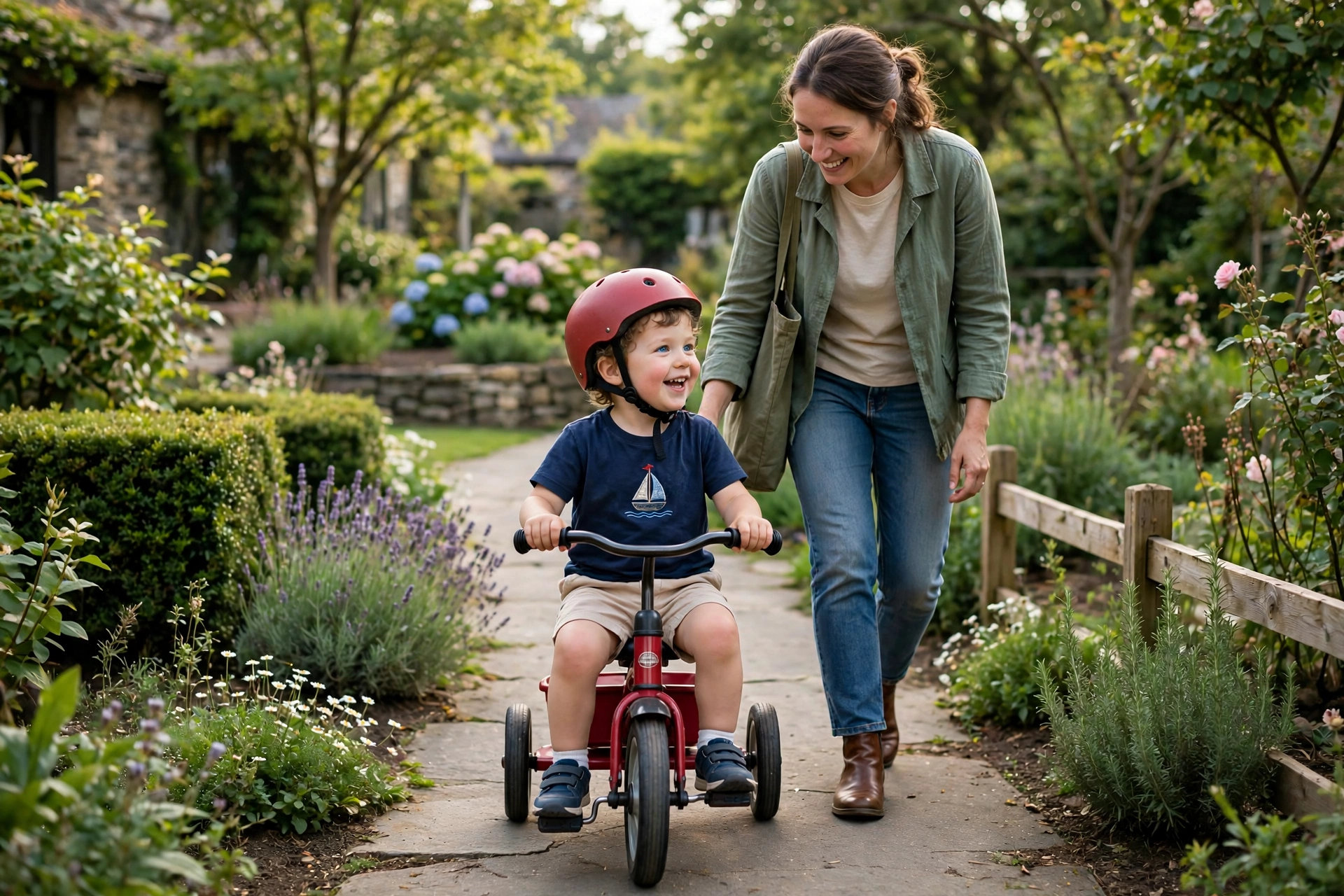
In general terms, yes — toddlers should wear a helmet when riding a tricycle. Tricycles feel slow and stable to adults, but toddlers are still learning balance and steering, and they can tip over, roll off a kerb, or hit an obstacle surprisingly quickly. A helmet protects the head in exactly those everyday tumbles, and starting the habit early makes it much easier for your child to accept a helmet later on a balance bike or bicycle.
Some parents wonder whether a tricycle is slow enough to skip the helmet, especially for short rides in the garden or on a quiet pavement. It is true that tricycles travel at low speeds, but the risk is not really about speed. It is about a small child falling from the height of the seat onto a hard surface, often without the reflexes to break the fall with their hands. A well-fitting toddler helmet is light and comfortable, so there is little downside to wearing one for every ride.
Do toddlers really need a helmet on a tricycle?
In general terms, the answer is yes, and most child safety guidance treats tricycles the same way as other ride-on wheeled toys. Toddlers are top-heavy, their coordination is still developing, and they are easily distracted by something interesting at the side of the path. A tricycle can also tip sideways if a wheel catches on a crack, a stone, or the edge of a driveway. None of this means tricycle riding is dangerous — it is a wonderful way to build coordination — but a helmet is a simple precaution that matches the way toddlers actually fall.
There is a second benefit that is easy to overlook. Toddlers who wear a helmet from their very first rides tend to treat it as a normal part of riding, like shoes. Children who start wearing helmets later, when they are older and more opinionated, are often much harder to persuade. By making the helmet part of tricycle time from the beginning, you are setting up a habit that will carry through to balance bikes, scooters, and pedal bikes without a battle.
At what age should a toddler start wearing a helmet?
Most toddlers are ready for a helmet as soon as they can sit steadily on a tricycle and push themselves along, which for many children is around their second birthday, though every child develops at their own pace. The key question is not the exact age but whether your child can hold their head up comfortably while wearing a light helmet and whether the helmet fits properly. A helmet that is too heavy or too large for a very small child can be uncomfortable and may flop around, which defeats the purpose.
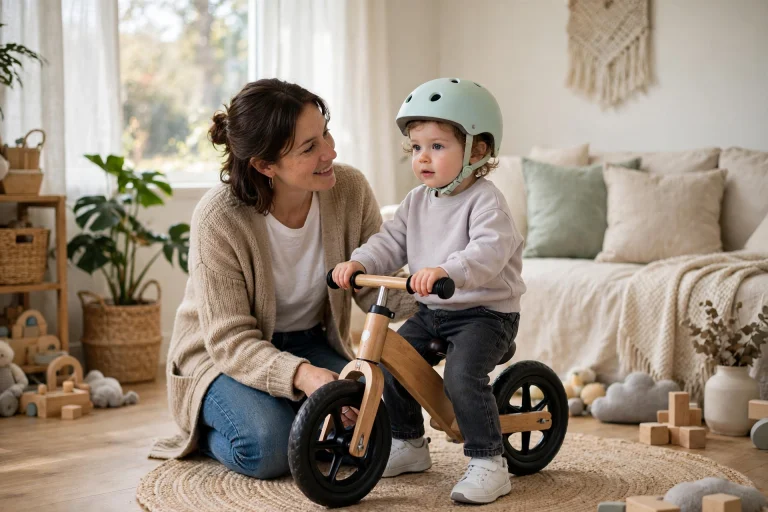
If your child is still very young or small, look for a helmet made specifically for toddlers, with a smaller shell and lighter weight than a child’s bike helmet. Try it on at home first, for short periods, so your child gets used to the feeling before the first ride. If the helmet slips down over the eyes or rocks from side to side even after adjustment, it is not the right size yet, and it is better to wait or try a different model than to use a poor-fitting helmet.
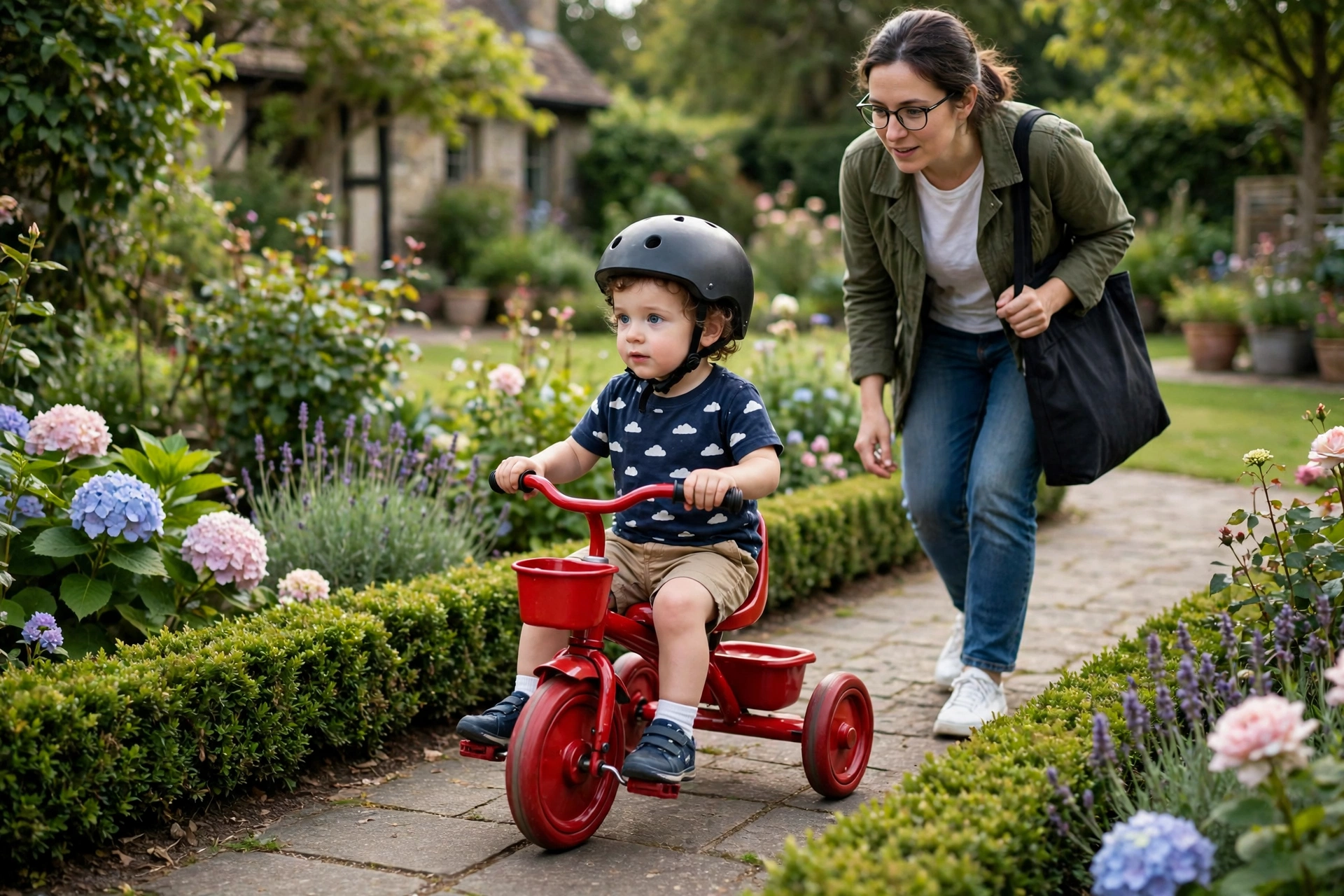
What kind of helmet is best for a toddler on a tricycle?
A toddler-specific bike helmet is usually the best choice for tricycle riding. These helmets are designed for low-speed falls, with a rounded shape, good coverage at the back of the head, and a simple adjustment system. Some also have a flat back so a toddler can lean back comfortably in a seat. A multi-sport helmet designed for cycling and skating can also work, provided it fits well and is suitable for cycling use. What matters most is fit, comfort, and a shape that suits your child’s head.
Avoid helmets that are not designed for cycling, such as heavy full-face helmets, and avoid handing down an older child’s helmet that is too big. A helmet should sit level on the head, low on the forehead, and snug enough that it does not slide when your child shakes their head gently. Check the chin strap too: it should be snug, with the side straps forming a V shape below each ear. If you want to understand newer safety features before buying, reading about what MIPS for helmets means can help you weigh up the options, but fit and comfort matter more than any single feature for a toddler.
How can I get my toddler to keep a helmet on?
Patience and routine work better than force. Let your toddler handle the helmet at home, try it on for a few minutes at a time, and praise them when they wear it. Make it part of the ritual: helmet on, then tricycle out. Some parents find that wearing a helmet themselves, or letting a favourite toy “wear” a helmet, helps a reluctant toddler accept it. Keeping the helmet comfortable is also crucial — a helmet that pinches, slips, or feels hot will be pulled off far more often than one that fits well.
If your toddler keeps removing the helmet mid-ride, stop the ride calmly and explain in simple terms that riding happens with the helmet on. Then try again another day. Most toddlers settle into the routine within a week or two, especially if every ride follows the same pattern. Avoid turning it into a long negotiation each time; a short, consistent rule is easier for a toddler to understand than a debate about why helmets matter.
Are there times when a toddler does not need a helmet on a tricycle?
In general terms, a helmet is recommended whenever a toddler is riding a tricycle outdoors or on a hard surface, even for a short ride. The exception most parents make is for indoor ride-on toys used on soft carpet at walking pace, where the fall risk is very low — but even then, some families keep the helmet on to build the habit. What matters is consistency: if the rule is “helmet every time we ride outside,” your toddler will learn it quickly and you will not have to decide case by case.
One important safety note: a helmet should only be worn while riding. Toddlers should not wear a helmet while climbing, playing on playground equipment, or riding in a car seat, because straps can catch on equipment and a helmet changes how a car seat harness fits. So the routine is simple: helmet on for the tricycle ride, helmet off when play moves elsewhere. That keeps the habit clear and avoids new risks.
Frequently Asked Questions
Q: Do toddlers need a helmet on a tricycle?
A: In general terms, yes. Toddlers can tip a tricycle or fall from the seat onto a hard surface, and a well-fitting toddler helmet protects the head during those everyday tumbles.
Q: What age can a toddler start wearing a helmet?
A: Most children are ready once they can sit steadily on a tricycle and hold their head up comfortably in a light, toddler-sized helmet — for many, around their second birthday, though readiness varies by child.
Q: Should a toddler wear a helmet on playground equipment too?
A: No. Helmets are for riding. On playground equipment the straps can catch, so take the helmet off when tricycle time ends and climbing play begins.

Olivia
Writer at Helmet Today, covering helmet reviews, fit and riding safety.