Before buying a second-hand ski helmet, check its age and certification date, inspect the shell and liner for cracks, dents, or crushed foam, ask directly whether it has had any impact, and walk away if the history is unknown or the fit is wrong — in general terms, a used helmet is only worth buying when its history is clear, its condition is excellent, and it fits you properly.
Second-hand helmets are tempting: good helmets are expensive, and a barely-used one can look like a bargain. The problem is that a helmet’s most important quality — whether its foam is still able to manage an impact — is invisible from the outside, so the checks below matter more than the price.
What Should You Ask the Seller First?
Ask about impacts, directly and specifically. Has the helmet been in a crash or a hard fall? Has it been dropped onto a hard surface from height? How many seasons has it been used, and how was it stored? A seller who answers clearly and without hesitation is a good sign; vague answers, or “I bought it second-hand myself,” mean the history is unknown, which is itself a reason to be cautious.
Ask why it is being sold. Size changes, quitting the sport, and switching brands are ordinary reasons. A helmet sold because “it never fitted right” may simply be the wrong size for you too, so try it on rather than trusting the label.
Ask for the model and year. With those, you can check the maker’s guidance on the helmet’s lifespan and whether replacement pads are still available. A helmet so old that spares are gone is a poor buy even if it looks fine.
How Do You Inspect the Shell and Liner?
Start with the shell. Look over the whole outer surface in good light for cracks, deep scratches, dents, or areas where the finish has flaked. Run your fingers over it too — hairline cracks are easier to feel than to see. Any crack, however small, is a reason to walk away.
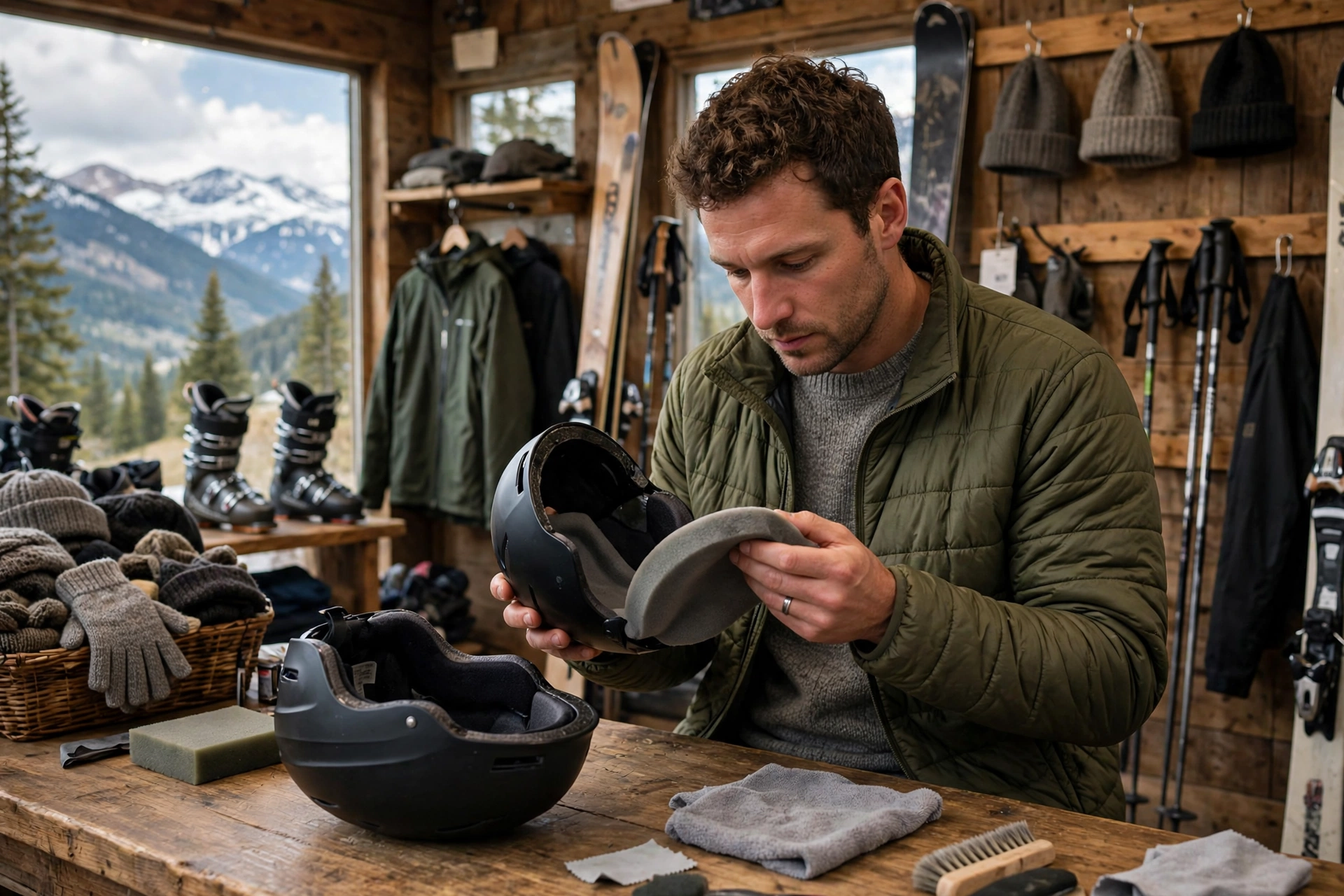
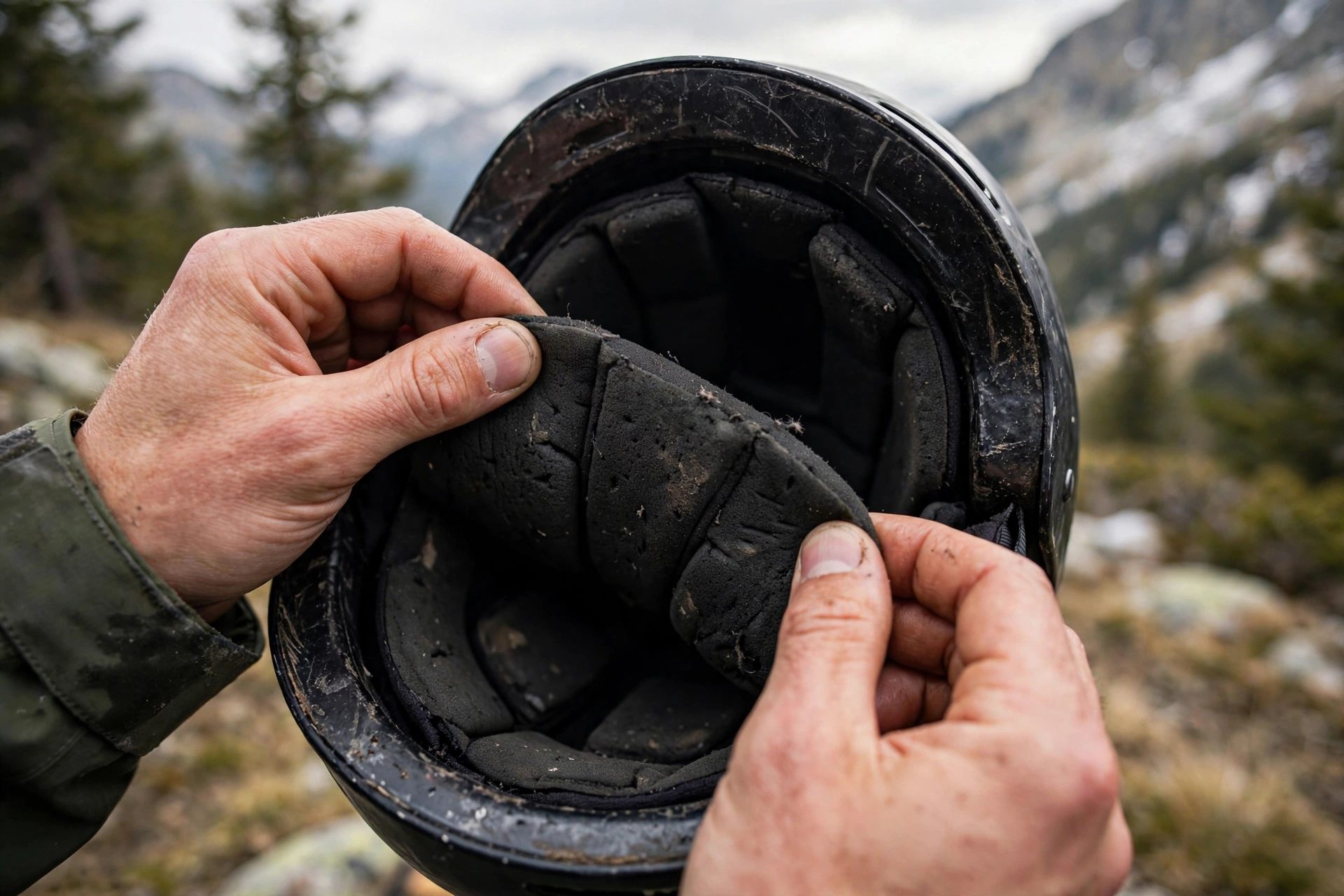
Next, check the liner. Remove the liner if it is detachable and look at the foam underneath: it should be even, springy, and free of crushed, cracked, or missing sections. Press the foam gently all over — soft spots or areas that stay compressed suggest past impact damage. Check the liner fabric for wear, smell, and mould, especially if the helmet was stored damp.
Check every fitting. Work the fit system dial through its full range, fasten and release the chin strap and buckle several times, and check the goggle clip, vent sliders, and ear pads. Worn or broken fittings are replaceable in some cases, but a helmet with several failing parts has had a hard life.
How Do You Check the Helmet’s Age and Certification?
Find the manufacturing date, usually printed on a label inside the helmet or stamped into the shell. In general terms, makers suggest replacing helmets after a number of years of use, even without an impact, because foam ages and materials degrade — so a helmet that is already old has less useful life left, whatever its condition.
Check the certification sticker. It should be present, legible, and current for the standard your country or resort recognises. A missing sticker, a sticker that does not match the helmet’s claimed standard, or a helmet sold without any certification information is not a bargain — it is an unknown.
Be wary of helmets that have been repainted or covered in stickers. Paint and heavy stickers can hide shell damage, and some paints and solvents can damage shell materials. A helmet with a heavily decorated shell is harder to inspect honestly, so treat decoration as a reason for extra care, not a bonus.
How Should the Fit Test Work for a Used Helmet?
Try it on with the layers you actually ski in. The helmet should sit level, just above the eyebrows, feel snug and even all the way round, and stay put on a hard head shake with the strap fastened. Remember that the previous owner’s head has already shaped the liner — a helmet that fitted them perfectly may fit you differently, and liner compression from their use may mean it sits looser on you than the size label suggests.
Wear it for several minutes. Pressure points that are invisible at first try announce themselves over time, and a used liner that feels fine for thirty seconds may feel wrong after ten minutes. If the shop or seller will not let you wear it for a few minutes, that is useful information in itself.
Check it with your goggles. The goggle should meet the helmet’s brow without a gap and without pushing the helmet up, and the goggle strap should sit properly in the rear clip. A helmet and goggle mismatch is annoying with a new helmet and just as annoying with a used one.
- History: clear, credible answers about impacts and storage
- Shell: no cracks, dents, or hidden damage under paint or stickers
- Foam: even and springy, with no crushed or soft sections
- Fit: level, snug, and stable on a shake test with your own layers
When Should You Walk Away and Buy New Instead?
Walk away whenever the history is unknown, the helmet has had an impact, the shell or foam is damaged, the certification is missing or out of date, or the fit is wrong. Any one of these is enough on its own — together they are decisive. A helmet’s job is to manage impact forces, including the rotational forces described in this guide to what MIPS is for helmets, and a compromised helmet may not do that job when it matters.
In general terms, a new entry-level certified helmet that fits you is a better buy than a premium used helmet with a doubtful past. The price difference buys certainty: a known history, a full lifespan ahead, and a warranty. Second-hand makes sense only when the helmet is nearly new, its history is clear, and the saving is real — not when it merely moves the risk from the seller to you.
If you do buy used, budget for new liner pads where available, clean the helmet thoroughly before first use, and keep the seller’s details and the helmet’s model and date somewhere safe. That record helps you judge its remaining life honestly in seasons to come.
Frequently Asked Questions
Q: Is it ever safe to buy a second-hand ski helmet?
A: Yes, when the history is clear and verifiable, the helmet has had no impact, the shell and foam are undamaged, the certification is current, and it fits you properly. If any of those conditions fails, the saving is not worth the uncertainty — buy new instead.
Q: How old is too old for a used ski helmet?
A: In general terms, a helmet that is already several seasons old has used up much of its service life, since foam ages even without impacts. Check the manufacturing date and the maker’s lifespan guidance, and favour helmets with most of their life still ahead of them.
Q: Can a seller hide impact damage on a helmet?
A: Sometimes, yes — internal foam damage is not always visible, and paint or stickers can hide shell marks. That is why the seller’s answers matter as much as the inspection: if you cannot trust the history, you cannot trust the helmet, however good it looks.

Olivia
Writer at Helmet Today, covering helmet reviews, fit and riding safety.